Can Paramount and Warner Bros. Defy History of Lackluster Hollywood Mergers?
If, at first, Discovery, AT&T, AOL, Time and others fail? Well, David Ellison is going to go ahead and give Warner Brothers a try anyway.
Sign up for smart news, insights, and analysis on the biggest financial stories of the day.

That’s all, folks. Well, maybe. With Netflix bowing out of the bidding war for Warner Bros. Discovery (WBD), Paramount SkyDance officially has a deal in place for David Ellison’s white whale.
Pending all-but-certain approval from WBD shareholders in a vote expected early this spring, and barring unforeseen financing difficulties or regulatory roadblocks, Ellison’s studio is set to acquire WBD in a heavily financed all-cash transaction that values the rival studio at $110 billion.
So what do you get with a crossover between two of Hollywood’s most storied companies?
Here’s what Ellison’s claims, plus a little back-of-the-napkin math of the sort studio execs of yesteryear might have done at The Brown Derby, tell us WarnerMount could deliver:
A vast content library of valuable intellectual property (quite valuable), a pair of storied Hollywood film studios capable of delivering a combined 30 movies into theaters each year (debatable), corporate savings totaling $6 billion that will come without widespread layoffs (allegedly), and a combined debt load totaling some $80 billion (potentially catastrophic).
The debt burden, in fact, is so high that it may cause a failure to launch, experts told The Daily Upside. After all, there’s a reason that shares of Netflix have spiked roughly 12% since it bowed out of the Warner Bros. Discovery bidding war late last month, and why shares of Paramount have plummeted nearly 20% since it became the default winner. In the streaming era, however, scaling up may be a do-or-die proposition regardless of cost.
Of course, that’s exactly the logic that David Zaslav preached when his Discovery Inc. took on heavy debt to acquire Warner Bros from AT&T in 2022, and not too dissimilar from the logic AT&T used to justify its acquisition of WarnerMedia in 2018.
But if Ellison and his partners, including investment firm Red Bird Capital and his father/Oracle founder/world’s sixth-richest man Larry Ellison, are to be believed, the third try really is the charm. Or, rather, the fourth or fifth or sixth try, depending on how far back into Hollywood history you want to look.
“I understand why Paramount is in the Warner Bros. business,” Third Bridge sector analyst John Conca told The Daily Upside. “But the overall ability to execute this turnaround would be threading a needle here.”
One Deal After Another
There’s just no getting around the debt load, especially since the Ellisons are moving quickly to gobble up WBD before they can even finish digesting their $8 billion acquisition of Paramount, which only closed in August.
That deal, in which Ellison’s production company Skydance subsumed the storied studio behind films from Sunset Boulevard to the Star Trek franchise and the first eight Friday the 13th movies, is still working its way through the balance sheet. In its fourth-quarter earnings report, the company reported an operating loss of $339 million, citing $546 million in restructuring and transaction-related costs.
Hollywood Accounting
WarnerMount will have a debt‑to‑EBITDA leverage ratio of roughly 6.5x at deal close, Paramount says, a figure it can whittle down to just 3x within three years.
That’s a lot of big numbers and big predictions. And if it all sounds familiar, that’s because it is. Risky, too. Reality proved far different from Zaslav’s predictions in the Discovery merger, with WBD struggling to achieve steady profitability while trapped servicing a Godzilla-sized debt pile and failing to achieve the efficiencies and gains promised. Shares of the company fell more than 70% in the years following the deal, trading at just above $7 per share in mid-2024. That Zaslav eventually sold the company at $31 per share remains no small Hollywood miracle, though an unprecedented and enviable run of 2025 box office hits, capped off by a handful of Oscars, certainly helps. Paramount’s film studio had a comparatively awful 2025.
Junkyard Dogs
Wall Street, for its part, is starting to worry the deal could turn out to be another dud. It has happened to Hollywood sequels before.
“As discovered with the WBD combination, restructurings take years to implement, and while we remain attracted to the potential long term, we expect short-term performance to be choppy,” Bank of America analyst Jessica Reif Ehrlich wrote in a note published March 10 that reiterated an underperform rating on Paramount and lowered its price target from $13 to $11.
Ratings agency Fitch, meanwhile, downgraded Paramount’s credit rating to junk status and placed it on watch for another reduction, citing “increased event risk and transaction complexity from the proposed acquisition of WBD” as well as ongoing pressures on the media sector.
Skydancing in the Rain
The junk rating on the massive debt load “leads to a situation where you really have to walk a tightrope, and you really have to drive growth,” Conca said.
So how do you drive growth? With a mix of unrivaled intellectual property paired with unparalleled scale and reach, Paramount says. There’s plenty of merit to both claims.
About 8% of total US TV time across linear and streaming in January was spent viewing content distributed by Paramount, according to Nielsen, while 5.5% was spent on WBD-distributed content. Adding the two together would make WarnerMount the clubhouse leader, above Youtube’s 12.5%, Disney’s 11.9%, and Netflix’s 8.8%.
Both companies have a considerable business selling new content and licensing old content to their platform rivals. Paramount, for instance, produces the popular Netflix series Emily in Paris, while WBD produces Ted Lasso for Apple TV and The Bachelor for Disney’s ABC. With a combined back catalogue of 10,000 films and 150,000 TV episodes, WarnerMount will likely find new pricing leverage in licensing negotiations, as both companies remain locked in a symbiotic licensing relationship with ostensible rival Netflix.
Swim for It
Still, WarnerMount remains trapped in the same quandary as the rest of legacy media: Linear TV is a rapidly sinking behemoth cruise ship, and streaming is a life raft that doesn’t look big enough for everyone.
See Paramount’s latest earnings report: Linear remained the primary free cash flow driver, even in continued structural decline, while its streaming unit remained unprofitable.
A consolidated Paramount+ and HBO Max streaming platform would nonetheless have scale (and yes, that means HBO Max may undergo yet another name change, reverting to an earlier moniker). Paramount currently counts 79 million subscribers for its service, while HBO Max last reported roughly 131 million. The two services could have a non-negligible amount of subscriber overlap, however, and, worse, the days of rapid subscriber growth may be coming to a close.
Disney reported just under 200 million global streaming subscribers in November, while Netflix boasted 325 million subscribers last year. Both companies have stopped reporting total subscriber counts in a signal of slowing global growth.
“From a raw subscriber count, [the streaming industry] is closing in on saturation,” Conca said. Meanwhile, Bank of America flagged slowing direct-to-consumer growth as a key downside risk.
“Growth isn’t cheap anymore; everyone is fighting to keep subscribers, increase engagement, and win ad dollars within a crowded market,” creative agency mentor and former Paramount executive Travis Pomposello told The Daily Upside.
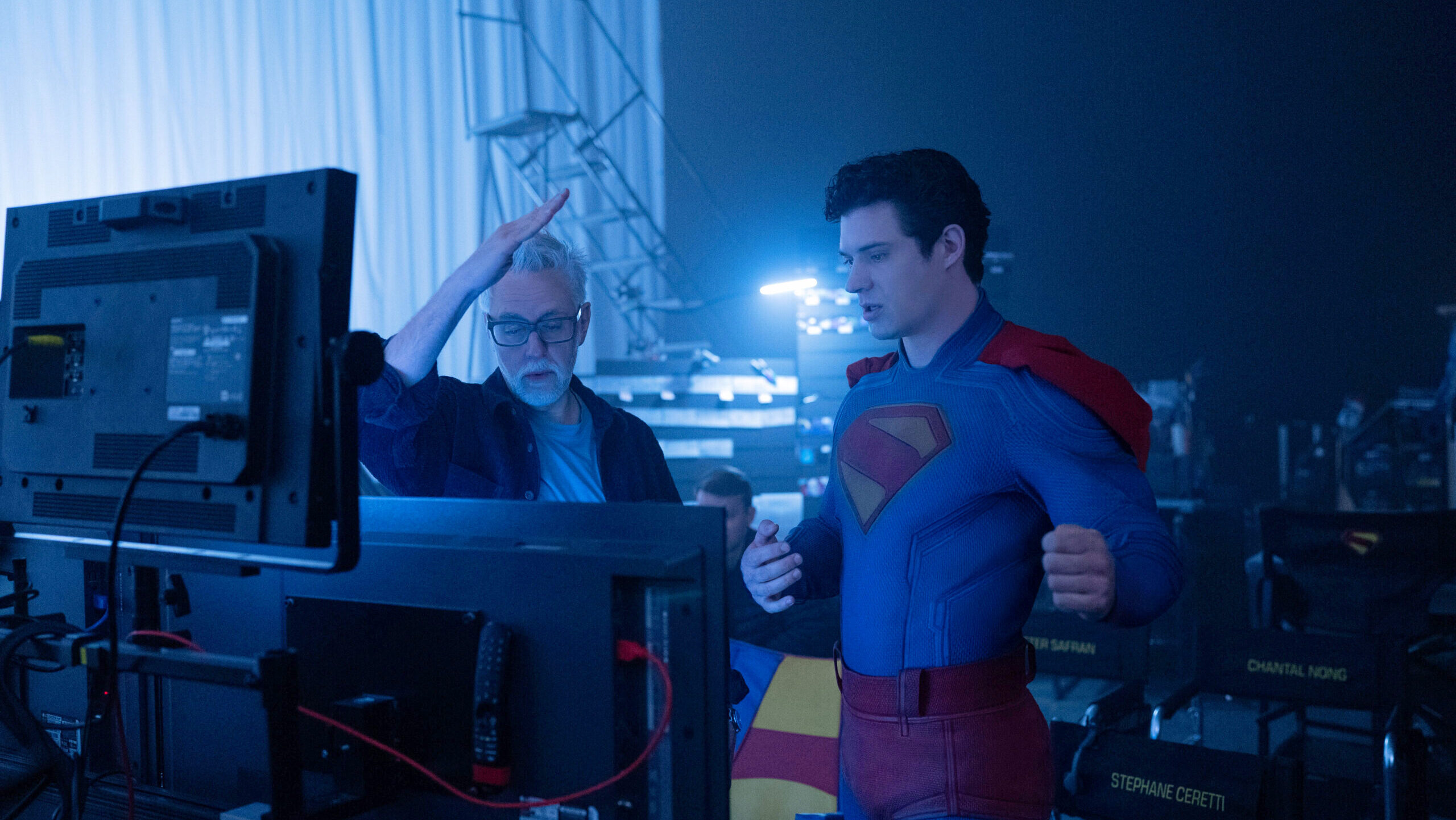
Superman to the Rescue?
Increasing engagement, which is crucial to the combined company’s growth, requires making TV shows and movies that audiences can’t ignore. There, WarnerMount could benefit from Hollywood’s habit of playing the hits when in doubt, leveraging the considerable IP firepower of WBD’s stable of DC superheroes, Game of Thrones and Harry Potter along with Paramount’s library of Mission: Impossible, Transformers, Yellowstone and CBS procedurals.
But in 2026, franchise rehashes are hardly a safe strategy. WBD’s big 2025 box office run came off the backs of originals, such as the Oscar-winning Sinners, and previously unadapted IP, such as Minecraft. Meanwhile, Disney spent the years following its costly acquisition of 21st Century Fox juicing the output of its marquee franchises, such as Marvel and Star Wars, only to see steady, reliable blockbuster returns dwindle as audience fatigue set in.
“This kind of debt shapes what projects get approved, what gets cut, how patient leaders can be, and how much room there is for mistakes as two big companies merge,” Pomposello said. “With so much debt, management teams become more cautious and focus more on saving cash in the short term than on taking creative risks.”
Hail Mary: Paramount does have one ultra-safe media asset in its hands: NFL rights, far and away the biggest driver of eyeballs in the American media landscape. But even that relationship is looking increasingly risky. The league, which has begun contract renewal talks with CBS, is seeking as much as a 60% increase on a current deal under which Paramount pays $2.1 billion annually, CNBC reported last week.
It’s a price so high that CBS is probably already failing to recoup the money from raw ad sales during games, Conca said, though NFL viewership tends to increase engagement across the network overall. Which means, like WBD, the NFL may just become another asset that turns into an anchor in the future. And somewhere down the road, Paramount may be the next company trying to sell off Warner Bros. to somebody else.
Where’s Superman supposed to hang his cape then? It was bad enough when his alter-ego, Clark Kent, got laid off in Metropolis and had to move back to Smallville.
Recent News





-

Photo illustration by Connor Lin / The Daily Upside, Photos via Waymo, Zoox, and Tesla