Investors Hope the Santa Rally Is Hitching Up Its Reindeer
The S&P 500 has posted an average gain of 1.3% during this seven-day December-to-January period since 1950
Sign up for smart news, insights, and analysis on the biggest financial stories of the day.

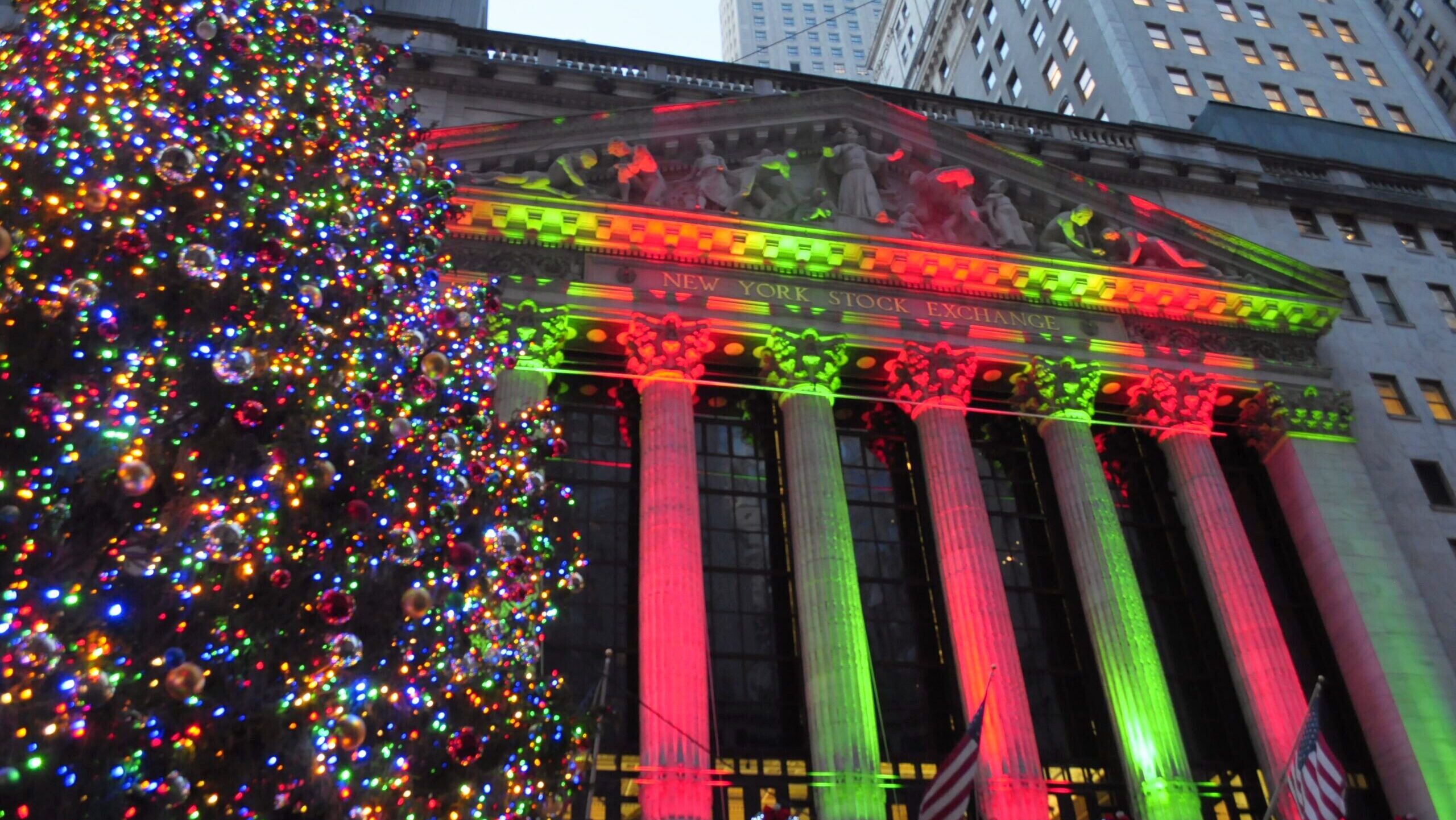
There are precious few trading days left in 2025. If history is your guide — and you share the cheery disposition of the season’s round-bellied, red-cheeked representative — you might be in luck.
Signs of the year-end, so-called Santa Claus rally may have emerged late last week amid investors’ concern that a rough December would leave them with the proverbial coal in their stock holdings this Christmas.
A Data Assist
First observed by Stock Trader’s Almanac founder Yale Hirsch in 1972, the Santa Claus rally refers to a phenomenon generally held to occur on the last five trading days of December and the first two trading days of January. The S&P 500 has posted an average gain of 1.3% during this seven-day period since 1950. (Slightly different dates have also been proposed for capturing the rally: Data tallied by Citadel Securities shows that, in the last two weeks of December, the index has gained 75% of the time since 1928, also rising by an average 1.3%).
As with the physics of Santa himself — come on, a sled weighed down by all those presents isn’t getting airborne — there’s no ultimate agreement about why this happens. Some suggest the cause could be lower trading volumes as institutional investors and fund managers are on holiday; others point to end-of-year portfolio rebalancing; and others still attribute the Santa Claus rally to investors simply adopting a cheerful holiday spirit. Scrooge, the miserly protagonist of Charles Dickens’ A Christmas Carol, had his moments last week, however:
- A four-day losing streak for the S&P 500 temporarily put the index into negative territory for December, until it was broken by a 0.8% gain on Thursday. The advance continued with a 0.9% gain on Friday.
- “Barring any major shocks, it will be hard to fight the overwhelmingly positive seasonal period we are entering and the cleaner positioning set-up,” Goldman Sachs analysts wrote in a client note. To emphasize just “how positive” the holiday rally tends to be, Goldman noted that while the S&P’s mean return for the entire month of December since 1928 has been 1.98%, from just December 18 to 31, it has been 1.77%.
Getting Tech-nical: On top of the S&P 500’s 16.2% climb in 2025, banks are forecasting more gains and robust corporate earnings in 2026. While this has coincided with rotations out of tech stocks amid concerns about overheating in the AI sector, the tech industry got a shot in the arm heading into the Santa Rally period. Incomplete Labor Department data last week suggested inflation eased in November, clearing the path to more Federal Reserve interest rate cuts. The Roundhill Magnificent Seven ETF, which tracks the highest-performing tech megacaps, rose 0.8% on Friday.
Recent News


-

Photo illustration by Connor Lin / The Daily Upside


-
Fed’s ‘Goldilocks’ Economic Strategy Disintegrating amid Hormuz Strikes

Photo via Chen Mengtong/China News Service/VCG/Newscom