Sign up for smart news, insights, and analysis on the biggest financial stories of the day.

They’re bringing in the fixer, the industry’s version of the Harvey Keitel character in Pulp Fiction.
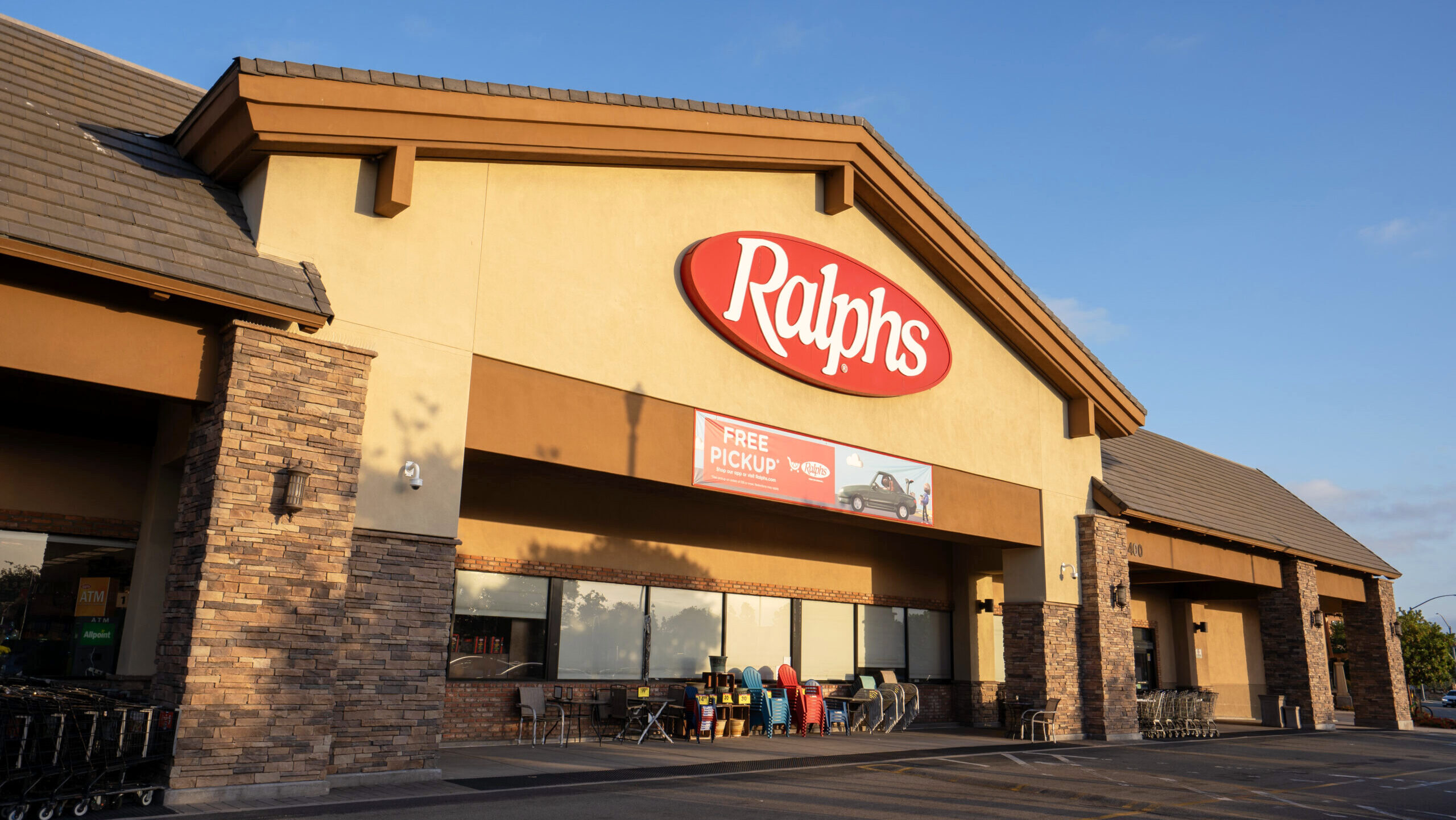
On Monday, after a roughly year-long search, grocery giant Kroger announced its new top boss: veteran Walmart executive Greg Koran. As an alumnus of the only grocer in America larger than Kroger by sales, Koran is stepping in at a critical time for the Ralph’s-Roundy’s-and-Dillon’s parent company as it navigates a cash-strapped consumer base in the wake of a failed 2024 merger with rival Albertson’s.
Clean Up On Aisle Everywhere
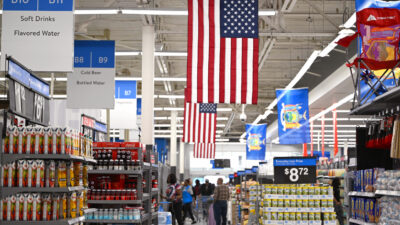
Kroger sees competition from everywhere. Downmarket, the company is facing heat from discount grocers such as Aldi. Upmarket, it’s losing customers to quality-centric players such as Whole Foods and Sprouts. A recent report from data analytics company Placer.ai found that foot traffic growth for “non-differentiated” grocery stores, such as those that make up the bulk of Kroger’s empire, lagged compared to the entire industry last year. For instance, visits to non-differentiated stores increased just 3.6% year-over-year in the fourth quarter of 2025, while visits to “quality-first” chains jumped 9.3% and visits to “savings-first” chains jumped 7.1%. So-called “unicorn” chains — or those that “defy grocery’s traditional quality-price tradeoff” via extreme focus, a.k.a., the Trader Joe’s of the world — were up 9.2%, while the entire industry saw an increase of 5.3% as consumers increasingly picked eating in over dining out. The trends were observed across all four quarters last year; in the first quarter, non-differentiated stores saw foot traffic decrease by more than 1%. (Note: full-year foot traffic data was not made available.)
What’s more, Placer.ai found that the customer base for both up- and downstream competitors is eating into the middle:
- The median household income of savings-focused chain customers has increased in the past three years, while the median household income of quality-focused chain customers has decreased. Placer.ai also tracked a decrease in store-hopping, with each market category increasingly serving as standalone shopping destinations.
- In short, the middle class is splitting in two — trading up for quality or down for value — leaving traditional grocers like Kroger stranded in the ‘no-man’s-land’ of the K-shaped economy: “As price sensitivity rises and perceived quality differences narrow, the retailers winning today are those with the clearest answers to a simple question: Why shop here instead of anywhere else?” Erich Kahner, Americas Senior Director at data analytics firm Dunnhumby, wrote in a note published by Placer.ai.
Beefing Up: Suffice to say, Koran has his work cut out for him. Kroger has been focused on reducing costs for customers the past couple of years in a bid to compete with the Aldis of the world. The company has slashed roughly 1,000 corporate jobs in the past year, while closing underperforming locations, scaling up its (oft-cheaper) store-brand labels, and, yes, beefing up on protein offerings.
Editor’s Note: A previous version of this story incorrectly stated Erich Kahner was an analyst for Placer.ai.