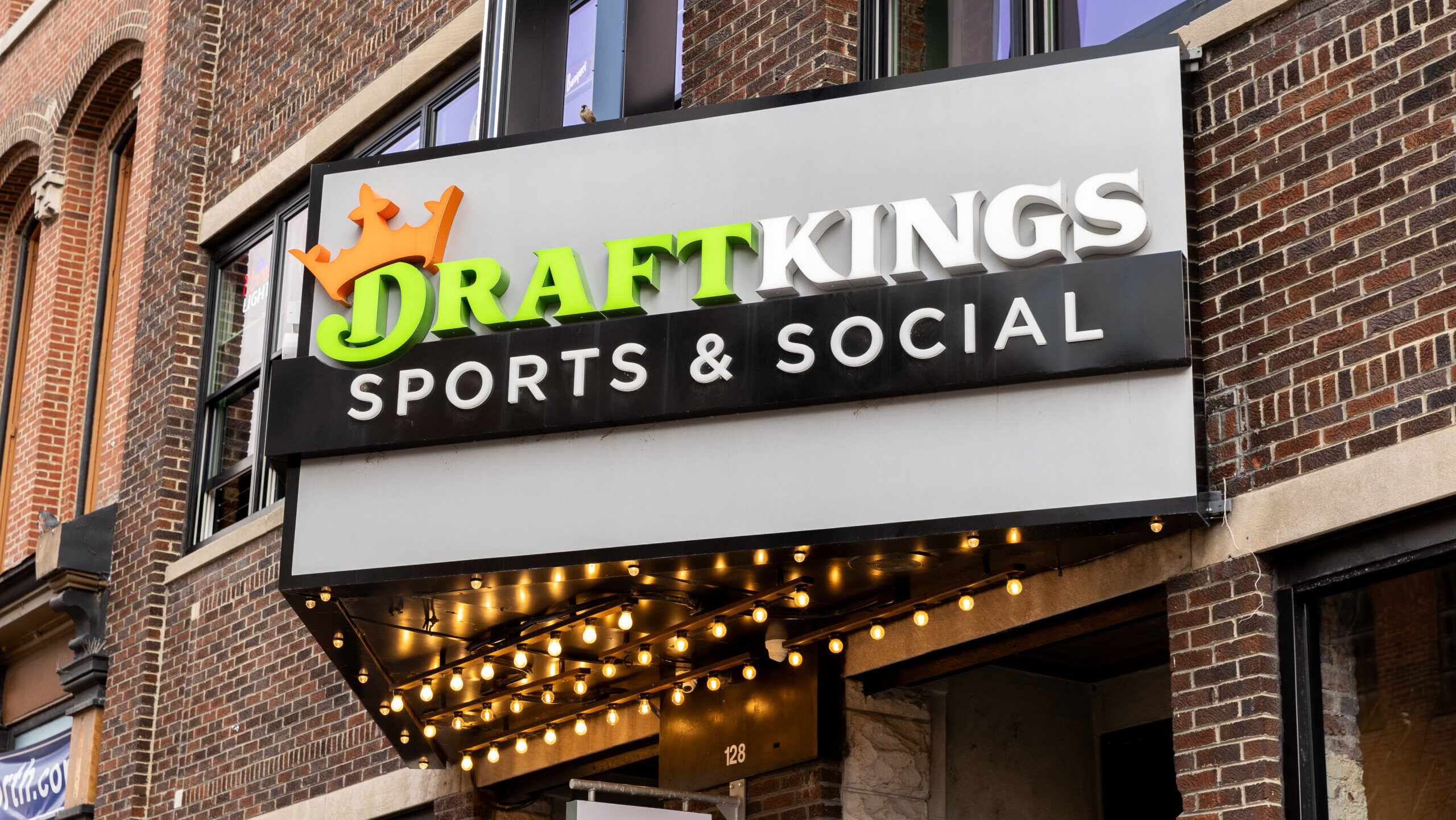
DraftKings is Taking The Prediction Market Industry Head-On
In December, DraftKings launched a predictions market platform of its own, turning the disruptors like Kalshi into direct competitors.
Sign up for smart news, insights, and analysis on the biggest financial stories of the day.

For DraftKings, the stakes have never been higher.
Its fourth-quarter earnings call today comes directly in the wake of a Super Bowl that saw prediction market platforms such as Kalshi and Polymarket eat into the sports-betting turf typically owned by traditional sportsbooks. The shift was hardly unpredictable. In December, DraftKings launched a predictions market platform of its own, turning the insurgent disruptors into direct competitors and setting up 2026 as possibly the most important year ever for the company. To put it in the parlance of your average Joe Sixpack, DraftKings is officially hedging its bets.
Picking Horses
While the final tally isn’t quite ready yet, the American Gaming Association (AGA) estimated ahead of the Super Bowl that Americans would place a record $1.76 billion worth of wagers on the game with traditional sportsbooks, both in-person and digitally. That’s nice, but hardly dwarfs the action that occurred on prediction markets. Kalshi alone booked about $1 billion in Super Bowl-related bets. Conversely, sports books in Nevada booked just under $134 million in Super Bowl bets, marking a 10-year low according to the state’s gaming regulator body.
The profound rise of prediction markets has not gone unnoticed on Wall Street; shares of DraftKings and rival FanDuel-owner Flutter Entertainment have plummeted around 40% and 45% in the past twelve months, respectively. Where traditional sportsbooks serve as “the house” taking bets with each individual player, prediction markets simply take fees while serving as peer-to-peer platforms (a distinction that places them under the regulatory umbrella of the presently-friendly Commodity Futures Trading Commission rather than state gambling commissions). “Our experts say the model is lower risk and potentially less volatile,” Alex Smith, consumer analyst at investment research firm Third Bridge, told The Daily Upside.
Of course, the rise hasn’t gone unnoticed by traditional gaming players either — and they’re betting they can stop prediction markets in their tracks:
- Last month, the AGA sent a letter to Congress urging a ban on sports contracts on prediction markets, and has claimed that states have lost some $400 million in tax revenue as bets divert from sportsbooks to prediction markets. Nevada’s gambling commission, meanwhile, recently won a lawsuit against Kalshi, blocking it from taking sports bets in the state (Kalshi is appealing); similar cases are playing out in Massachusetts and Ohio.
- If successful, the AGA would effectively kneecap prediction markets (note: DraftKings recently left the AGA). According to Kalshi data seen by the Financial Times, roughly 90% of all trading volume on the platform is on sports outcomes.
Risky Business: Smith called DraftKing’s prediction market foray both “a defensive and offensive strategy.” Most experts see traditional sportsbooks as having two distinct advantages over their new rivals: parlays and power users. Parlays are the betting style that allows gamers to score big by predicating multiple bets upon another, a risky wager that’s proven massively profitable for sportsbooks and structurally difficult for peer-to-peer platforms. Power users would be, say, your Cousin Billy, who may or may not have a gambling problem.