

Good morning.
Welcome to the ten figures club.
While many people just want to make enough money to pay off their mortgages and send the kids to college, one elite group is light-years ahead of the rest of us, and they’ve just expanded their ranks. Today, there are 2,900 billionaires across the globe, up about 7.5% from last year, according to new UBS data. Altogether, they control $15.8 trillion in wealth, and many of their latest gains are the result of a surging stock market and booming tech valuations. Some newbies are self-made entrepreneurs who founded biotech firms and fast food ice cream shops, while others are the beneficiaries of the Great Wealth Transfer.
Good news for advisors — the pool of potential ultra-high-net worth clients just got a little bit bigger.
How Top Advisory Firms Are Winning The Talent War
More than a third of all financial advisors will retire this decade, triggering a fierce and protracted competition for talent. As Addepar’s newest report shows, great technology gives financial-advice firms an edge in attracting the next generation’s standout wealth managers.
See how top firms like WE Family Offices and Belzberg & Co. have used Addepar to refashion their tech stacks into powerful recruiting tools that expand capacity and help them exceed client expectations.
This Week’s Highlights
Vanguard Raises White Flag Over Crypto ETFs

For having a name that means leading actions, movements and the development of new ideas, Vanguard has been curiously behind the industry in giving its clients access to crypto ETFs.
That was the case until yesterday, when the low-cost, investor-focused financial giant made a big change, allowing some of the more mainstream (meaning not memecoin) digital-asset exchange-traded funds onto its brokerage system. That followed a decision by Morgan Stanley in October to expand crypto access to all clients, rather than limiting it to those with high risk tolerance and at least $1.5 million, as it previously had. And Vanguard’s change coincides with a move by Bank of America to recommend allocations of 1% to 4% of wealth management clients’ assets to Bitcoin ETFs.
“Vanguard is the latest TradFi firm to do an about-face on crypto,” said Ric Edelman, founder of the Digital Assets Council of Financial Professionals, crediting CEO Salim Ramji, who has been at the helm since mid-2024, with the development. “It’s impossible to view this as anything other than highly bullish for Bitcoin and other major digital assets.”
Turning from a Stern Position
Vanguard acknowledged the already high and growing demand for Bitcoin ETFs and other crypto assets, in a note to investors. The company didn’t publicize the change in the ways it would for a fund launch, new model portfolios or retirement data report. But it stated clearly on its site that its more than 50 million investor clients should approach crypto with caution. “These products have been tested through periods of market volatility, performing as designed while maintaining liquidity; the administrative processes to service these types of funds have matured; and investor preferences continue to evolve,” the company stated. The funds are available in brokerage accounts, meaning that defined-contribution plan participants don’t have access outside of brokerage windows, a spokesperson told ETF Upside.
There’s plenty for people to be excited (or worried) about:
- Crypto is notoriously volatile. Bitcoin prices fell from a high of over $124,000 in October to just over $84,000 in November, since rebounding to about $92,000.
- Even as the biggest fund, the iShares Bitcoin Trust ETF (IBIT) fell from nearly $100 billion in assets under management to $66 billion, the product is reportedly the biggest revenue driver for BlackRock.
- Famed investor Michael Burry this week said crypto is essentially worthless, comparing Bitcoin’s rise to the Dutch tulip bubble in the 1600s.
Righting the Ship? Edelman cast Vanguard’s until-now ban on crypto as a mistake. But in fixing the alleged mistake, the company is doing so at an opportune time, he said. “By making Bitcoin, Ethereum, Solana and other crypto ETFs available to its 50 million customers, Vanguard is letting them buy while crypto prices are 30% below their all-time highs,” he said. “Vanguard customers who take advantage of the sudden availability will find themselves sitting on nice profits in the future.”
Still, it’s not necessarily right for everyone. “Crypto access is all well and good. But access is not an investment plan,” Jeff DeMaso, editor of the Independent Vanguard Adviser, said in a note to investors. “For most investors, owning little, or none, is perfectly acceptable.”
What’s the Future of AI in Financial Advice?

The flux capacitor is operational. We just need enough runway to hit 88 miles per hour.
The year 2030 isn’t far off — although it’s 15 years past where Doc Brown and Marty McFly travelled in “Back to the Future Part II” — but a lot can change by then. The CFP Board revved up its DeLoreans in a recent report and outlined a handful of possible scenarios for AI’s transformation of financial advice over the next four years. Whether trust in AI grows or fades, the human elements of financial planning will become even more essential.
“The best way to understand AI is to use it,” said CFP Board Chair Liz Miller, adding that the most competitive advisors will showcase their expertise in areas such as tax, estate, insurance planning as well as the psychology of financial planning. While advisors do not need to worry about being replaced with AI, new competencies in the tech are required, she told Advisor Upside.
Great Scott!
In the first scenario, AI becomes a planner’s indispensable co-pilot, much like it is today but far more capable. Tasks such as client onboarding, portfolio management, complex risk modeling and compliance checks become faster and more accurate, allowing advisors to focus on client relationships.
The second scenario imagines AI assistants woven into every aspect of daily life: financial, personal, social and professional. Advisors who fail to integrate these tools risk being pushed out, while the most successful wealth managers are those who complement AI rather than compete with it, acting as interpreters between powerful tech and clients seeking clarity.
This is Heavy, Doc. But the future may not be fully AI-friendly. In a third scenario, trust in AI erodes after AI robo-advisors touted as the next big thing fail to adapt to sudden market shocks such as unexpected Federal Reserve rate cuts, causing double-digit losses for clients. Regulators respond with tighter rules on AI-driven advice, prompting Big Tech and fintech firms to retreat. Demand for human guidance surges, but the workforce struggles, especially after the number of CFPs falls 30% from 2025 amid fears of AI-driven disruption.
The final scenario places Silicon Valley at the center of Wall Street. Younger investors flock to tech-first advisory systems, disrupting traditional networks long dominated by banks and wirehouses. But when a global recession and political instability send AI-powered financial engines into chaos, confidence collapses and investors once again turn to human advisors to navigate uncertainty.
“Three imperatives showed up so strongly in every single scenario: Oversight of AI is essential, trust in financial planners is central and the future revolves around evolution over disruption,” Miller said.
- Cut alts admin time by 90%. Download the e-book today.
- Discover how Alternative ETFs are reshaping portfolios — Download the report.
Low-Key $3T Investment Firm Is Ready for Its Closeup
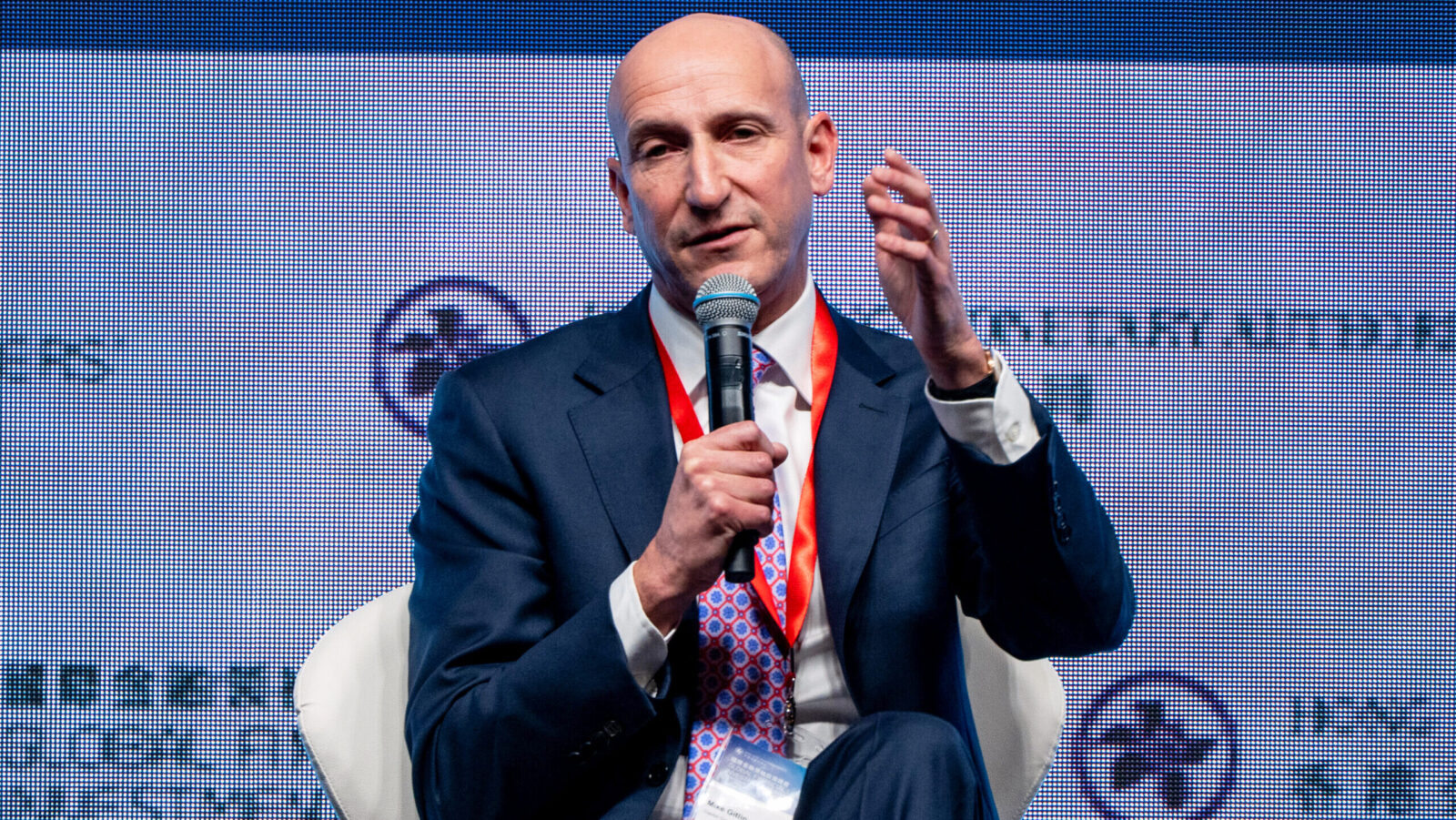
LA-based Capital Group manages $3.3 trillion in assets, but the nearly century-old firm has managed to stay out of the spotlight. Not anymore. On Wednesday, Capital Group and investment firm KKR announced two new funds for retail investors, and Bloomberg reports that there are plans to expand the partnership further next year.
The new funds blend private and public assets as investors increasingly move money into private markets.
Chasing New Money
Capital Group is giving itself a makeover this year, and making sure a new demo of retail investors know about it. In addition to its team-up with KKR, the firm is also expanding its ETF offerings. Capital Group has a marketing campaign planned and, in the meantime, has been announcing its new phase in quirky ways, like putting its logo on a hot air balloon and getting finance execs to play pickleball.
The change-up after a century of success could be a sign of changing times:
- Capital Group’s clients have been withdrawing more money from its equity mutual funds and similar offerings than they’ve been investing annually for the past decade. From 2015 through this September, investors took $122 billion out of Capital Group’s largest mutual fund, the Growth Fund of America, Morningstar found. The fund, which dates to 1973, is the biggest actively managed mutual fund in the US.
- As investors turn away from mutual funds, they’ve been piling into private markets. Deloitte predicts retail investors could pour $2.4 trillion into private capital by 2030, up from $80 billion estimated today. Competitors including Apollo Global Management and Blackstone have ramped up offerings for retail investors, putting pressure on firms like Capital Group to keep up. Following POTUS Trump’s order this fall to let retirement plans invest in private equity, companies like Empower have added private assets to 401(k) plans.
New Century, New Me: Capital Group is undergoing a significant shift under its CEO, Mike Gitlin, who took the position in 2023. And the strategy is showing early signs of success: Two funds started as part of the tie-up with KKR have more than $500 million in assets already. While Capital Group wants to fit in with the new gen of firms (Gitlin’s been appearing on podcasts, if that’s any indication), leveraging its legacy could be key: About three-quarters of US financial advisors have Capital Group products in their portfolios.
Edited by Sean Allocca. Written by Emile Hallez, Griffin Kelly, John Manganaro, and Lilly Riddle.
Advisor Upside is a publication of The Daily Upside. For any questions or comments, feel free to contact us at advisor@thedailyupside.com.