

Good morning.
The custodian landscape is starting to look a lot like an episode of “The Bachelor.”
Independent robo-advisor Betterment was the latest wealth manager to step out of the limo in slow motion last week, unveiling its new Betterment Advisor Network, a matchmaking service pairing its retail investors with RIAs in search of long-term relationships … errr …. financial plans. It follows similar moves from BNY Pershing and Goldman Sachs last month, and of course, long-time matchmakers Charles Schwab and Fidelity. For advisors, it’s great news: more referral options, more leads, fewer awkward cold calls, while the custodians get to charge a fee for the prospects.
It’s all leaving the custody landscape resembling a mansion packed with advisors clutching champagne flutes claiming they’re “here for the right reasons.”
Going Upmarket Means Going Beyond Public Markets

If all you offer is public markets, you’re already behind.
Advisors competing for larger, more complex clients are increasingly turning to private markets as a differentiator. Join Opto’s Matt Malone, CFA, and Nick Gerace in conversation with Advisor Upside’s Sean Allocca to explore how thoughtfully constructed private market allocations can strengthen portfolios, deepen client relationships, and help firms go upmarket.
No commute. No small talk. Just CE credits and better portfolios.

This Week’s Highlights
After Selloff, Wall Street Execs Double Down on AI

AI-n’t no thang, but a chicken wing.
It’s easy for financial planners or wealthtech entrepreneurs to say: “AI is not going to replace human advisors.” However, that was before last week, when the digital-first custodian Altruist launched an AI-powered tool on its Hazel platform. The program’s debut spooked investors, and wealth management stocks took a tumble. Charles Schwab’s stock sank almost 11%, and Morgan Stanley fell nearly 5% last week. Meanwhile, LPL and Ameriprise saw their stocks drop 13% each.
“What we’re likely to see is some periodic volatility as new tools are announced and investors and analysts reassess competitive advantage in real time,” said Brian Storey, head of multi asset strategies at Brinker Capital Investments, adding that he doesn’t see it as a wholesale shift in how investors value advisory models.
21st Century Digital Boys
Despite the sharp sell-off, Wall Street’s biggest wealth managers aren’t downplaying the future of the technology, but doubling down. Executives at major firms said they’re expanding AI across their wealth units. It’s the latest development in the race to monetize AI, a technology that many believe will end up reshaping the wealth management industry itself.
AI has already become a co-pilot for advisors, taking meeting notes, drafting emails and assisting with research. Now, the industry’s largest firms are pushing further into automation. Morgan Stanley Head of Wealth Management Jed Finn said during a conference last week that the firm is building AI tools across “three broad buckets of functionality.”
- The first expands on the company’s existing co-pilot features, enabling systems not just to retrieve information but to execute tasks like opening accounts or changing beneficiaries.
- The second is an AI agent capable of interacting directly with clients.
- The third is a portfolio construction engine. Advisors submit client financial goals and timelines, and the system takes care of asset allocations.
“The human relationship is the whole point,” said Reed Colley, president of Orion Advisor Technology. “The advisors who thrive will use AI to be more present with clients, not less.”
Constant Change. Schwab is deploying AI in call centers to help staff respond more quickly to clients and has identified more than 200 potential use cases across the business, CEO Rick Wurster told Barron’s. Schwab also took a minority stake last year in Wealth.com, an AI-powered estate planning platform. “Technology has changed a lot in our business over the past 51 years, but we have always been part of that change and led it,” Wurster said.
Why Buffer ETFs May Fall Short for Long-Term Investors

Some ETFs have “buff” in their names, but that doesn’t mean they’re strong performers.
Buffer funds have become the largest category within ETFs by number of products, and they are among the fastest growing by assets. By employing options, they offer protection from losses, but that doesn’t necessarily serve most long-term investors well, according to a recent report from Morningstar.
“They definitely fit best with investors that have shorter time horizons,” said Zachary Evens, Morningstar manager research analyst and the report’s lead author. Such investors might be near retirement and concerned about “black swan” events like Covid-19 or the 2008 financial crisis, he noted. “For investors that might not be able to stomach such a decline in the equity markets but have a longer time horizon, it could make sense on the behavioral side of it.”
Results May Vary
Two factors can hold back buffer ETFs. Obviously, the caps on positive returns are a limiter. But the funds’ fees tend to be higher than those of otherwise comparable funds, albeit without the protection against losses, which can be a drag on net returns. The S&P 500 index rarely dropped more than 20% during any 12-month period since 1970, though it went up 20% or more roughly a third of the time, the report noted. Most buffer ETFs would have protected against losses during that timeframe, though the extreme declines would have exceeded most protection limits, and investors would have missed much of the stock market rebounds because of caps.
There is also a wide range of products out there:
- About 420 defined-outcome ETFs were on the market as of the end of last year, representing $78 billion, per Morningstar.
- Many offer protection on 15% of losses, though some go as far as 100% principal protection. They are also available for assets ranging from US equities to bitcoin.
- The two biggest issuers, First Trust and Innovator (which is being acquired by Goldman Sachs), have about $40 billion and $28 billion in defined-outcome ETF assets under management, respectively.
Apples and Oranges? Buffer ETFs have done well for advisors who want to offer risk mitigation and precision to clients, said Matt Kaufman, head of ETFs at Calamos. And they offer a much more liquid alternative to insurance products like registered index-linked annuities, a category that has also been growing for years, he noted. Many investors have been using buffer ETFs for retirement spending, while some institutions have turned to them instead of hedge funds, he said.
“If you view them as a bond-replacement, a risk-management tool, you can make the case that a large part of your portfolio can be allocated to buffered ETFs,” he said. “There’s a large number of Americans, especially retirees, whose goal is to provide for themselves … Their goal is not to maximize the Sharpe ratio.”
- [Webinar] Why a Solo 401(k) can make the difference during tax season. Register here.**
Why Apple No Longer Trades Like a Tech Firm
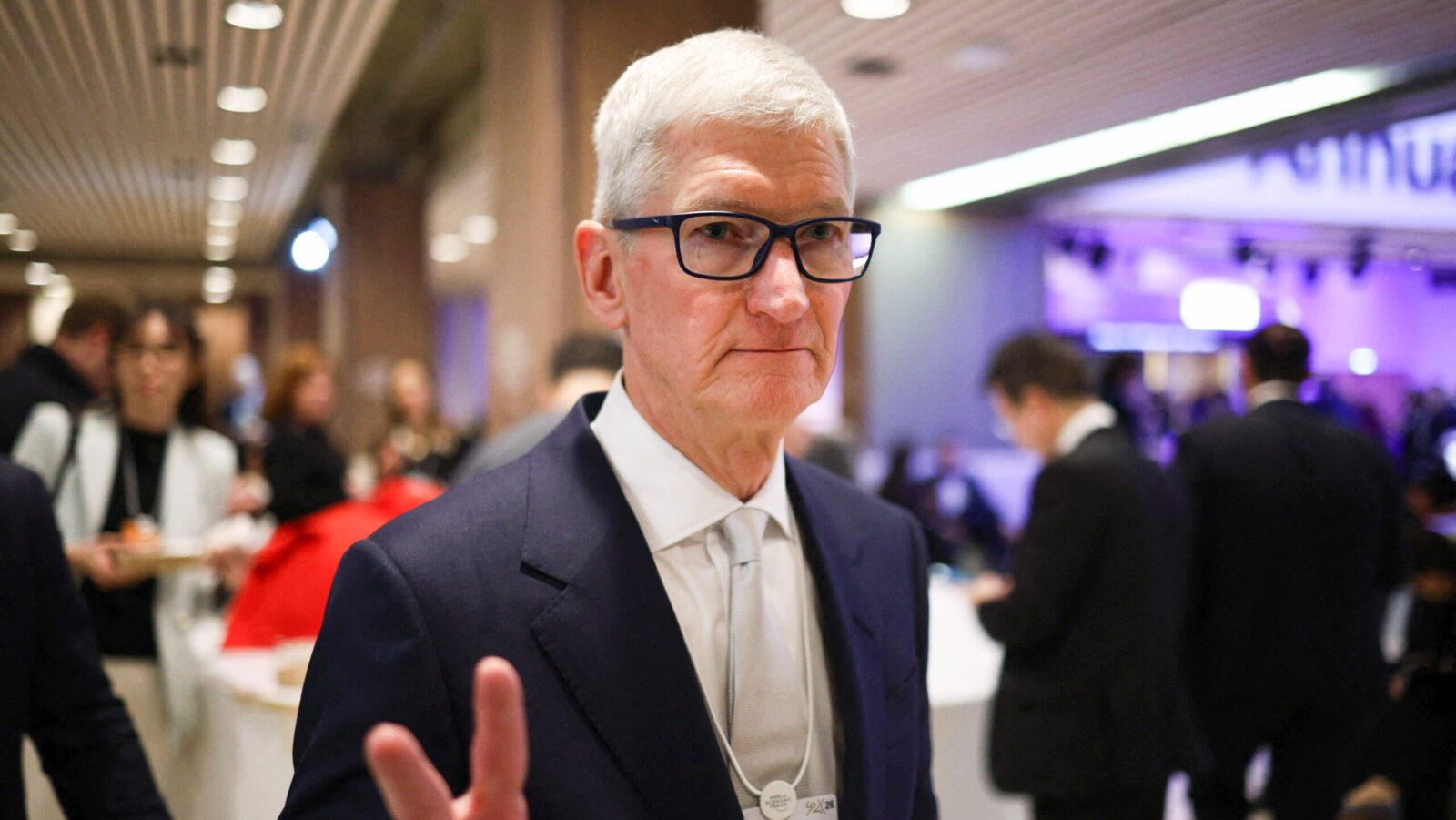
Nearly 20 years after the debut of its famous “Think Different” ad campaign, Apple continues to live up to the slogan. Increasingly, investors are noticing.
The Cupertino, California-based company’s 40-day correlation to the Nasdaq 100 fell to just 0.21 last week (a correlation of 1 equates to perfect alignment), according to recent Bloomberg data, marking the starkest difference between the iPhone-maker and the tech-heavy index since 2006. It’s a trend that started early last year and looks likely to continue.
Return of the Mac
Actually, Apple isn’t so much “thinking different” as it is “thinking like John D. Rockefeller,” who made bank operating as an oil refiner while letting others take the costly risk of oil drilling. Today, as Apple’s Big Tech brethren embark on one of the greatest capex ventures in human history, Apple is spending pennies in comparison and relying on third-party models to power its in-device AI ambitions. And as AI cannibalizes software firms left and right, Apple continues to sell hardware by the boatload.
It’s enough to differentiate the company’s stock from its peers:
- Apple has climbed more than 7% over the past month, compared with a slight decline in the broader Nasdaq and a nearly 5% skid in the Roundhill Magnificent Seven ETF (which includes Apple).
- On Tuesday, Bloomberg reported that the company is accelerating development of three AI-powered devices: smart glasses, a small device that could be worn as a pendant or a pin, and new versions of AirPods featuring a camera system. The devices will be built around the planned AI version of Siri.
“Apple is a sleeping giant in AI,” Nick Grous, an associate portfolio manager at ARK Invest, posted on X this week. “In past platform shifts, the winner wasn’t the first app; it was the company that controlled the hardware and the ecosystem. Apple still does.”
Memory Game: Perhaps Apple’s biggest roadblock? Soaring memory costs, which are bedeviling the entire tech industry amid the hyperscaling of AI data centers. In January, CEO Tim Cook warned that the memory shortage — and resulting price hikes — could eat into margins as soon as the current quarter. Meanwhile, AI firms are outbidding the company for memory chips from key suppliers for the first time in, well, recent memory.
Upcoming Events
Edited by Sean Allocca. Written by Emile Hallez, Griffin Kelly, John Manganaro, and Lilly Riddle.
Advisor Upside is a publication of The Daily Upside. For any questions or comments, feel free to contact us at advisor@thedailyupside.com.
Disclaimers
*Opto Investment Management, LLC (the “Firm”) is a wholly-owned subsidiary of Opto Investments, Inc. and an SEC-registered investment advisor. Registration with the SEC does not imply a certain level of skill or training. SEC registration does not mean the SEC has approved of the services of the investment adviser.
Unless otherwise indicated, content herein is for general informational purposes only and is not intended to provide specific advice or recommendations for any individual on any security or advisory service. It is only intended to provide education about the financial industry. Such content is based on then-current market conditions and may be forward looking. Subsequent events and market conditions may impact the relevance or materiality of such content and the views reflected in the content are subject to change at any time without notice. While all information presented, including from independent sources, is believed to be reliable, such information has not been verified by a third party or independently verified by the Firm or any other person. Neither the Firm, or any of its affiliates, employees or agents assume any responsibility or make any representation or warranty as to accuracy or completeness of such information. We assume no obligation to provide updates. Nothing herein or in the related commentary constitutes investment advice, performance data or a recommendation that any particular security, portfolio of securities, transaction or investment strategy is suitable for any specific person. Investing involves the risk of loss of some or all of an investment. The Firm or its affiliates provided compensation in connection with the production and distribution of this podcast episode.
**Paid non-client. Views may not be representative. See G2 reviews. Learn more.