

Good morning.
Push it to the limit.
Who doesn’t love putting more of their money away for decades? The Internal Revenue Service has extended the yearly contribution limit for 401(k)s, 457 accounts and federal government Thrift Savings Plans by about 4% for 2026, the agency announced. Employees will be able to put aside $24,500 in their workplace retirement accounts next year, up from $23,500 this year. Meanwhile, the limit for IRA yearly contributions will increase to $7,500, up from the current $7,000.
How much clients can save in their workplace retirement accounts is quite well defined. As for how much they should be saving, well, we’ll let you hash that out in your next client meeting.
SEC Zeroes In on Advisors Recommending Alternatives. Just Not Crypto
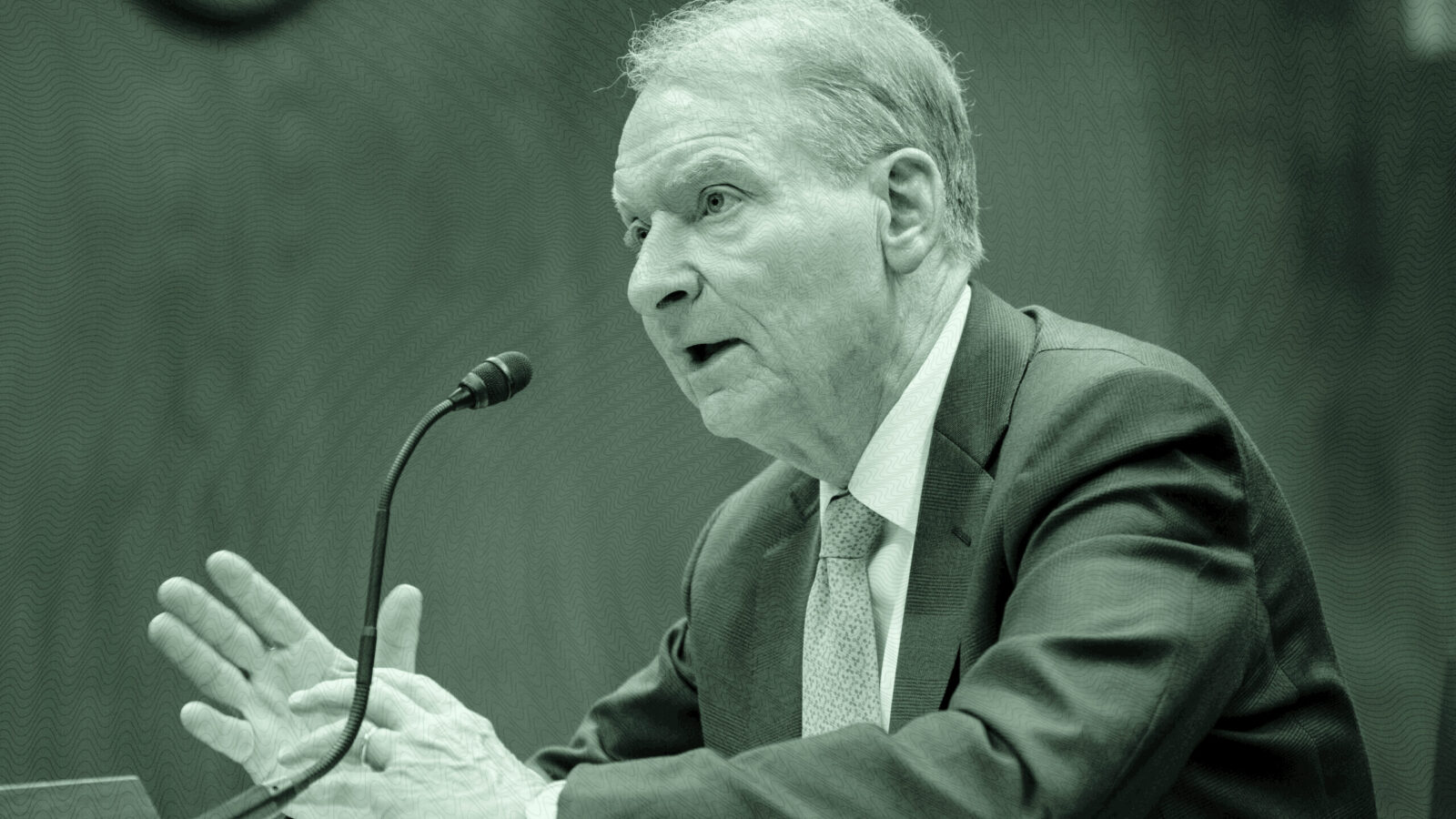
Is that everything? OK.
The SEC’s priorities for 2026 focus on complex products and alternatives like private equity and private credit, but there seems to be one thing missing: crypto. Digital assets are now a $4 trillion global industry in which roughly 14% of American adults have holdings, but a Ctrl+F search of the agency’s plans that was announced this week didn’t return even one mention of cryptocurrency.
“It’s a glaring omission because [former SEC Chair Gary] Gensler couldn’t form a sentence without mentioning cryptocurrency,” said securities lawyer Bill Singer. “It’s like in ancient Egypt or Rome, when pharaoh or caesar fell out of favor, they would chisel their names off all the monuments.”
What Matters Most?
Crypto’s exclusion from the priorities list further highlights the 180 that the Paul Atkins-chaired SEC has done on multiple issues from its stances during the Biden era, when it was often criticized for regulating crypto by enforcement. The absence of crypto from the 2026 priorities is being seen as an intentional and politically savvy move. “The SEC is sending a very clear message that it’s not getting involved in the crypto debate,” Singer told Advisor Upside. “Given the fact that the Trump family is heavily involved in crypto and crypto is a growing debated issue in society, it’s become a third rail to the SEC.”
However, that creates a regulatory void for brokerages, RIAs and other firms looking to sell crypto as an asset, Singer said. “Does it mean they can pursue crypto products risk free?” he said. “Wall Street doesn’t care whether somebody is for or against something. They just want the certainty of knowing what’s what, so that they can handle investments and trading strategies.”
The SEC will instead focus on advisors recommending:
- Alternatives with extended lock-up periods, like private credit and private equity.
- Exchange-traded funds with complex strategies, including option-based, leveraged, or inverse ETFs.
- Products with higher commissions or expenses than comparable investments.
“Atkins is basically laying his chips on the table that he is not going to head an SEC that engages in ‘gotcha oversight,’” Singer said. “Oddly enough, from a Republican administration, we’re getting a kumbaya tone to securities regulation now.”
Chill Pill. Overall enforcement has slowed under the current SEC. More than 90% of actions against public companies in 2025 were filed before the change in administrations in late January, according to Cornerstone Research. Off-channel communications with clients is another area the SEC has not been prioritizing. The previous regime wasted resources focusing on books and records retention, Atkins said in a speech last month. “We must go after cases of genuine harm and bad acts,” he said.
Bond Investors Join The AI Infrastructure Boom

Building out industrial-strength AI takes long-term capital. Technology companies have responded by issuing $17.4B in data-center bonds this year to date, 50% more than all of 2024. There’s opportunity out there, but Columbia Threadneedle Investments knows it’s only for investors who can separate signal from noise.
Three key risks explain the difference between strong and weak deals.
- If an AI tenant fails, specialized data centers can’t always find new takers, and the bond may default.
- Lease terms can run 20 years, but tenant contracts often end after three, creating significant refinancing pressure.
- Bonds backed by strong and weak tenants often trade at similar yields, masking risk.
Columbia Threadneedle Investments identifies deals that truly compensate for risk, and flags those that only look good from the outside.
Why US Bank, UBS, JPMorgan All Shut Down Their Robo Advisors

US Bank’s robo may have gone the way of the dodo, but automated investing tools aren’t extinct just yet.
US Bank officially shuttered its robo advisor last month due to “evolving market conditions and customer preferences,” the bank said in an email. Called Automated Investor, the robo accounts were automatically moved to either self-directed options or its Wealth Connect advice service. The move is the latest by a major bank to nix its robo offering, following UBS winding down its robo in June and JPMorgan Chase closing its own version last year. Given the thin profit margins, the closures may have been expected, but they don’t necessarily spell the end of automated advice.
“There’s going to be a few winners across the space, and those that don’t reach a pretty significant scale are going to struggle,” said David Goldstone, manager of investment research at Condor Capital Wealth Management, which publishes its quarterly Robo Report. “But robo advisors on the whole are not going away. They serve a certain segment of the population, and I think they do that pretty well.”
A Robo Reckoning
Even though digitized advice is significantly cheaper than human input, high customer acquisition costs and operational maintenance make for razor-thin margins. Even Wealthfront, which has one of the most successful robo products, revealed in its recent IPO filing that the lion’s share of its profits, roughly 75%, comes from its cash accounts. “As managers at these larger institutions are looking at these products, they’re making a decision of whether or not it’s worth the resources to continue to support a product that is just not that profitable,” Goldstone said.
Other recent robo closures include:
- Goldman Sachs’ Marcus Invest, which it sold to Betterment in April 2024.
- BlackRock’s FutureAdvisor, which it sold to Ritholtz Wealth Management in 2023.
Reaping Robo Rewards. Still, robos can be good stepping stones for newer clients, setting them on the pathway to becoming traditional advice clients. “Robo-advisors within large financial institutions are generally operated as loss-leaders … with the hope that the client becomes profitable to the business,” said Ken Lotocki, chief product officer at Conquest Planning. And the term “robo-advisor” may not apply in the future, he added, as the technology evolves.
“There is a demand for holistic digital tools that go beyond investments of today’s robo-advisors,” Lotocki added. “These digital tools are going to support and be developed around hybrid-advice models … [T]his blend of digital convenience and human empathy and experience is what we are going to see more of in the future.”