

Happy Thursday, and welcome to CIO Upside.
Today: The new vibe-coding wave, and what it means for software development. Plus: AI in the clinical lab setting, and Nvidia seeks a patent to keep chips from working too hard.
Let’s jump in.
How Vibe-Coding Is Democratizing the Field

Not so very long ago, aspiring coders had two options: They could either teach themselves everything about the craft online, painstakingly, or learn their skills in college.
But the “vibe-coding” wave is upending that status quo. Coding on vibes means, in no small part, democratization: Anyone can code.
With vibe-coding, people describe the code they want, and AI writes it for them.
‘Power in the Prompt’
“I see it as a total inversion of what tech used to be,” Nicolas Genest, CEO of CodeBoxx, said. “We spent over 30 years treating coding like a craft reserved for the chosen few. Suddenly, the machine understands the request, and the real power lies in the prompt, not the syntax. The winners now? They’re the ones who can reverse-engineer intent, articulate business outcomes, and direct the machine with clarity and conviction.”
And it’s not just developers who are vibe-coding, he said: “It’s marketers, founders, CEOs, analysts, designers, ops leads. What they all have in common is that they’re interfacing directly with AI to define success and provide guidance and guardrails that are then implemented by AI.”
Success depends less on actually writing the code and more on understanding how AI thinks. That’s part of what CodeBoxx does: train users in the AI-native ways of software development.
It’s something Genest called “composing and orchestrating machine intelligence,” with AI getting rid of gatekeepers.
So what happens when pretty much anyone can code?
One possibility is that they lose the plot.
Coding Without Guardrails
“Vibe-coding without intent and consciousness is just noise,” Genest said. “This output needs a watchdog that needs to course-correct as you go, because you’re shaping systems that will be used and generate new facts, create new events and take new actions.”
Rules and standards need to be explicitly defined to keep out assumptions, hallucinations and biases. Genest said vigilance is key: curated data, validated outputs, and an eye on optimization goals, assumptions and logic.
“Most prompt engineers out there aren’t yet trained to think like accountable product owners,” Genest said. “They might not be auditing the behavior extensively. They’re not logging decisions. They’re not anticipating sensitive edge cases.”
They’re coding “without guardrails.”
And though there are potential issues with the vibe-coding approach, like the broader AI industry, it’s poised to accelerate despite any drawbacks.
That’s why Genest said “the next generation of coders won’t look like traditional coders at all.” He posited some potential titles: “systems thinkers, product whisperers and business navigators.”
It’ll be a mindset switch from “What language should I learn?” to what system they’re building or optimizing, or what outcome they’re targeting.
“Code is no longer the barrier to entry for software development,” Genest said. “Clear intent is.”
Letting AI into the Lab Setting

Clinical AI isn’t necessarily on the verge of taking over healthcare. Humans are still the experts — judging outcomes, interpreting data and following regulations — and for now, AI is the thoughtful sidekick.
“In reality, lab work involves complex variables, nuanced decision-making and strict compliance protocols that AI alone can’t yet manage,” said Dinkar Sindhu, CEO of AXIS Clinicals. While people believe AI can step in for humans, he said, that “oversimplifies what actually happens in a regulated bioanalytical or clinical research lab.”
Instead, Sindhu said, AI should be an asset that helps scientists recognize patterns and manage complex analyses: “For example, AI could automatically flag outliers, predict instrument drift before it happens or optimize resource allocation to reduce turnaround times.”
Most labs are taking on AI slowly because of siloed systems and isolated datasets, as well as accuracy and privacy concerns. Adoption usually is led by workflow optimization, data cleaning or modeling, but pilot programs are far from becoming full implementations because of the care with which the data and programs need to be treated and built, respectively.
Plus, there isn’t much precedent for the integration. “Regulatory agencies are also just beginning to define how AI-based decisions fit within” good laboratory practice and good clinical practice frameworks, Sindhu said. “Innovation moves faster than regulation.”
AI developers, contract research organizations and regulators will need to come together, Sindhu said, to bring AI into lab settings safely, with “transparent pilot programs, standardized data frameworks and clear audit trails for AI decision-making.”
When AI does make its way into the lab, it’s poised to help accelerate drug development, improve data accuracy and enhance safety signal detections, as well as identify patterns that recognize smaller population subsets.
“In regulated science, every innovation must uphold the integrity of the data above all else,” Sindhu said. “We need to focus on integrating AI responsibly, in ways that improve quality and reproducibility, while preserving the scientific rigor that underpins every clinical outcome.”
Nvidia Wants to Balance Workloads Between GPUs
Blowing a household outlet is pretty bad news. Blowing out a chip or server rack can be a huge problem.
That’s why Nvidia is thinking about spreading out and balancing GPUs’ capacity. As AI data centers continue to ramp up in demand, it’s increasingly important to avoid any issues.
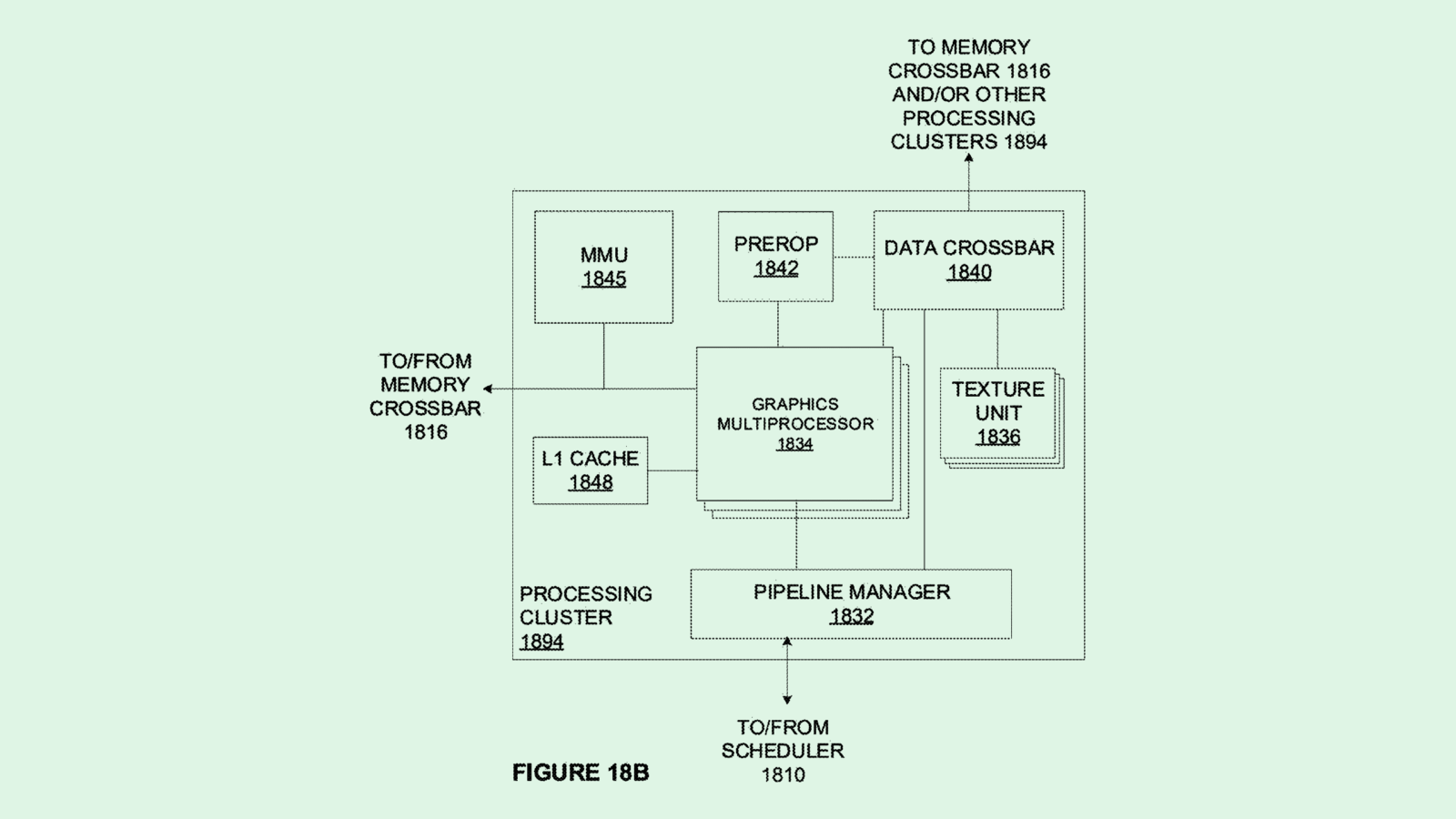
The company wants to patent “apparatuses, systems and techniques to power balance multiple chips” and ensure energy is distributed evenly across the board.
In the proposed system, several processors all perform similarly to each other, but each chip uses a different amount of power when running: While some need more power, others are more power-efficient.
When all of the chips are at peak performance, running at their max speed, the system kicks in to make sure that the total power they use won’t go over a specific limit, the “system power threshold.”
It’s all designed to keep things cool, so the system doesn’t draw too much power or overheat.
As a massive force in the chips industry, it’s no surprise Nvidia is trying to mitigate any shutdowns or surges. The company’s already looked to patent a system for improving energy usage at data centers and seeks patents (covering areas from robotics to self-driving) that will bolster the sales of its chips.