

Good morning and happy Boxing Day to readers in the Commonwealth.
Wrestler, influencer and energy drink impresario Logan Paul may soon become a Pokémon Market Maker. Paul revealed on Tuesday that he will auction off a rare PSA Grade 9 Pikachu Illustrator card from the Japanese media franchise, for which he paid nearly $5.3 million in 2021. During an appearance on Fox Business, Paul claimed that “Pokémon as an asset class has outperformed the stock market by upwards of 3,000% in the last 20 years.”
The caveat being that most common cards that aren’t fought over by well-moneyed obsessives and collectors are practically worthless. Paul’s advice to those unable to buy the priciest assets was to “go to your local card shop, go on eBay, buy a card that you think looks cool or that you have a connection with.” Or you could try the Russell 2000.
Video Game Console Sales Lag Behind Previous Holiday High Scores
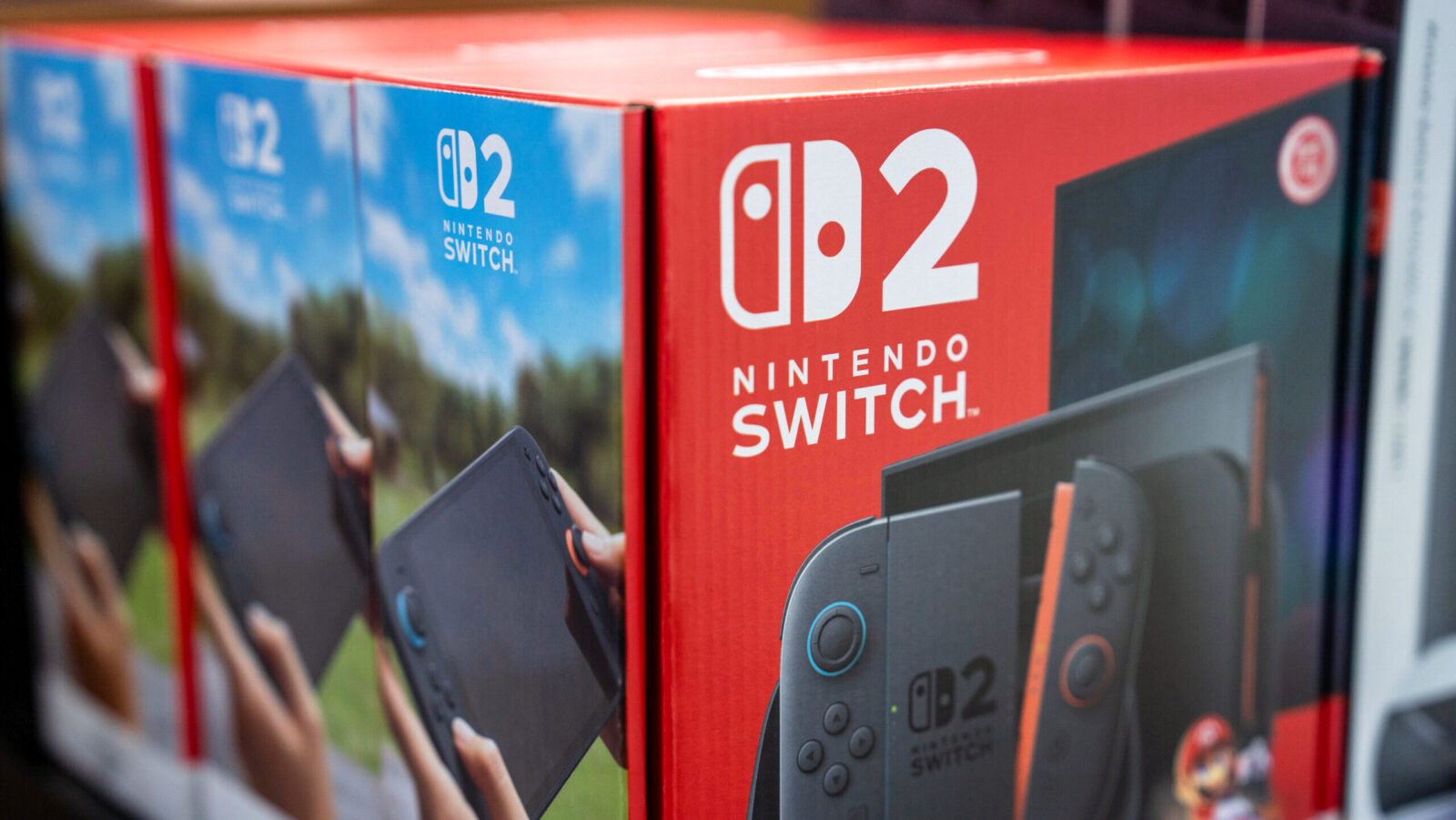
The Video Game Console Wars have entered an involuntary Christmas truce.
According to a report published last week from market research firm Circana, holiday-season console sales haven’t been this soft since kids were discovering original Sony PlayStations under their Christmas trees back in 1995. That has the industry playing on Hard Mode.
Extra Life Needed
Spending on video game hardware reached just $695 million in November, down 27% year over year and the lowest amount for the month since 2005, Circana says. Meanwhile, per-unit hardware sales reached just 1.6 million consoles in November, the lowest amount since 1995. On the software side, the results are murkier. Circana found that physical software sales had also plummeted to the lowest level since 1995, though overall software spending was up 1% year-over-year to $4.8 billion, thanks to a continued uptick in subscription services.
The dip has been felt by all, though not equally. Combined sales of the Nintendo Switch and Switch 2, the fastest-selling console in US history, were down 10% compared to original Switch sales last year. They were also surpassed for the first time this year in November by the PlayStation 5, whose sales fell 40% year over year. Microsoft’s Xbox Series, meanwhile, is in freefall: Sales dropped 70% year-over-year, and there were fewer per-unit sales than the cheaper and family-focused NEX Playground console.
Which brings us to what’s really got the industry down — costs, which keep going up:
- The average console sold for $439 in November, per Circana, up 11% year over year. Both Sony and Microsoft raised the price of their flagship consoles this year, a relative rarity for the industry, while the Switch 2 sells for $449.99, compared with just $300 for the previous iteration.
- Trade war woes are mostly to blame, but so is the AI hype train, which is eating up crucial RAM chips used in gaming consoles. The cost of memory chips in Switch 2 consoles, for instance, has risen 41% in the current quarter alone, according to market research firm TrendForce; shares of the company have plummeted around 20% this month amid growing concerns over a memory chip shortage.
Back To The Well: So what was under Christmas trees this year, if not shiny new consoles? Retailers have witnessed a surge in demand for analog technologies. Sales of point-and-shoot cameras were up 260% over Black Friday weekend, according to Adobe, while sales of CD players and MP3 devices were up 225%. Meanwhile, the Wall Street Journal recently observed the growing demand for wellness and health-conscious gifts like sleep trackers. Anyone else think that sounds like a hard candy Christmas?
Your Playbook for the Next Era of ETFs
The ETF world is shifting, from active strategies to new themes and sectors rising fast.
That’s why we built ETF Upside, the resource that breaks down the trends shaping the future of exchange-traded funds.
Every Monday and Wednesday, ETF Upside delivers timely insights and actionable takeaways to help you make smarter investment decisions, whether you’re an individual investor, an advisor or part of an institutional team.
Consumer Spending Surge Sets Stage for Year-End Market Rally
All those marked-down smart home gadgets and Ralph Lauren socks under Christmas trees this year have already been regifted. To Uncle Sam.
Commerce Department data released just before the holiday showed that US gross domestic product rose at an unexpectedly robust 4.3% in the third quarter, with the American consumer to thank for it. That might be enough to power one final miniature stock market rally to end 2025.
A Goldilocks Ending for 2025
Tuesday’s reading, the best since the third quarter of 2023, was 0.5 percentage point higher than the previous quarter and an emphatic full percentage point above most economists’ forecasts. “If the economy keeps producing at this level, then there isn’t as much need to worry about a slowing economy, and concerns may actually flip back to the price-stability constraint,” said Chris Zaccarelli, Northlight Asset Management’s chief investment officer.
Indeed, inflation picked up in the quarter, along with GDP. The 2.9% annualized reading was up from 2.6% in the second quarter, both of which are well above the Federal Reserve’s 2% target. The strong GDP growth could lead the Fed to hold interest rates steady and focus on taming prices.
The hero once again is the almighty consumer, whose consumption accounts for roughly 70% of the economy. Consumer spending rose at a 3.5% annualized pace in the third quarter, up a whole point from the second quarter and the highest since the last three months of 2024. Eric Teal, chief investment officer for Comerica Wealth Management, sees mostly upside:
- “The economy is demonstrating a Goldilocks scenario with above-potential US economic growth, and declining but elevated inflation and a less robust labor market,” he said, after the data was released Tuesday, adding that the “Fed will likely maintain a dovish bias.” Bank of America and Goldman Sachs both forecast two rate cuts next year.
- However, in cutting rates further, there is an increased risk in pushing long-term bond yields higher and undermining the dollar, he added.
I Promise, Honey, Just One Last Trade: “The data may be overlooked because … many people are done trading for the year, but the GDP number was exceptional,” said Zaccarelli. He noted that stock-trading volume, as is typical, will almost certainly be down in the waning days of 2025, but some might want to get in on the GDP enthusiasm: “There will likely be light trading volume, but the path of least resistance is higher until the end of the year.”
Exit Strategizing: Private Equity Carries Record Backlog of Companies into 2026
For an industry prized for its discretion, private equity’s problems have become uncomfortably public.
Despite a pickup in dealmaking in the latter half of the year, the industry is sitting on a backlog of at least 31,000 companies valued at $3.7 trillion, according to the most recent data from Bain & Company. That’s higher than last year’s 29,000-company record backlog valued at $3.6 trillion. Private equity firms typically make money for their investors, such as pension funds and endowments, by buying companies, revamping them and either selling them at a profit or taking them public.
They’ve had a harder time finding an exit than Zoomers trying to read a folded road map. The Times reported that private equity firm Thoma Bravo hasn’t been able to sell two companies it owns (data analytics firm J.D. Power and software company ConnectWise) at an acceptable price, and that Roark Capital still hasn’t moved forward with plans for an IPO for Dunkin’-parent Inspire Brands. Some firms are even stuck with so-called “zombie companies” that aren’t growing or attracting buyers.
2026 Forecast
There have been comeback predictions before, but this time, Wall Street pros say that things are actually looking up for the floundering private equity market:
- Goldman Sachs CFO Denis Coleman recently said that private equity dealmaking is improving, with many “jumbo” deals now “percolating.”
- PitchBook analysts’ private-market outlook for 2026 includes the industry entering a “new phase of measured momentum,” with platform buyouts accounting for at least 25% of total private equity deal activity next year.
AI’s Role: As with most industries nowadays, artificial intelligence is reshaping private equity. David Miller, Morgan Stanley’s global head of private credit and equity, recently wrote that half of the portfolio companies in its private-equity middle market funds have active AI initiatives. “As AI models become more capable in 2026, the competitive moat for tech-enabled mid-market businesses will deepen, making them attractive targets for private equity investment and exit,” he added.
Extra Upside
- Thank You, Santa: A person in Arkansas won the $1.8 billion Powerball jackpot, the second-largest U.S. lottery jackpot ever, on Christmas Eve. Under state law, they can choose to remain anonymous for three years.
- MacBook Air Jordan: Apple CEO Tim Cook doubled his personal stake in Nike, where he is a board member. His endorsement of the company’s turnaround efforts helped send shares up 4.6%.
- At Your Service: ServiceNow agreed to acquire cybersecurity startup Armis in a $7.75 billion deal.

