

Smart, actionable news trusted by millions.

Our flagship newsletter delivers smart news and analysis on finance, and investing — all for free.

Good morning for the last time in 2025.

“In the business world, unfortunately, the rear-view mirror is always clearer than the windshield,” Warren Buffett wrote in his 1991 letter to Berkshire Hathaway shareholders. Today marks the investing legend’s last day as CEO of the conglomerate he built over six decades.

Today’s edition of The Daily Upside, meanwhile, focuses on the auto industry, a sector Buffett described as “just too tough” when explaining Berkshire’s limited investments in carmakers at its 2023 annual shareholder meeting. The volume of global competitors, he argued, makes it hard to consistently produce attractive returns. Not to mention, as his windshield quip made clear, not even the Oracle of Omaha can see what lies on the road ahead — whether it’s more robotaxis and electric vehicles or a game-changer like flying cars. Whatever twists and turns you encounter in the next 365 days, however, here’s wishing you a happy New Year.

Electric Vehicles

EV Sales Stall as Buyers Shift to Hybrids

Anyone who got a new car with a big red ribbon on it over the holidays will probably need to gas it up over the coming year rather than recharge. Electric vehicle sales likely dipped 37% in the last three months of the year, experts say, after spiking in the third quarter as buyers rushed to take advantage of an expiring tax credit of up to $7,500 from the Biden era.

EV sales jumped 30% in the three months through September from the same period a year earlier, reaching 427,000, according to Cox Automotive. Just 230,000 new EVs are expected to make it off the lot this holiday season, however. And Q4 is only the start of a downturn: The pace of EV sales will probably keep slowing next year.

That’s because price is a deciding factor in Americans’ shopping decisions, especially as they cope with a climbing cost of living, a stunted job market and slow wage growth. A new EV is simply more expensive than alternatives.

Going Green Can Cost a Lotta Green

Electric vehicles cost about $57,000 on average in the US as of August, a more than $9,000 premium over old school gas-guzzlers, Kelley Blue Book found. Just nine available EV models cost $40,000 or less, compared with 56 gas-powered cars. The solution for buyers: used cars. While the outlook for new EV sales is bleak, those of used EVs may surge:

  • Best-selling used EVs, including the Tesla Model 3, Tesla Model Y and Chevrolet Bolt EV, all sold for less than the market average in August, and 14 EVs cost less than their gas counterparts, per Cox. But sales of old Teslas with “Anti Elon Tesla Club” bumper stickers and other used EVs don’t boost the companies that made the cars.
  • Ford said in mid-December that it’ll halt production of its Ford F-150 Lightning and focus instead on building a line of cheaper EVs, including a $30,000 pickup. At the same time, automakers are making a compromise between gas and electric: hybrids.

Middle lane: EV projections were overblown, in part because hybrids — with their lower prices and longer ranges — have appealed more to consumers than expected. As countries like the US have downshifted their EV-promoting policies, carmakers have lost the incentive to churn out EVs and are focusing more on their hybrid lineups. Ford, for instance, plans for half of its global volume to consist of hybrids and other EVs by 2030, a big jump from less than a quarter this year. Climate activists say how much hybrids help the environment is unclear because they don’t know how often the cars run on gasoline vs electricity. Plus, some drivers don’t charge their plug-in hybrids, meaning they use more gas to move around a heavy battery.

ETFs are easier to access than ever, but there are now thousands of them, each promising something different.

From downside protection to thematic and actively managed funds, separating long-term value from short-term hype isn’t always obvious.

That’s why we created ETF Upside.

ETF Upside delivers clear, data-driven insights on ETF strategies, trends, and risks, helping investors understand what they’re really buying and how it fits into a portfolio.

Join us every Monday and Wednesday for practical ETF analysis built for long-term investors. Subscribe for free today.

Big Tech

Robotaxis Break Through Rider Resistance as Operators Vie for Dominance
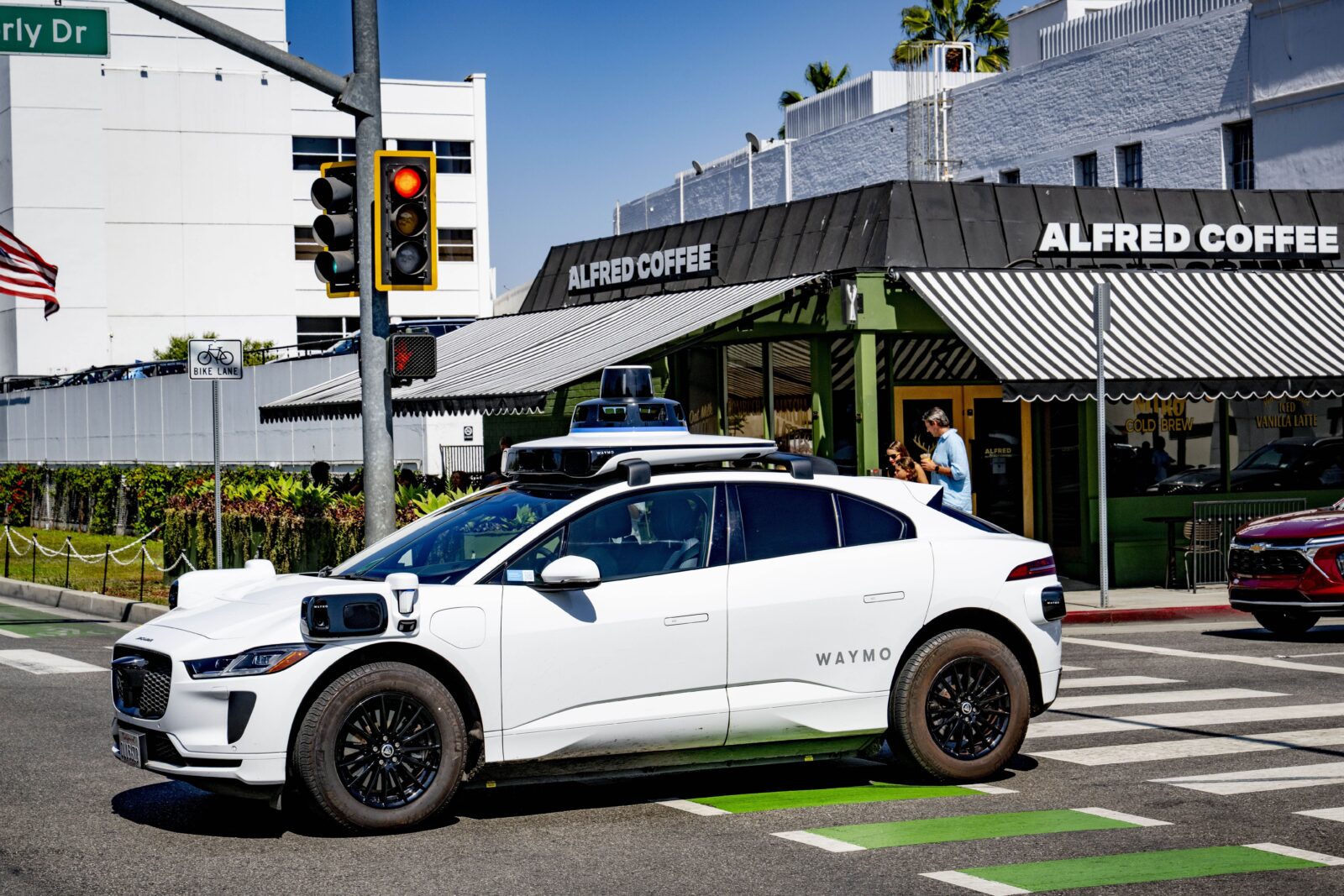
Waymo self-driving taxi passes a coffee house.
Photo via ANP/ZUMAPRESS/Newscom

The future is now. And while we may still need roads, robotaxis are enabling us to rely less on human drivers to get around. At least in major urban areas.

That shows how rapidly attitudes toward driverless cars have changed as tech and auto companies fought to conquer the market for self-operating cabs in the past year.

Cash Cabs

Humans entered 2025 not so sure about sharing the road with robots, let alone getting a ride from one. In February, a survey by AAA revealed 61% of Americans were “afraid” to travel in a driverless vehicle, while just 13% said they would trust a robo-ride (up from 9% the year before). But as robotaxi services expand across the country, they’re finding plenty of willing passengers.

According to a letter from investor Tiger Global viewed by CNBC earlier this month, Google’s Waymo — currently the biggest robotaxi fleet in the US market and active in Austin, Los Angeles, Phoenix, Atlanta and the San Francisco Bay area — is now providing 450,000 weekly paid trips, up from an estimated 250,000 in April. The service has provided more than 14 million paid trips this year, putting it on track for 20 million since launching in 2020, according to a statement.

Americans who remain wary of robotaxis, meanwhile, may not be concerned solely about personal safety:

  • A recent report from the National Highway Traffic Safety Administration showed vehicles using automated driving systems have experienced relatively few crashes this year; just 66 in the month of September, for instance. Meanwhile, Waymo’s robotaxis experienced 81 percent fewer crashes than humans would be expected to over the course of roughly 100 million miles driven so far.
  • On the flip side, a report this summer from ride-share price comparison firm Obi found that the typical Waymo ride costs 41% more than a trip in a Lyft and 31% more than one in an Uber. Remember: Tip your humans, not your robots!

Drive To Survive: 2026 will no doubt be a bigger year for robotaxis than 2025. The Amazon-backed Zoox expects to scale beyond existing operations in San Francisco and Las Vegas. Meanwhile, Waymo expects to expand into major cities in Florida and Texas and to continue broadening highway access in existing markets. Tesla, on the other hand, is hitting more roadblocks. The company still employs human supervisors in its robotaxi pilot programs in San Francisco and Austin, and even with the chaperones, the robotaxis are experiencing crashes once every 62,000 miles, way more than Waymo, according to an analysis of NHTSA crash reporting data. Some in the industry have flagged Tesla’s camera-only self-driving systems; most of its rivals also use radar and lidar. Another reminder: Buckle up.

Autos

Pedal off the Metal: Detroit’s Big 3 Brace for Slowing Sales in ’26

If life is a highway, the Big 3 US automakers are taking their feet off the gas to get ready for hazardous conditions ahead.

Not only is economic uncertainty lingering, unemployment is increasing and tax credits for electric vehicles have expired, prompting Cox Automotive’s Economic and Industry Insights team to predict the new-vehicle sales pace in 2026 will decrease by 2.4% to 15.8 million. David Whiston, a senior US autos analyst at Morningstar, says he doesn’t see much potential for robust US auto sales growth in the new year because “affordability is a challenge for many middle- and lower-class consumers and because the industry is making good profits at lower volumes thanks to good demand for high-end trim packages.”

From Green to Gasoline

Eyes will be on the Big Three automakers — General Motors, Stellantis (formerly Fiat Chrysler), and Ford Motor Company — which are still dealing with import tariffs that Ford CEO Jim Farley has said caused “a lot of cost and a lot of chaos.”

Whiston says that pricing can come down without ravaging General Motors and Ford’s profitability as most automakers, especially GM, aren’t using a high level of incentives as a percent of average transaction price. In other words, they can increase discounting without overly hurting profits should volumes start to slide more than they would like next year. After Stellantis’ last earnings report, Morningstar equity analyst Rella Suskin wrote in a note that volume performance for the next two earnings reports will be “critical in assessing whether the new management’s product-driven strategy is the key to Stellantis’ market share recovery.”

  • General Motors took a $1.6 billion writedown related to its EV assets in October.
  • In September, Stellantis threw its goal of producing only EVs by 2030 out the window.

Used Cars: As for second-hand autos, Cox Automotive expects sales to come down 1% year-over-year. “Used retail inventory will remain relatively tight in 2026, but demand should be steady due to affordability concerns pushing consumers toward lower-priced vehicles,” the firm’s Insights Team wrote in a recent report.

Extra Upside

  • Staying the Course: Paramount Skydance’s amended $108 billion hostile bid for Warner Bros Discovery, which is pursuing a competing $82 billion cash-and-stock bid from Netflix, is expected to be rejected.
  • On the Fence: Newly released Federal Reserve minutes show some officials who supported a rate cut earlier this month had reservations about the decision.
  • What’s Really Behind an Annuity’s Fine Print? Find out with Annuity Insights: 9 Questions Every Annuity Investor Should Ask, Fisher Investments’ free guide for investors with $1,000,000 or more. Download the guide now.*

* Partner

Sign Up for The Daily Upside to Unlock This Article
Sharp news & analysis on finance, economics, and investing.