

Good morning.
Come to think of it, investing for the long term has always been something of an endurance challenge. Jimmy Donaldson, the YouTube megastar known as “MrBeast,” has acquired teen-focused financial services app Step via his Beast Industries, the companies announced Monday. Step, which says it has over 7 million users, offers people under 18 mobile banking, savings and investment services. Donaldson, best known for his viral videos subjecting contestants to elaborate challenges for cash prizes, also owns chocolate brand Feastables and Lunchly, a snack kit competitor of Kraft Heinz’s Lunchables.
Step has raised more than $500 million and counts Steph Curry, Justin Timberlake and Will Smith as investors. Terms of the deal were not disclosed. Newly minted finfluencer Donaldson, who grew up working class and is now worth an estimated $2.6 billion, tweeted his aim is to “give millions of young people the financial foundation I never had.” Legal disclaimer: “survive 100 days in prison, win $500,000” does not constitute investment advice.
Can An Ex-Walmart Exec Help Rescue Kroger?
They’re bringing in the fixer, the industry’s version of the Harvey Keitel character in Pulp Fiction.
On Monday, after a roughly year-long search, grocery giant Kroger announced its new top boss: veteran Walmart executive Greg Koran. As an alumnus of the only grocer in America larger than Kroger by sales, Koran is stepping in at a critical time for the Ralph’s-Roundy’s-and-Dillon’s parent company as it navigates a cash-strapped consumer base in the wake of a failed 2024 merger with rival Albertson’s.
Clean Up On Aisle Everywhere
Kroger sees competition from everywhere. Downmarket, the company is facing heat from discount grocers such as Aldi. Upmarket, it’s losing customers to quality-centric players such as Whole Foods and Sprouts. A recent report from data analytics company Placer.AI found that foot traffic growth for “non-differentiated” grocery stores, such as those that make up the bulk of Kroger’s empire, lagged compared to the entire industry last year. For instance, visits to non-differentiated stores increased just 3.6% year-over-year in the fourth quarter of 2025, while visits to “quality-first” chains jumped 9.3% and visits to “savings-first” chains jumped 7.1%. So-called “unicorn” chains — or those that “defy grocery’s traditional quality-price tradeoff” via extreme focus, a.k.a., the Trader Joe’s of the world — were up 9.2%, while the entire industry saw an increase of 5.3% as consumers increasingly picked eating in over dining out. The trends were observed across all four quarters last year; in the first quarter, non-differentiated stores saw foot traffic decrease by more than 1%. (Note: full-year foot traffic data was not made available.)
What’s more, Placer.AI found that the customer base for both up- and downstream competitors is eating into the middle:
- The median household income of savings-focused chain customers has increased in the past three years, while the median household income of quality-focused chain customers has decreased. Placer.AI also tracked a decrease in store-hopping, with each market category increasingly serving as standalone shopping destinations.
- In short, the middle class is splitting in two — trading up for quality or down for value — leaving traditional grocers like Kroger stranded in the ‘no-man’s-land’ of the K-shaped economy: “As price sensitivity rises and perceived quality differences narrow, the retailers winning today are those with the clearest answers to a simple question: Why shop here instead of anywhere else?” Placer.AI analyst Erich Kahner wrote.
Beefing Up: Suffice to say, Koran has his work cut out for him. Kroger has been focused on reducing costs for customers the past couple of years in a bid to compete with the Aldis of the world. The company has slashed roughly 1,000 corporate jobs in the past year, while closing underperforming locations, scaling up its (oft-cheaper) store-brand labels, and, yes, beefing up on protein offerings.
The Next $435B Energy Empire Is Being Minted
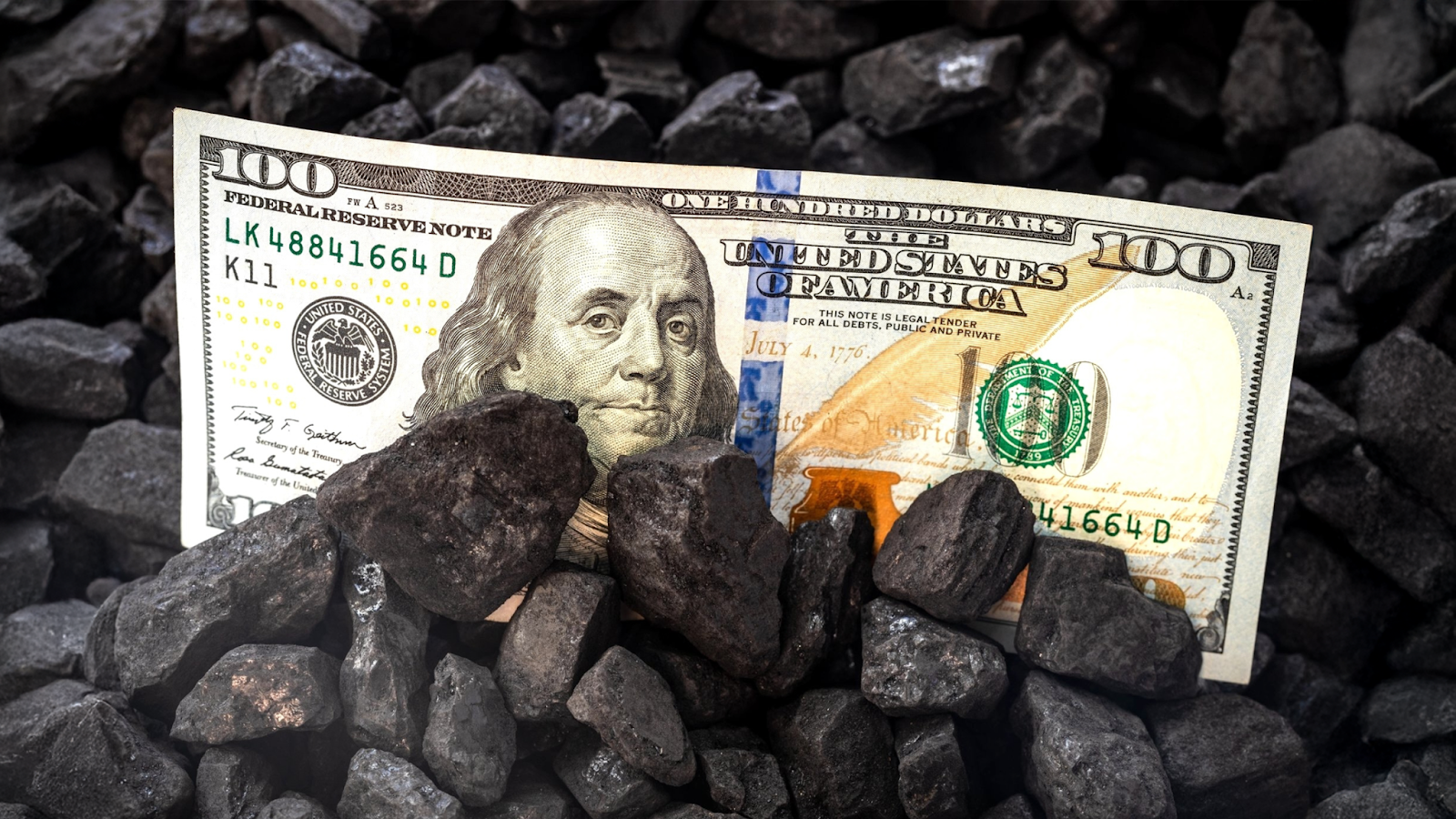
In today’s dollars, John D. Rockefeller would be worth $435 billion. But “oil money” is old news, and what’s next might surprise investors in 2026: a $2.1 Trillion opportunity in “clean” coal.
Now is the “Rockefeller” moment for Frontieras North America as they reform coal into hydrogen, diesel, jet fuel and other valuable commodities (just like Rockefeller did with oil). With a White House that favors domestic energy, the NASDAQ ticker FASF reserved, and land officially purchased for their flagship coal reformation plant, Frontieras is positioned for potential valuation impact.
You have 3 days left: Invest in Frontieras at $7.38/share* by February 12th at 11:59 PM PT.
Novo Nordisk Launches Suit to Knock Out Hims & Hers’ Weight Loss Knockoffs
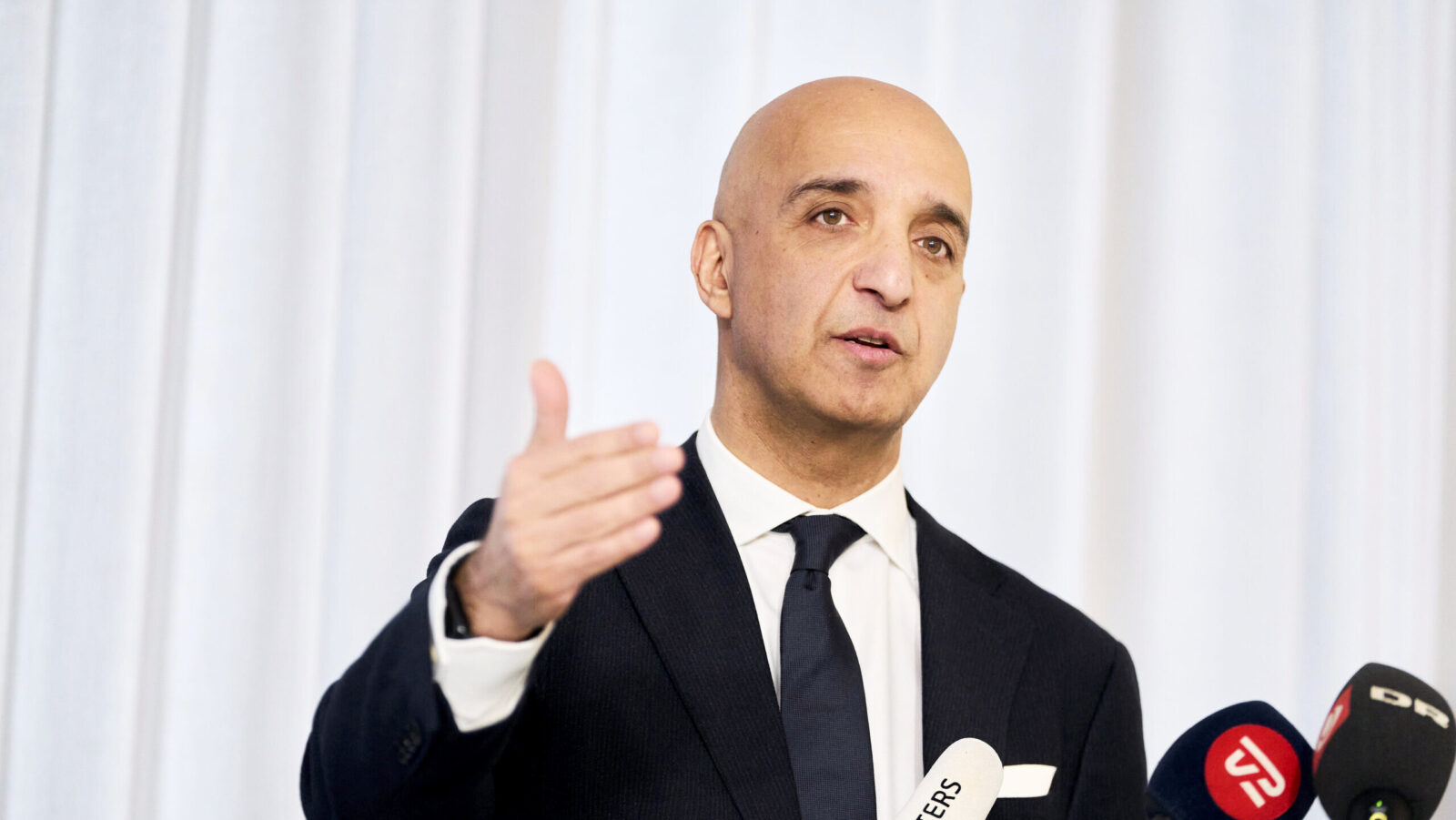
Novo Nordisk wants Hims & Hers to get theirs.
On Monday, the Danish pharmaceutical giant made good on legal threats to sue the online telehealth provider, which has been mass marketing cheaper, unapproved copycat versions of its blockbuster Ozempic and Wegovy weight loss drugs.
Throwing Their Weight Around
Hims & Hers invited enough fury from pharma sector rivals to burn a week’s worth of calories last Thursday when it announced plans to sell a knockoff of Novo’s new oral weight loss pill, which was approved for US sales less than two months ago. Shares in Novo and its chief competitor, Mounjaro and Zepbound-maker Eli Lilly, each took a roughly 7% tumble. Not to mess around, Novo immediately blasted Hims, alleging the nine-year-old telehealth company is guilty of “duping the American public with knock-off GLP-1 products” and said legal and regulatory action would follow.
And so it did. First, on Friday, the US Food and Drug Administration jumped into the fray, warning that a crackdown on the use of GLP-1 ingredients in unapproved compounded drugs is nigh. A day later, Hims backed down and said it would not offer its copycat weight loss pill, which it planned to sell for as little as $49, or $100 less than Novo’s approved Wegovy pill. Novo pressed ahead with legal action Monday, asking a federal court to ban Hims from selling any compounded versions of its drugs for good, including injectable versions, and to award damages. The urgency for both companies is clear:
- Drug compounding is allowed during shortages, but Novo’s GLP-1 drugs have been off the FDA shortage list for nearly a year. Yet compound semaglutide treatments have continued to flood the market, and Novo estimates they’re being used by 1.5 million Americans — with its shares down 50% in the last 12 months amid the proliferation of those compounds, the lawsuit could prove a prescription for one of Novo’s biggest business headaches.
- “Hims & Hers has teased the bear, which we believe could lead to increased scrutiny of the company’s entire GLP-1 compounding business, not just the tablet,” wrote SEB analysts in a note on Monday. “Overall, we see this as a positive for Novo.”
Diet Plan: Novo’s Copenhagen-listed shares rose 5.2% on Monday. New York-listed shares in Hims & Hers, meanwhile, shed an Ozempic-like 16% in volume.
Morgan Stanley Begins Coverage Of Bitcoin Miners As Wider Infrastructure Plays
As bitcoin hovers around $70,000, down about 40% from its peak in October, Wall Street is prospecting mining companies for their potential beyond crypto. Morgan Stanley on Monday initiated coverage of bitcoin miners Cipher Mining, TeraWulf and Marathon Digital. The bank assigned overweight ratings to Cipher and TeraWulf and a more cautious underweight rating to Marathon.
Morgan Stanley isn’t hopping on the bitcoin bandwagon, though. Instead, it’s looking at miners as more of an infrastructure play than a crypto one, since the vast computing power they generate to mine bitcoin can be tapped for non-crypto uses, like AI.
The Power of Future-proofing
Bitcoin mining is becoming less profitable amid the crypto winter, and not all miners can handle the chill. The revenue miners make per terahash (a measure of how much power it takes to mine bitcoin) has fallen to about $35, down from $70 when bitcoin was trading at record highs.
As profitability plummets, miners have shut down operations, and mining difficulty — meaning how hard it is for miners to solve the cryptographic puzzles that add new blocks to the chain — has fallen. That can encourage miners to shut down, raising the likelihood of those who remain reaping the leftover rewards. It acts as a mechanism to lead the crypto back toward more stable ground.
Since the number of miners that can turn a sizable profit is limited, companies are looking beyond bitcoin to make the most of the power infrastructure they’ve built:
- Bitfarms plans to back out of bitcoin mining completely, announcing last week that it’ll move operations to the US and change its name to Keel Infrastructure, as it transitions towards powering AI.
- Hut8 is converting some of its bitcoin mining ops to AI power centers, in collaboration with Anthropic. Two of the miners Morgan Stanley initiated coverage of, Cipher and TeraWulf, have also shifted in part toward AI.
Win Win: Demand for power from data centers could grow by 74 gigawatts from last year to 2028, Morgan Stanley predicted. (For context, 5 gigawatts can power a major US city.) But accounting for how many data centers are planned, the US could be short about 49 gigawatts. Transitioning bitcoin miners away from crypto could alleviate that shortfall while leaving more profits for the miners that stay in the crypto game.
Extra Upside
- Riyadh’s Rethink: The $900 billion Saudi Public Investment Fund is poised to announce a new five-year strategy focused on AI, tourism and industries, while previously vaunted mega projects like planned smart city The Line take a back seat.
- Grounded: International airlines will no longer be able to refuel in Cuba due to shortages following the US administration’s threats to tariff countries that supply the island nation with oil. Canada’s flag carrier suspended its Cuba flights Monday.
- Trouncing The S&P 500 Doesn’t Happen By Accident. The Pernas brothers have managed to outperform since 2016, notching a 654% total return vs. the S&P’s tepid 202%, with a very deliberate process. Just a handful of stocks (out of thousands they analyze) make their final buy list. Get access to the best picks from the Pernas brothers here.**
** Partner
Just For Fun
Disclaimer
*This is a paid advertisement for Frontieras’s Regulation A offering. Please read the offering circular at https://invest.frontieras.com/.
Reservation of the ticker symbol is not a guarantee that we will be listed on the NASDAQ. Listing on the NASDAQ is subject to approvals. Under Regulation A+, a company has the ability to change its share price by up to 20%, without requalifying the offering with the SEC.

