Smart, actionable news trusted by millions.

Our flagship newsletter delivers smart news and analysis on finance, and investing — all for free.

Good morning.

The mind is willing but the wallet is weak. “Consumer spending has finally caught up with consumer sentiment, and not in a good way,” is how Northlight Asset Management’s Chief Investment Officer Chris Zaccarelli characterized the US Commerce Department’s latest retail sales report, which showed consumer spending was flat in December from November, when activity rose 0.6%.

Economists expected a 0.4% growth in retail sales. While the 4.4% unemployment rate remains at historically low levels, consumers have expressed anxiety over limited job creation and stubborn inflation in confidence surveys. Meanwhile, the Labor Department on Tuesday reported wage growth slowed to 0.7% in the fourth quarter of 2025, the smallest quarterly increase in four years. On the upside, consumers can take advantage of this weekend’s Valentine’s Day or, as it’s known to those who find frugality romantic, 2-for-1 Specials Day.

Technology

Has The SaaS-pocalypse Been Overblown?
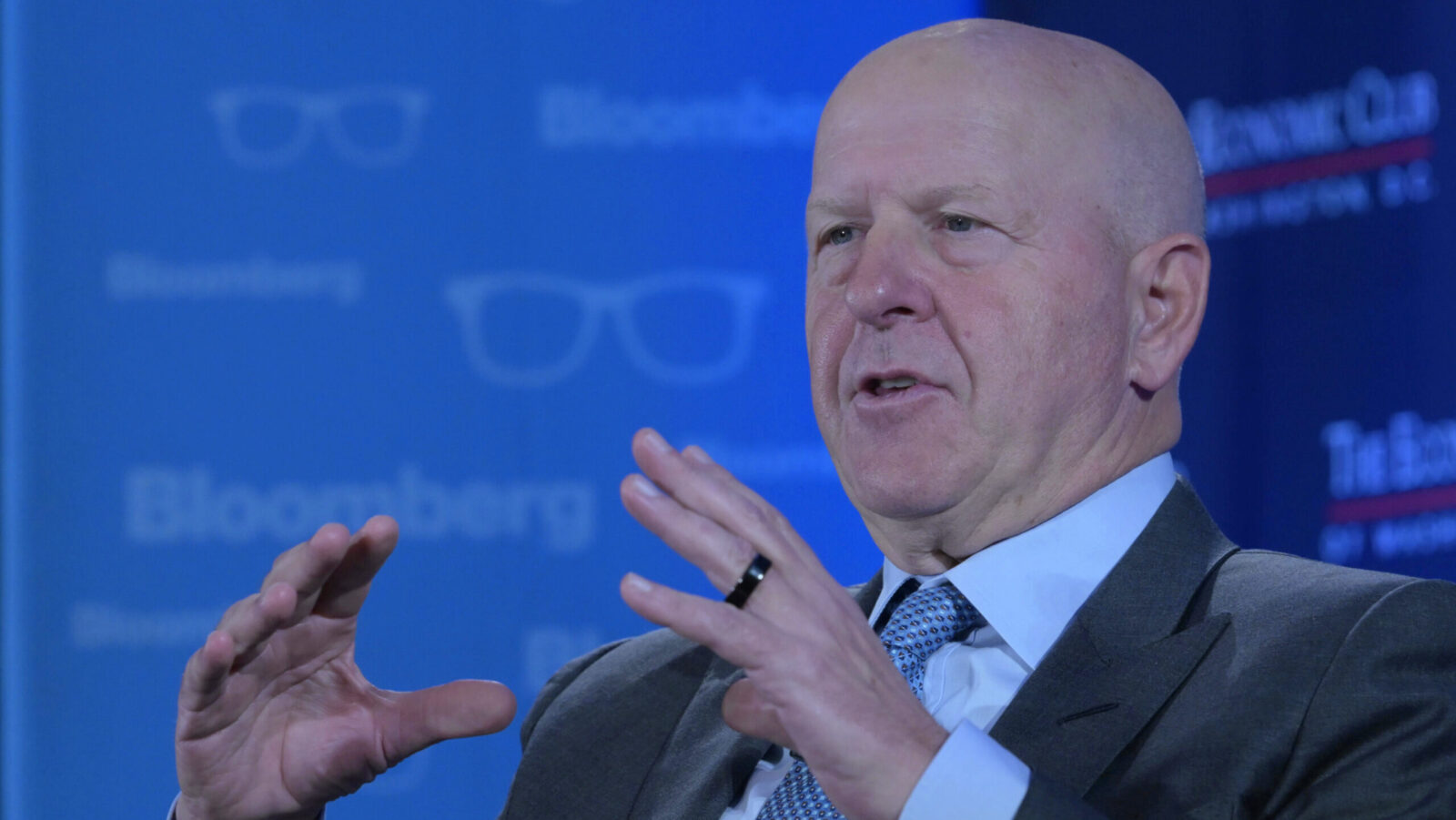
Photo of Goldman Sachs CEO David Solomon.
Photo via Lenin Nolly/Sipa USA/Newscom

As the gusts die down, the “SaaS-pocalypse” has been downgraded to a mere “Severe SaaS Weather Event.”

That’s the thinking of Goldman Sachs CEO David Solomon at least, who said at a UBS conference in Key Biscayne, Florida on Tuesday that the end-times narrative over the past few weeks, as experienced in a massive software as a service stock selloff, has been “a little too broad.” It’s an optimistic opinion increasingly shared by Wall Street’s collective inner stock-picker.

Agents of Change

There’s a reason the arrival of Anthropic’s Claude coding tools blew a roughly $800 billion hole in the software market. If you start hyperventilating enough, then being any type of SaaS company in the age of coding AI appeared all too similar to those companies that specialized in digital cameras or GPS devices or MP3 players or, say, alarm clocks right when the iPhone arrived in 2007. But SaaS firms are not lumbering dinosaurs, oblivious and defenseless to the oncoming asteroid. Not all of them, at least. “There’ll be winners and losers — plenty of companies will pivot and do just fine,” Solomon said Tuesday.

In a research note published this week, analysts at JPMorgan outlined just exactly who they see as potential winners as the balance of risk in the market grows “increasingly skewed towards a rebound”:

  • In a list of 19 “AI-Resilient Software Companies,” the JPMorgan analysts highlighted cybersecurity as one “higher quality” software segment, naming firms such as CrowdStrike, Palo Alto Networks, SentinelOne and Zscaler. Data software and enterprise firms such as Snowflake, Twilio and Okta also got a call out.
  • “Enterprise software remains deeply embedded across the corporate landscape, underpinned by multi-year contracts and high switching costs that provide a significant buffer against near-term displacement,” the analysts wrote.

That echoes a Wedbush Securities note last week that similarly said enterprise companies are unlikely to unwind decades and billions of dollars worth of software infrastructure to pivot to AI-made tools, claiming the “Armageddon scenario for the [SaaS] sector that is far from reality.” Katy Huberty, Morgan Stanley’s global director of research, similarly posited this week that the recent sell-off has been “sentiment-driven, not fundamental.”

One Sector After Another: And yet, the rout continues unabated, with seemingly a new AI tool appearing every day to launch a specific sector into an existential crisis. Look no further than the financial services industry, which tanked on Tuesday after the arrival of Hazel, a new AI-powered tax planning tool from wealth management platform Altruist. In its wake, shares of Charles Schwab fell more than 7%, while shares of LPL Financial and Raymond James fell more than 8% each on Tuesday.

Photo via NYU Stern

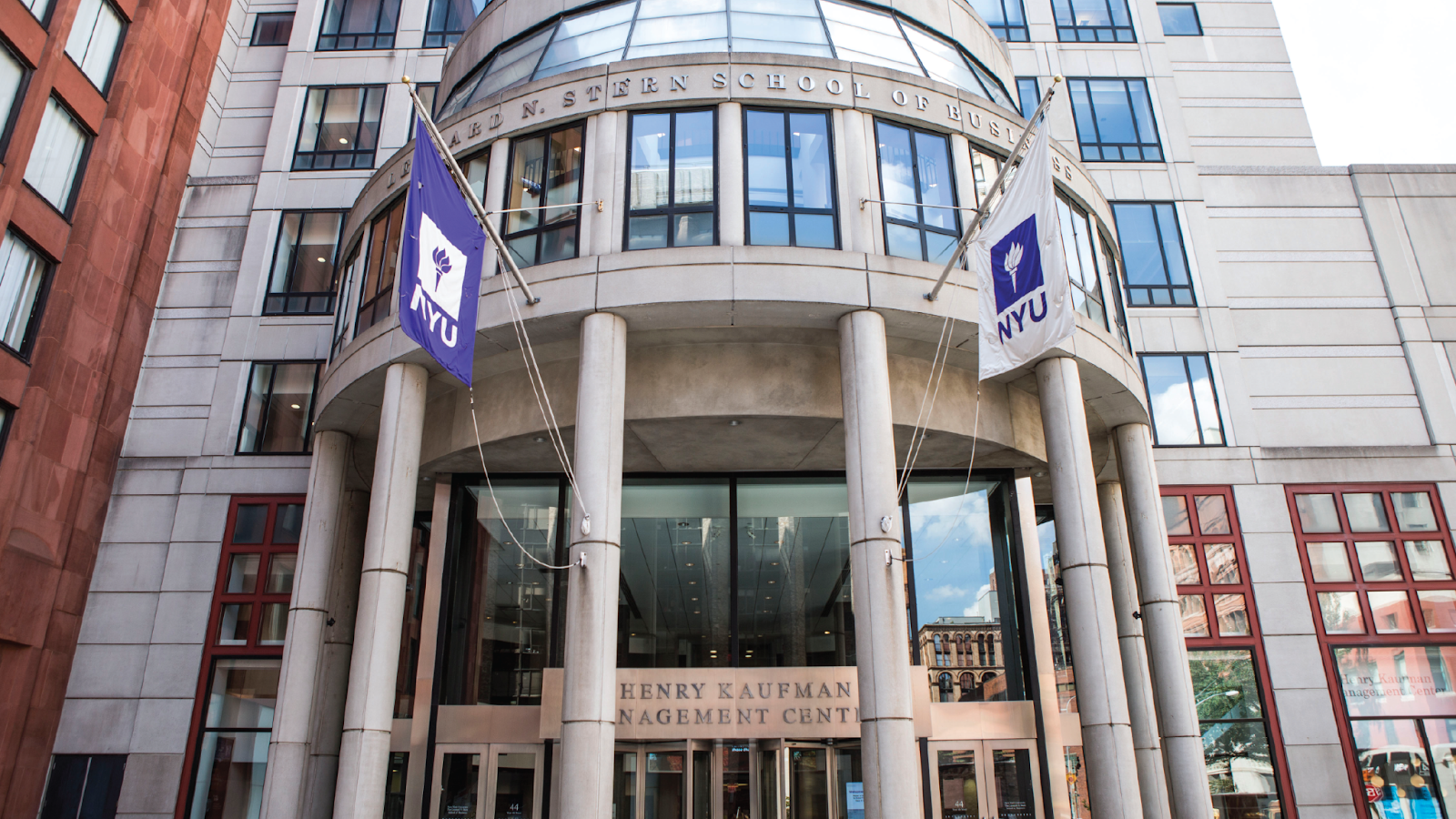
You’re on a strong career path, and the pursuit of excellence never stops. Advancement at this level isn’t about working harder, it’s about sharpening how you think and expanding who you know.

The NYU Stern Executive MBA program is designed for experienced professionals ready to accelerate without stepping away. With classes every other Friday and Saturday, the program fits alongside a demanding career while delivering rigorous business fundamentals, modern leadership skills, and a global perspective.

You’ll learn from world-renowned faculty, customize your curriculum with electives to fit your needs, and join a global network of more than 110,000 Stern alumni across industries and continents. Because the right insight (and the right introduction) can change everything.

Your network is your net worth. Invest strategically.

Apply to the NYU Stern Executive MBA program.

Consumer

Marriott’s Earnings and Growth in Luxury Travel Highlight K-Shaped Economy

It’s not the destination, it’s the journey — and in this economy, Americans are taking very different ones.

Marriott’s fourth-quarter earnings report shows that well-heeled travelers are still shelling out for top-tier accommodations while budget and middle-income travelers are pulling back. A key industry metric, revenue per available room, jumped more than 6% for global luxury hotels in the fourth quarter. The hotel giant’s overseas travel business also helped boost the company’s results, with 6.1% growth for revenue per available room in international markets compared to a 0.1% decline in the US and Canada.

That slowdown close to home reflected the impact of the government shutdown late last year, especially on business travellers, Marriott CEO Anthony Capuano said via the company’s news release. And a deep divide for American consumers.

“The K-shaped economy is certainly impacting the travel vertical,” Capuano told CNBC.

Puttin’ on the Ritz

Despite missing Wall Street’s expectations, Marriott’s stock gained 9% on Tuesday thanks to a 2026 outlook that included revenue per available room growing between 1.5% and 2.5%. Investors also loved the company’s expectation for its co-branded credit card fees to jump 35%.

And Marriott expects big spenders to keep spending big, which is especially good news for a company with about 10% of its global inventory and 10% of its global pipeline in the luxury tier:

  • “When you look internationally, there is an almost insatiable demand for luxury,” Capuano said on a post-earnings call.
  • Leeny Oberg, Marriott’s chief financial officer, indicated that she expects luxury travel to continue to be so strong, it could offset the slowdown in business travel seen since the pandemic.

Comeback for Corporate? Putting employees on planes for in-person meetings may have taken a backseat for many companies in recent years, but that could soon make a turnaround. A survey from Morgan Stanley published at the end of December showed that 61% of respondents said they are “very optimistic” or “somewhat optimistic” about the 2026 outlook for business travel, up from 50% in a 2025 mid-year survey. “Hotel bookings are predicted to increase 6.3%, with room rates up 3.9%, while the impact of virtual meetings on travel continues to shrink,” according to Morgan Stanley.

With deal volume projected to rise in 2026, firms are rethinking the tools behind every transaction. This on-demand webinar breaks down how modern deal technology helps teams move faster, reduce friction, and stay competitive, with real-world biotech and healthcare examples. Watch now.

Markets

S&P Global Shares Dragged by Market’s “Most Bearish Possible” AI Anxieties

As a Big Three ratings agency, S&P Global is usually the one handing out grades on Wall Street.

After the company reported its fourth quarter and full year earnings on Tuesday, markets got their turn to render a verdict. Unfortunately, the financial information and analytics provider’s revenue proved unable to overcome a wave of AI-driven investor jitters, meaning yesterday’s grade came back like one handed down by a high school’s grumpy AP chemistry teacher.

Software’s Softening Up

In the four trading days before Tuesday, S&P Global mostly sidestepped the Great Software Panic, its shares falling a mere 3.8% in all. That changed when the company reported. Revenue increased 9% year-over-year in the fourth quarter to $3.9 billion, in line with Wall Street estimates. Of note, the indices business, which maintains the blue chip S&P 500 and Dow Jones Industrial Average, saw revenue climb 14%.

But that couldn’t overcome the current AI-induced freakout moment. S&P Global’s forecast for 2026 didn’t help either, as executives expect revenue growth to slow to between 6.6% and 8.6%, down from 9% last year. All told, the company’s shares tanked 9.7% on Tuesday:

  • “The AI anxiety will likely linger,” said analysts at ClearStreet before the earnings announcement, suggesting firms will simply have to deal with the market’s fretting du jour. Meanwhile, even as revenue at S&P’s ratings division rose 8% in the quarter, the selloff reverberated at rival ratings agency Moody’s, whose shares lost 6.8%.
  • Analysts at JPMorgan flagged the selloff as an overreaction, writing it’s “unclear whether AI will ultimately depend on software infrastructure or replace it, but current market pricing is expressing the most bearish possible outcome, which we view as an overshoot at this time.”

Buyback Their Affection: S&P Global shares are now down over 23% this year, but there are signs of value. CEO Martina Cheung noted S&P rewarded shareholders with a whopping $6.2 billion in 2025, $1.2 billion in the form of dividends and $5 billion in share buybacks, which is equal to more than 100% of the company’s adjusted free cash flow. Tuesday’s earnings report said S&P Global intends to return roughly 85% of free cash flow to investors this year. The current share price of $444 also significantly trails the average analyst target price of $615, implying a roughly 38% upside, with most rating it a buy.

Extra Upside

  • Added Sweetener: Paramount Skydance continued its relentless pursuit of Warner Bros. Discovery by offering to pay fees to shareholders and cover the costs of breaking up its proposed merger with Netflix.
  • Slim Odds: Sam Bankman-Fried, the jailed founder of the collapsed FTX cryptocurrency exchange serving 25 years for fraud, filed a longshot appeal for a new trial.
  • Start Your Day With Smarter Health Habits. All Healthy delivers clear, practical wellness insights covering nutrition, fitness, and health news in a quick 5-minute read. Join 1M+ readers.*

* Partner

Sign Up for The Daily Upside to Unlock This Article
Sharp news & analysis on finance, economics, and investing.