

Good morning and happy Friday.
AI’s not for you? At Accenture, that’ll cost you a promotion. The multinational consulting giant told senior employees they must use the company’s AI tools or kiss career advancement goodbye, the Financial Times reported Thursday. Among those tools is AI Refinery, which Accenture says turns “raw AI technology into useful business solutions” like AI agents. It’s also high on SynOps, described in inscrutable marketing speak as an “innovative human-machine operating ‘engine’” (we don’t know what that means, either, but Dale in accounting had better wrap his head around it pronto).
Accenture initiated an AI makeover in the fall, when it dubbed its nearly 800,000 staff “reinventors” and set out to lay off any “reinventors” (are they using AI to come up with these amorphous names?) who could not make AI part of their workflow. Which begs the question: Does asking AI to draw up a YouTube playlist while passing time in the office cubicle count at Accenture?
Is Walmart’s Yearly ‘Humble Brag’ Obscuring the Retailer’s Strength?
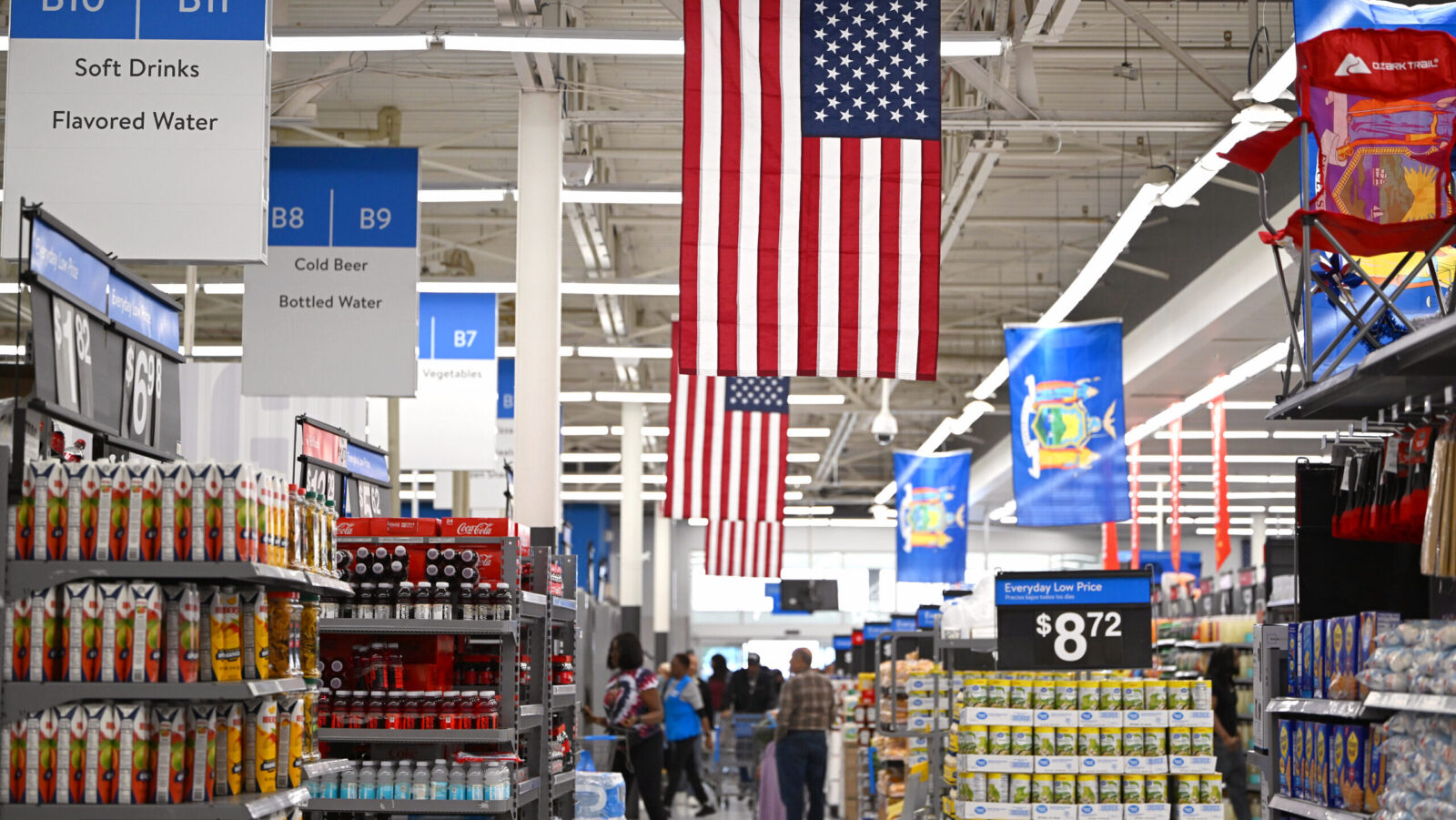
New Walmart CEO John Furner took on the company’s hallowed role of greeter Thursday (or “customer host” as they’re now called) on his first earnings call as top boss.
So fresh in the job that he updated his LinkedIn page a couple of weeks ago (CEOs, they’re just like us!), Furner had good news: US same-store sales rose a better-than-expected 4.6% in the latest quarter, the last of Walmart’s fiscal 2026. But the retailer’s stock fell 1.4% as the new boss carried on a company tradition: a cautious, conservative outlook that many analysts view as a buy signal.
‘A Beatable Bar’
Because of Walmart’s longtime status as America’s biggest brick-and-mortar retailer, its results double as a bellwether of consumer spending. Revenue rose 5.6% year over year to $190.7 billion in the fourth quarter, good for an earnings beat. Furner’s also taking the reins at a crossroads, with his company trying to expand its position in the hypercompetitive e-commerce sector. On this point, Thursday saw another plus: Walmart’s US online sales rose 27%, marking the 15th quarter in a row of double-digit increases. It suggests that forward-thinking initiatives, such as a partnership with OpenAI to enable Walmart purchases within ChatGPT, are beginning to pay dividends.
It’s worth noting that Furner said the majority of gains came “from households making more than $100,000,” continuing a trend of wealthy shoppers turning to bargain retailers for respite from inflation and consumer anxiety. And therein lies the reason that Walmart shares slid on Thursday. The company’s guidance, which calls for sales growth of 3.5% to 4.5% in fiscal 2027, trailed the 5% Wall Street expected because of consumer uncertainty. Take your pick of “whatever your favorite macro statistic to point to is” and you’ll find reason for caution, Furner said. He flagged “the hiring recession” (or what economists have dubbed the job market’s “low-hire, low-fire” mode), elevated student loan delinquencies, and trade uncertainty. Walmart’s conservatism seems to fit the US economy’s peculiar imbalance of sound GDP growth with a tough labor market and historically weak consumer sentiment. But caution is also something of a company ritual to start the year, one that can obscure the stock’s true value:
- “While Walmart is winning profitable market share and driving positive traffic, historically, management tends to be conservative when providing its initial guide for the year ahead,” Evercore ISI analysts wrote before the report.
- “We suspect that [Walmart] wants to set a beatable bar,” D.A. Davidson said in a note to clients. “Any weakness on that guide should be bought, in our view.” Walmart shares have climbed 12% this year, outpacing the S&P 500, and the company plans to spend $30 billion on new buybacks.
Welcome to the Jungle: Despite its strength, Walmart will have to settle for being the second-biggest company in the world by revenue, as it fell behind e-commerce rival Amazon, which made $716.9 billion last year. The torch was officially passed when Fortune said Thursday that Amazon will now sit atop the Fortune 500, ending a 13-year streak for Walmart and its measly $713.2 billion in 2026 revenue.
A Cure for Ultra-High-Net-Worth Exhaustion

Wealth should buy you freedom, not a second career. Yet most families find themselves acting in a constant cycle of coordination.
If you’re the one juggling advisors, managing entities and solving fire drills, you may want to join us on Thursday, March 5.
Aspiriant is hosting a webinar for ultra-high-net-worth families navigating ongoing complexity that comes with significant wealth. You’ll hear real-life stories of how families handled the mental load of their wealth to finally find breathing room in their financial lives.
See what life can look like when it no longer falls on you to hold everything together.
Save your spot to join Aspiriant on March 5 at 11:00 AM PT / 2:00 PM ET.
DoorDash Delivers Fresh Profits with a Soggy Forecast

DoorDash delivered piping hot earnings this week, accompanied by a side of lukewarm expectations for the first quarter.
The delivery giant’s revenue in the winter quarter climbed 38% from the same time last year for a total that’s flirting with $4 billion. The app notched about 903 million orders, a 32% jump, as coffee-table diners double-dashed breakfast burritos and ramen. Orders were boosted by DoorDash’s October acquisition of British delivery app Deliveroo — without the new app, DoorDash orders still climbed about 20%.
But feast could turn to famine this year. DoorDash, whose shares have dropped nearly 20% this year, lowered its first-quarter forecast. The company expects supersized investments into its technology, along with an international push and winter storms, to bite into its earnings.
Spending Money to Make Money
DoorDash shares had their biggest one-day drop ever in November, when the company announced plans to spend hundreds of millions of dollars improving its platform and business. Investors at the time had already grown skittish about large investments into unguaranteed futures as tech companies poured hundreds of billions into AI.
Now, investors know more about the details of DoorDash’s self-improvement plan, and yes, it does include AI:
- DoorDash is working to integrate its three delivery businesses — DoorDash, Deliveroo and EU-favorite Wolt — into a single platform that it says will be more efficient. The company’s spending push also focuses on both agentic and physical AI. The AI agents could facilitate more orders for the delivery company, while AI-powered autonomous vehicles could cut costs. DoorDash said its research and development expenses had already surged 41% last year.
- DoorDash is also investing in the last mile of delivery with robots and drones (some of the bots have heart eyes). These last-mile solutions could give DoorDash an edge in grocery delivery compared with rivals like Amazon.
Global Ambitions: DoorDash is looking to make its plan pay off in the second half of the year, which could catapult it higher up the list of apps people order fried rice on. In the US, DoorDash dominates the delivery industry with more than double the order volume of its closest competitor, Uber Eats, according to Consumer Edge and Fortune. Deliveroo and Wolt, meanwhile, have strong presences abroad but still face stiff competition from rivals like Just Eat.