Smart, actionable news trusted by millions.

Our flagship newsletter delivers smart news and analysis on finance, and investing — all for free.

Good morning.

Anthropic is spending big on Super Bowl Sunday to troll a rival.

In a 30-second spot reported by the Wall Street Journal on Wednesday, the Claude maker mocks OpenAI’s planned pivot to advertisements in ChatGPT. The ad shows a man struggling to do pull-ups in a park asking a muscled onlooker for advice on getting in shape. The onlooker answers in a flat, AI-like voice before launching into a promotion for a fictional line of shoe insoles called “StepBoost Max.” A tagline reads: “Ads are coming to AI. But not to Claude.”

Anthropic could not have chosen a pricier venue to throw shade. Broadcaster NBC said last week that 30-second ads during this year’s NFL championship, typically the most-watched US television event each year, cost an average of $8 million.

Markets

S&P 500

6,882.72

-0.51%

DJI

49,501.30

+0.53%

NASDAQ

22,904.58

-1.51%

*Presented by Betterment. Stock data as of market close on February 4, 2026.

Build your wealth with Betterment’s automated investing.*

Indicators

Molasses-Like Jobs Growth Not Enough to Trump Fed’s Rate-Cut Inertia

Wednesday was data déjà vu day. New employment numbers from payments processor ADP suggest the US labor market started 2026 the same way it ended 2025: in a “low-hire, low-fire” environment where companies are holding on to their employees like cherished collectibles but reluctant to add to their ranks.

While weaker jobs data often fuels calls for interest rate cuts at the Federal Reserve, Wednesday’s figures are unlikely to move the needle as the central bank prepares for a new chair when Jerome Powell’s term ends in May.

Fed Up with Work

Hiring in January was not just slower than expected, according to ADP. It was way slower. Private employers added just 22,000 jobs, fewer than half the 45,000 forecast by economists. The number of jobs added in December was trimmed to 37,000.

Manufacturing, in particular, is approaching a potentially gloomy two-year anniversary: The sector has posted job declines in every month since March 2024. It fell by 8,000 positions last month. The education and health sectors, which added 74,000 jobs, did the bulk of the heavy lifting to offset weaker areas, like professional and business services, which lost 57,000 jobs. “[Hiring has] been almost exclusive to healthcare services and a little bit of leisure and hospitality,” ADP Chief Economist Nela Richardson told CNBC. “It is following the consumer right now; it is not following technology to the same extent.”

Which is to say the AI trade, which has powered the stock market in recent years, does not seem to be fueling job growth, even as GDP, unemployment and wages remain solid. With sticky inflation spurring the Fed to keep interest rates higher, a stable labor market offers scant incentive to lower them. President Donald Trump, who wants to see rates cut substantially to buoy growth, told NBC News on Wednesday that he “would not” have tapped finance veteran Kevin Warsh as Powell’s successor if he expressed a desire to raise them. But analysts said it will take more than the latest slowing numbers to motivate policymakers:

  • “The ADP report alone won’t be enough to sway Fed policymakers or alter interest rate expectations — nor should it,” wrote eToro analyst Bret Kenwell. “But if the [Bureau of Labor Statistics’] January jobs report shows a similar dynamic, it should, at a minimum, help keep the Fed from adopting an overly restrictive stance.”
  • The Fed is still widely expected to leave rates unchanged at its next monetary policy meeting, with markets placing 90% odds on that outcome, according to CME’s Fedwatch.

Only Kidding? Trump joked over the weekend that he will sue Warsh if he doesn’t deliver interest rate cuts as Fed chair. And while Warsh criticized the Fed as he auditioned for the role, he was known as an inflation hawk during his tenure on the central bank’s board from 2006 to 2011. Now, if nothing changes on the Fed’s economic gauges, he may find himself staring across the table at other policymakers who have adopted his old habits.

Fortunes used to be created slowly, deliberately, and with the power of compounding over decades.

For some capital allocators, the advent of AI has meant that process has been shortened to years or even months.

If you weren’t invested in AI “Phase 1,” you might be kicking yourself.

But if the AI revolution is anything like the first internet boom, most of the value creation has yet to unfold. JPMorgan recently coined the term “AI 2.0” to describe the next wave of opportunities in AI, which they believe will be in the application layer.

By some estimates, it’s a $14 trillion opportunity by 2030 (vs. just $200 billion today).

The Motley Fool has the name of a few stocks they believe are poised to benefit.

Get the names here.

Blockchain

Bitcoin Sinks to 14-Month Low amid Plot Twist in Safe-Haven Story

Bitcoin has tumbled to levels not seen since 2024, nosediving to nearly $72,000 Tuesday before bouncing back a bit. Now, Citi analysts are eyeing $70,000 as the next big testing point for the coin — and some X users say crypto investors will hold it at least above $69,420.

The crypto market lost half a trillion dollars in value since last Thursday, CoinGecko data shows, with bitcoin dropping below key thresholds including $75,000. Bitcoin’s down about 40% since its October record of more than $126,000. The No. 1 crypto’s slide has raised concerns about its place in the financial landscape and how investors view the volatile asset.

It’s Hard to Bounce Back

Bitcoin rose to new highs last year under Trump’s pro-crypto administration, as both regulators and major financial institutions buddied up with digital assets. But every big party is followed by a hangover. The coin was hit hard in October, when $19 billion of leveraged bets were liquidated in about a day, and no amount of ibuprofen has helped it recover.

Instead, the narrative that bitcoin is “digital gold” that can act as a safe-haven asset could be unwinding. Rising geopolitical tensions don’t seem to be boosting the coin, which is also facing a psychological hit at the end of a four-year cycle that has coincided with past price drops (it could be a self-fulfilling prophecy). At the same time, the spiral in sentiment is taking place amid crypto’s falling out with the same institutions whose backing last year helped legitimize the sector:

  • The Clarity Act, a sweeping framework for regulating crypto that the industry has been waiting on, has hit an impasse. A White House meeting on Monday aimed at advancing the legislation failed to make progress, as banks and crypto companies disagreed over stablecoin incentives such as interest rewards.
  • Coinbase pulled its support of the bill last month, claiming banks’ insistence on nixing the rewards was anticompetitive. From there, the gloves came off: At the World Economic Forum, JPMorgan CEO Jamie Dimon is said to have told Coinbase CEO Brian Armstrong, “You are full of s—,” The Wall Street Journal reported. Regardless of who is in the right, the beef between Wall Street and crypto could make bitcoin appear less secure.

Gold Nonstandard: The debate over whether bitcoin is “digital gold” enters semantically tricky territory when the price of gold itself is in flux. In the month through Monday, gold proved more volatile than bitcoin, Bloomberg found. Crypto companies also increasingly own more gold, tying their fate to the physical asset: Stablecoin company Tether has more gold than most central banks. But conversations comparing the two could be missing the point. Bitcoin whale Michael Saylor reiterated on X this week that “Volatility is Satoshi’s gift to the faithful.” For the cryptocurrency’s most faithful HODLers, one bitcoin is always worth the same amount: one bitcoin.

Photo via Outskill

An AI Generalist can make $100K (and remain indispensable). In Outskill’s 16-hour, live AI Mastermind (Feb 7–8), you’ll master AI tools, build AI agents, automate up to 70% of your work and learn how to monetize AI skills. Made for leaders turning AI into leverage. Claim your seat.

Big Tech

Google Doubles Down on AI with Moonshot Investment
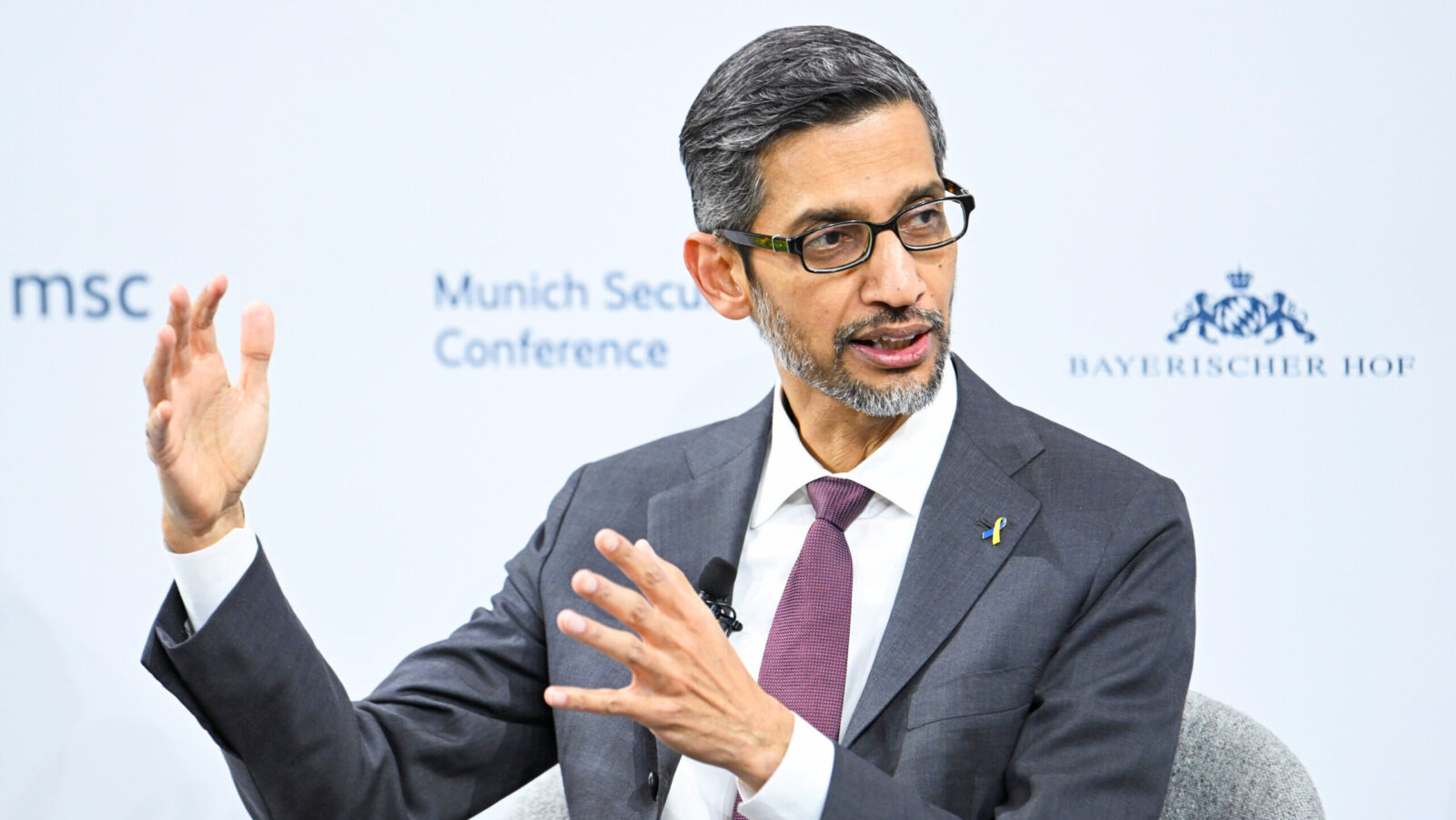
Photo of Google CEO Sundar Pichai.
Photo via Tobias Hase/dpa/picture-alliance/Newscom

Adjusted for inflation, the entire Apollo Space Program, which put 12 humans on the moon over 11 years, cost roughly $178 billion. That’s about the same amount of money Alphabet plans to spend on AI in 2026 alone.

After Meta and Microsoft announced capital expenditure plans that blew past expectations last week, Google’s parent on Wednesday announced its own massive AI spend. The rest of the company’s quarterly earnings report made clear it could afford to do so. Oh, and at the same time, an AI-adjacent subsidiary is growing into yet another powerhouse.

Search and Rescue

The death of the search engine narrative, revived in recent weeks by the remarkable ascent of Anthropic, may have been put to rest for now. Alphabet generated revenue of $113 billion, marking its second straight quarter topping $100 billion and an 18% year-over-year increase. Roughly half that amount came from its search advertising, which beat expectations and jumped 17%. “Search saw more usage than ever before, with AI continuing to drive an expansionary moment,” CEO Sundar Pichai said.

Revenue in Alphabet’s increasingly competitive cloud unit, meanwhile, surged 48% to $17.7 billion. Together, search and cloud showed the type of growth Google needs to justify its capex plans:

  • The tech behemoth now projects capital spending of $175 billion to $185 billion for the year — way, way, way ahead of the $120 billion that Wall Street expected. It’s also a tick above Meta and Microsoft.
  • The spending is needed to service the rapidly growing user base of Google’s Gemini suite of AI tools. Monthly active users for the Gemini app now top 750 million, Google said, up from 650 million a quarter ago.

Pichai stressed that scaling is key to achieving AI efficiency: “We are getting dramatically more efficient,” he said. “We were able to lower Gemini serving unit costs by 78% over 2025 through model optimizations, efficiency and utilization improvements.”

Self-Drive to Survive: AI isn’t the only part of the Google empire being aggressively scaled. Subsidiary Waymo is expected to launch in at least a dozen new international markets this year, including Tokyo and London. That’s thanks in part to a $16 billion fundraising round completed earlier this week at an eye-watering valuation of $126 billion. This may be the year that Waymo officially turns the corner into the mainstream.

Extra Upside

  • Paper Cut: The Jeff Bezos-owned Washington Post is slashing hundreds of jobs on the editorial and business sides, an amount equal to about a third of its workforce.
  • More for Less: More than 60 percent of US homebuyers paid less than the asking price last year, the most since 2019, according to an analysis by Redfin. The average discount was the largest in more than a decade.
  • 7 Ways to Achieve a Comfortable Retirement. Retirement planning shouldn’t be complicated. The Definitive Guide to Retirement Income can help you feel confident about your financial future. Explore seven income streams to help keep a $1,000,000 portfolio growing for years to come. Learn more.**

** Partner

Disclaimer

*Investing involves risk. Performance not guaranteed.

Sign Up for The Daily Upside to Unlock This Article
Sharp news & analysis on finance, economics, and investing.