
Smart, actionable news trusted by millions.

Our flagship newsletter delivers smart news and analysis on finance, and investing — all for free.

Good morning and happy Friday.

Why join the empire if you think you can topple it?

That’s the moral of a Financial Times report published Thursday, in which a source close to OpenAI said the company made “a conscious decision to not become the custom model provider for Apple” last year. The plan instead is to create a possible iPhone-killer of its own. That’s why it acqui-hired Jony Ive, the former top Apple designer, last May. More than happy to be second choice, Google agreed this week to have its Gemini AI model power Apple’s Siri smart assistant, in a deal another source told the FT will entail Apple paying Google several billion dollars. Remember, OpenAI, if you come at the smartphone king, you best not miss … especially if you’ve passed up a pretty cushy job in the kingdom.

Banking

Goldman Sachs, Morgan Stanley Riding High on Dealmaking Wave
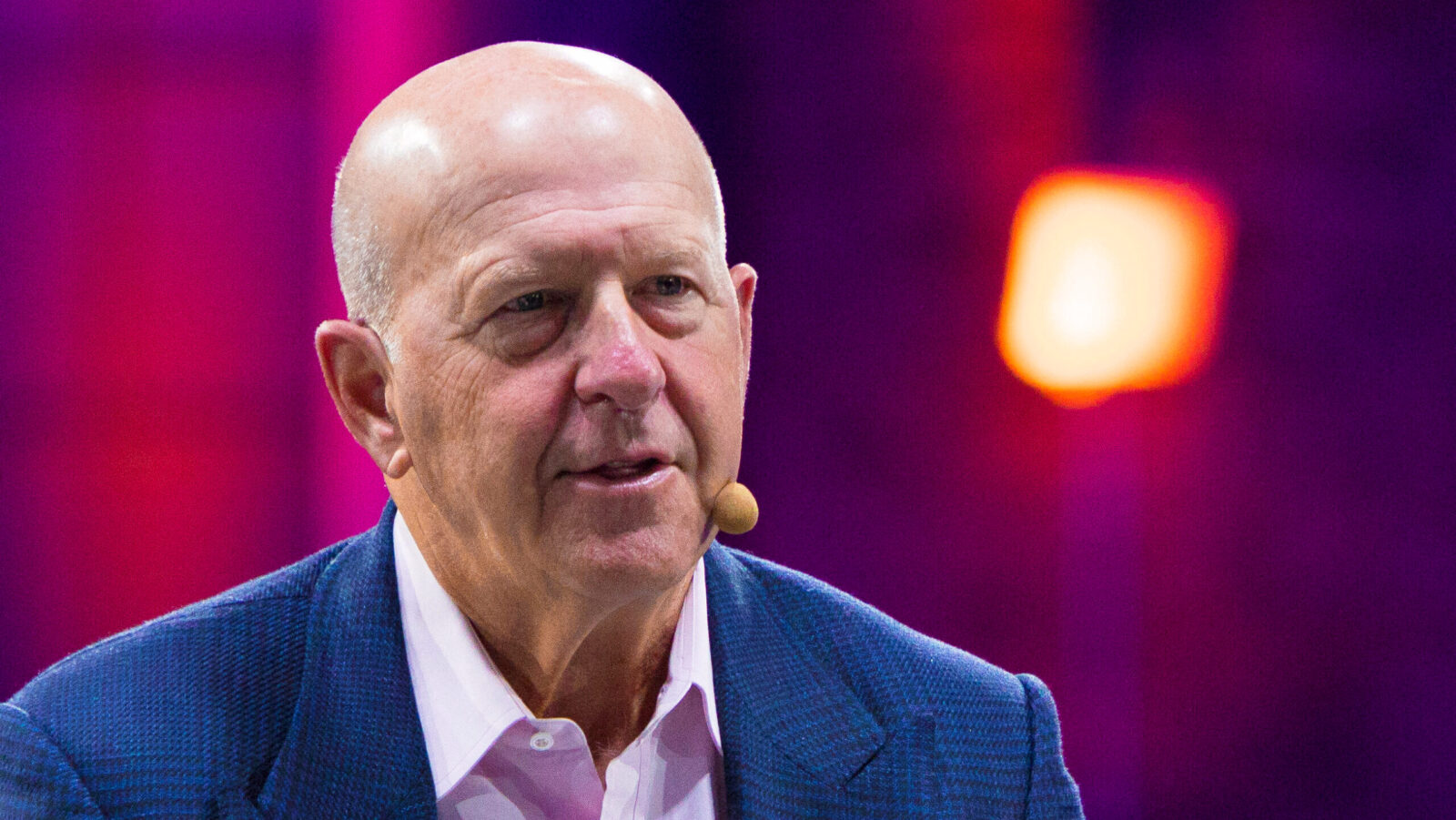
Photo of Goldman Sachs CEO David Solomon.
Photo via IPA/ABACA/Newscom

Seems like Wall Street saved the best for last.

Goldman Sachs capped off a week of big bank earnings calls with a blockbuster report on Thursday that made Wall Street history. Joining the investment bank was rival Morgan Stanley, which similarly reported gangbuster earnings. Big banks are officially playing offense once again.

Some of them, anyway. JPMorgan Chase, Bank of America and Citi, which reported their quarterly performance earlier in the week, didn’t fare as well.

League Table Talk

Let’s start with Goldman. Profit at the famed investment bank reached $4.6 billion in the final quarter of 2025, up 12% year-over-year, thanks to record fees from its wealth and asset management business as well as a hot streak of dealmaking and equity trading. In fact, Goldman scored $4.3 billion in equities trading revenue in the final quarter — roughly $700 million higher than analysts surveyed by Bloomberg had anticipated. That marked a new Wall Street record. It also meant Goldman reclaimed Wall Street’s crown as the top investment bank for equities trading, a title it had ceded — for the first time in three years — to Morgan Stanley in the previous quarter.

We doubt Morgan Stanley is fretting over the loss too much. The firm reported a staggering 93% year-over-year revenue increase in its debt-writing operations, while net revenue for its investment banking arm jumped 47% as it also rode last year’s dealmaking wave.

The party doesn’t look to end in 2026, either:

  • In its earnings call, Goldman said that its deal backlog now sits at a four-year high entering the New Year amid the AI boom and a rush of private equity firms finally veering toward exit ramps. “We are not yet in the middle of the potential for a full-on M&A and sponsor cycle,” CEO David Solomon said during the bank’s call with analysts on Thursday.
  • “We are seeing an accelerating pipeline in M&A and IPOs,” Morgan Stanley CFO Sharon Yeshaya said in an interview with Reuters. “We expect more deals in healthcare, industrials. Sponsors are also increasing activity because they have the dual track alternative now, either selling through an M&A transaction or an IPO.”

Falling Far From the Tree: The one rotten apple in Goldman’s earnings basket yesterday? Its total revenue of $13.4 billion, down 3% year-over-year and missing most expectations. But the bank chalked up the whiff to a one-off hit from offloading its Apple Card loan portfolio to JPMorgan. With the move, Goldman officially exits the consumer space as it enters 2026. Still, during the earnings call, Solomon said the firm is exploring opportunities in prediction markets. Translation: We don’t care about running your checking account, and we certainly don’t want to be behind your credit card, but facilitating bets on the Golden Globe for Best Podcast? Sure thing!

Photo via Betterment

Enroll and earn up to $1,500 with Betterment.

For a limited time, open any Betterment individual investing account (including an IRA) and make a deposit to earn up to $1,500. The more you invest, the more you can earn.

  • Deposit or roll over into any individual investing accounts (including Roth and traditional IRAs).
  • Increase your rewards with higher deposits, up to a total of $1,500. You can make multiple deposits from outside accounts to reach each reward amount.
  • Make deposits within 45 days to start earning your reward. You’ll receive your reward on or around 45 days after you’ve enrolled in the offer.

Ready to put automated investing to work for you? Get started with Betterment.*

Semiconductors

AI Market Looks More Like Boom than Bubble After TSMC Earnings 

What AI bubble?

Taiwan Semiconductor Manufacturing Co., the foundry behind Nvidia’s and Apple’s chips and a leading indicator for the state of the artificial intelligence market, predicted Thursday its capital spending would swell at least 27% this year, to a range of $52 billion to $56 billion.

“Moving into first quarter 2026, we expect our business to be supported by continued strong demand for our leading-edge process technologies,” Wendell Huang, TSMC’s chief financial officer, said in a news release.

‘Breakout’ 2026

TSMC, whose profit surged 35% to a record high and topped analysts’ estimates, is the largest dedicated contract chip manufacturer in the world, making it an obvious beneficiary of tech giants’ frenzied efforts to get ahead in the crowded field of artificial intelligence. Late last year, Amazon announced it was investing $50 billion to expand its AI and supercomputing capabilities for US government customers. Just this week, Meta CEO Mark Zuckerberg said his company was launching Meta Compute, an initiative to build out its AI infrastructure.

Counterpoint Research senior analyst Jake Lai told CNBC that 2026 will be another “breakout year” for AI server demand. “The demand for AI remains very strong, driving overall chip demand across the entire server industry,” Lai said.

The fact that TSMC leaders expect demand to continue may dispel concerns that euphoria over AI will come crashing down. But TSMC isn’t the only business signaling that companies are still willing to fork over billions of dollars for AI innovation:

  • Nvidia CEO Jensen Huang said earlier this month that customer demand in China is “very high” for the chipmaker’s H200 AI chips, which President Trump officially greenlit for China-bound exports this week.
  • Wall Street analysts’ consensus estimate for hyperscaler AI companies’ 2026 capital spending grew from $465 billion at the start of the third-quarter earnings season to $527 billion in December, analysts at Goldman Sachs wrote last month. And even so, “analyst estimates have consistently underestimated capex spending related to AI,” they added.

Bubble to Burst? Not everyone is convinced AI isn’t a bubble ready to pop. CNBC compiled thoughts on the potential for a bubble and its worrisomeness from 40 tech executives, analysts and experts over the past four months. The result is a chart that shows a wide range of concerns from the likes of Microsoft co-founder Bill Gates, JPMorgan CEO Jamie Dimon, Federal Reserve Chair Jerome Powell and more.

Meet Range. All-In-One Wealth Management. Discover upside in any scenario. Range generates thousands of advanced projections that calculate your goals and account for market changes. Our advanced algorithms take every one of your data points and project multiple scenarios. You’ll discover new opportunities and shine light on upsides you may have missed. Book a complimentary demo with Range today.**

Blockchain

Coinbase CEO’s Change of Heart on Crypto Framework Stalls Key Senate Bill

Coinbase CEO Brian Armstrong flexed the power of his keyboard yesterday with a 162-word X post that stopped major crypto legislation in its tracks. After apparently speed-reading the latest draft of the nearly 300-page Clarity Act that dropped late Monday, Armstrong said that he no longer supports the proposed framework for regulating crypto. Hours later, the Senate postponed its markup scheduled for that day.

The Clarity Bill goes a step further than the Genius Act, the first major US crypto legislation, which laid down the legal groundwork for stablecoins last summer. But after months of tweaks to the Clarity Act, some folks in the crypto industry say it now goes a few steps too far.

Clarity Loses Its Focus

The Clarity Bill was supported and influenced by industry leaders including Coinbase. The biggest US crypto exchange has been an active force in shaping crypto laws, pouring millions into congressional races to elect crypto-friendly legislators. Armstrong has headed to the Hill himself to advocate for clear crypto rules. But as the Clarity Act’s aim came into focus, Armstrong disagreed on several points:

  • Armstrong said the current Clarity Act would give too much power over crypto to the Securities and Exchange Commission as opposed to the Commodity Futures Trading Commission. The SEC has harshly cracked down on crypto in the past, including by filing a now-dropped suit against Coinbase. He also said the bill gives the government too much access to customers’ financial info (privacy is key to crypto’s decentralized promise).
  • Another of Armstrong’s gripes hits closer to his wallet. The latest version of the bill doesn’t let companies reward stablecoin-owning customers with interest. Coinbase currently offers a 3.5% payout to some stablecoin owners. Banks have lobbied against interest rewards, which could make owning stablecoins similar to having a traditional deposit account. But Armstrong said banks just want to block competition.

Now or Never: The crypto industry has been moving fast in the first year of President Trump’s second term to take advantage of his pro-crypto campaign promises (he said he’d make the US “the crypto capital of the planet”). Now, pushback from insiders risks delaying regulation for years — until a time when the US president doesn’t have his own line of NFTs. Armstrong wrote that, “We’d rather have no bill than a bad bill.” Be careful what you wish for.

Extra Upside

  • Prescription Proposal: The White House introduced a health framework on Thursday that seeks to lower prescription drug prices and send subsidies to consumers rather than insurers but wouldn’t replace Obamacare.
  • Grok Gets Guardrails: Elon Musk’s xAI has begun limiting photo-editing capabilities for Grok chatbot users amid a regulatory crackdown on creating sexualized images.
  • Earn Up To $1,500 When You Invest. Right now, new investing customers can get up to $1,500 with a qualifying deposit or rollover from an outside bank or investment account into a Betterment individual automated investing account, including a Roth or traditional IRA. Get started today.*

* Partner

Disclaimers

*Not a recommendation; Investing deposit must be kept for three years to avoid a fee. Terms apply. Investing involves risk. Performance not guaranteed.

**Non-client promoter providing paid endorsement of Range Advisory, LLC. Compensation creates a conflict of interest. Not investment advice. Visit Range.com for details.

Sign Up for The Daily Upside to Unlock This Article
Sharp news & analysis on finance, economics, and investing.