

Good morning.
“Accidents happen” has been the unofficial slogan at SpaceX for a while now. But rapid unscheduled disassemblies, as people in the rocket business describe rocket ships blowing up, that involve faulty construction equipment aren’t just another big “whoopsie” moment.
On Tuesday, the US Occupational Safety and Health Administration (OSHA) said it found seven “serious” violations by the premier private space company amid an investigation that began in June. At the center of the OSHA probe was the collapse of a large construction crane, which crumbled on its South Texas Starbase while picking up large pieces of the blown-up … make that rapidly disassembled Starship. The government agency claims SpaceX failed to inspect the hydraulic crane properly; it is unclear whether any workers were injured in the accident. For the violations, OSHA is slapping SpaceX with a maximum financial penalty totaling … $115,850. Elon earned that in interest before you finished the first sentence of this story.
Wall Street Gets Squeezed by Twin Global Crises
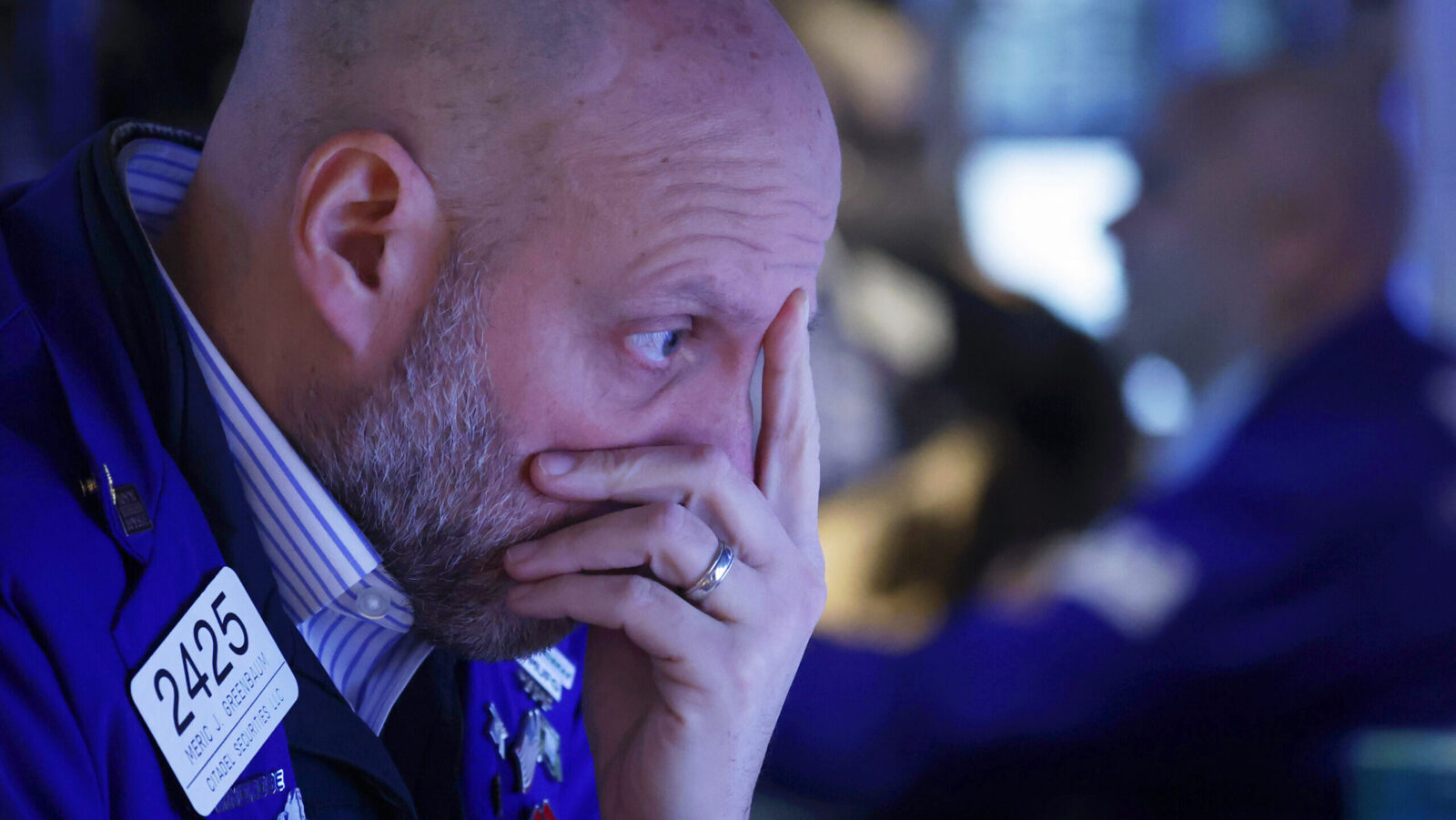
Almost anywhere Wall Streeters looked yesterday, they saw trouble. To the East, a brewing trade war with Europe over the fate of Greenland. To the West, an all-time meltdown in Japan’s bond market.
The result? Equities melted, the VIX jumped, gold soared and yields on America’s own government bonds leaped to recent highs. And it couldn’t have come at a worse time for Wall Street, which somehow — we’re honestly not sure how — made it into the New Year with a newfound sense of calm and serenity. Call it a dual global wakeup-slash-margin call. Next Christmas, we want whatever eggnog they were drinking.
Risky Business
No, seriously: Wall Street, which has been admirably tuning out geopolitical noise all year, exited last week feeling quite rosy. According to a Bank of America survey published Tuesday and conducted between January 9 and 15, fund managers were feeling their most bullish since the glorious post-COVID, pre-inflation days of July 2021. Cash levels fell to a record low, with 48% of managers reporting overweight positions. Half of respondents said they had no protections against a sharp U-turn in equity prices, the highest amount since 2018.
Then came President Trump’s escalated rhetoric over Greenland, prompting threats of explosive retaliation from European leaders. S&P 500 futures slipped about 0.9% on the Monday holiday, before the index fell more than 2% on Tuesday, coinciding with another blaring wakeup call. Yields on ultra-long 40-year Japanese Government Bonds (JGB) rose 0.26 percentage point on Tuesday, reaching 4.2%, an all-time high and crossing the 4% threshold for the first time since their debut in 2007. It’s the roiling end of a slow boil. Investors for years have been wary of Japan’s growing debts, especially amid Prime Minister Sanae Takaichi’s high-spending, tax-slashing regime; yields on 20- and 40-year JGBs have jumped 80 basis points since Takaichi took office in October.
The turmoil spread across global bond markets, and, suddenly, rosy Wall Street was forced to adopt a risk-off mindset:
- Yields on five- and 10-year US government bonds hit their highest intraday levels since August, while 30-year yields hit their highest point since early September, before all three stabilized somewhat by market close. Chicago Board Options Exchange’s CBOE Volatility Index, also known as the VIX, also known as Wall Street’s fear index, jumped 6.6% Tuesday, while gold notched a record high.
- “No one is doing a great deal to control fiscal deficits, and when it all comes together with geopolitical concerns around Greenland and European demand for Treasurys, plus the Japanese selloff, yield curves need to be steeper to get the appropriate amount of risk premium,” Dominic Konstam, head of macro strategy at Mizuho Securities, told Bloomberg.
Selling Out: At the World Economic Forum in Davos, European Commission President Ursula von der Leyen said the bloc must be “unflinching, united and proportional” in its response to the US. Not everyone is waiting around. Danish pension operator AkademikerPension said Tuesday it plans to exit its $100 million position in US Treasurys by the end of the month, with investing chief Anders Schelde telling CNBC: “It is not directly related to the ongoing rift between the [US] and Europe, but of course that didn’t make it more difficult to take the decision.”
How Are CFOs Preparing for 2026?

26% of finance leaders say economic uncertainty is their top risk heading into 2026. But regulatory pressure, data privacy and tax complexity aren’t far behind. The margin for error is shrinking.
The CFO Agenda 2026: 12 Ways to Flourish Now from Oracle NetSuite draws on global research to show how finance leaders are balancing cost control, resilience and AI-driven growth. Inside, you’ll find four focused, three-step guides designed to move from insight to execution:
- Drive operational excellence with technology.
- Optimize cash flow using advanced forecasting.
- Extract strategic insights from your data.
Are you prepared for 2026? These frameworks help CFOs make smarter decisions when the margin for error is thin.
White House Affordability Push Grabs Big Bank Bulls by the Horns
Is the bull case for banks about to get much harder to make?
Earlier this month, President Donald Trump ordered defense companies to stop repurchasing their own shares and his director of the Federal Housing Finance Agency, Bill Pulte, said the agency is scrutinizing how much homebuilders spend on buybacks. The White House said that those moves weren’t coordinated and didn’t extend to other industries, per The Wall Street Journal. But if buybacks are becoming a political risk, banks could be in trouble.
The president has begun making more populist proposals — such as curtailing credit card interest rates — to buoy affordability and appeal to voters before this year’s midterm elections, which could change the balance of power in Congress. And while his authority to enforce a prohibition on defense company buybacks is unclear, banks already have to seek government approval for repurchases under regulations meant to ensure they can withstand shocks to the financial system.
The six largest US banks spent more than $140 billion on dividends and buybacks last year, beating the record set in 2019, according to Bloomberg. JPMorgan Chase is particularly keen on repurchasing its own stock: The giant bought back more than $30 billion of shares — a high for Wall Street banks.
Political Cost of Capital
Banks tend to hold more capital than their minimum regulatory requirement, and the bull case for lenders often assumes that they’ll use some of that extra money to buy back shares and boost their earnings. Some upcoming reforms could result in lower requirements for the capital that banks hold, freeing even more money to reward investors, says Sean Dunlop, director of equity research at Morningstar.
“Most banks are holding the extra capital today either because they are awaiting regulatory clarity regarding their ultimate capital requirements or because they view their own shares as too expensive to justify extensive share repurchases, or some combination thereof,” Dunlop says.
But if banks can’t carry on with buybacks, they would have to use capital elsewhere:
- Their options are more lending, more investments in securities (of which US Treasurys make up a disproportionate share) or higher dividend payments. But Dunlop says banks are reluctant to raise dividends much higher than they are today, and there are demand-side limits to how much they can safely grow their lending. In other words, signs point to larger Treasury holdings.
- That could be a good thing for the Trump administration. But for banks, holding Treasurys offers a lower return on assets than they’d probably like.
Hopeful No More: Banks started Trump’s second term with optimism about his plans for deregulation. It’s safe to say that his recent plan to cap credit card interest rates at 10% and his threats to sue JPMorgan Chase over allegedly “debanking” him have the industry singing a different tune.
Bubble or Boom? Answer Depends on AI Adoption, Microsoft CEO Says
He’s not saying it is a bubble, but Microsoft CEO Satya Nadella knows what one would look like.
Speaking at the World Economic Forum in Davos, Switzerland, on Tuesday, the Microsoft CEO said whether there’s an AI bubble depends on one not-so-surprising factor: adoption rates. “For this not to be a bubble by definition, it requires that the benefits of this are much more evenly spread” beyond just AI firms and the tech industry, Nadella said. Early indications suggest the industry may have its work (human, AI-driven or otherwise) cut out for it to achieve that.
In the Business of Business
In PwC’s 29th Global CEO Survey, published this week, just 12% of top bosses said AI has delivered both cost and revenue benefits for their organizations, and more than half (56%) say they have seen no significant financial benefit from it. That dovetails with an MIT report last summer that found 95% of firms reporting zero returns on their own AI pilot programs.
Thankfully for Nadella and the rest of the AI eggheads in Silicon Valley, PwC’s report also offers a roadmap for successful AI deployment:
- Per the survey, CEOs who reported both cost improvements and savings gains from AI were around 2.5 times more likely to say their companies have integrated AI across operations, from strategic decision-making to products and services.
- Meanwhile, organizations that established “strong AI foundations” were three times more likely to report meaningful financial gains. Translation: Companies seem to be getting out of AI what they put into it.
“AI moves so fast … that people forgot that the adoption of technology, you have to go to the basics,” PwC global chairman Mohamed Kande told Fortune on Tuesday.
Spread The Wealth: AI firms, meanwhile, are grappling with a fundamental business question of their own: how to make money. Last week, OpenAI announced plans to start testing ads in the US for its free and low-cost Go tier worldwide. In Davos this week, Google DeepMind CEO Demis Hassabis told independent tech journalist Alex Heath the company has “no plan” of its own to put ads in Gemini, adding, “It’s interesting [OpenAI has] gone for that so early … Maybe they feel they need to make more revenue.” Perish the thought!
Extra Upside
- Hey, Big Spenders: United Airlines predicts earnings may climb more than 30% this year as travelers pay extra for premium seats and benefits.
- Full Stream Ahead: Netflix expects to invest 10% more in films and television production while fighting to complete its purchase of Warner Bros. Discovery.
- 7 Ways to Achieve a Comfortable Retirement. Retirement planning shouldn’t be complicated. The Definitive Guide to Retirement Income can help you feel confident about your financial future. Explore seven income streams to help keep a $1,000,000 portfolio growing for years to come. Learn more.*
* Partner

