
Smart, actionable news trusted by millions.

Our flagship newsletter delivers smart news and analysis on finance, and investing — all for free.

Good morning and happy Friday.

Such are the healing powers of Magic Mountain’s crisp Alpine air.

Attendees entered the World Economic Forum in Davos, Switzerland, this week on edge over a major brouhaha between the US and its European allies over the fate of Greenland. Instead, the two sides arrived at a “framework” of a deal, per US President Donald Trump, which Bloomberg reported Thursday will include the stationing of US missiles and new mining rights in Danish autonomous territory designed to block Chinese interests. From foes to friends again. Speaking of, longtime Davos-hater Elon Musk made his first-ever appearance at the exclusive conference on Thursday. In a 30-minute sitdown interview with BlackRock CEO Larry Fink, Musk even drew a few moments of applause and laughter from the crowd he has ceaselessly derided as elitist and out of touch.

Consumer

Procter & Gamble Lathers Up a Turnaround
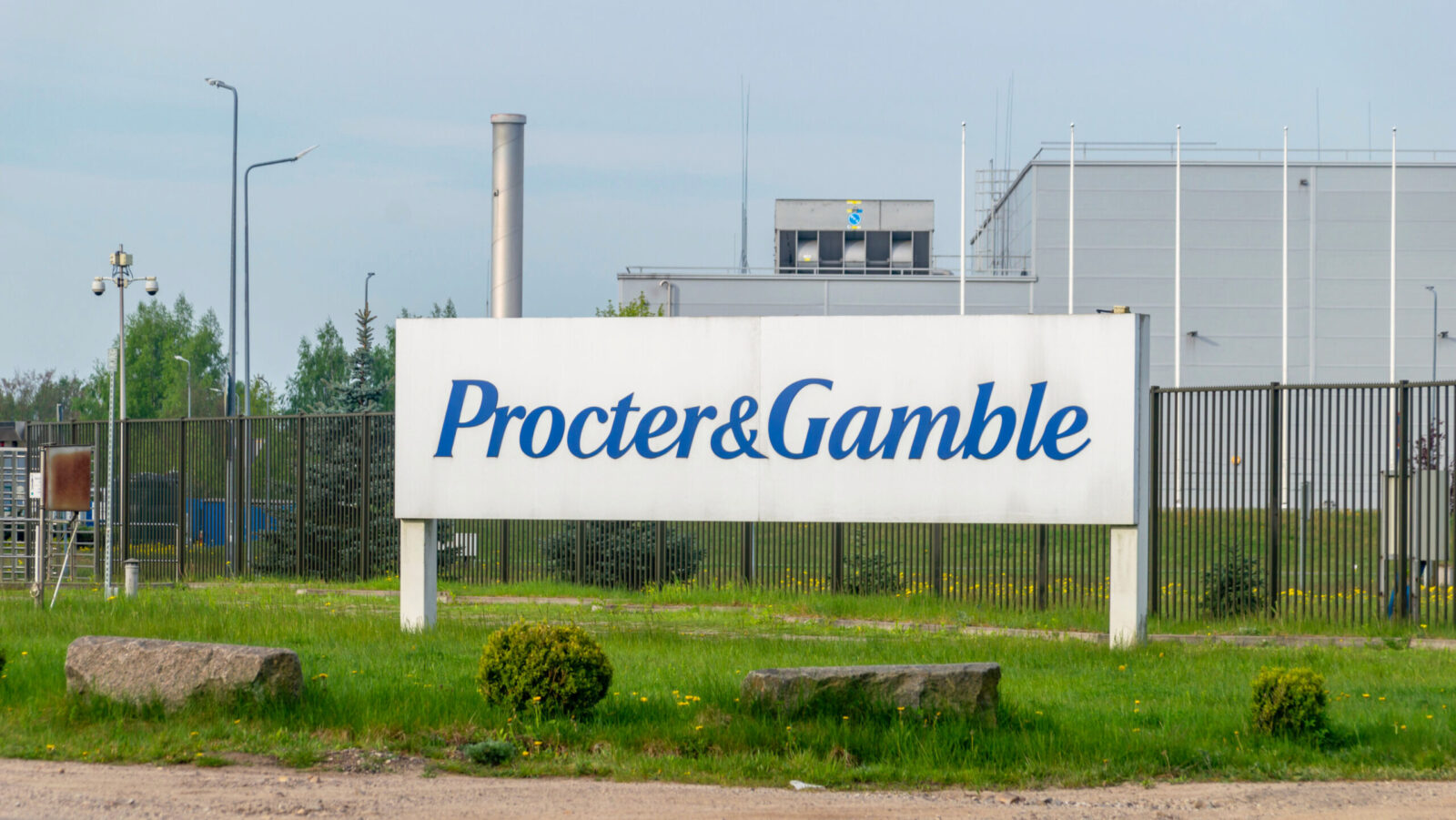
Photo of the logo of Procter and Gamble.
Photo by RobsonPL via iStock

No Shave November apparently had an extended run last year, with Procter & Gamble reporting weak demand for Gillette razors and other grooming products. But consumers didn’t just skip shaves: Volume fell for three out of five P&G product categories, the company reported yesterday.

The aisle that consumers skipped most was the one with feminine and family care products, including P&G brands like Pampers, Charmin and Tampax. P&G’s volume for the category fell 5% last quarter, while its grooming biz (Gillette, Venus) dipped 2% and its healthcare segment (Oral-B, Vicks) dropped 1%.

While P&G’s overall revenue came in below expectations, its shares ticked up yesterday as investors looked to new CEO Shailesh Jejurikar to lead the product titan in a turnaround. Chief Financial Officer Andre Schulten said last quarter will be the company’s weakest of the fiscal year.

Silk Diapers and Vitamin C Serums

Schulten attributed low demand to consumers staggering their purchases more — in other words, shoppers are saving money by opting to shave twice a week instead of every day. P&G and other consumer companies are dealing with shoppers who wait longer between purchases, looking out for any inflation-offsetting deals. The government shutdown, which delayed SNAP benefits, hit lower-income shoppers hard at the end of 2025, prompting P&G’s finance chief to call out shutdown-related sales declines in December.

But while P&G has seen low demand for a wide swath of products, not everything in its portfolio was in the red as the K-shaped economy played out:

  • P&G’s haircare and beauty category was the only piece of its biz in which sales volume grew last quarter. Over the years, the Pantene parent has acquired high-end hair- and skincare brands like Ouai and Farmacy, which sell products ranging from $30 shampoos to $60 serums.
  • Meanwhile, in China, which is facing a consumer-spending crisis of its own, P&G’s line of Pampers Prestige baby products, featuring diapers made in part with silk, is flying off shelves. Despite China’s record-low birthrate, P&G said its baby-related business in the country is growing by double digits.

Rinse and Repeat: There’s a balancing act when it comes to inflation. P&G’s sales rose 1% to $22.2 billion last quarter from higher prices, but demand, measured by the volume of products sold, fell as consumers were put off by higher prices, shopping less and seeking out deals. While higher-income consumers are also looking for deals, P&G has said, margins tend to be wider on luxe products even when shoppers snag a discount. Consumer product companies could also be seeing a comeback of the “Lipstick Index” theory: When shoppers feel they have to skimp on some purchases, they’re more likely to splurge on small luxuries like high-end makeup.

Photo via EnergyX

America is dedicating $7B to boost the domestic supply of precious metals. The real winner could be a US startup preparing for commercial lithium production right now, and investors are taking advantage.

EnergyX has been at the forefront of the $204B energy storage market for years, with patented tech that can recover up to 3X more lithium than conventional methods.

Backed by General Motors, POSCO and Eni, they control approximately 150,000 acres of prime lithium territory across Chile and the US.

In fact, a recent independent study says EnergyX’s Chilean resource alone could generate $1.1B annually at projected market prices once fully operational. No wonder over 40,000+ people have already invested.

Invest before EnergyX’s share price increases on 2/26.*

Banking

Huntington Bank’s 21% Growth Shows Main Street’s up for Borrowing

Vibecession? They’re not feeling it.

Businesses that borrow from regional banks seem to think the economy’s just fine. Huntington Bancshares, the parent company of Ohio-based Huntington Bank, reported that its average commercial loans grew 12% from the prior quarter and 21% from a year ago during the last three months of 2025. The bank expects net interest income — the difference between how much money it generates from interest-bearing assets like loans, and how much it has to pay to depositors — to climb between 10% and 13% to a record high this year.

“Our focus for 2026 remains on driving strong organic growth,” Huntington CEO Steve Steinou said in a statement. “We entered the year with excellent momentum and our backlogs and pipeline are robust.”

Regional Banks Report

Regional banks operate closer to Main Street than financial behemoths like JPMorgan Chase and Bank of America, so they can offer insight into how comfortable small- and medium-sized businesses are running up debt to invest in expansion. They also tend to be more sensitive to the economy and interest rates than their larger peers.

“Regional banks’ net interest income will face some headwinds in 2026 from two or three rate cuts from the Fed,” Morningstar equity analyst Maoyuan Chen said in a markets brief earlier this week, adding that banks’ growth will depend on loan volume. “We currently forecast around 3-4% growth, but we could see bank lending growing faster from more commercial real estate loan growth, a headwind in the past three years, or higher commercial lending growth from a pickup in middle-market M&A deal activity.”

As for now, Huntington isn’t the only regional bank with good news on the earnings front:

  • Cincinnati-headquartered Fifth Third reported the “highest quarterly commercial loan production in over three years, driven by investments in middle market sales force and corporate banking expertise” in the fourth quarter.
  • KeyCorp, the parent company of Cleveland-based KeyBank, reported that net interest income grew 15% year-over-year in the fourth quarter.

Buying Opportunity: Devin Ryan, senior research analyst at Citizens, recently told CNBC that his firm sees regional bank stocks as a buying opportunity. Earlier this month, Erika Najarian, UBS senior equity research analyst and managing director, told the outlet that it’s time to rotate into some regional bank stocks, in part because of a rebound in loan growth.

Meet Range, All-in-One Wealth Management, Designed for Households Making over $300,000 with Complexity in Their Wealth. Range delivers comprehensive financial planning across investments, taxes (including tax filing), real estate, equity compensation, and retirement, all through a transparent flat fee model. Book your free demo today.**

Semiconductors

Supply Shortages Send Intel Stock Sputtering

Intel’s “Made in America” mission remains a work in progress.

In the storied American chipmaker’s earnings call on Thursday, it delivered an unexpectedly dour outlook for the current quarter as supply shortages prevent it from meeting customer demand. Shares of the company cooled 4% Thursday ahead of the after-the-bell report, and as much as 6% in after-hours trading. Ouch.

Chips on the Table

President Trump, whose administration acquired a 10% stake in the company last year, wasn’t the only one to go from Intel skeptic to true-believer. In 2025, the company’s shares leapt more than 80% and another 37% in the New Year through Wednesday, reaching a four-year high. Wall Street had begun to buy into the company’s vision of an authentically American chip fabricator in the AI age — never mind the fact that Intel has often struggled to attract clients.

Now it has a new problem. Demand is “quite strong,” CEO Lip-Bu Tan told Bloomberg on Wednesday, but the company can’t make new chips fast, or rather effectively, enough:

  • “Our yield and production manufacturing are not up to my standards. We need to improve that,” Tan told Bloomberg. In a note earlier this year, KeyBanc Capital Markets analyst John Vinh estimated the yield on Intel’s leading-edge chipmaking process was around 60%; that’s lower than master chipmaker TSMC’s 80% yield, but better than industry also-ran Samsung’s 40%.
  • Still, Intel’s foundry unit generated $4.5 billion in revenue, up nearly 4% year over year and a decent chunk of its total $13.7 billion in revenue. For the current quarter, Intel predicted revenue of $11.7 billion to $12.7 billion, which disappointed Wall Street.

Looking Up: The good news is that CFO David Zinsner expects the company’s supply to reach its “lowest level” in the current quarter, before rebounding through the rest of the year. And Intel is hardly the only player in the game feeling a crunch: Micron, Broadcom and Nvidia are all chips off the old block with similar supply shortages. That’s good company to be in.

Extra Upside

  • It’s Official: TikTok finalized a deal Thursday fostered by President Trump that will allow it to continue sharing user videos in the US.
  • Legal Tender: President Trump is seeking $5 billion in damages from JPMorgan Chase in a lawsuit claiming the bank closed his accounts after a January 2021 riot at the US Capitol.
  • Read Stocks Like Big Money Does. Most traders chase headlines. Smart traders read capital flow. VantagePoint’s predictive AI identifies leading sectors before price confirms it, so you know when to enter, wait or exit using disciplined, top-down signals. Master sector rotation strategies, download their free guide.***

*** Partner

Disclaimers

*Energy Exploration Technologies, Inc. (“EnergyX”) has engaged The Daily Upside to publish this communication in connection with EnergyX’s ongoing Regulation A offering. The Daily Upside has been paid in cash and may receive additional compensation. The Daily Upside and/or its affiliates do not currently hold securities of EnergyX. This compensation and any current or future ownership interest could create a conflict of interest. Please consider this disclosure alongside EnergyX’s offering materials. EnergyX’s Regulation A offering has been qualified by the SEC. Offers and sales may be made only by means of the qualified offering circular. Before investing, carefully review the offering circular, including the risk factors. The offering circular is available at invest.energyx.com/.

**Non-client promoter providing paid endorsement of Range Advisory, LLC. Compensation creates a conflict of interest. Not investment advice. Visit Range.com for details.

Sign Up for The Daily Upside to Unlock This Article
Sharp news & analysis on finance, economics, and investing.