

Good morning and happy Sunday.
Sure, “printing money” sounds cool. But it’s a euphemism for what the Federal Reserve does, not a technically accurate description; the central bank’s core mission is walking the vibrating tightrope of boosting jobs without fueling inflation while grappling with outside efforts to influence its decisions. It’s a high-profile role and, at times, an unenviable one. And Wall Street is always watching, trying to gauge what will happen next.
That’s the subject of today’s deep dive. But first, a word from our sponsor, Betterment.
Betterment’s Cash Reserve secures your money during volatile times and currently offers an APY of 3.25%, which is 8x the national average. Set money aside for what matters to you. You can create multiple savings goals and use Betterment’s automated tools to help you achieve them. There’s unlimited withdrawals and no minimum balance.
Betterment’s Cash Reserve lets you earn interest and helps keep your money safe as it grows. FDIC insurance covers your money up to $2 million ($4 million for joint accounts) at Betterment’s program banks, meaning you won’t have to sacrifice security for growth.
Betterment’s new customer offer: Open a Cash Reserve account and make a qualifying deposit to get a 0.65% APY boost on your savings for 3 months. Your boost stays locked in, even if Betterment’s base rate changes.
Limbo for Longer: Don’t Expect More Fed Rate Cuts Before Mid-2026
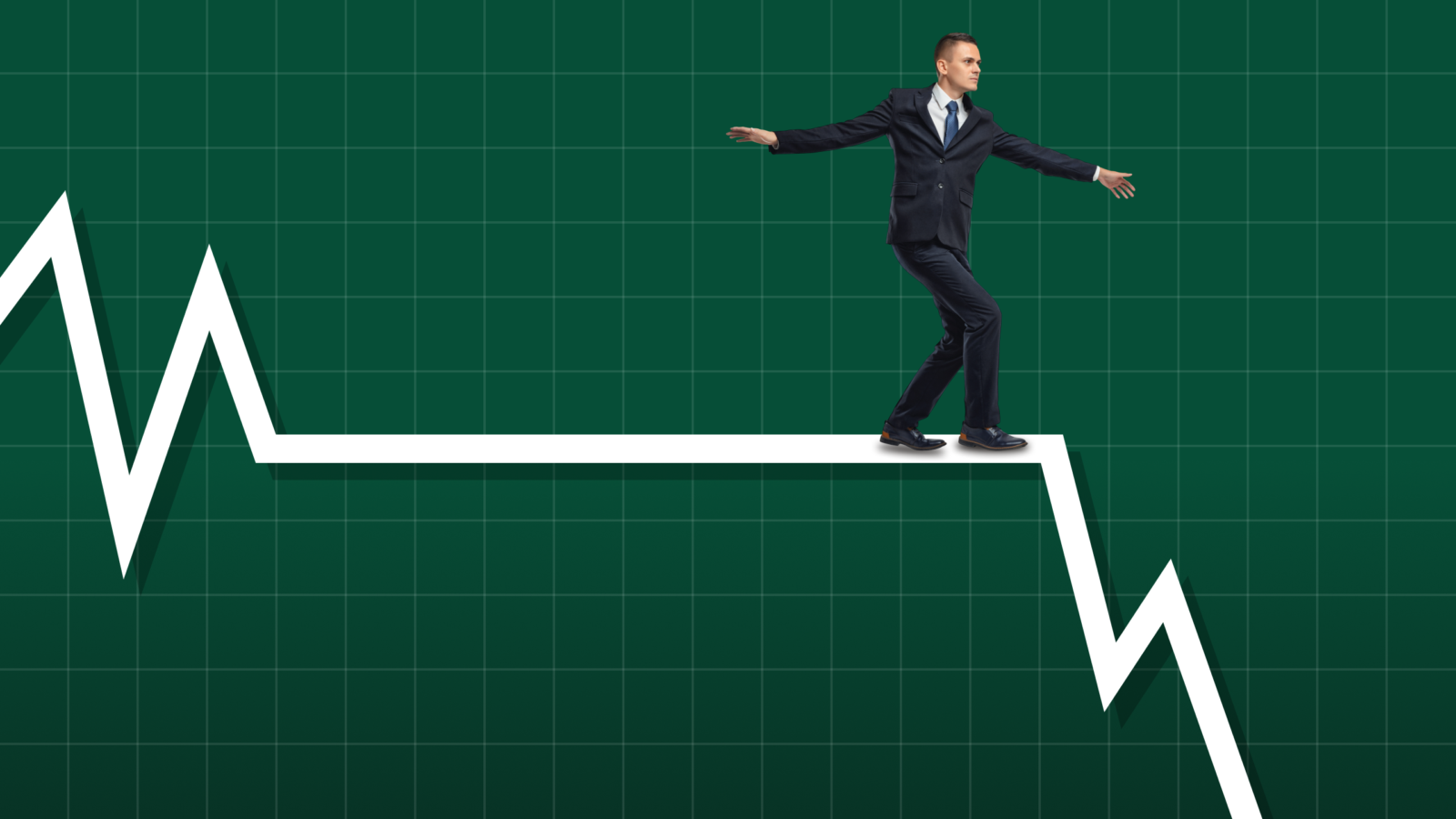
To cut, or not to cut. That’s the question that the Federal Reserve is wrestling with as it kicks off 2026 with mixed signals from the economy and lingering impacts of data delays from last year’s government shutdown.
The US economy grew at an inflation-adjusted annualized rate of 4.4% in the third quarter of 2025 — its fastest pace in two years. Strong consumer spending signals that the fourth-quarter data may show continued expansion. Yet there’s no masking weakness in the labor market, which added fewer jobs in December than economists had expected, ending the worst year for hiring since 2020. And while inflation decelerated throughout last year to 2.7% in December from 2.9% a year ago (and even more if you zero in on core inflation, which excludes volatile food and energy prices), it’s still well above the Fed’s 2% goal.
Now the central bank will have to balance continuing to cool inflation without spurring unemployment, a tricky feat with the Fed’s toolbox. While policymakers might typically lower interest rates to buoy hiring, that would run the risk of driving inflation even higher. Throw in a criminal investigation into Fed Chair Jerome Powell, President Donald Trump’s highly anticipated selection of Powell’s successor (which reports say may happen as soon as this week) during a mid-term election year, and you can see why predicting where interest rates are headed has economists and Wall Street in a bit of a tizzy.
Outlook Options
It’s not often that experts are on the same page about the state of the economy and what it means for the Fed, but they’ve achieved flawless three-part harmony on this one: They’re not expecting a cut at this week’s meeting. As of last week, the widely followed FedWatch tool from CME Group estimated a 97% chance that the Federal Open Market Committee would leave rates unchanged.
“Most members of the Fed prefer to wait for additional economic data, particularly surrounding inflation and labor markets,” Bill Merz, head of capital markets research and portfolio construction at US Bank Asset Management, told The Daily Upside. “Their focus tends to be primarily official government sources that still may be influenced by the government shutdown last year.”
JoAnne Bianco, a partner and senior investment strategist at BondBloxx, said there’s “almost no possibility of a rate cut at the January meeting.” She added that the probabilities also remain low for rate cuts at the March and April meetings. Traders agree: The FedWatch tool points to an 84% chance the Fed keeps interest rates steady in March and a 70% chance it does the same in April.
But while a Powell-led rate cut isn’t likely, come June, a new head of the Fed is likely to be running the show.
“We assume that we’ll get a new Fed chair in the second half of next year, and that new Fed chair will be more dovish than Powell,” said Stephen Juneau, Bank of America senior economist. (Doves tend to favor lower rates to boost economic activity, while hawks are more keen on high interest rates to keep inflation in check.) “We think that that person will be able to kind of convince enough people on the committee … to follow through with two more cuts.”
Bank of America is currently predicting those post-Powell cuts will come in June and July, though Juneau says the timing could certainly change. Researchers at Goldman Sachs recently said they expect to see two rate cuts of 25 basis points, one in June and the other in September. Merz also says two cuts in the second half of 2026 is a “reasonable assumption.”
But not everyone believes that a new, dovish Fed leader will spell cuts. Researchers at J.P. Morgan Global expect the Fed to hold tight for the rest of the year and hike the federal funds rate by 25 basis points in the third quarter of 2027. “If the labor market weakens again in the coming months, or if inflation falls materially, the Fed could still ease later this year,” the bank’s chief US economist said in a recent note. “However, we expect the labor market to tighten by the second quarter and the disinflation process to be quite gradual.”
More Affordable Mortgages?
Earlier this month, the average rate on the 30-year fixed-rate mortgage fell to 6.06%, its lowest level since September 2022. If the Fed does indeed cut rates in the second half of the year, that should continue to improve housing affordability, all else equal.
“But will it? That’s kind of a bigger question,” Juneau said. “There are other factors at work — like the rising deficits in the US, the general broad increase in term premium and limited demand for Treasurys at the back end of the curve — that can kind of offset some of the downward pressure on affordability coming from purely Fed cuts.”
Plus, mortgage rates don’t directly mirror the federal funds rate; they track the 10-year Treasury yield. And Juneau said Bank of America rate strategists expect the 10-year Treasury yield to remain unchanged in 2026, despite cuts. Strategists at Charles Schwab also see the 10-year Treasury yield holding near 4%, “given sticky inflation, an expected increase in Treasury supply to finance federal deficits and rising global bond yields.” (Lenders add a spread to the 10-year Treasury yield to help cover their costs, which is why mortgage rates aren’t also at 4%.)
As of now, Fannie Mae expects the 30-year fixed-rate mortgage to end the year around 6%, while the Mortgage Bankers Association expects it at 6.4%.
The housing market certainly needs some good news. In December, pending home sales declined a sharp 9.3% from the month before and 3% year over year. The White House is trying to make residential properties more affordable with an executive order signed Tuesday that restricts large institutional investors such as Blackstone from buying single-family homes that Trump says could be purchased by individuals.
Bond Market Bennies
The second year of a rate-cut cycle tends to be positive for stocks because the threat of a recession has waned or we’ve already gone through one, said Sam Stovall, chief investment strategist at investment research firm CFRA. The S&P 500 has climbed an average 6.2% during the second year of such cycles, according to data the firm has gathered since 1991. Small- and mid-cap stocks tend to outperform their large-cap counterparts.
At the risk of sounding like a compliance team, past performance doesn’t guarantee future performance. But rate cuts do usually give equities a boost, since companies can borrow money at lower costs and put it to work, and consumers are able to spend more.
Existing bonds also tend to get more attractive when rates are cut.
“We expect another good year in 2026, although returns might not be as robust as they were last year,” Schwab strategists wrote recently. “Starting yields are lower, and we see less room for yields to fall (and prices to rise) as an expected resilient economy likely will limit the scope for Fed rate cuts.”
US Treasurys, however, didn’t start the year off on a great footing. They — along with the global government bond market — experienced a sharp selloff last week as Trump ratcheted up threats to impose tariffs on European countries that didn’t support his attempt to take control of Greenland. But worries about a potential trade war waned, and the bond markets calmed after Trump walked back the threat. European investors hold roughly $8 trillion in US Treasurys and equities — more than any other foreign holders, according to a note from Deutsche Bank.
Earn a 3.90% Var. APY with Betterment’s High-Yield Cash Account

Betterment’s new customer offer: Open a Cash Reserve account and make a qualifying deposit to get a 0.65% APY boost on your savings for 3 months. Your boost stays locked in, even if our base rate changes.
Keep your money safe as it grows. Betterment Cash Reserve lets you earn interest even during volatile times. FDIC insurance covers your money up to $2 million ($4 million for joint accounts) at Betterment program banks, meaning you won’t have to sacrifice security for growth. There are unlimited withdrawals and no minimum balance. Plus, if the variable base APY changes, you’ll still earn the 0.65% boost on the updated rate.