

Good morning and happy Sunday.
The problem with making it to the top in any field is that someone else, who wants to be there just as badly as you did, is always trying to replace you. That’s true even for the Magnificent 7, the tech giants who command an outsize swath of the S&P 500’s market value but are seeing their collective sway diluted by upstart AI rivals. That’s the subject of today’s deep dive.
But first, a word from our sponsor, Oracle NetSuite.
The more volatile these markets get, the more CFOs need to anchor themselves to facts.
Real, cash-flow-generating facts.
And as facts get more important, focusing on metrics like EBITDA can become a distraction. Especially today, as interest costs eat into “adjusted” earnings, making cash flow your only true hedge against refinancing risk.
Real strategic power belongs to the CFOs who prioritize liquidity. And this guide from Oracle NetSuite gives you a clear plan to unlock more of it.
You’ll learn:
- Why cash remains the number-one indicator of solvency.
- How to identify the blind spots in your earnings.
- Proven frameworks to optimize your cash flow.
Get the full picture and download your CFO’s guide to cash visibility and discipline here.
Will MANGO Inherit Magnificent 7’s Market Dominance?
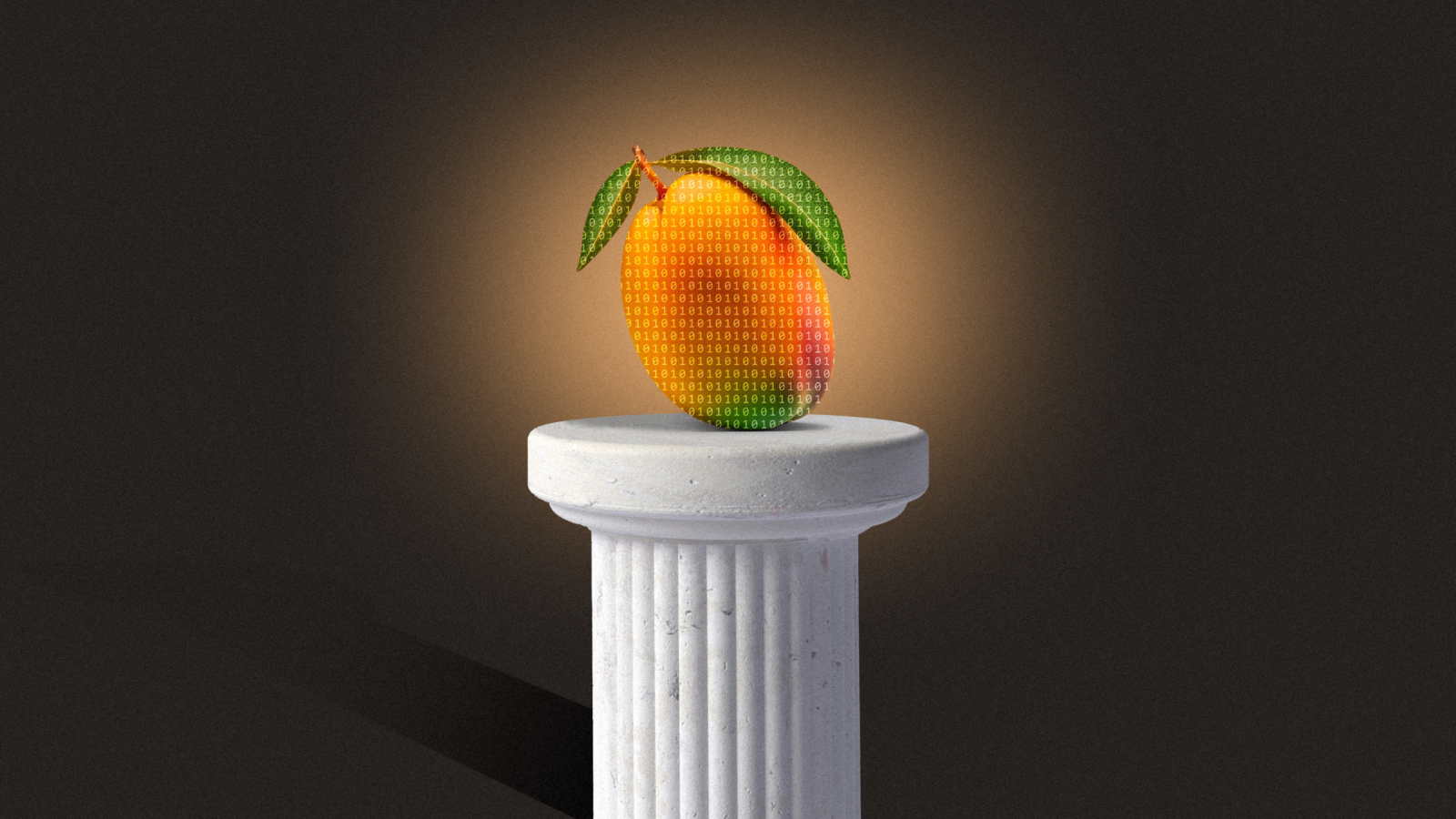
Talking Heads. One Direction. Destiny’s Child. Even the greatest groups break up, and the same’s true on Wall Street. The Magnificent 7 (Alphabet, Nvidia, Microsoft, Meta, Apple, Amazon and Tesla) just don’t seem to have the stage presence they used to. While Nvidia and Alphabet outperformed the S&P 500 last year, the other five stocks dragged the index down.
Artificial intelligence, meanwhile, has thrown a spotlight on the companies at the forefront of the new tech. Nvidia has gone from being the smallest part of the Mag 7 to by far the largest, while Google has gained attention for its DeepMind division. Private companies, notably OpenAI and Anthropic, are taking up more air in the room as they rack up massive investment rounds and their chatbot products become everyone’s therapist and personal email writer.
The Mag 7 isn’t going anywhere overnight, or maybe ever, but a new batch of companies is dominating the popular narrative.
Mag 7 to Lag 7
The term Magnificent 7 came into vogue in 2023, coined by Bank of America strategist Michael Hartnett and based on the eponymous western movie. The group of companies has grown to make up a massive share of the S&P 500 over the past decade, with their percentage of the index’s market value rising from about 13% in 2016 to 33% earlier this month.
Don’t let the growth fool you, though:
- The Mag 7’s share of the S&P 500 has receded from last year’s level as of this month and is increasingly dominated by companies within it that have adapted to the AI era. Nvidia now makes up more than a fifth of the Mag 7’s total market share. The chipmaker, which has shifted its focus in recent years from gaming to AI, is almost worth more than the three least valuable members of the group (Amazon, Meta and Tesla) combined.
- Like Nvidia, Microsoft stands taller in the group compared with peers, Moses Singer partner Rob Rosenberg told The Daily Upside. While Nvidia has its chips, Microsoft has its AI assistant Copilot as well as its massive investments into OpenAI and Anthropic, the latter of which is having its models integrated into Copilot as of this month.
As the narrative shifts towards AI and some of the S&P’s biggest players struggle to boost the index they dominate, Hartnett wrote in a note that the group should get a new moniker: the Lagnificent 7. Fittingly, Hartnett told The Wall Street Journal that in the original western film, only some of the characters survived.
And just like in the wild west, investors are abandoning some companies in the desert. Tesla, once a favorite among retail traders, saw activity from everyday investors fall 43% last year from its 2023 peak. The company’s slow electric-vehicle sales, as well as its CEO’s polarizing antics, have rubbed less die-hard shareholders the wrong way.
AI Titans Go Tropical
The companies getting the most buzz, meanwhile, are drifting into new cliques. One that has been making headlines: MANGO, an acronym for Microsoft, Anthropic, Nvidia, Google DeepMind and OpenAI. (There’s some debate online about whether the M and A are actually Meta and Apple, which would overlap even more with the Mag 7.)
Venture capitalist Kristina Shen told CNBC that this handful of AI-forward companies is now controlling consumer sentiment. Rosenberg, who wrote about the shift to MANGO last year, told The Daily Upside, “It’s really about what is stealing all the air in the room.”
It’s not that the Mag 7, or its predecessor FAANG (Facebook, Apple, Amazon, Netflix and Google), have lost market dominance. They’re all still titans in their respective fields. But AI is now driving the conversation on Wall Street and at the dinner table, as well as attracting hundreds of millions of dollars in new money.
The impact of MANGO for now is hard to measure because two of its titans, OpenAI and Anthropic, are still private companies. However:
- Rosenberg expects AI companies may go public when enthusiasm (and funding) slows down. Compared with the internet era, when companies tried to get their money out of their initial investment quickly through IPOs, Rosenberg said, “People are playing a longer game.”
- OpenAI is reportedly considering an IPO later this year that could be worth up to $1 trillion. Anthropic has no known plans to go public, but it will be a behemoth when it does: Its valuation climbed to $380 billion after its February funding round. Together, they’d hit the market like a massive belly flop.
MANGO Could Stick
Nvidia and Microsoft have broken away from the Mag 7 by making AI core to their businesses. Other companies may expand their AI-related ventures as the revenue streams they’re best known for become less relevant. Divisions of Amazon and Alphabet to watch, Rosenberg said, include:
- AWS, Amazon’s cloud division, which is becoming increasingly important as AI demands more and more computing power. Revenue from AWS grew 24% year over year in the most recent quarter to make up nearly 17% of sales for Amazon, which built its empire on e-commerce.
- DeepMind, the groundbreaking Alphabet lab that created an AI program to advance biological research by analyzing proteins. (It even won the 2024 Nobel Prize in Chemistry.) Now, its scientists are creating deep learning models that make predictions about genes; they’re being used in research for cancer and other diseases.
Apple, meanwhile, has seen less success with its AI efforts after failing to impress with its smarter, and much-delayed, Siri upgrade. Meta’s AI integrations have similarly failed to make a big splash. And, rounding out the Mag 7, Tesla’s AI-powered robotaxis and humanoid robots don’t seem enough to put it at the center of the AI conversation.
Investors have been grouping the most zeitgeisty companies together with catchy terms since the 1960s, when the Nifty Fifty stocks dominated industries. There have been WATCH (Walmart, Amazon, Target, Costco and Home Depot), Beijing’s BAT (Baidu, Alibaba and Tencent), and Granolas (11 European companies that included Novo Nordisk and Roche). Like its namesake, MANGO could be sticky. Rosenberg said what sets the group apart is AI’s industry-spanning influence, which is reshaping everything from medicine to education.
CFO: It’s Time to Clear the Fog in Your Reporting

As any seasoned CFO will tell you (perhaps after a few glasses of wine), EBITDA can be the ultimate vanity metric. It’s a useful snapshot and looks impressive on a slide deck. But you can’t service debt or fund a pivotal acquisition with “adjusted” earnings.
For sustainable growth, we need to keep our eyes on metrics that drive resilience: true cash flow, hidden earnings blind spots, and unlocked liquidity.
Cut through the haze and download your CFO’s guide to cash visibility and discipline.