

Good morning and happy Monday.
The 2025 US economy crossed the finish line wheezing a lot more than any of us thought. On Friday, the Bureau of Economic Analysis halved its fourth-quarter annualized growth reading to 0.7%. Business investments in manufacturing, exports and the great driver of the US economy, consumer spending, were all weaker than reported in last month’s initial 1.4% estimate.
Meanwhile, the BEA’s Friday reading of the personal consumption expenditures price index, the Federal Reserve’s favorite inflation gauge, came in at 2.8% for the month of January. That’s in line with expectations but well ahead of the Fed’s inflation target, and it predates the likely inflationary impacts of the current energy shock. Coupled together, the two data points are heightening fears of everyone’s least favorite “S” word. If you thought your Monday was rough, Jerome Powell’s is worse.
AI Super Bowl Brings Moment of Truth for Nvidia’s ‘Chip That Will Surprise the World’
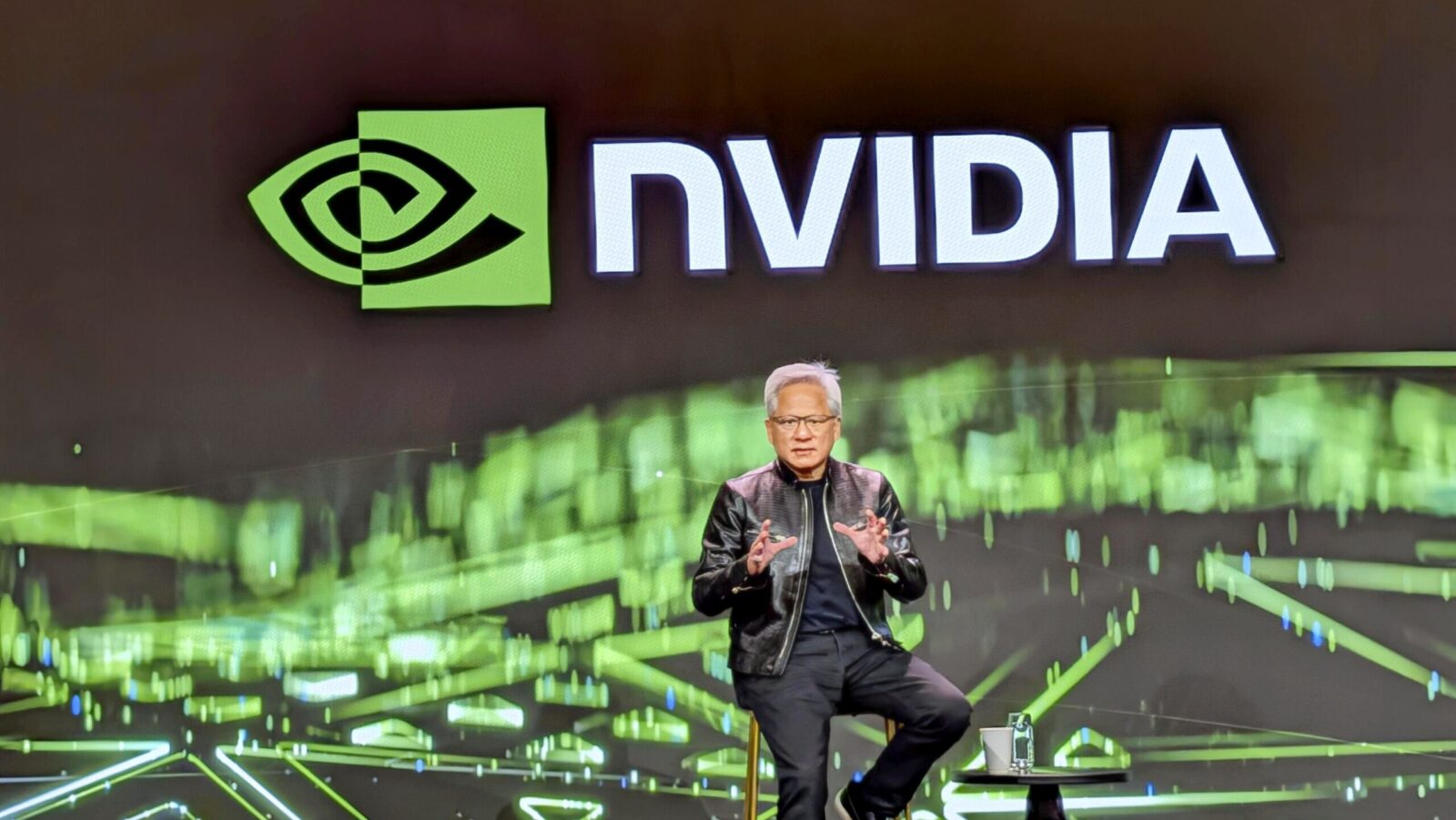
Last month, Nvidia delivered its latest blockbuster quarter, smashing through Wall Street’s earnings expectations. The market’s reaction: an aloof, Larry David-like “eh.” Shares in the world’s most valuable publicly traded company have slid 3.3% in 2026.
Today marks the company’s biggest chance to reignite investor enthusiasm, which has been curbed by the market’s fatigue with the AI trade. Through Thursday, the semiconductor giant is hosting the GPU Technology Conference, its annual showcase that’s been called AI’s Super Bowl. Nvidia CEO Jensen Huang, set to deliver a keynote at 11 a.m. PT today, has confidently promised “a chip that will surprise the world.”
Seeing Upside
An especially crucial factor to address in what Huang has referred to as “the largest infrastructure buildout in human history” will be AI’s changing hardware demands.
Generative AI models that respond to prompts, like ChatGPT and Claude, are primarily trained on specialized graphics processing units (GPUs), which are Nvidia’s bread and butter. But recent months have seen the rapid rise of agentic AI, which runs on its own or with limited human intervention: think autonomous vehicle technology and specialized coding agents, the latter of which sent software company shares into a tailspin earlier this year. Agentic AI also has different hardware needs, relying heavily on the general computing power of central processing units (CPUs), which aren’t Nvidia’s traditional focus. Bank of America analysts estimate the CPU market could more than double to $60 billion by 2030. Growing demand for CPUs has already created “a quiet supply crisis,” according to analysts at Futurum.
This is where Nvidia, which launched a data center CPU called Grace in 2021 and has begun producing its next-generation Vera, could capitalize. Industry watchers expect this week’s conference to see the debut of agentic-optimized CPUs, as well as CPU-only racks (Nvidia’s CPUs are normally deployed alongside GPUs). Futurum wrote that Nvidia, which struck a major CPU deal with Meta last month, is “aggressively moving beyond GPUs.” Success would contribute to some analysts’ belief that the world’s most valuable company is actually undervalued:
- “We do see an upside bias for the stock on the [GPU Conference], although it is hard to see [Nvidia] being able to provide thesis-altering commentary,” UBS analysts wrote. Their 12-month price target of $245 suggests a 36% premium over the stock’s $180.25 Friday close.
- That view is practically nihilistic compared to the bulls at Tigress Financial. Nvidia’s growth is fueled by $3 trillion to $4 trillion in AI infrastructure spend by 2030, the firm’s analysts wrote, raising their 12-month target to $360.
Forward Progress: As of Friday, Nvidia trades at 22.8 times its projected earnings, roughly the same as the S&P 500. FactSet projects the year-over-year earnings growth for the broader index in the first quarter will be 11.6%, compared with 86% in the semiconductor sector.
Aviation’s Next Era: Electric Flights

SRFM operates one of the largest commuter airlines in the US by scheduled departures. BETA, the #1 company on TIME’s list of the World’s Top GreenTech Companies of 2025, has flown its ALIA aircraft over 100,000 nautical miles.
Their goal: fly the first paying passengers on a next-generation electric aircraft.
With initial flights planned in Hawaii, where SRFM already operates, this is more than a fleet upgrade. It’s a phased platform play – starting with cargo and expanding to scheduled and on-demand passenger flights.
Have You Maxed Out Your 2025 IRA?

Don’t forget you have until April 15 to max out your 2025 IRA. Maxing out a tax-advantaged IRA is one of the smartest things you can do for your future. Limited-time offer: Open any Betterment individual investing account (including an IRA) and make a deposit to earn up to $1,500. Get
started with Betterment today.**
Clean Energy Regains Its Swagger as Hedge Against Wartime Oil Crisis
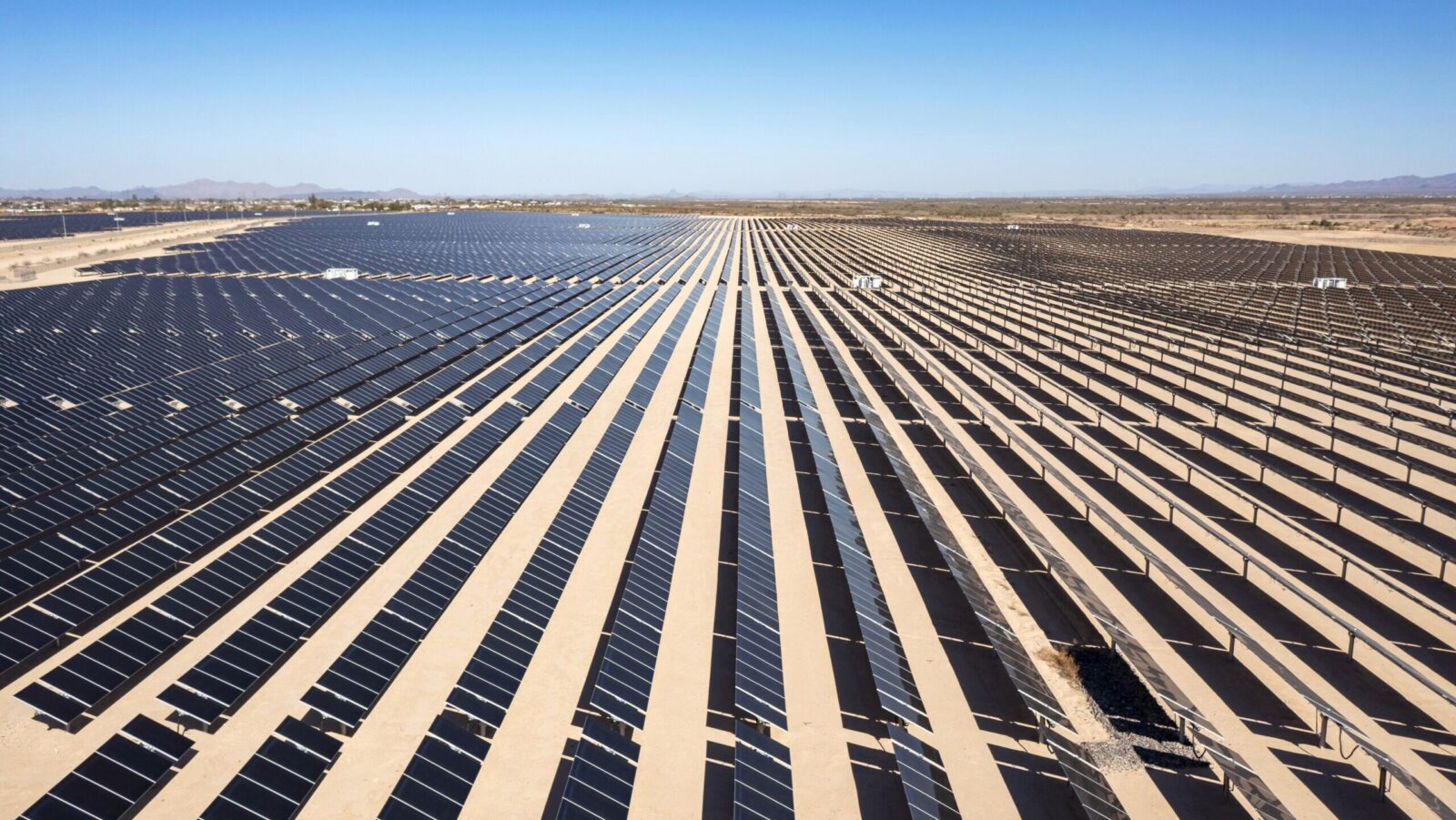
The term “alternative energy” has become a misnomer during the biggest oil disruption in history. “Contingency” might be better. But “necessity” also looks increasingly accurate.
With the Strait of Hormuz effectively sealed and oil prices around $100 per barrel by week’s end, global power players are rediscovering a love for solar, wind and other clean alternative energy sources that can’t so easily be blockaded. So there’s a national security case for clean energy. Yes, another national security case for clean energy, outside of climate change.
Where the Wind Blows
In a report last week, analysts at BloombergNEF projected that global solar installation growth this year, previously expected to be flat from last year’s record 655 gigawatts in added capacity, could widen if oil and gas supply disruptions continue. Global investment in clean energy already jumped to a record $780 billion last year, according to the International Energy Agency. That outpaces investment in oil and gas infrastructure and continues a ramp-up in clean energy investment in the name of energy independence after Russia invaded Ukraine in 2022 and the start of a US-led trade war.
The current supply shock has regular people rethinking their energy mix just as much as world governments:
- Homeowner requests for quotes on solar installations jumped 17% in the first 11 days of the conflict compared with the 11 days prior, according to online clean energy marketplace EnergySage. Meanwhile, Edmunds says searches for EVs and hybrids have also ticked up.
- Wall Street has taken note: The iShares Global Clean Energy ETF jumped more than 5% last week, exceeding the oil-and-gas-focused Vanguard Energy ETF’s 1.3% gain as the fossil fuel industry lagged uncharacteristically far behind oil prices.
Take Your Lumps: On the other hand, the conflict in Iran has pushed some countries to increase their reliance on an energy source far dirtier than oil and gas: coal. In fact, the price of coal on the Rotterdam market has climbed roughly 20% in the past month, reaching its highest point in the past 12 months.