

Good morning.
Chatbot Claude allegedly has moves like Jagger, but Sir Mick’s music publisher isn’t getting any satisfaction. Global music giant BMG is suing artificial intelligence company Anthropic in California federal court over claims it used copyrighted song lyrics to train its AI models. The case is the latest in a deluge of lawsuits against AI companies over infringement of copyrighted works, and Anthropic notably settled a class action by a group of authors for $1.5 billion last year.
In an exhibit, BMG listed over 400 songs whose lyrics it says Anthropic pirated and stripped of copyright-identifying information to train Claude: genres represented include punk (the Sex Pistols), R&B (Beyonce), pop (Justin Bieber), and rap (Eminem). No artist, however, appears as much as the Rolling Stones. Hits from “Jumpin’ Jack Flash” to “You Can’t Always Get What You Want” and “Honky Tonk Women” are among the materials BMG says Claude “unlawfully copied.” Instead of “Get Off My Cloud,” the music company is saying, “Get my lyrics off your cloud server.”
Can New CEO Josh D’Amaro Break Disney’s Bob Chapek Curse?

Josh D’Amaro’s World of Tomorrow is borrowing a page from Disney’s yesteryear.
At the Walt Disney Annual Shareholder meeting on Wednesday, D’Amaro kicked off his first official day as the CEO of the House of Mouse. He faces a tall task. The veteran executive from Disney’s parks and cruises division finds himself at the head of one of the biggest film and TV studios in the world, at a critical and rapidly changing time for the entertainment industry. Meanwhile, his predecessor and longtime CEO Bob Iger will continue to hang around the company in a special advisory capacity and as a member of the board. For longtime Disney observers, it may all feel like a case of Bob Chapek-esque déjà vu. But Disney swears its second take on appointing an Iger successor will be different.
We Don’t Talk About Chapek, No, No
Chapek, like D’Amaro, made his bones in Disney’s parks and cruises division, which continues to be the major profit driver of the company (in fact, D’Amaro stepped in as Chapek’s direct successor when Chapek took over Iger’s job in 2020). But D’Amaro is surely hoping his next chapter is unlike Chapek’s, who was effectively pushed out after roughly two years for his perceived inability to run the creative TV and film side of the company, which generates less profit than parks and cruises but tends to drive interest in those experiences. After all, fans go to Disney World to get a real-life taste of their favorite Disney movies.
On Wednesday, D’Amaro went to great lengths to make clear he understood not to put the pumpkin carriage before the creative horses:
- During the shareholder event, Disney announced that TV and streaming executive Dana Walden, one of D’Amaro’s chief rivals in the running for Iger’s job, will be elevated to the company’s first president and chief creative officer.
- The elevated role places significant responsibility on Walden at a critical time for the entertainment division. While Disney’s streaming unit has recently turned the corner into profitability, sector-wide growth appears to be slowing (Disney recently stopped reporting subscriber figures) at a time when crucial live sports rights values are ballooning and fan interest in key Disney franchises such as Marvel and Star Wars appears to be waning.
The Big Picture: “The fact that they opted for the parks head again, I think it’s an acknowledgement of the challenges in the entertainment business,” Third Bridge sector analyst John Conca told The Daily Upside, and added that the biggest challenge for Disney moving forward will be breaking down operational siloes and reinvigorating its entertainment unit. In his remarks Wednesday, D’Amaro said he plans to do just that, promising a unified vision of the wide-ranging company. “Our greatest advantage is not any one business, but how our global businesses come together,” he wrote in a memo to employees. Hopefully, various stakeholders stay unified in their belief that it’s finally time for Iger to pass the baton.
Are Annuities Actually Good for Your Goals?

Annuities are often marketed as low-risk ways to achieve your long-term goals, but have you looked closely at what’s in the fine print? Many investors are surprised to learn just how complicated — and costly — these products can be. Before you commit, it’s vital to consider whether the advertised benefits outweigh the risks.
Fisher Investments’ guide breaks down the essentials so you can make an informed decision. Get the unvarnished facts on annuity expenses — not the sales pitch.
Does Market Volatility Give You Heartburn?

When markets swing, a solid plan can steady you. Backed by 40+ years of experience, Plancorp’s free 2026 Financial Plan Analysis gives you a fresh look at your plan to uncover blind spots and outdated assumptions. Discover missed opportunities before they become problems, so you can stay focused on long‑term goals, not every headline. Pressure-test your plan today.*
Nvidia Embraces Red-Hot Agentic AI Tool OpenClaw
OpenClaw has the AI world clinched in its pincers, as technophiles from Boise to Beijing try to “raise a lobster.”
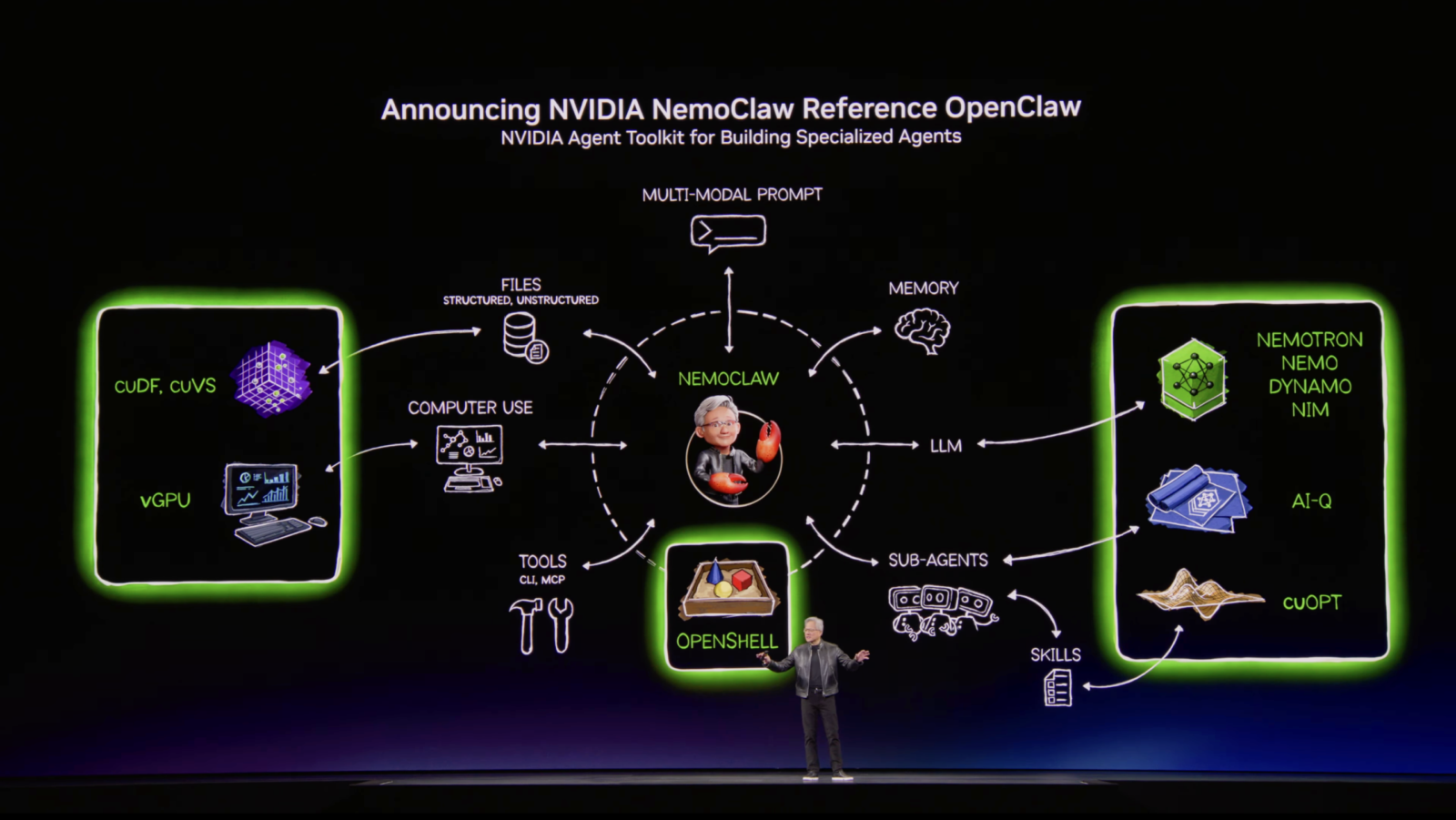
Nvidia CEO Jensen Huang told CNBC this week that OpenClaw is “the next ChatGPT” after the chip-maker launched a new product that layers on top of OpenClaw’s personal assistant. The agentic AI platform racked up more than 250,000 stars (similar to bookmarks) on GitHub, where coders share projects, in about four months. That’s more than Linux, the open-source operating system that’s essentially the backbone of the internet.
Making a Big Splash
OpenClaw went viral within months of its initial launch as users scooped up Mac Minis en masse to run the open-source tech 24/7. FYI: OpenClaw used to be called Clawdbot before it changed its name after receiving a nudge from Anthropic.
OpenClaw differs from Anthropic’s Claude and OpenAI’s ChatGPT because it doesn’t run its own AI model. Instead, it taps various AI models, including Claude and ChatGPT, to perform tasks locally. OpenClaw can read and respond to messages on WhatsApp or Gmail, compile research from across the web, manage calendars or shop for groceries online.
The catch: these tasks require giving the AI agent access to sensitive communications (texts, emails) and credit cards. The two big cracks in the AI tool’s shell are its iffy security and not-so-user-friendly setup and training.
Companies are stepping in with their own solutions, though:
- Nvidia this week unveiled NemoClaw, a product meant to act as a secure layer on top of OpenClaw that could appeal to enterprise users who otherwise can’t afford the security risks.
- Chinese companies want to address the difficult setup of OpenClaw, with Tencent launching a 17-city tour to help users install the tool. Beijing’s biggies are also coming out with simplified OpenClaw copycats: ByteDance launched ArkClaw, Tencent released QClaw and Alibaba debuted CoPaw.
Rising Tide: Though OpenClaw is free, it can’t do much if users don’t pay for the AI models it interacts with. OpenClaw users connect the personal assistant to their other AI accounts, accounts that cost more to use more. Basically, one lobster in the water lifts all the AI boats.