

Good morning.
US financial regulators on Thursday proposed softening rules placed on banks after the 2008 financial crisis. In a win for the industry lobby, whose campaigns included an attack ad against Biden-era regulatory proposals aired on Sunday Night Football, the proposal would lower capital requirements for lenders of all sizes.
According to a Federal Reserve memo, the largest US banks, like Goldman Sachs and JPMorgan Chase, would see their holding requirements drop by 4.8%. For major regional banks, like PNC and Truist, the requirement would fall 5.2%, and for banks with less than $100 billion in assets, 7.8%. Advocates say the move will free up billions for lending, while opponents warn it could boost systemic risk on Wall Street. Either way, the proposed changes are subject to a 60-day comment period, meaning there’s still time for either side to confuse millions by running another ad about Basel III policy during the NBA playoffs.
Wanna Bet? MLB Makes Polymarket Its Official Predictions Market Partner
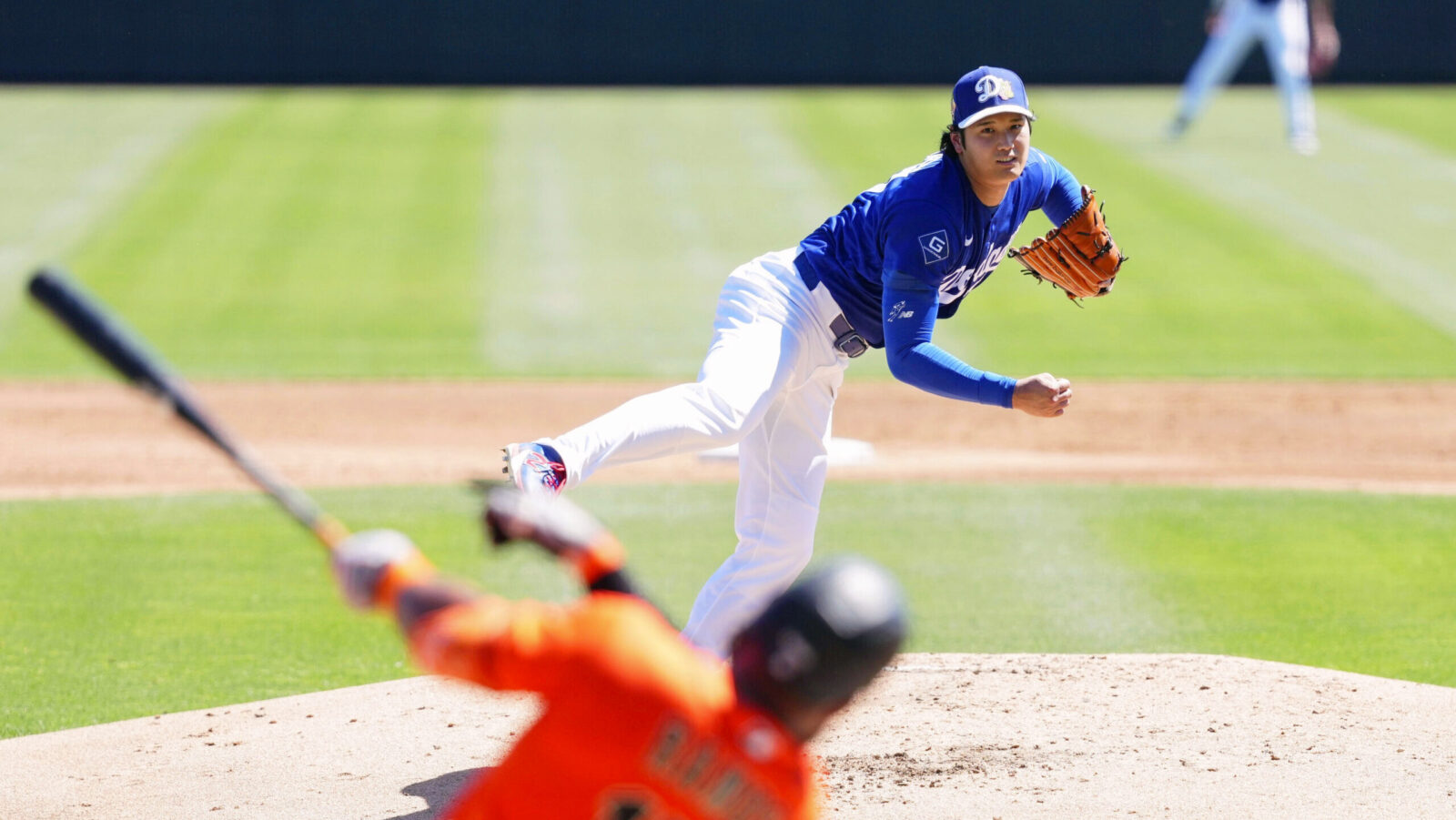
As far as baseball surprises go, this one was a little more predictable than the all-star-stacked Team USA losing the World Baseball Classic.
On Thursday, Major League Baseball threw a curveball with a spin rate that would do Charlie Morton proud, making Polymarket the official prediction markets exchange of the American pastime. It’s the latest step toward legitimacy for the industry, though it comes amid fresh legal challenges and while MLB faces a gambling scandal of its own.
Tipping Pitches
The rapid rise of prediction markets and legalized sports betting has put integrity front and center for organized sports, and perhaps none more than professional baseball. Last season, federal prosecutors indicted Cleveland Guardians pitchers Emmanuel Clase and Luis Ortiz in an ongoing case that alleges the pair were participating in an illegal gambling scheme.
Worse, the pair weren’t alleged to have thrown entire games, a la the infamous 1919 Chicago Black Sox, but merely to have rigged certain pitches, highlighting how hyper-specific prop bets open the door to far more discrete improper behavior.
MLB is moving forward with the Polymarket partnership anyway, in a deal that Front Office Sports reported will net the league $300 million over four years. MLB insists the deal increases integrity:
- While the arrangement gives Polymarket the rights to MLB trademarks and logos, MLB says it will now work with Polymarket to identify and restrict shady contracts that could pose integrity risks, such as bets on individual pitches or umpire decisions.
- Meanwhile, MLB also said Thursday that it a signed a “memorandum of understanding” with the Commodity Futures Trading Commission, the federal agency that regulates prediction contracts. MLB said it would engage in information-sharing and other integrity-protecting efforts with the CFTC.
State of the Gambling Union: In fact, MLB Commissioner Rob Manfred pitched prediction markets Thursday as potentially more immune to illegal behavior than online sportsbooks: “The fact that you have a federal regulatory scheme makes our life a lot easier as opposed to … sports betting, where you’re going state by state.” Speaking of states, the state of Arizona filed criminal charges this week against prediction market Kalshi, alleging its peer-to-peer prediction contracts amount to an illegal gambling operation. One league source told ESPN that MLB could void its contract with Polymarket if courts end up ruling prediction markets violate state laws. Now, that sounds like a “one strike, you’re out” policy.
1,000+ ChatGPT Prompts to Help You Work 10X Faster

Most people use ChatGPT like Google and miss its real power. These 1,000+ proven prompts help you solve problems in minutes instead of hours. Join 1M+ professionals reading Superhuman AI to get the prompts plus a 3-minute daily newsletter with practical AI tools and workflows. Claim your free prompts.
Uber Revs Up Rivian Robotaxis with $1.25 Billion Agreement

Apparently, the “quiet preferred” option isn’t enough for less chatty Uber riders. Uber said Thursday it’ll spend at least $300 million adding Rivian’s robotaxis to its fleet, with the potential to invest up to $1.25 billion.
Uber plans to add 10,000 Rivian R2 robotaxis to its fleet, revving up to as many as 50,000 by 2031. The Rivian-Uber team-up will hit the road in 2028, starting in San Francisco and Miami, with plans to expand to 25 cities globally.
While providing the unprofitable EV-maker with some cash, the deal helps Uber secure its future in a self-driving world.
The Great Robotaxi Race
Alphabet-owned Waymo has been coasting down an open road in autonomous ridesharing. But traffic’s up ahead, with Amazon, Tesla, and others starting robotaxi services. Uber doesn’t want to get left in the dust.
In addition to its Rivian deal, Uber has a $300 million partnership with EV-maker Lucid for at least 20,000 robotaxis, and Nvidia said Monday it’ll work with Uber and Lyft to get their robotaxis on the road. Uber’s push, however, could turn its old robotaxi friends into foes:
- Uber has partnerships with Waymo and other services, such as WeRide and Avride, that let riders book autonomous vehicles in the Uber app in select cities. Amazon said this month that its Zoox service will soon have a similar tie-up with Uber.
- For now, these partnerships help Uber keep robo-riders within its app. But once Uber beefs up its own autonomous armada, keeping competitors in the app could cannibalize Uber’s own robo-business.
Hands off the Wheel: Uber’s so dominant in the US rideshare market that the practice is literally called “Ubering,” not “ridesharing” and definitely not “Lyfting.” While Waymo and other autonomous rideshare services aren’t even a blip in Uber’s rearview mirror yet in terms of market share, they present a growing existential threat to Uber’s core business and, for the first time in years, competition. Uber wants to leverage its dominant position on people’s phones to beat robotaxi rivals to the road, but building an autonomous fleet won’t come cheap or fast.