

Good morning.
It turns out the only thing more volatile than a No. 12 seed is the credit score of the person betting it.
In a new report published in the Liberty Street Economics blog on Wednesday, Federal Reserve Bank of New York researchers found that consumer credit delinquencies rise in states with legalized mobile sports gambling, with “spillover effects” noted across the borders of neighboring non-legal gambling states (as it stands, 30 states in the union have legalized online sports betting). The report suggests legalized gambling has officially graduated from a “vice” to a “macroeconomic headwind.” What we know is this: Nobody ever got a mortgage approved by accurately predicting 11 of the Sweet 16 teams.
Merck Preps for End of Keytruda Exclusivity with $6.7B Deal for Leukemia Treatment
One executive’s patent cliff is another executive’s lucrative exit.
German pharmaceutical giant Merck revealed Wednesday that it’s paying $6.7 billion for Terns Pharmaceuticals, as it tries to bridge a multibillion-dollar gap when its bestselling Keytruda comes off patent.
Patent Drop
The key patent protections on Keytruda, a Spielberg-level blockbuster immunotherapy treatment that outsold all other prescription drugs last year, end in 2028. As a result, some $31.7 billion in sales, or nearly half of Merck’s $65 billion total revenue in 2025, is at risk in the next few years.
That one-two punch of federal drug pricing and cheaper knockoff biosimilars defines the potential exposure. But, keen not to end up a relic on the pharmacy shelf, executives have gone on an aggressive shopping spree for new drugs. Last year, Merck earmarked $9.2 billion to acquire Cidara Therapeutics, which is developing a treatment that provides long-lasting passive immunity against the flu. In an even bigger deal, executives spent $10 billion to acquire respiratory drugmaker Verona Pharma. The deal for Terns, which is developing a best-in-class treatment for a type of leukemia in a market worth potentially billions, is seen by some analysts as too good to be true:
- Merck’s offer of $53 per share is only a 6% premium over Terns’ Tuesday closing value, which BMO analysts wrote would make it “one of the best deals the company has made since its spree began.”
- In fact, RBC Capital Markets analysts wrote that it’s such a sweet deal that competitors like AbbVie and Bristol Myers Squibb may look at it and throw their hat in the ring: “We think the premium of only 6% opens the door for competing bids from other potential acquirers.”
Doctor-Tested, Bull-Approved: Pharmatech company DeepCeutix, citing US patent data, estimates over $300 billion in prescription drug revenues will lose patent exclusivity in the run-up to 2030. That’s roughly one-sixth of the pharmaceutical industry’s total revenue. Of the 10 largest firms in the industry, half have more than 50% revenue exposure, prompting an industry-wide M&A bonanza to develop new revenue sources. Investors are so far bullish on the acquisition spree: Merck’s shares are up 35% in the past 12 months, and the State Street SPDR S&P Biotech ETF is up 42%.
AI Is Reshaping the Role of a Finance Leader. Here’s Your Playbook

Come the end of 2026, there will be two types of finance leaders:
- The ones who have learned how to implement AI into their team’s workflows.
- Those who need to brush up their resumes.
If you’d like to be the former, Glenn Hopper’s free guide skips the hype and gets straight to what finance leaders actually need: a clear, governed strategy for deploying AI where it moves the needle (without blowing up your controls). The use cases alone are worth the read:
- Kill the AR aging spreadsheet. AI prioritizes your collections list by payment likelihood, not just dollar amount — trimming the fat off your DSO (the board will love you).
- Stop asking “why is COGS over budget?” into the void. Get the specific culprits, be it freight surcharges or volume shifts, in seconds (not a spreadsheet odyssey).
- Recover the 4% of spend hiding in your contracts. Missed discounts, pricing violations, volume rebates left on the table. On $1B in spend, that’s $40M that shouldn’t be anyone’s rounding error.
Hopper also walks through a 90-day pilot framework so this doesn’t become another technology initiative that dies in committee.
Your competitors are already reading it.
Arm Shoulders More of the Supply Chain by Making a Chip
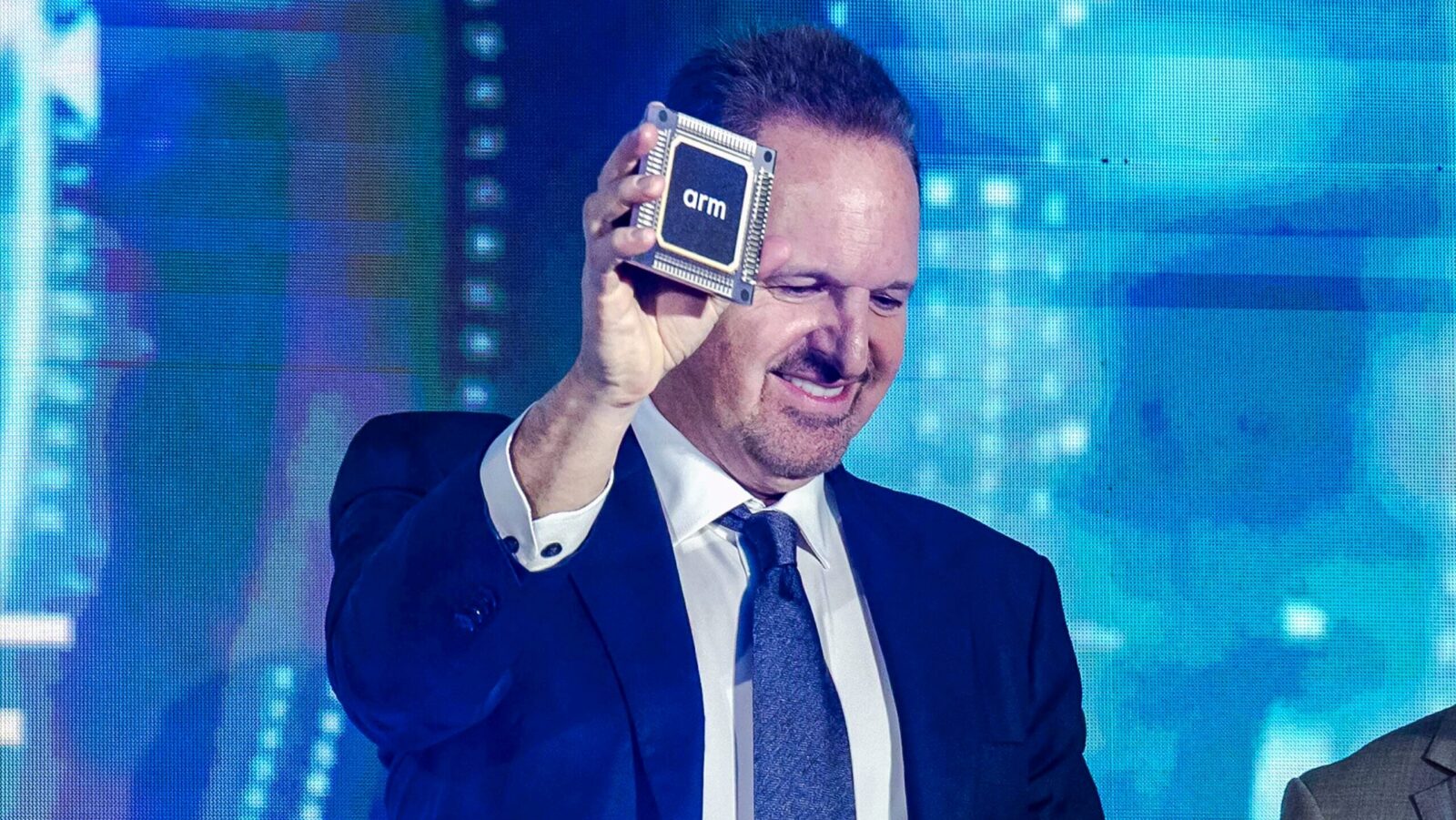
Arm’s stock flexed more than 16% on Wednesday after the chip designer decided to take chip-making into its own hands. The 35-year-old company previously made money mostly by licensing its designs to other players in the chip ecosystem, including Qualcomm and Nvidia, and then scooping up royalties from their sales. Now, Arm wants to make its own chip built to support agentic AI.
Arm already has its first customer queued up: Meta, which is collaborating with Arm to help develop the new “AGI CPU” (Artificial General Intelligence Central Processing Unit). OpenAI and Cerebras also plan to use Arm’s new chip, Arm said.
SoftBank, which bought Arm in 2016 for $32 billion, saw its shares jump about 8% in Tokyo yesterday. Arm is among SoftBank’s many big bets on AI companies.
35, Flirty, and Thriving
Demand has surged for chips that can support agentic AI, the kind of AI that acts as a personal assistant by automatically reading and responding to emails, buying weekly groceries and so on. Making a chip that can meet that demand is Arm’s latest move to boost profits as the tech sector shifts its focus to AI:
- Arm’s current CEO, Rene Haas, took the helm four years ago and has switched the company’s focus from smartphone chips to data center semiconductors, which sell at significantly higher prices. The transition to chip-making, rather than relying on licensing intellectual property, is also a play for money. Haas expects the new chip to generate about $15 billion in annual revenue within five years, accounting for the bulk of its anticipated $25 billion in total sales. The rest is expected to come from its still-growing (but not as much) IP business.
- Under Haas, Arm’s revenue has surged more than 20% a year, with annual sales breaking past $4 billion last year. Arm’s gross margin last quarter was a super-high 98%, but making its own CPUs is expected to bring it closer to its peers’ levels.
More is Merrier: Powering AI requires tapping millions of high-end chips of different kinds that work together. Arm’s new chip is made to work with Nvidia chips. And while Arm said its chip is more power-efficient than rival tech from Intel and AMD, booming demand could mean there’s room for multiple competitors making similar chips. Shares in Arm’s soon-to-be rivals, Intel and AMD, climbed about 5% and 6%, respectively, yesterday.
You Can Still Max Out Your 2025 IRA

Don’t forget you have until April 15 to max out your 2025 IRA. Set sail into retirement with tax-advantaged growth and the power of compounding. Limited-time offer: open any Betterment individual investing account (including an IRA) and make a deposit to earn up to $1,500. Get started with Betterment today.*