
Good morning.
South Korea’s benchmark Kospi Index, which had been running hotter than extra-spicy jjigae, crashed 18% in two days before rebounding 9.6% on Thursday. The best-performing major index of the year, it had climbed nearly 50% through January and February, helping make South Korea’s equity market the world’s eighth-largest. But with the start of the Iran conflict, Korea’s 70% reliance on crude oil imports, mostly from the Middle East, scared some investors into selloff mode.
In an editorial, the conservative daily Chosun Ilbo noted that the stock boom didn’t reflect the country’s weaker economic fundamentals. Last year’s 1% growth rate was the sixth-lowest on record, industrial output hit a five-year low, and inflation-adjusted consumer spending fell for the first time in five years. Among the solutions to the problem, the editorial board said, could be easing a 52-hour workweek cap implemented in 2018 to maintain work-life balance. In other words, if fuel supplies are going to drag on the market, fueling up on caffeine before your next extended shift is gonna have to make up the difference.
Blockaded Gulf Oil Stockpiles Turbocharge Crude Prices
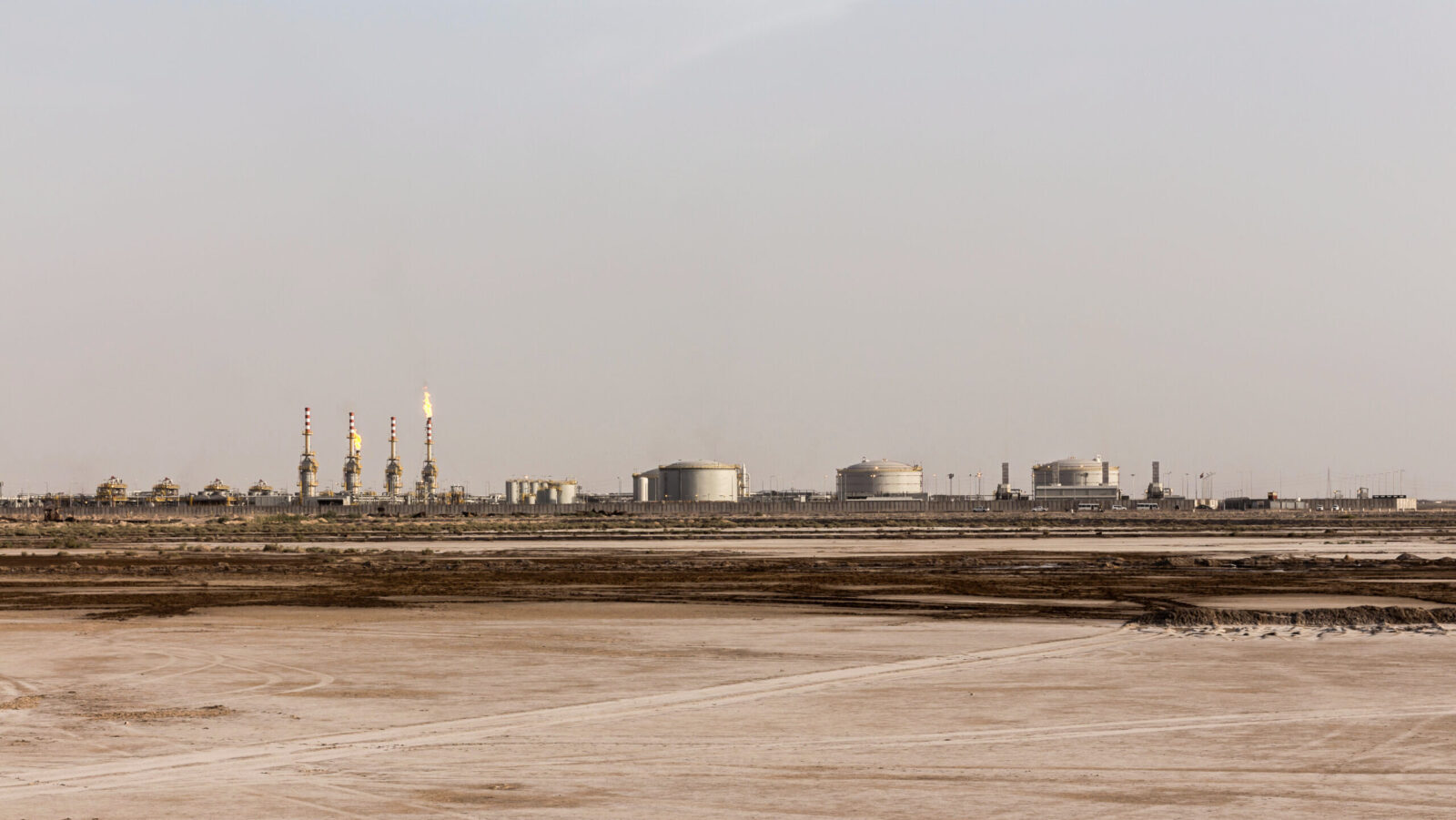
The world’s energy artery has developed a lethal clot. Help is apparently on the way, but it could be days or more before it arrives.
Treasury Secretary Scott Bessent said Wednesday that the US government will soon make a “series of announcements” meant to bring order to oil shipping in the Gulf, where traffic has come to a near standstill since the US and Israel struck Iran, prompting Tehran to threaten attacks on any ship that tries to pass through the Strait of Hormuz. Wall Street analysts have warned that the immediacy of the shutdown is such that oil production could see massive cuts for every day the situation goes unresolved.
Not Pulling Their Freight
Bessent told CNBC that the administration will reach out to ship owners and insurance brokers “over the coming days” about government-backed insurance guarantees President Donald Trump authorized on Tuesday. Trump said the US International Development Finance Corp. will offer ships insurance at a “reasonable price” after maritime insurers began swiftly canceling war policies.
For now, little is moving. S&P Global Commodities at Sea said Wednesday that an average of 135 vessels crossed the Strait of Hormuz daily in February. This week, that has dropped to the single digits. In normal times, all that traffic shuttles roughly 15 million barrels of crude through the Strait each day. The backlog from the current quagmire, analysts warn, could soon have serious consequences. While Saudi Arabia, OPEC’s largest producer, has “abundant storage,” according to JPMorgan, the oil-producing alliance’s second-largest producer, Iraq, and its fifth-largest, Kuwait, are a very different story. Iraq, which has already cut production by 1.5 million per day or roughly in half, has days before its storage is full, the bank’s analysts wrote. Storage in Kuwait, they estimate, will be at capacity in roughly two weeks. Production losses could total 3 million barrels per day by the end of this week, 4 million if the conflict lasts another week, and 5 million by day eighteen. That would add to the pressure that has pushed international benchmark Brent crude up 12% to $81.40 a barrel since Saturday:
- Analysts at Citi said Brent should trade between $80 and $90 for the next week. Along with Wood Mackenzie and Bernstein, the bank said its most extreme scenarios (a prolonged conflict or Iranian strikes on infrastructure) put Brent at $120.
- Already, Wall Street is forecasting that the impact of the Hormuz closure and related supply issues will linger for months, even if there’s a resolution.
Part-Time Job: Massive oil tankers stranded in Hormuz could become floating storage containers to help cover their own operating and capital needs, S&P said Wednesday. Some are also “seeking short-term employment” taxiing cargo within the region, the agency’s analysts wrote. One tanker run by Dynacom, they added, got a $3.75 million payday to ferry cargo between Jubail and Ras Tanura in Saudi Arabia.
From $10M To $225M+

The inflection is already in motion. RAD Intel has grown from a $10M valuation to $225M+, raised $60M+, secured recurring seven-figure Fortune 1000 contracts, and doubled sales contracts from 2024 to 2025. Nasdaq ticker reserved: $RADI. $0.85 per share through March 12.**
Sony Doubles Down on PlayStation 5 Even as Console Costs Level Up

In Sony’s popular video game Ghost of Yōtei, Atsu searches for six outlaws on her quest for revenge. If they made it out of the realm of PlayStation 5, she may have trouble catching them.
In a major shakeup for Sony’s strategy, the company is focusing on the console and pulling back from PC ports, according to a Bloomberg report on Wednesday, citing people familiar with the company’s plans. Ghost of Yotei and action game Saros, which is expected to launch next month, will be exclusive to the company’s console, PlayStation 5, instead of being shared with PC users.
Sony isn’t scrapping its PC releases completely: Bloomberg noted that online games such as Marathon will still hit multiple platforms, and two games created by external developers but published by PlayStation are still slated for a PC release this year. But, at least for now, gone are the days when gamers could bet on their favorite single-player PlayStation games coming to the device of their choice.
Pricey Payoff
The U-turn on PC releases brings Sony back to a pre-pandemic strategy that treated PlayStation exclusives as somewhat sacred, and put pressure on customers who wanted to get their hands on those games to buy the company’s console. But starting in 2020, Sony began bringing hits like The Last of Us to the masses via PC ports. The tradeoff? The company had to let its IP onto other firms’ hardware.
Sony has now decided the broader audience that PC offers isn’t worth giving up that control. Neither Sony nor PlayStation responded to requests for comment.
Sony is doubling down on its own box even as consoles become more expensive to develop and sell:
- “The average price paid for a new unit of video game hardware in the US during November 2019 was $235. In November 2025, it was $439,” Mat Piscatella, Circana video game industry analyst, wrote on Bluesky. “3.9 million units of video game hardware sold in the US in November 2019. In November 2025, it was 1.6 million.”
- When asked how these companies would lower prices with tariffs and an increase in bill of materials (BOM), Piscatella said, “They likely cannot and will not.”
Mario Move: Sony’s shift is looking very Nintendo-like. The gaming rival has largely reserved its marquee franchises for customers with Nintendo’s hardware, the Switch.