TAX planning corner presented by

Wealth.com’s Danny Lohrfink on the Evolving Role of the Advisor in the Realm of Tax
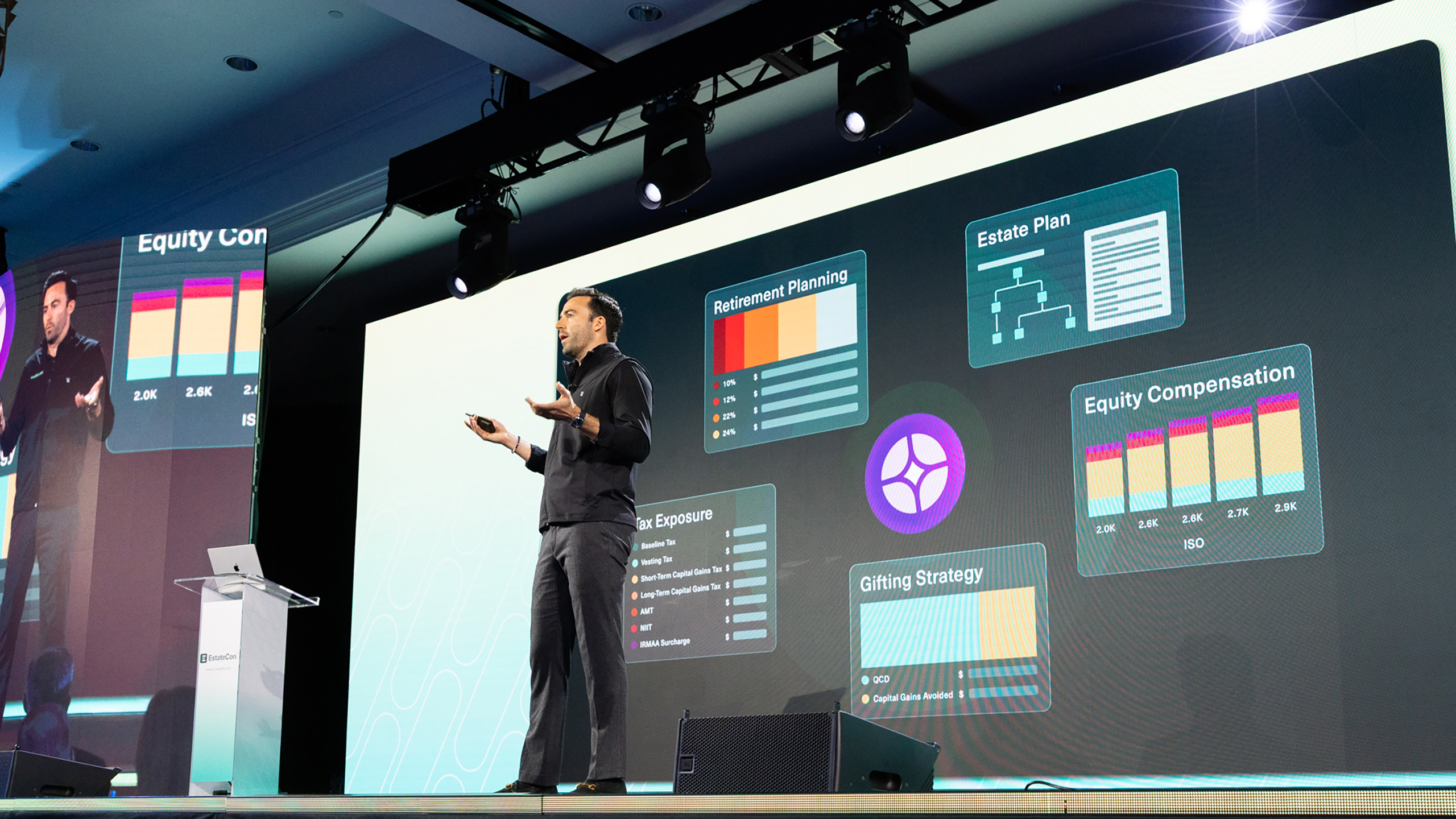
For advisors, the name of the game is delivering value for clients. It’s the key to building sticky relationships with clients and their families for generations to come.
We sat down with Danny Lohrfink, Co-Founder and Chief Product Officer of Wealth.com, to talk about the ways tax has become one of the most strategic ways to go deeper with clients. Let’s dive in.
Q: Why is tax planning becoming unavoidable for modern financial advisors right now?
Tax has always been one of the largest determinants of client outcomes. What is different now is visibility and expectation.
A: Clients can see performance anywhere. The real differentiator is not just return, it is after-tax return and coordinated planning. At the same time, wealth has become more complex. Business ownership, concentrated stock, private investments, multi-state exposure. All of it carries tax implications.
Tax planning is a binary game. You either get it right, or you miss an opportunity. And missing an opportunity can be the equivalent of hundreds of basis points in alpha.
Take the federal gift/estate and GST taxes, for example. One dollar passing through each of those “tolls” will ultimately become $0.36 ($1 x 60% x 60%). In reverse, that means you’d need $2.77 if you wanted to pass $1.0 to your grandchildren. Now think about that in terms of alpha. Appropriately avoiding those taxes is the equivalent of generating 17,700 basis points of portfolio alpha. Good luck retaining a client if you miss that one.
Ignoring tax consequences means ignoring one of the largest drivers of client outcomes.
Q: Where do advisors get it wrong when they think about tax as “someone else’s job”?
A: The mistake is equating tax planning with tax preparation. Preparing a return is absolutely the domain of a CPA. But understanding how a decision today will shape a tax outcome tomorrow is squarely within the advisor’s strategic role.
When advisors treat tax as external, they limit their impact. They might manage a portfolio well, but fail to anticipate the tax impact of a rebalance. They might recommend a charitable strategy without modeling the deduction impact. They might review estate structures without understanding the income tax consequences embedded in those assets.
The opportunity is coordination. Advisors who surface tax implications early elevate the entire planning conversation. They move from being asset managers to outcome managers.
Q: How do you empower advisors without turning them into tax advisors?
A: There is a clear distinction between giving tax advice and providing tax clarity. We focus on creating technology that surfaces key data points through our proprietary combination of AI and deterministic code.
Showing the math is more powerful than telling clients what to do. It makes trade-offs visible. It anchors conversations in data rather than opinion.
Responsible tax enablement means structured analysis, traceable assumptions, and a clear boundary between insight and instruction. Advisors stay within their fiduciary role while dramatically increasing the sophistication of their guidance.
Q: What changes when tax considerations are surfaced alongside estate and investment decisions rather than after the fact?
A: Planning becomes integrated instead of sequential. Consider a liquidity event. Investment strategy, charitable intent, estate structures, and tax consequences are all intertwined. If those elements are evaluated independently, opportunities are delayed at best, and missed at worst.
When they are modeled together, advisors can coordinate gifting strategies with capital gains planning. They can align trust structures with income tax efficiency. They can position assets in the right vehicles before a sale rather than reacting afterward.
The compounding effect is meaningful. Small percentage improvements in tax efficiency, applied across decades and generations, materially change family outcomes.
A significant amount of value is left on the table today simply because tax implications are not modeled early enough.
Q: Wealth.com seems to be everywhere lately. What changed?
A: In reality, much of our scale has been building quietly for years.
From the beginning, we focused on institutional-grade architecture. Secure infrastructure, embedded governance controls, deterministic outputs, and full auditability. Those requirements matter deeply to private banks, broker dealers, and RIAs operating at scale.
In 2024, Google Ventures came alongside us, reinforcing both the long-term vision and the technical rigor behind the platform. We have assembled a team of leading technologists, estate and tax planning attorneys, and subject matter experts who understand the nuances of regulatory expectations and enterprise deployment. That includes dedicated AI engineers and researchers who previously worked on many of the most widely used AI tools in the market today. This has allowed us to build purpose-driven AI specifically for estate and tax workflows, rather than retrofitting general models or chat wrappers into highly regulated financial use cases.
As a result, some of the largest financial institutions in the country have deployed Wealth.com. If you walk down Sixth Avenue in New York, you will pass multiple buildings with the logos of firms using our platform. Many of those relationships were intentionally behind the scenes as we focused on building AI capabilities that serve clients across the entire net worth spectrum.
What has changed is visibility. As estate and tax planning move to the center of advisory differentiation, institutions are more willing to speak publicly about our technology enabling that shift.
The adoption is not accidental, and it is accelerating. It reflects a structural need in the market for estate and tax planning technology that meets enterprise standards while empowering advisors on the front line.’
Recent News
-
Thrivent to Hire 600 Advisors for Second Straight Year

Photo by Andrej Lišakov via Unsplash -
Agentic AI Arrives in Advisor Offices
Photo via Carson Group -
Lego Builds Record Sales by Adapting to Tariffs

Photo via Efren Landaos/Sipa USA/Newscom -
Oracle Regains Its Footing amid SaaSpocalypse
Photo via CNP/AdMedia/Newscom -
Private Credit Crunch: JPMorgan Limits Exposure, Morgan Stanley Fund Caps Redemptions
Photo via Billy Tompkins/ZUMAPRESS/Newscom -
Your Average Advisor Is Happier than Your Average American
Photo by krakenimages via Unsplash -
Fidelity Adds Models with a Taste of Private Markets
Photo by Annie Spratt via Unsplash -
Sequoia Fund to Be Transplanted into an ETF
Photo by Joshua Earle via Unsplash -
Nvidia Partnership Hints at Big Ambitions for Former OpenAI Tech Chief’s Startup
Photo via JOHN ANGELILLO/UPI/Newscom -
Bill Ackman Tests Main Street Rizz with Pershing Square IPO
Photo via Kris Tripplaar/Sipa USA/Newscom