Commodity Bulls Have a Strong Case to Make in 2026
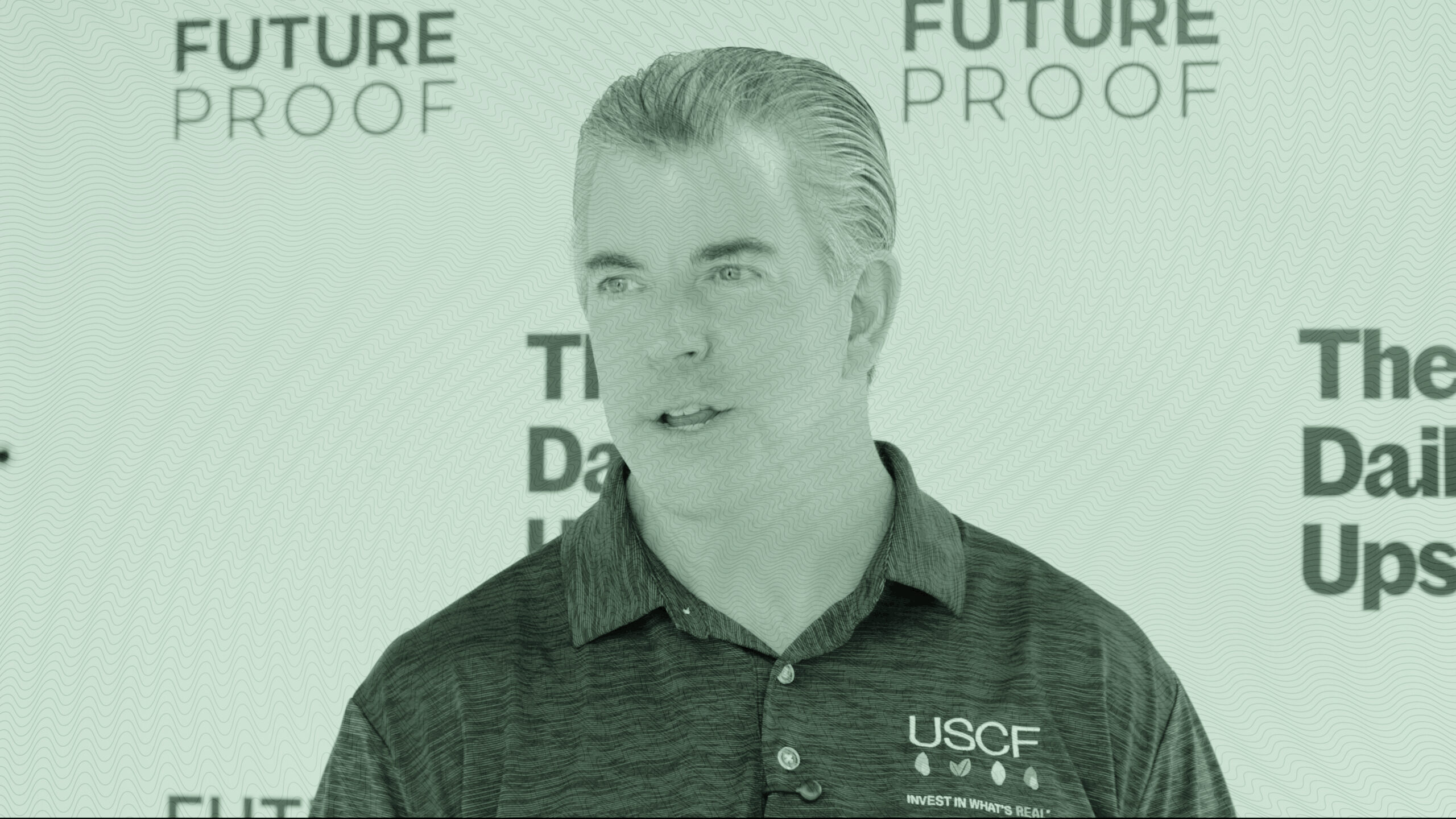
USCF Investments President and CEO John Love is bullish about commodities amid the AI boom, supply chain disruptions.
Economists debate whether global commodity markets are in a long-term supercycle or are instead being driven by shorter-term forces. What’s clear is that a growing number of advisors see significant upside in embracing commodity investments through tax-efficient exchange-traded fund vehicles, providing a source of diversification and returns in client portfolios.
Supercycle or no, commodity markets have faced years of underinvestment, leading to structural supply constraints and depleted inventories at a time when the artificial intelligence boom and geopolitical tensions are adding significant upward pressure on prices. Nobody has a crystal ball, but commodity bulls feel they have a strong case to make.
John Love, president and CEO of USCF Investments, has witnessed these trends playing out in real time. Love is a 24 year veteran of the firm, previously serving as a senior portfolio manager for USCF products including the United States Oil Fund and the United States Natural Gas Fund. He said the next five to ten years are shaping up to be an excellent time for commodity investors, though downside risks must always be considered. Here are some highlights from our conversation at Future Proof Citywide in Miami Beach.
The Daily Upside: Can we start by rewinding and get your reflections on the two decades of experience USCF has in democratizing commodity investments, including commodity futures, for US investors? How has the firm and its mission evolved since some of your early initiatives in the mid-2000s?
When we launched our United States Oil Fund two decades ago, we were among the first 300 or so ETFs on the market. There weren’t that many ETFs yet, in general, so we were really bringing something new to the space. We have continued to do that in the time since with our flagship funds and other commodity ETFs, including with what we call our third-generation commodity indexes.
Our mission has not changed. It’s about finding new ways to invest and deliver value to our clients. Our mission has always been about giving investors new tools that they haven’t had access to before, whether that’s in terms of product structure or the investment strategy itself. It’s pretty amazing to think about how far we have come.
The Daily Upside: Seeing as we are speaking at Future Proof Citywide, a squarely AI-focused conference, I’m curious for your thoughts about what AI might mean for USCF and its clients? What are the benefits? What are some of the risks?
Several things come to mind from an investment standpoint. On the one hand, people have been using early AI tools for many years to develop investment strategies. Clearly, we believe that will continue, but outside of some big hedge funds with a ton of resources, we haven’t really seen agentic AI being used to develop investment strategies that are trying to outperform traditional managers. AI usage has been more about being able to move quickly and automate some of the portfolio management process.
To that end, AI has a lot of potential on the operational side, and I think it is going to create major efficiencies for asset managers and their clients. We are finding new ways to do things, but people also have come to realize AI’s real limitations. It’s great for aggregating information, without question, but you still have to check it and keep a human in the loop. It’s also interesting to think just about the continuing role of financial advisors and the human element of investing. That part won’t go away even as we increase our use of AI.
The Daily Upside: I want to talk now about the energy transition. For a long time, we’ve talked about the transition from a fossil fuel-based economy to a greener economy. In recent years, that conversation has evolved, I think it’s fair to say. What are your thoughts about that and what it means for USCF and how you deliver value to investors in a fast-changing world?
You’re right, especially when it comes to the political side of this discussion. There has been a sort of interruption in the green transition narrative, but it’s more complicated when you look under the hood. For example, green transition metals like lithium had a couple of bad years in the recent past while everybody was saying, “Hey, this transition is happening now.” Fast-forward to 2025 and the narrative changed, but lithium actually had a great year. Fundamentally, I don’t think the green transition trajectory has changed, but the way we talk about it has.
Also, we’ve always been a proponent that the global economy is going to need energy from everything for a long time to come, and that was before the big AI boom that has put even more demand on the grid. You still need energy from fossil fuels, but we also know that you need energy from new sources like wind and solar. That’s why we released a copper fund in 2011, for example, and investments in battery metals. So, we kind of look at it as a continuum strategy, where we have traditional energy on one end and we have new energy in the form of these metals and some other commodities on the other side of it.
The Daily Upside: What insights can you share about digital assets, things like Bitcoin, and whether or not you think it is appropriate to talk about them as digital commodities?
I don’t consider them commodities. I’ve written some pieces about this on our website, where I go through all the different reasons they aren’t commodities. I know some people have merged crypto investments with some commodity-focused strategies, and that’s fine as far as it goes, but I wouldn’t call that a pure commodity play.
It has been interesting to see the Commodity Futures Trading Commission get more involved, so you are seeing some of the same regulators that oversee commodities looking at cryptocurrencies. Bottom line, they aren’t commodities, but they can play a role in a diversified portfolio when investors understand the risks and limitations.
The Daily Upside: Finally, what other macro or micro trends are you tracking? It’s a dynamic time for investors right now. What comes to mind? Do you buy into the commodities supercycle narrative, for example?
It’s interesting. A lot of people don’t like that term and there are reasons to argue against it, but if you look over the last hundred or so years, there have been a half dozen times when commodities have really outperformed for long stretches. Since 2021, commodities have been moving up. Demand has been great while supplies have been constrained, and it’s not just about the AI story. There have been supply disruptions, and we’re seeing this now with oil, with what’s going on in the Middle East. So we think commodities probably have a bright future for the next five to 10 years, at least, and I think they always belong in a holistic asset allocation, anyway.