Google Doubles Down on AI with Moonshot Investment
Alphabet generated revenue of $113 billion, marking second-straight quarter topping the $100 billion revenue mark.
Sign up for smart news, insights, and analysis on the biggest financial stories of the day.

Adjusted for inflation, the entire Apollo Space Program, which put 12 humans on the moon over 11 years, cost roughly $178 billion. That’s about the same amount of money Alphabet plans to spend on AI in 2026 alone.
After Meta and Microsoft announced capital expenditure plans that blew past expectations last week, Google’s parent on Wednesday announced its own massive AI spend. The rest of the company’s quarterly earnings report made clear it could afford to do so. Oh, and at the same time, an AI-adjacent subsidiary is growing into yet another powerhouse.
Search and Rescue
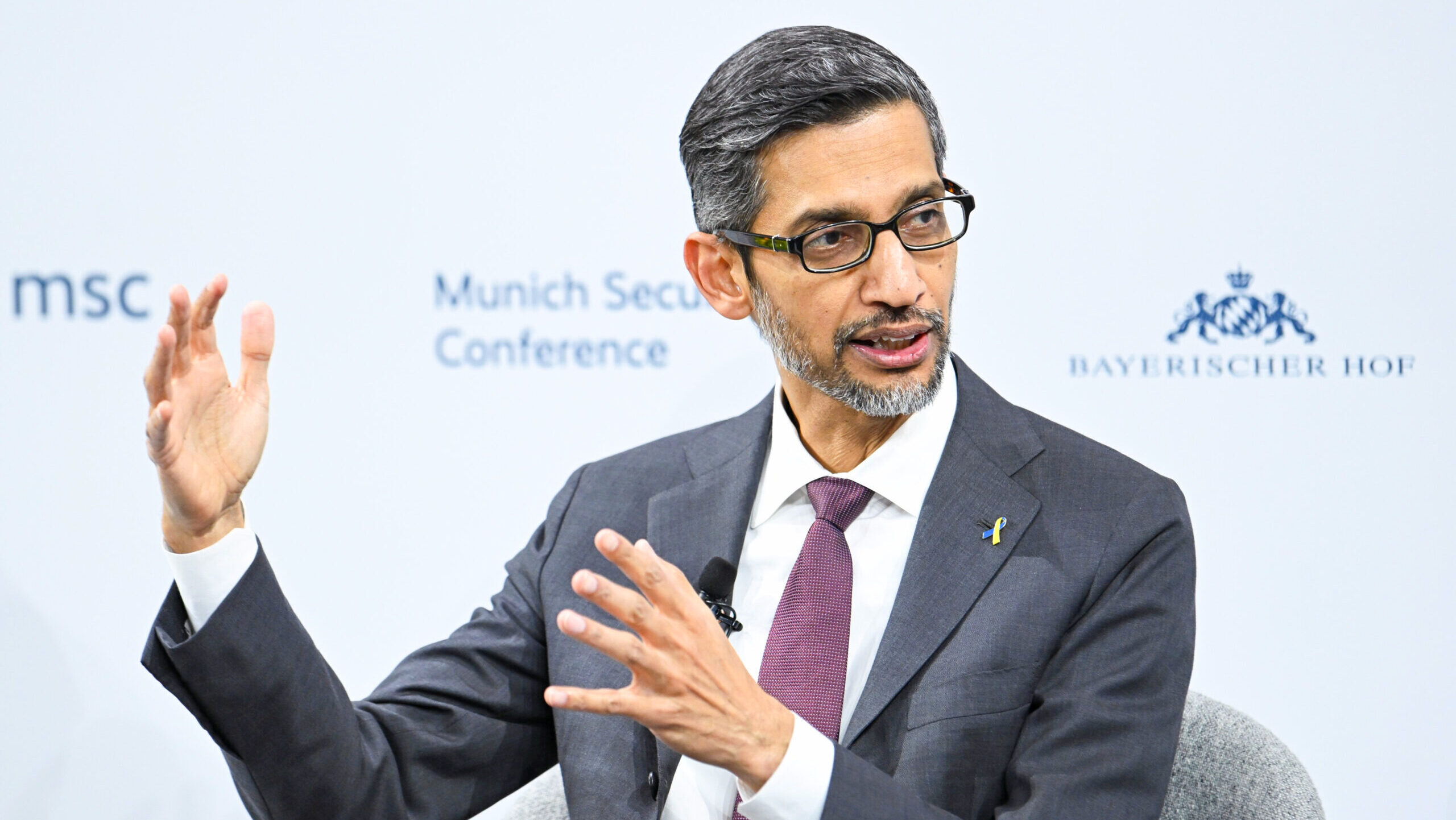
The death of the search engine narrative, revived in recent weeks by the remarkable ascent of Anthropic, may have been put to rest for now. Alphabet generated revenue of $113 billion, marking its second straight quarter topping $100 billion and an 18% year-over-year increase. Roughly half that amount came from its search advertising, which beat expectations and jumped 17%. “Search saw more usage than ever before, with AI continuing to drive an expansionary moment,” CEO Sundar Pichai said.
Revenue in Alphabet’s increasingly competitive cloud unit, meanwhile, surged 48% to $17.7 billion. Together, search and cloud showed the type of growth Google needs to justify its capex plans:
- The tech behemoth now projects capital spending of $175 billion to $185 billion for the year — way, way, way ahead of the $120 billion that Wall Street expected. It’s also a tick above Meta and Microsoft.
- The spending is needed to service the rapidly growing user base of Google’s Gemini suite of AI tools. Monthly active users for the Gemini app now top 750 million, Google said, up from 650 million a quarter ago.
Pichai stressed that scaling is key to achieving AI efficiency: “We are getting dramatically more efficient,” he said. “We were able to lower Gemini serving unit costs by 78% over 2025 through model optimizations, efficiency and utilization improvements.”
Self-Drive to Survive: AI isn’t the only part of the Google empire being aggressively scaled. Subsidiary Waymo is expected to launch in at least a dozen new international markets this year, including Tokyo and London. That’s thanks in part to a $16 billion fundraising round completed earlier this week at an eye-watering valuation of $126 billion. This may be the year that Waymo officially turns the corner into the mainstream.
Recent News




-

Photo illustration by Connor Lin / The Daily Upside