Sign up for smart news, insights, and analysis on the biggest financial stories of the day.

As the gusts die down, the “SaaS-pocalypse” has been downgraded to a mere “Severe SaaS Weather Event.”
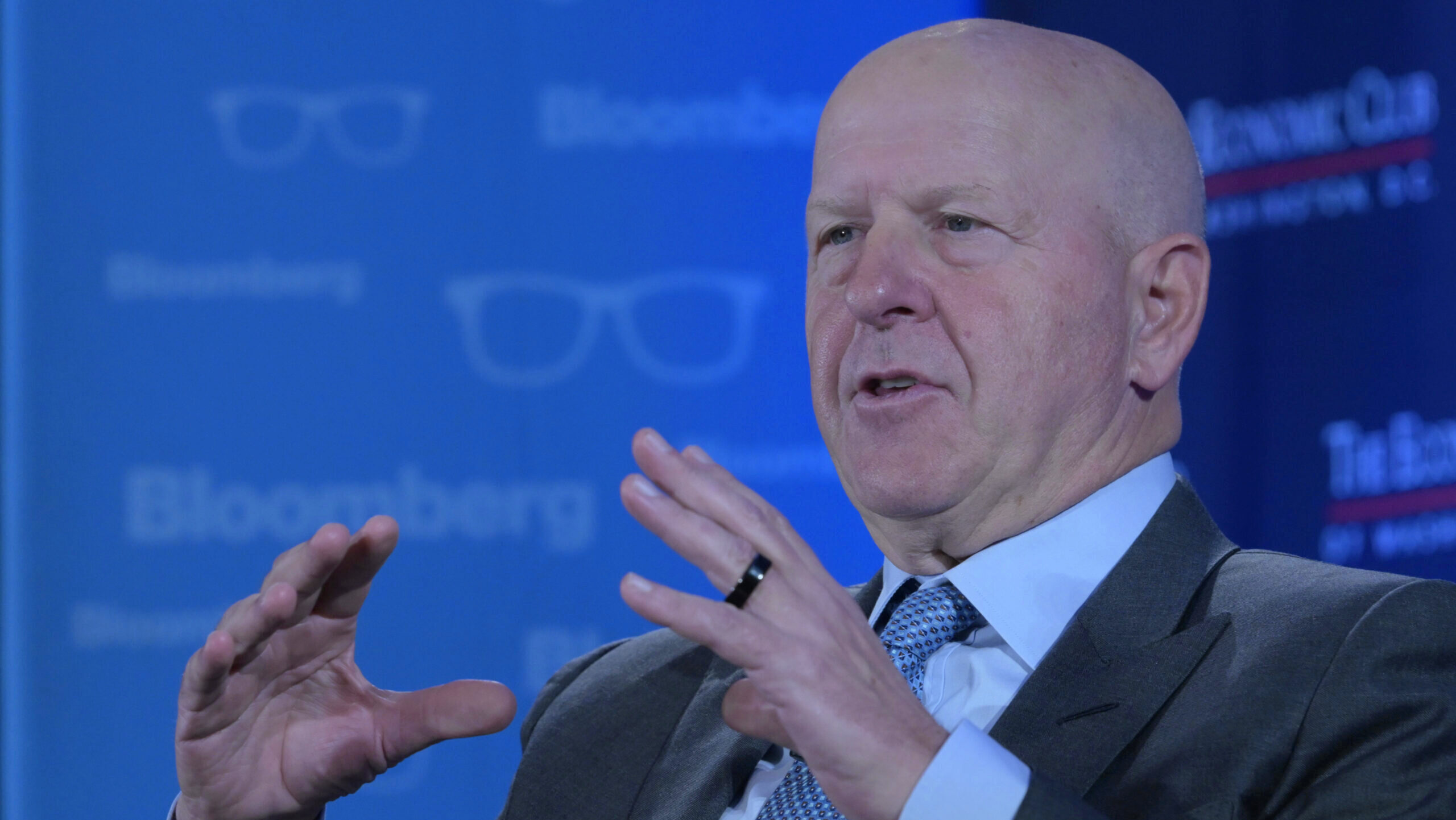
That’s the thinking of Goldman Sachs CEO David Solomon at least, who said at a UBS conference in Key Biscayne, Florida on Tuesday that the end-times narrative over the past few weeks, as experienced in a massive software as a service stock selloff, has been “a little too broad.” It’s an optimistic opinion increasingly shared by Wall Street’s collective inner stock-picker.
Agents of Change
There’s a reason the arrival of Anthropic’s Claude coding tools blew a roughly $800 billion hole in the software market. If you start hyperventilating enough, then being any type of SaaS company in the age of coding AI appeared all too similar to those companies that specialized in digital cameras or GPS devices or MP3 players or, say, alarm clocks right when the iPhone arrived in 2007. But SaaS firms are not lumbering dinosaurs, oblivious and defenseless to the oncoming asteroid. Not all of them, at least. “There’ll be winners and losers — plenty of companies will pivot and do just fine,” Solomon said Tuesday.
In a research note published this week, analysts at JPMorgan outlined just exactly who they see as potential winners as the balance of risk in the market grows “increasingly skewed towards a rebound”:
- In a list of 19 “AI-Resilient Software Companies,” the JPMorgan analysts highlighted cybersecurity as one “higher quality” software segment, naming firms such as CrowdStrike, Palo Alto Networks, SentinelOne and Zscaler. Data software and enterprise firms such as Snowflake, Twilio and Okta also got a call out.
- “Enterprise software remains deeply embedded across the corporate landscape, underpinned by multi-year contracts and high switching costs that provide a significant buffer against near-term displacement,” the analysts wrote.
That echoes a Wedbush Securities note last week that similarly said enterprise companies are unlikely to unwind decades and billions of dollars worth of software infrastructure to pivot to AI-made tools, claiming the “Armageddon scenario for the [SaaS] sector that is far from reality.” Katy Huberty, Morgan Stanley’s global director of research, similarly posited this week that the recent sell-off has been “sentiment-driven, not fundamental.”
One Sector After Another: And yet, the rout continues unabated, with seemingly a new AI tool appearing every day to launch a specific sector into an existential crisis. Look no further than the financial services industry, which tanked on Tuesday after the arrival of Hazel, a new AI-powered tax planning tool from wealth management platform Altruist. In its wake, shares of Charles Schwab fell more than 7%, while shares of LPL Financial and Raymond James fell more than 8% each on Tuesday.