Is Walmart’s Yearly ‘Humble Brag’ Obscuring the Retailer’s Strength?
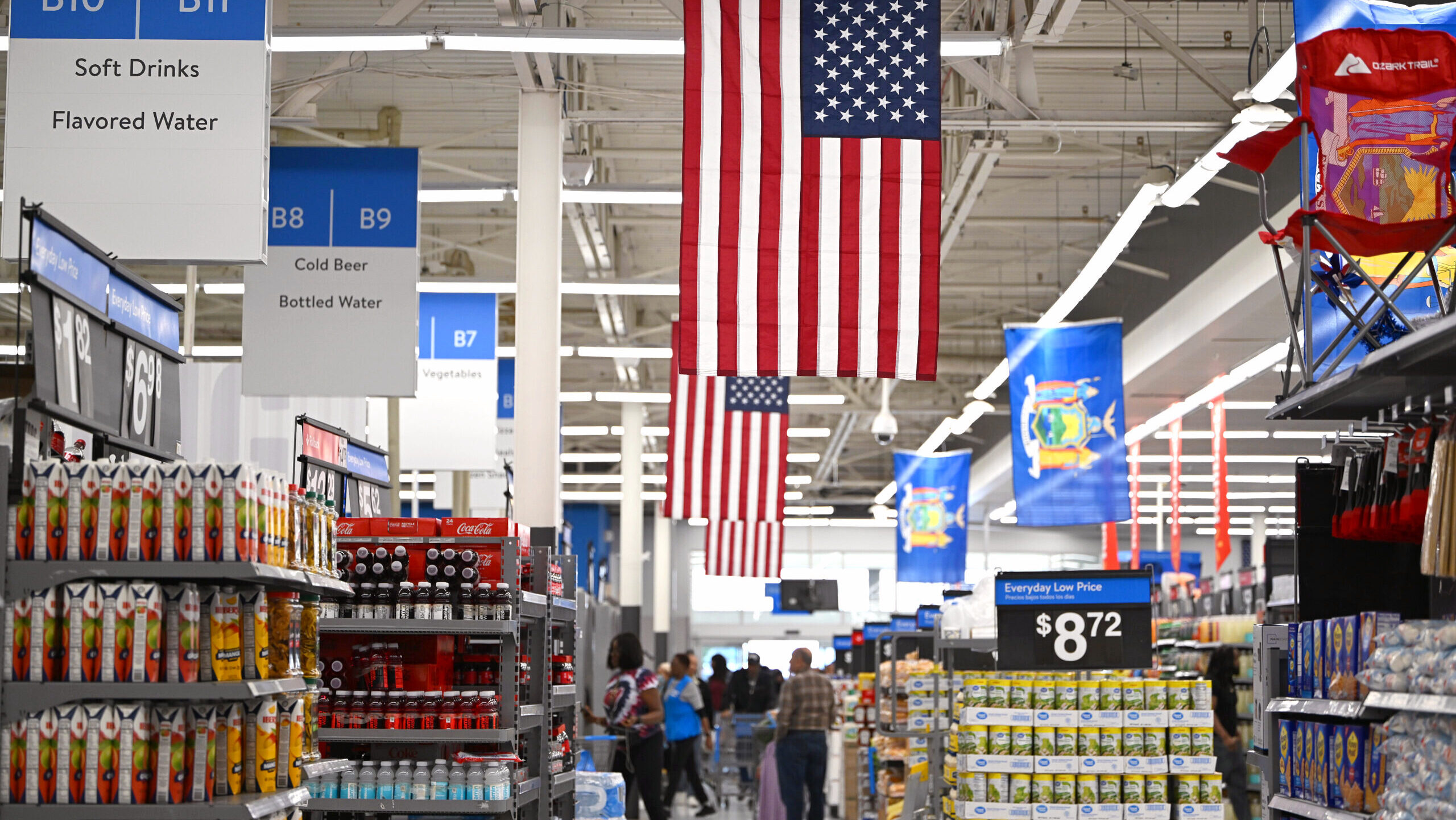
The majority of Walmart’s gains came “from households making more than $100,000,” continuing a trend of wealthy shoppers turning to bargains.
Sign up for smart news, insights, and analysis on the biggest financial stories of the day.

New Walmart CEO John Furner took on the company’s hallowed role of greeter Thursday (or “customer host” as they’re now called) on his first earnings call as top boss.
So fresh in the job that he updated his LinkedIn page a couple of weeks ago (CEOs, they’re just like us!), Furner had good news: US same-store sales rose a better-than-expected 4.6% in the latest quarter, the last of Walmart’s fiscal 2026. But the retailer’s stock fell 1.4% as the new boss carried on a company tradition: a cautious, conservative outlook that many analysts view as a buy signal.
‘A Beatable Bar’
Because of Walmart’s longtime status as America’s biggest brick-and-mortar retailer, its results double as a bellwether of consumer spending. Revenue rose 5.6% year over year to $190.7 billion in the fourth quarter, good for an earnings beat. Furner’s also taking the reins at a crossroads, with his company trying to expand its position in the hypercompetitive e-commerce sector. On this point, Thursday saw another plus: Walmart’s US online sales rose 27%, marking the 15th quarter in a row of double-digit increases. It suggests that forward-thinking initiatives, such as a partnership with OpenAI to enable Walmart purchases within ChatGPT, are beginning to pay dividends.
It’s worth noting that Furner said the majority of gains came “from households making more than $100,000,” continuing a trend of wealthy shoppers turning to bargain retailers for respite from inflation and consumer anxiety. And therein lies the reason that Walmart shares slid on Thursday. The company’s guidance, which calls for sales growth of 3.5% to 4.5% in fiscal 2027, trailed the 5% Wall Street expected because of consumer uncertainty. Take your pick of “whatever your favorite macro statistic to point to is” and you’ll find reason for caution, Furner said. He flagged “the hiring recession” (or what economists have dubbed the job market’s “low-hire, low-fire” mode), elevated student loan delinquencies, and trade uncertainty. Walmart’s conservatism seems to fit the US economy’s peculiar imbalance of sound GDP growth with a tough labor market and historically weak consumer sentiment. But caution is also something of a company ritual to start the year, one that can obscure the stock’s true value:
- “While Walmart is winning profitable market share and driving positive traffic, historically, management tends to be conservative when providing its initial guide for the year ahead,” Evercore ISI analysts wrote before the report.
- “We suspect that [Walmart] wants to set a beatable bar,” D.A. Davidson said in a note to clients. “Any weakness on that guide should be bought, in our view.” Walmart shares have climbed 12% this year, outpacing the S&P 500, and the company plans to spend $30 billion on new buybacks.
Welcome to the Jungle: Despite its strength, Walmart will have to settle for being the second-biggest company in the world by revenue, as it fell behind e-commerce rival Amazon, which made $716.9 billion last year. The torch was officially passed when Fortune said Thursday that Amazon will now sit atop the Fortune 500, ending a 13-year streak for Walmart and its measly $713.2 billion in 2026 revenue.
Recent News




-

Photo illustration by Connor Lin / The Daily Upside