Markets Shrug Off Shift in Venezuelan Oil Industry’s Prospects
Venezuela’s 303 billion barrels worth of oil reserves are estimated to be about a fifth of the world’s total.
Sign up for smart news, insights, and analysis on the biggest financial stories of the day.

The geopolitical hits keep coming, but where do things flow from here? That was the million-barrel question that markets began to reckon with on Monday.
As you may have detected by the relentless push notifications on your lock screen this weekend, the United States captured Venezuelan leader Nicolás Maduro on Saturday and brought him stateside to face drug-trafficking charges. President Trump said US energy companies will be invited to revitalize the country’s struggling energy industry, rich in reserves but hampered by ailing infrastructure. With details scant, the impact may be muted for some time.
The Pump Remains the Same
Venezuela’s 303 billion barrels of oil reserves are estimated to make up about a fifth of the world’s total, but the country accounts for less than 1% of global production. Years of sanctions, corruption, mismanagement and fraying infrastructure are to thank. That’s also why no one was in a rush to revise their annual energy forecasts on Monday.
Analysts at GasBuddy wrote that “even under the most optimistic outcomes,” any significant impacts on oil supply or prices due to Venezuela are years away. They still expect US fuel prices to average $2.97 a gallon in 2026 — the first year below $3 since 2020 — adding to relief from last year when prices fell 20%. Unchanged were Goldman Sachs’ 2026 oil price forecasts of $56 a barrel for Brent, the benchmark for European crude, and $52 for West Texas Intermediate, the US benchmark. The bank expects Venezuela’s production to remain flat at 900,000 barrels per day in 2026 (if production roughly doubled, it could lead to a $4-per-barrel downside by 2030). Expected to help markets remain relatively stable is an ongoing supply glut: The International Energy Agency projects a surplus of 3.8 million barrels a day in global oil markets this year. That means that, with more fuel than there is demand, energy markets have the capacity to absorb shocks and uncertainty.
It’ll be years before a revived Venezuelan oil economy changes the market’s dynamics, and that’s assuming US oil majors opt to invest billions in what may yet be a volatile political situation. But at least for Monday, energy companies were the beneficiaries of animal spirits:
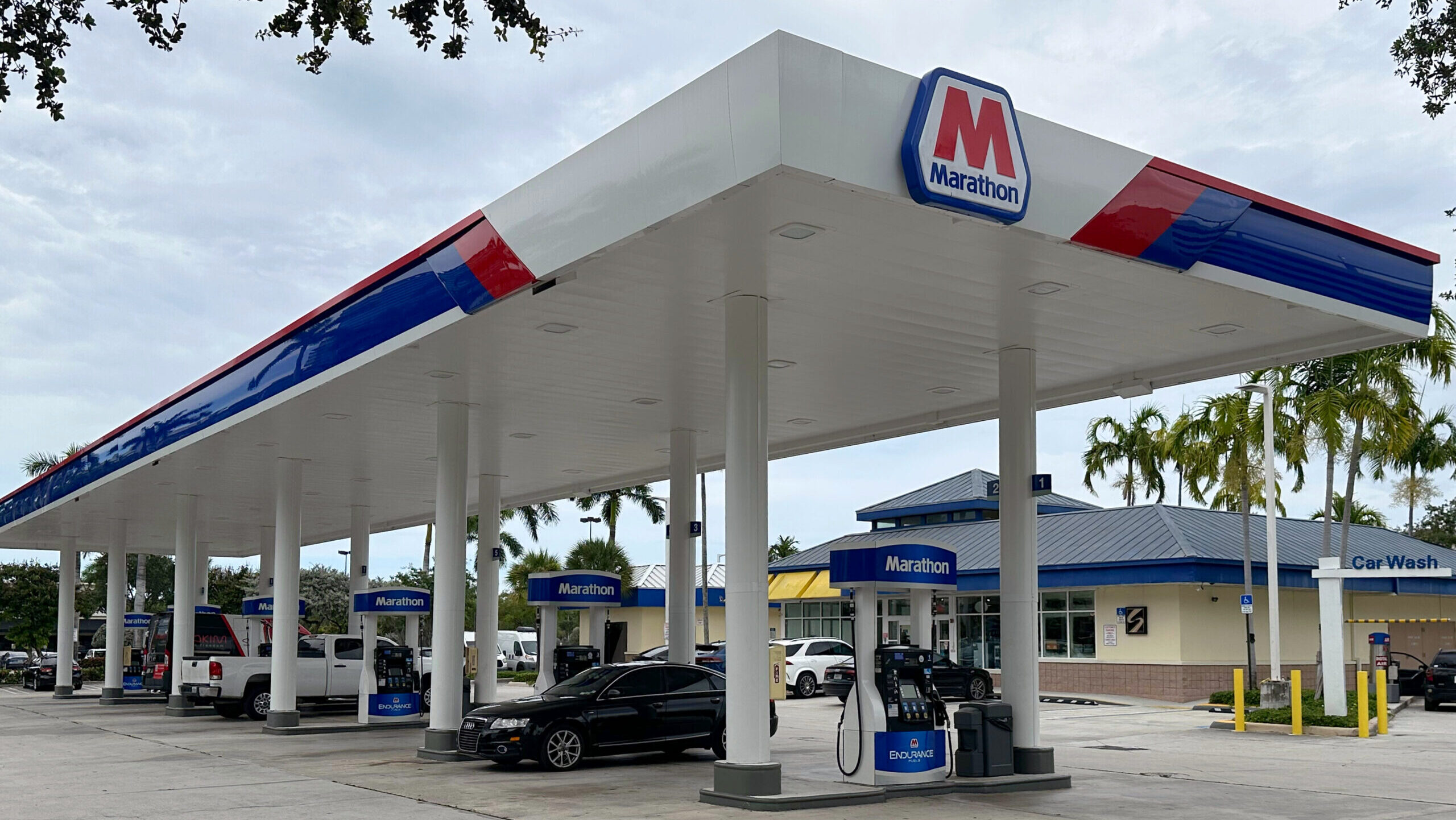
- Chevron, the only US oil major currently operating in Venezuela, rose more than 5%. In addition, the big winners were US Gulf Coast refiners — Marathon Petroleum (up 5.9%), Phillips 66 (+7.2%), PBF Energy (+3.4%) and Valero Energy (+9.2%) — which are especially suited to processing the heavy, sulfur-rich crude found in Venezuela.
- “Geopolitical crises typically have only a fleeting impact on financial markets, and we don’t expect this to be an exception,” wrote UBS analysts, noting the muted overall impact. “During the last 11 major geopolitical events, the S&P 500 was on average just 0.3% lower one week after the event and 7.7% higher 12 months later.” The blue chip index rose 0.6% Monday.
A Heavy Price to Pay: If the super dense, heavy crude oil in Venezuela’s Orinoco Belt, which is more costly to extract and refine than light crude oil, eventually makes its way to western markets, one country could pay a heavy price. The heavy crude from the Canadian oil sands competes with Venezuelan exports because of its similar high sulfur makeup. On Monday, shares in Canada’s top oil sands producers were down on the Toronto Stock Exchange: Cenovus fell 4.8%, Canadian Natural 6% and Suncor 1.6%.