

Good morning.
Parents just don’t understand. And neither do their financial advisors, apparently.
Every wealth manager knows that portfolio construction and financial planning isn’t one-size-fits-all. That lesson is more important than ever as trillions of dollars are passed down to younger generations during the Great Wealth Transfer.
Today’s younger clients are more open to digital markets and private assets than previous generations, according to Natixis findings reported by Barron’s. Plus, many of the inheritors will be Gen Xers, who are still dealing with challenges like paying off school debts. It all suggests advisors might have to take a different approach if they want to hold on to their clients’ heirs.
Have you tried delivering advice through rap? Gen X still loves the Fresh Prince, right?
John Manganaro Joins to Launch Retirement Upside
Journalism is a bit like being a financial advisor.
You need a bunch of attributes to succeed, and credibility is near or at the top of that list.
John Manganaro has built a career serving the financial advisory and retirement community, spending a decade at planadvisor and plansponsor. Then, nearly four years at ThinkAdvisor.
John is a true authority in the space and he recently joined The Daily Upside to help launch Retirement Upside.
For quality insights to help you build a better practice, and help your clients achieve stronger retirements — sign up for Retirement Upside here.
This Week’s Highlights
Can Advisors Do More to Combat Elder Financial Abuse?

Elder financial abuse is a big problem. Just how big is up for debate.
The FBI reported for 2025 a total of $7.7 billion in losses from more than 201,000 complaints, which the agency admitted was likely an underestimate due to its reliance on self-reported data. Back in 2023, AARP estimated victims of elder financial abuse lose more than $28 billion annually. These figures have almost certainly grown in the time since, and lawmakers and financial services professionals are taking note, as evidenced at a recent hearing held by the US Senate Special Committee on Aging. In a rare show of bipartisan agreement, senators from both sides of the aisle voiced concern about elder financial exploitation, and they asked witnesses how government and industry can work together to stem the tide.
The consensus was that proactive and consistent public education about the risk of elder abuse is essential. Likewise, witnesses said, lawmakers should empower financial advisors and bankers who suspect clients are falling victim to fraud or abuse to take action, including by slowing or pausing suspicious transactions. Elders themselves must also play a role, including by letting trusted family members have a better view of their finances and not being embarrassed to report victimization.
A Patchwork of Protection
More than half of US states have established rules that allow financial professionals to pause suspicious transactions requested by elder clients, and momentum is building for the development of national standards. Such policies must be balanced against seniors’ rights for unfettered access to their accounts, lawmakers and witnesses agreed, but the growing threat of AI-powered scams means inaction is unacceptable.
The typical amount lost by seniors to fraud isn’t trivial:
- The median cost of elder financial abuse reported to the Treasury Department’s Financial Crimes Enforcement Network in 2023 was $33,000.
- The mean amount was $129,000, showing some unfortunate seniors lose far more.
“Congress should consider legislation that empowers financial professionals to hold transactions when they suspect elder financial exploitation,” said Sam Kunjukunju, vice president of consumer education at the American Bankers Association Foundation. “Establishing a uniform national framework would eliminate inconsistencies among state laws and enable more decisive action.”
One lesson learned in states that already have such rules in place, Kunjukunju said, is that educating seniors about them is critical. “When an older adult doesn’t realize they’re falling for a scam, but the banker suspects it, the older adult can be put off,” he warned. “We need to get ahead of all that.”
What to Watch For. The good news is that spotting abuse isn’t exactly rocket science. As a baseline, advisors should be on the lookout for sudden changes in client behaviors, alterations in appearance or demeanor, and unexpected transactions. For example, if a client who has never used wire transfers before suddenly wants to send $15,000 to a foreign bank account, that’s a major red flag.
State Street Predicts Inflows Into US ETFs Hit $2.1 Trillion This Year

Like the astronauts on NASA’s Artemis II, the exchange-traded fund market is set to break records in 2026.
That’s according to State Street’s most recent outlook, which estimates that there will be $2.1 trillion of inflows into US ETFs this year, up from $1.5 trillion last year. The firm also predicts that we’ll see the first fund to top $1 trillion, as well as some $750 billion flow into active ETFs in the US (a 50% jump). If you’ve been following the ETF market, it’s no surprise that another banner year is likely in the making. In 2025, US ETFs saw record launches, inflows and AUM as institutional investors and retail investors poured money into the tax-efficient, low-cost funds. As issuers build on that momentum, active ETFs remain the “global product center of gravity,” State Street authors wrote.
Active to the Moon
Jeff Sardinha, head of ETF solutions for North America at State Street, broke that $2.1 trillion prediction down by asset class for ETF Upside. He said we could see $750 billion move into passive equity, $350 billion-$375 billion into passive fixed income, another $350 billion-$375 billion in active fixed income, $425 billion for active equity and $50 billion-$75 billion for the remaining classes (crypto, metals, commodities, leveraged and inverse, and alternatives).
Many ETFs have mutual funds to thank. Sardinha said mutual-fund-to-ETF conversions could contribute another $50 billion-$60 billion, and that he expects a significant portion of the organic inflows to active ETFs to come from active mutual funds. And what about the multiple share class structures, which allow strategies to be offered in both mutual funds and ETFs?
- In early days, Sardinha said we could see smaller asset growth as ETF share classes are treated like new product launches. But once mutual-fund-to-ETF tax-free exchanges are “automated along the entire value chain,” we should see larger asset migration.
- Bryan Armour, Morningstar’s director of ETF and passive strategies research for North America, said that about $8.5 billion of ETF net assets came from mutual funds at the start of the year, whether that be ETF conversions (roughly $8.4 billion) or assets moved to an ETF share class (about $67 million were attributable to DFA US Micro Cap ETF, the first ETF share class).
“While meaningful, that is a drop in the bucket compared to the $560 billion of new investment in US ETFs so far,” Armour pointed out.
Unchartered Territories: Investors ability to access structured products previously reserved for high-net-worth and institutional investors is another reason ETFs have boomed in popularity of late. State Street said multi-coin diversified crypto ETFs beyond Bitcoin and Ethereum, private market-style ETFs, pre-IPO exposure and auto-callable income strategies are some of the areas gaining momentum.
Time to Revoke Tesla’s Magnificent Seven Card?
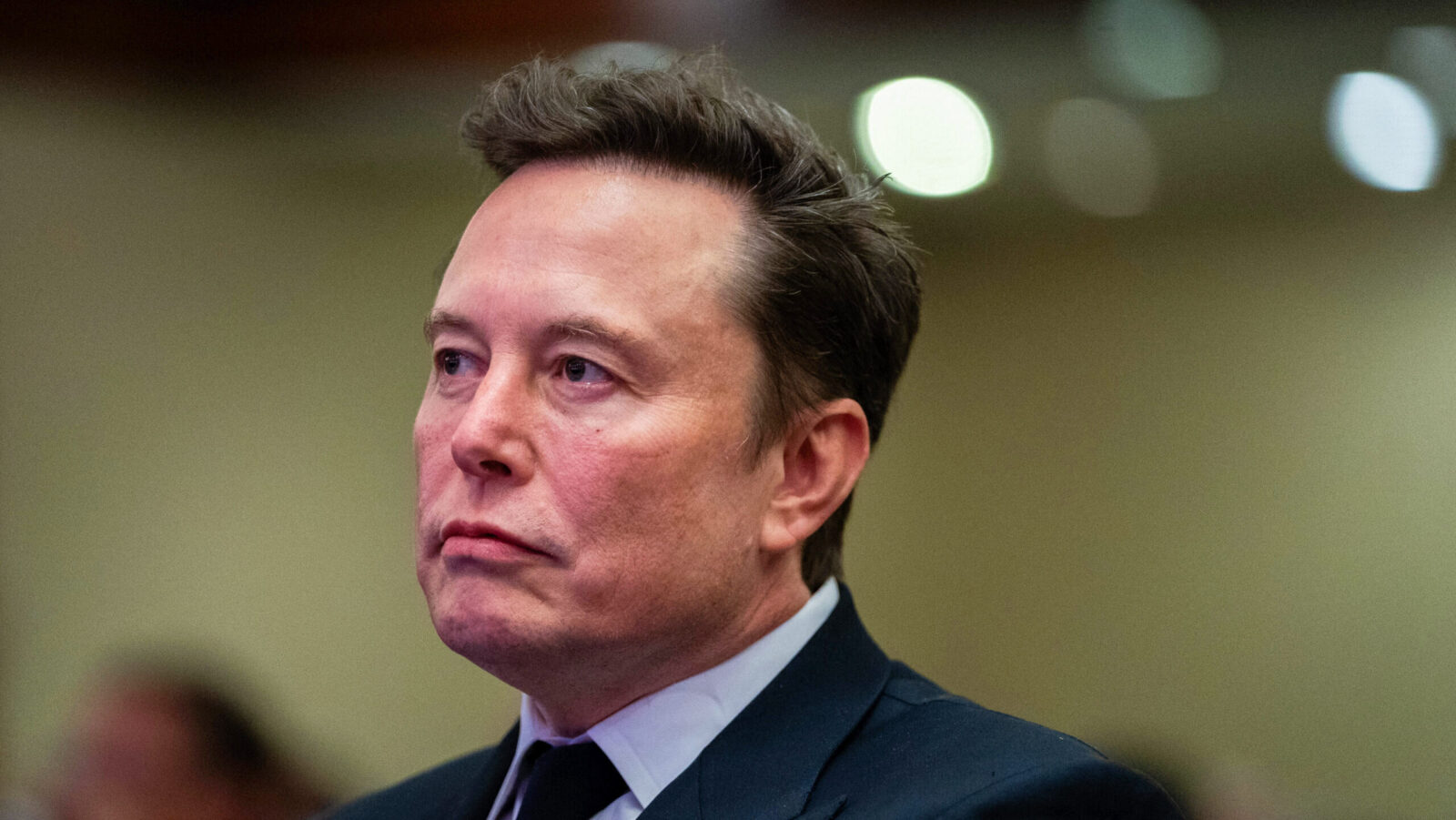
For Tesla, the future can’t come soon enough. Though the company can’t flip on autonomous driving cruise control in the meantime, either.
An all-time share price peak reached in December signaled that investors now view Tesla as a future-forward robotics and robotaxi business rather than a pure EV play. But Tesla’s share price has plummeted more than 20% since, even as the S&P 500 climbed to its own record high. And as the world awaits its robo-future, Tesla’s first-quarter earnings report on Wednesday showed its present-day core businesses are continuing to sputter.
So what does that make Tesla in 2026? A Magnificent Seven outlier, for one thing.
Riding Solo, So Low
Tesla did report a revenue beat on Wednesday, notching nearly $22.4 billion in total sales in Q1, a touch ahead of FactSet’s calculated consensus expectations of just under $22.3 billion. That would be nice if Wall Street hadn’t already dramatically lowered its expectations. According to a Bloomberg analysis, analysts had slashed their Q1 expectations by 30% in the past six months.
Still, Tesla has been trading as an aggressively future-focused play, a stark contrast to its Mag 7 peers. Shares of Tesla trade at around 183 times forward earnings, making them the third-most-expensive S&P 500 member (behind only Boeing and the Ellison-inflated Warner Bros. Discovery).
Tesla has been the worst performer among the Mag 7 since its December 16 peak, and its first-quarter results reinforce the reasons many have subbed the company out of the Mag 7 for chipmaker Broadcom:
- Tesla delivered 358,023 vehicles in Q1, down 14% quarter-over-quarter and missing expectations. While it did amount to a modest 6% rise year-over-year, 2025’s Q1 had artificially deflated sales figures due to a Model Y production shutdown amid factory firmware updates; distressingly, Tesla built around 50,000 more cars than it sold in Q1.
- Worse, Tesla’s battery unit, long the quiet backbone of the entire business, is also running out of juice. Total storage deployment plummeted 15% in the quarter, defying expectations of an increase by most analysts. Battery and solar revenue had increased more than 350% from 2021 through 2025.
Blessing and a Cursor: Tesla has delivered a few caveats of upside. Its robotaxi service expanded over the weekend to Houston and Dallas, after previously operating exclusively in Austin. Meanwhile, the firm is working hard to swipe public contracts from traditional Detroit players. Elsewhere in Muskworld, the soon-to-IPO SpaceX on Wednesday said it struck a deal with the option to acquire AI-coding startup Cursor “later this year for $60 billion or pay $10 billion for our work together.” If investors see Tesla as a singular bet on Musk’s singular ambition and vision, a SpaceX launch into public orbit renders the EV-player no longer all that singular.
Edited by Sean Allocca. Written by Emile Hallez, Griffin Kelly, John Manganaro, Lilly Riddle, and Quinn Waller.
Advisor Upside is a publication of The Daily Upside. For any questions or comments, feel free to contact us at advisor@thedailyupside.com.