

Good morning.
“No” isn’t something advisors like to hear from clients, but it probably hits differently when it’s coming from the GOAT.
Michael Jordan’s relentless, “It-became-personal” attitude helped him not only win six NBA titles, but also become a shrewd businessman. A few years after launching his NASCAR team, MJ sued the sport’s governing body over alleged antitrust violations, settling just last week. Court documents show he hasn’t lost his competitive edge. Discovery messages revealed that when Jordan was looking to sign a new driver for his 23XI Racing team, his financial advisor warned it would be costly and complex. The highest-paid drivers can make upward of $10 million per season. The five-time MVP winner shrugged it off and said, “I have lost that in a casino. Let’s do it.”
After all, what’s any loss to a sports legend worth nearly $4 billion?
Vanguard Warms Up to Crypto, Sort Of
It’s the hottest toy on the market.
Vanguard surprised investors this month when it finally allowed ETFs and mutual funds holding mostly crypto to be traded on its platform, but that’s not to say the low-cost megafirm is all in. It’s still very hesitant about digital currencies, as it has no plans to create its own crypto funds, introduce them to model portfolios, or have its advisors recommend them. “It’s difficult for me to think about Bitcoin as anything more than a digital Labubu,” said John Ameriks, head of Vanguard’s quantitative equity group, referencing the trendy monster dolls that have taken the retail world by storm.
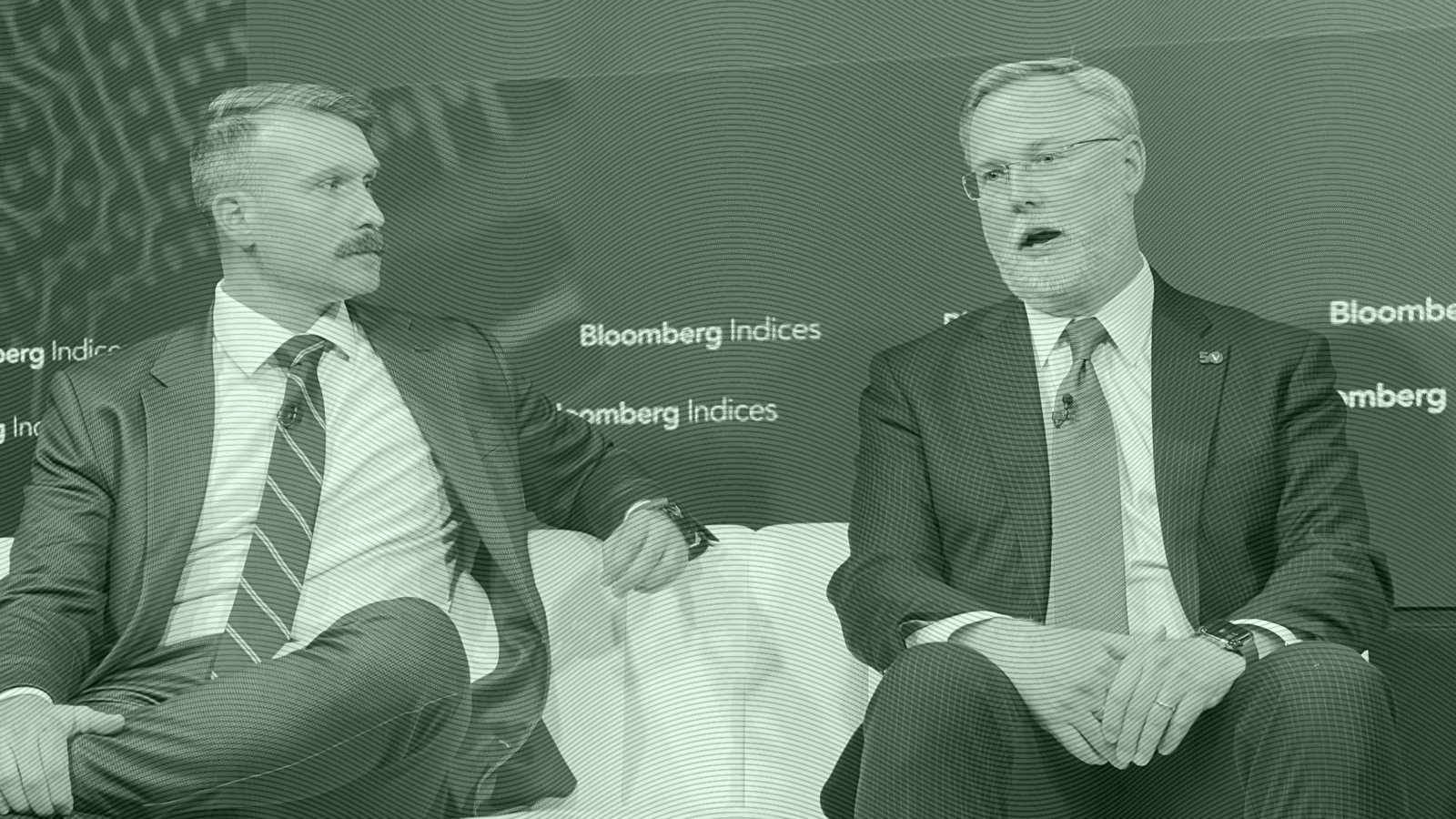
Still, it’s becoming just as hard for the firm to deny crypto’s presence. By some estimates, roughly a fifth of Americans own it, and some clients want to hold crypto funds alongside their traditional investments. “It made sense to relent on this and let this move forward,” Ameriks said during a Bloomberg panel last week.
Building Blocks
Vanguard isn’t on team crypto just yet, but it does seem to be a blockchain fan. Ameriks said the underlying technology has the potential to reduce costs, speed up operations and create a better client experience overall. “Anybody that’s been around the middle- or back-office at any fund firm understands some of the inefficiencies in there,” he said. “We had an early proof of concept where we’re using blockchain to transmit index data back and forth. It was great to have a centralized ledger.”
Vanguard is one of the world’s largest asset managers, by most measures, and holds considerable sway in the wealth management industry:
- The firm serves about 50 million customers and has roughly $12 trillion in global AUM.
- The Vanguard S&P 500 ETF (VOO) surpassed State Street’s SPDR S&P 500 ETF Trust (SPY) earlier this year as the largest ETF on the market, currently holding more than $820 billion in assets.
The Times They Are A-Changin’. Back in 2017, late Vanguard founder John Bogle told people to “avoid crypto like the plague.” That sentiment makes sense given Vanguard’s low-cost, long-term investing philosophy. However, Bogle and the firm originally had similar thoughts on ETFs in general, believing they encouraged short-term trading. Now Vanguard operates the biggest ETF in the world. Who knows, maybe in a few years it’ll have its own crypto fund rivaling BlackRock’s IBIT.
- Discover how Alternative ETFs are reshaping portfolios — Download the report.
- Cut alts admin time by 90%. Download the e-book today.
American Employees Are Scared of Daily Finances, Confident in Retirement

The human mind is a complicated thing.
Roughly 90% of American workers say they regularly experience financial anxiety, up from just 71% in 2022, according to a Betterment at Work survey. Yet despite worries about inflation, credit card debt and housing costs, 7 out of 10 say they’re at least somewhat confident they’ll be able to retire comfortably. It’s a contradiction that advisors said is all too common, but understanding it can help advisors navigate their clients’ long-term financial concerns and get them on a solid path toward retirement.
“Human psychology around money isn’t one-size-fits-all,” said Kevin Feig, founder of planning firm Walk You to Wealth. Some clients are deeply attached to their careers and struggle to imagine what retirement even looks like, he said, while others find it difficult to spend assets after decades of saving. “The key is to understand the blockers and emotions from a psychological perspective and then go from there,” Feig told Advisor Upside.
Are You Ready?
On the surface, retirement readiness appears to be improving. Participation in employer-sponsored retirement plans has reached an all-time high, with 91% of respondents saying they contribute to a 401(k). Still, anxiety remains widespread. More than half of American workers have considered delaying retirement due to insufficient savings, with baby boomers and women most affected. The survey also found:
- Gen Z, the oldest of whom are in their late 20s, are simultaneously the most confident in their retirement goals (88%) and the most financially anxious in their daily lives (73%).
- Meanwhile, Gen X is the most pessimistic regarding their savings. Only 61% believe they’ll have enough for retirement, citing struggles like limited time left to build assets, caregiving cost for their parents and college tuition payments for their children.
How Much Is Enough? That’s the million–dollar question. Roughly half of American workers believe they will need at least seven figures to retire comfortably, per the survey. While $1 million is a nice, round number, anchoring to a specific dollar target can be misleading, said Miller Hoffman, vice president at financial planning firm TradeWinds. “A certain dollar figure doesn’t guarantee a successful retirement,” he told Advisor Upside. Focusing instead on factors like insurance coverage, coordinated family planning, and sound tax and estate strategies often provides clients more peace of mind than hitting a number on an account statement.