Good morning.
Please remember to drink … or rather, invest … responsibly.
Alongside art and classic cars, wine and whiskey have some of the best legs among passion assets sought by wealthy clients. Some 97% of US wealth managers expect demand for fine wine investments to increase this year, according to WineCap, while 83% expect whiskey demand to rise. While the gap is narrowing, the markets remain distinct. Wine boasts a larger investment ecosystem, with multiple indices, exchanges and entry points. Whiskey generally requires longer holding periods, has a smaller secondary market and often commands higher premiums.
Many people unwind after a long day with a glass of vino or a snifter of bourbon. Now you can have the whole bottle … in your portfolios, of course.
See Your Book Through a Buyer’s Eyes
Most advisors wondering what their book is worth don’t have a good way to ask. The firm won’t tell you. The variables aren’t always obvious. So we’ve partnered with Diamond Consultants, a firm at the centre of the biggest advisor moves of recent years, to build a free RIA valuation calculator that sits in front of all that — a directional number, built on the variables they price every day.
This Week’s Highlights
Who’s Ahead in JPMorgan’s Game of Thrones?

And then there were two.
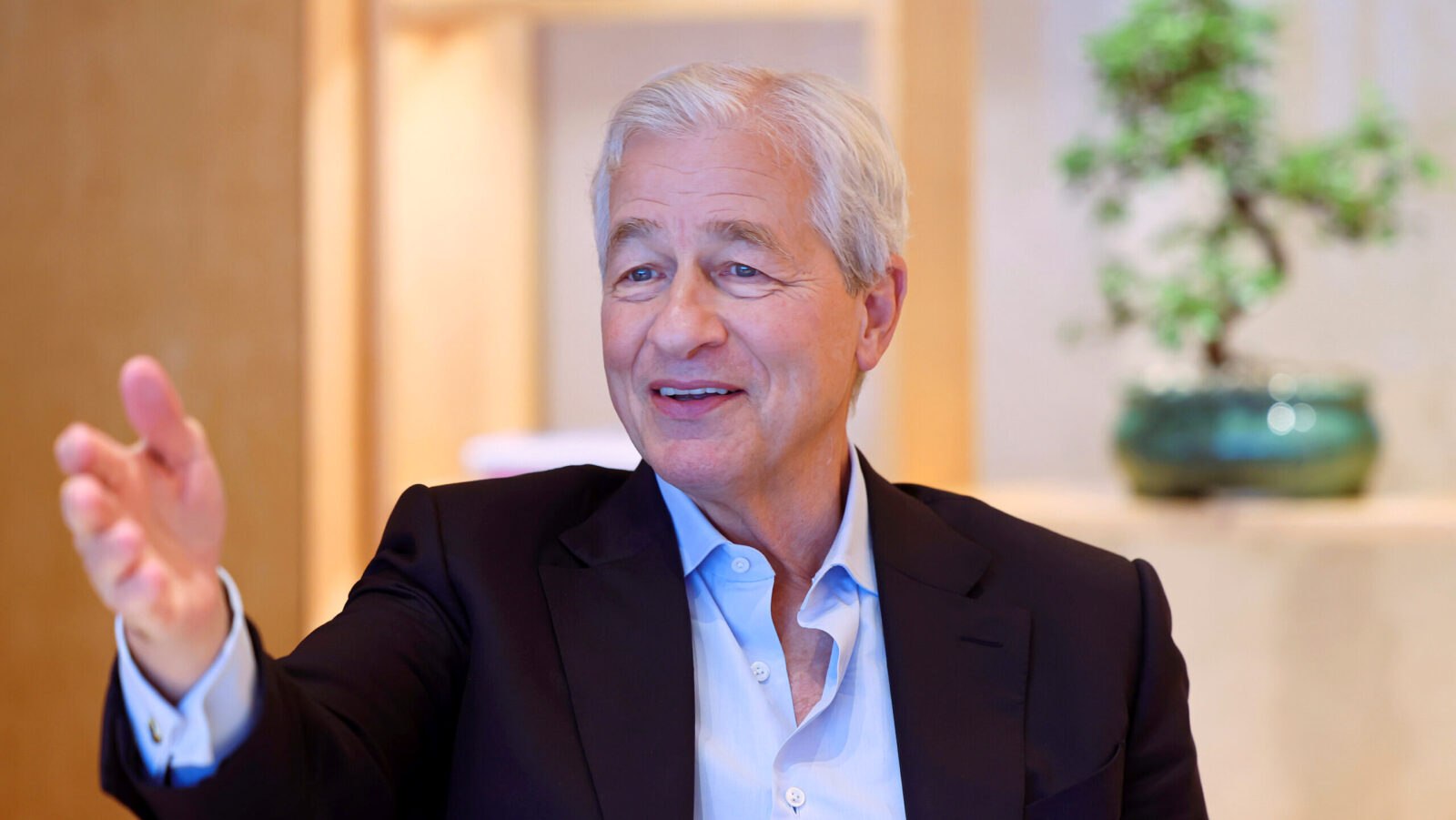
A pair of high-profile promotions at JPMorgan Chase on Thursday appeared to narrow the long-running Jamie Dimon succession race to just two candidates: Doug Petno and Troy Rohrbaugh, now co-presidents and CEOs of the bank’s commercial and investment division and consumer division, respectively. The shake-up seems to have knocked at least one other frontrunner out of contention. One thing we know is there isn’t room for two kings to sit on one Iron Throne, and that’s assuming, you know, Dimon actually decides to give up the job he’s held for 20 years running.
Chase Your Dreams
In fact, even when Dimon does relinquish the CEO gig, the small council chamber inside the Red Keep might feel a little crowded: He has already promised to stick around in an advisory role as executive chairman instead of disappearing to a pristine beach somewhere. Dimon wouldn’t be the only longtime leader of an iconic American company to do so, and in the meantime, the 70-year-old is holding his cards pretty close to his chest. In 2024, America’s Banker suggested he had less than five years at the helm. In a March interview, he told Barron’s that, “board willing,” he aims to serve at least three or four more years.
Either way, Petno and Rohrbaugh, ages 61 and 56 respectively, will have some runway to make their final push for the job, with both now the sole leaders of their own considerable fiefdoms:
- Rohrbaugh is stepping over to the consumer division after spending years leading investment banking and trading. The Main Street division accounted for roughly 40% of the company’s revenue in the first quarter, and 30% of its net income, though it may be the unit most susceptible to disruption in the fintech and AI age.
- Petno, whose background is in oil and gas investment banking, is now the sole leader of the Wall Street side of the company. That unit continues to be JPMorgan’s major growth engine, with its $9 billion in net income in Q1 marking a 30% year-over-year increase.
At the same time, Marianne Lake, the consumer business head and former finance chief once viewed as a likely frontrunner, announced her retirement on Thursday after it became apparent she would not get the top job, sources told The Wall Street Journal.
Stress Positions: Not that it needs saying, both men will inherit a bank far larger than the one Dimon took over two decades ago; its market cap, currently $897 billion, has climbed about 437% in that time. The bank also, unsurprisingly, recently aced the Federal Reserve’s annual stress tests, prompting the announcement of $50 billion in share buybacks.
What the FIFA World Cup Means for ETFs

The FIFA World Cup has always been a spectacle of national pride, athletic drama and of course … billions of dollars in ad revenues.
As the tournament returned to North America this month, investors are increasingly asking not just who will lift the trophy, but how to get a piece of the economic action. Advertisements, streaming subscriptions and travel demand represent a meaningful slice of global consumer spending, not to mention opportunity for American brands to capitalize on new exposure to global consumers, said Jon Clements, managing director and co-founder of MarketDesk.
“Often, the best investment opportunities are found in secondary effects that are less obvious,” he said. “The World Cup is generating a lot of attention around US brands right now.”
New in Town?
You may have seen the memes: traveling sports fans experiencing American goodies for the first time, expressing awe online for treasures like Waffle House and Texas BBQ. That’s driving attention to American brands and opening them up to new demographics. It could also generate interesting signals for momentum investors over the following months, Clements said.
“You have a lot of global travelers in the US experiencing US brands, everything from Costco to food chains to different retail products that maybe are not available in their local markets,” he said. “Most US companies [already] operate on a very global basis, but I would imagine they’re collecting a lot of important data and information in terms of where there might be interest to expand markets.”
World Cup matches obviously also create demand spikes in the hospitality, airlines, ticketing platform and consumer discretionary sectors. Some of the largest funds in related themes include:
- The Gabelli Opportunities in Live and Sports ETF (GOLS) holds Manchester United (which has several players currently represented in the cup) and is up 2.97% this year.
- The US Global Jets ETF, which invests in commercial airlines and is up 10.98% over the same period.
- Funds that track host countries at the macro level, like the iShares MSCI Mexico and Canada ETFs (which have the tickers EWW and EWC, respectively) could also benefit.
Data, Data, Data: Still, it’s going to take some time for the verdict to come in on which brands and regions show the most growth potential, Clements said. “Whether it’s Japanese tourists in Texas falling in love with different elements of US culture, these companies … [are] also collecting a lot more data,” Clements said. “Data is being collected in real time that I think you’re going to see being spoken about on earnings calls over the next two to three quarters.”
Why the Gen Z Dating Scene Is All About Retirement

Have you ever asked a date about their emergency savings or 401(k) balance?
That may sound like a faux pas to many readers, but it’s just common sense for some in Gen Z. The generation is feeling the squeeze when it comes to the high cost of living and preparing financially for the future, new survey data from Bank of America shows. Even among Gen Z households earning more than $100,000, only 26% contribute to a 401(k). It’s not that they aren’t saving, but rather that the majority are focused on paying down debt, building emergency savings and preparing for important life events like buying a home. In this context, assessing a potential romantic partners’ financial wherewithal feels like a necessity, as does reducing the amount of money spent on dates and entertainment. Sure, dinner and a movie are nice, but so is a healthy emergency fund.
“We can joke about it, but the fact that Gen Z has this focus on assessing a potential partner’s financial situation says a lot about the challenges they’re facing,” said Matt Gellene, head of specialized consumer client solutions at Bank of America Merrill Lynch. “Gen Z is an important part of our client base, now and in the future. We can’t just laugh and overlook this.”
Feeling the Squeeze
Nearly a quarter of Gen Zers are delaying some aspect of dating or relationship progress due to their financial situation, according to the survey. Among Gen Zers who are in relationships but not living together, the same percentage is hesitant to move in together or get engaged because of questions about money. It’s no surprise, then, to see that single Gen Zers are seeking a partner who is responsible with money and has similar financial values. By the numbers:
- 74% of survey respondents would prioritize finding a partner who is financially responsible, while 66% would choose a partner who can provide financial security.
- 65% would prioritize finding a partner with positive financial behaviors, while 58% are seeking a partner with strong financial knowledge and 51% want a partner with good earning potential.
These perspectives hold true across the relationship status spectrum, Gellene noted. There are no significant differences whether respondents are single, dating or married. Overall, having irresponsible spending habits is one of Gen Z’s biggest romantic dealbreakers, with 43% saying they would not date or marry a person with such a trait. Serious red flag.
Why Advisors Should Care. Few financial advisors base their practice on serving Gen Z clients at present, Gellene noted, but that will eventually change. The generation is well educated and stands to earn and inherit significant wealth in the future, current cost-of-living challenges notwithstanding. Advisors who do nothing to prepare their practices to serve the unique needs and preferences of this generation could eventually fall behind.

AI Won’t Replace Advisors. It Will Make Them More Valuable. Carson Group’s Dani Fava joins The Advisor Upside Show to explain how AI is transforming wealth management, from saving advisors up to 15 hours a week to letting them deliver bespoke client service that was out of reach before. Plus: why the skills that define a great advisor are shifting.
Edited by Sean Allocca. Written by Emile Hallez, Griffin Kelly, John Manganaro, Lilly Riddle, and Quinn Waller.
Advisor Upside is a publication of The Daily Upside. For any questions or comments, feel free to contact us at advisor@thedailyupside.com.