

Good morning.
We can finally put it to rest: Crypto is not a security … most of the time.
The debate over whether Bitcoin, Ether, Solana and other tokens should face strict government oversight sparked controversies and legal battles under the Biden administration. It even factored into Donald Trump’s successful presidential campaign.
Now there’s clarity. This week, the Securities and Exchange Commission and the Commodity Futures Trading Commission agreed that a crypto asset is a security only if it’s a tokenized stock or bond. “This is what regulatory agencies are supposed to do: Draw clear lines in clear terms,” SEC Chairman Paul Atkins said, noting the decision provides guidance for entrepreneurs and investors while Congress works on bipartisan market-structure legislation.
And the timing couldn’t be better because we’ve got something that is going to change the game: Advi$orCoin.
Beyond The Beach: Smarter Retirement Strategy
Seasoned advisors know this: retirement is about more than just piña coladas that come with miniature cocktail umbrellas.
Retirement is about building your legacy and preserving lifestyle after the W-2 disappears.
That’s why we are excited to launch Retirement Upside, a weekly newsletter that will illuminate the strategies and policy changes that impact how your clients should approach retirement.
This Week’s Highlights
Bye-Bye, Biden-Era Fiduciary Rule. Here’s What Comes Next

In the words of NSYNC, it’s officially “Bye, Bye, Bye” to the Department of Labor’s Retirement Security Rule.
On Tuesday, a Texas federal judge vacated the Biden-era rule that would have expanded the definition of “fiduciary” to cover practically all professionals giving advice to retirement plan participants, including one-time advice about IRA rollovers and commission-based annuity recommendations. The decision, pending the anticipated dismissal of a parallel lawsuit in Texas, returns the roughly $14 trillion DC plan industry to the longstanding “five-part test” for determining a professional’s fiduciary standing, a determination that comes with strict limits on self-dealing activity and requires the application of exemptions for the collection of compensation.
So for now, a years-long battle for insurance companies, broker-dealers and other financial firms comes to an end, though advisors will still be governed under existing frameworks, such as the Securities and Exchange Commission’s Regulation Best Interest and state-based rules adopted in recent years by insurance commissioners.
“It’s not going to change anything for the vast majority of advisors/brokers,” says Knut Rostad, president of the non-profit Institute for the Fiduciary Standard. “It’s going to allow them to do what they have been doing, by and large, without concerns of legal liability, or breaching a true fiduciary standard.”
Cause for Industry Group’s Celebration
If enacted, critics contended, the rule would have sharply limited practices like selling commission-based products. Now that it’s gone the way of the dodo, industry groups are rejoicing:
- “The Department’s decision to end this case and the Court’s order vacating the fiduciary rulemaking package closes the chapter on the Biden administration’s legally flawed fiduciary regulation,” the American Council of Life Insurers, National Association of Insurance and Financial Advisors, Finseca, Insured Retirement Institute and National Association for Fixed Annuities said in a joint statement.
- “The court’s ruling confirms the Biden rule conflicts with current law and exceeded the department’s authority,” they added.
But, others worry about the lack of protection for retirement savers. Rostad said that if the DOL introduces a new rule (as it’s expected to do later this year) it may even “make matters worse,” given the White House’s eagerness to introduce potentially risky investments into 401(k)s. When asked whether saying goodbye to the Retirement Security Rule means a potential increase in advisors not acting in the best interest of their clients, he added: “The message that is being delivered is being very well understood by the firms that have the greatest interest in what is allowable in retirement accounts.” That message? “Never mind any serious consideration of fiduciary safeguards.”
Missing the Mainstream. Sometimes, a push like the one from the Biden administration is enough to generate public awareness about a topic that greatly impacts everyday investors but that isn’t top of mind, such as the fiduciary standard. But that’s likely not the case here. Rostad says he doesn’t think the latest attempt to crack down on any potential conflicts of interest in retirement advice was understood by the public as much as it was during previous attempts under the Obama administration.
These ETFs Are Being Seeded with Tax-Free Exchanges

Poof. Where did the tax go?
For their next trick, issuers are turning to a strategy to help seed new products: the 351 exchange, which allows stock portfolios with years of appreciation to be transferred to ETFs without triggering capital gains taxes. But it’s not just the likes of Alpha Architect, Cambria and other shops that have made a point of focusing on 351s. Asset managers are increasingly incorporating the 351 exchange into new ETFs that aren’t specifically marketed for the capability. Advisors should expect to see this much more frequently.
“It’s not something they’re marketing or advertising as a business,” Morningstar associate director Daniel Sotiroff said. “It’s an option they have if they want to launch a new strategy and get it off the ground.”
The Big Money Wins
Over the past couple of years, a handful of asset managers have rolled out 351 exchange ETFs that have had initial investment minimums of $1 million or more. But recently, Alpha Architect added a fund that went as low as $150,000, only for accounts held at Charles Schwab (Fidelity accounts, by contrast, had a $5 million minimum for that fund). In any case, it’s likely that the firms specializing in 351s are moving downmarket, and the tax strategy could be available for smaller accounts. However, the asset managers that have added 351 exchange provisions in several yet-to-be-launched ETFs do not specify the investment minimums for seed money.
Some of the firms prepping funds with 351 provisions:
- Ritzholtz Wealth, whose forthcoming Goaltender ETF (GTND) will be its first exchange-traded fund.
- Polen Capital, which has filed for a US SMID Cap Growth ETF and 5Perspectives Growth Opportunities ETF, each of which appears similar to existing non-ETF strategies the firm manages.
- Cloverpoint Capital, which filed with the Securities and Exchange Commission for four funds: the Core Alpha US, International, Global and Energy Transition ETFs.
Perhaps the most notable firm to launch an ETF seeded in part via 351 exchanges is American Century’s Avantis Investors, Sotiroff noted. That firm’s Total Equity Markets ETF (AVTM) started trading in late January.
Tread Lightly on This One-Time Event: The rise in 351 exchanges hasn’t escaped attention from Congress, which could restrict them in the coming years. The US Treasury is also considering issuing guidance on such exchanges, according to a report by Bloomberg. The exchanges, which make use of a century-old tax rule, can also be flagged by the IRS, as illustrated by a recent paper on the subject. Further, investors should be fully aware of how the ETF’s strategy may be significantly different from the concentrated stock investments they are transferring, as well as confident that the seeded ETF will gather enough assets to be viable, Sotiroff said.
“You’ve got to make sure the strategy of the ETF vehicle is actually something you want and are willing to hold over the long run,” he said. “You might wind up with something that is very different from what you were doing before.”
- Turn client concerns into planning opportunities. Get the checklist.
Shock After Shock: Fed Fears Iran War May Fuel Higher Inflation
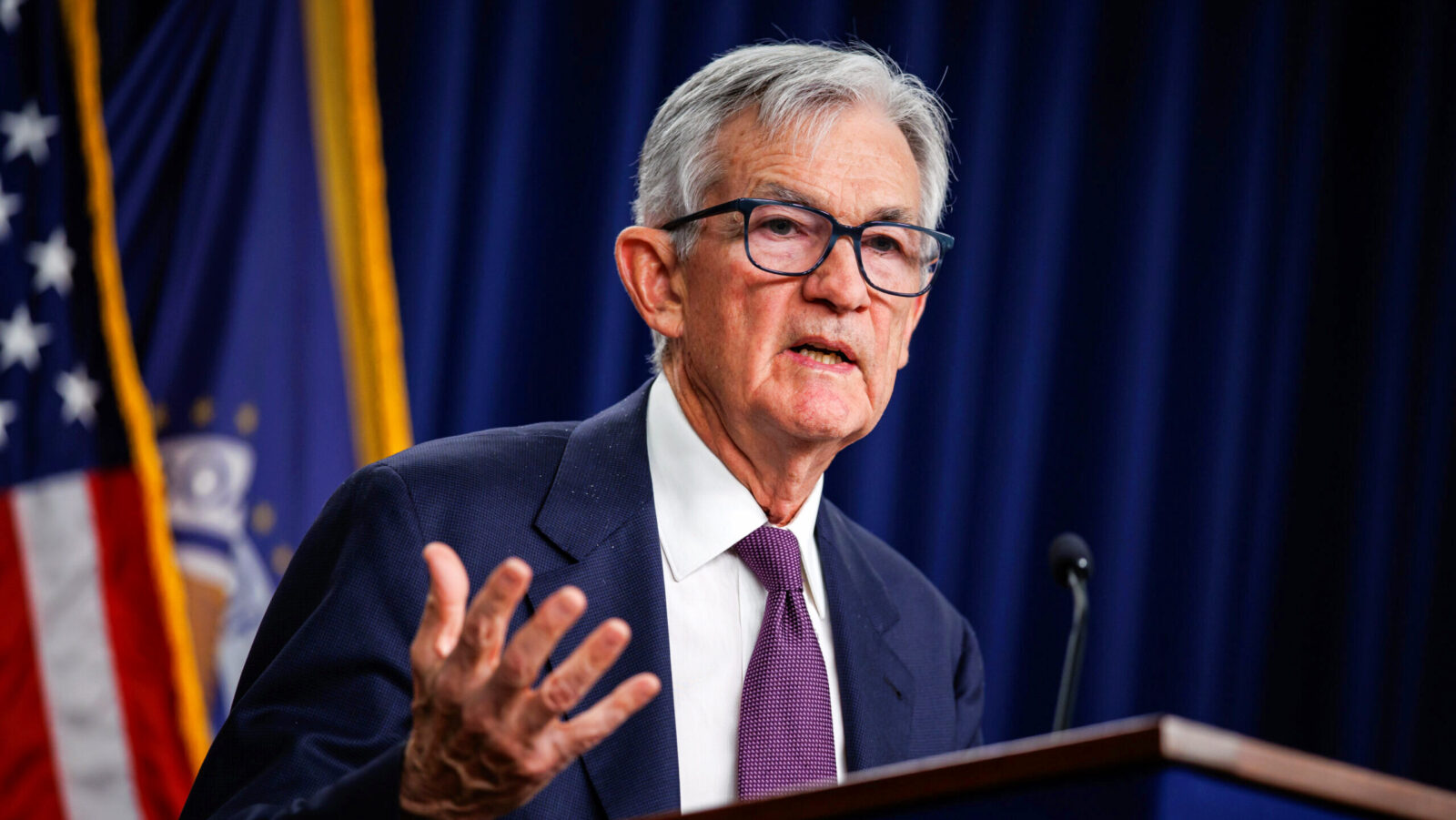
“We had the tariff shock, we had the pandemic, and now we have an energy shock.” Those were the words of Federal Reserve Chair Jerome Powell on Wednesday, underscoring how his term hasn’t exactly been a boring one.
With his tenure as chair due to expire in May, it doesn’t seem destined to end on a humdrum note, either. Powell, who plans to stay in the role until a successor is confirmed, bemoaned “frustrating” high services inflation and worried that conflict in the Persian Gulf could make matters worse after the central bank’s policymaking committee voted 11-1 to hold the benchmark interest rate between 3.5% and 3.75%.
Higher Cost of Doing Business
Powell’s Fed has worked aggressively since 2022 to reduce inflation to the central bank’s 2% target. In the past year, officials have also had to perform a delicate dance, balancing inflationary concerns with softening labor-market conditions.
War, meanwhile, is not delicate. Since the US and Israel attacked Iran on February 28, oil prices have risen nearly 50% amid Tehran’s de facto blockade of the Strait of Hormuz. Brent crude futures rose 3.8% on Wednesday to $107.38 per barrel, while the average price of gas hit $3.84 per gallon in the US, the highest since 2023. There are also signs that inflationary pressures were appearing before the war. The latest producer price index reading, which measures inflation at the wholesale level, rose more than expected. The Bureau of Labor Statistics said Wednesday that PPI climbed 0.7% month-over-month in February, or 0.5% with volatile food and energy prices stripped out, both more than the 0.3% economists forecast; on a 12-month basis, the headline index rose 3.4%, the most in a year. Powell, for one, said energy prices will push up inflation in “the near term,” and Fed projections show policymakers are more pessimistic about inflation:
- The median policymaker now expects the personal consumption expenditures price index, the Fed’s preferred inflation gauge, to end the year at 2.7%, up from 2.4% in December.
- Powell said the war is “the kind of thing that can cause trouble for inflation expectations,” which sent stocks tumbling.
“The big takeaway from the Fed decision is that the Fed will not be riding to the economy’s rescue, even if gas and diesel prices keep rising,” said Comerica Bank Chief Economist Bill Adams. “Monetary policy can slow growth and inflation, or it can speed up growth and inflation. But it can’t offset an energy supply shock, which weakens growth at the same time that it raises inflation.”
Mr. Brightside: There’s room for optimism: Fed policymakers expect the unemployment rate will come in at 4.4% at the end of the year, the same as their December forecast and in line with February’s actual reading. They also expect GDP growth to reach 2.4% in 2026, up from 2.3% in December.
Edited by Sean Allocca. Written by Emile Hallez, Griffin Kelly, John Manganaro, and Lilly Riddle.
Advisor Upside is a publication of The Daily Upside. For any questions or comments, feel free to contact us at advisor@thedailyupside.com.