Good morning.
Delay of game.
Edelman Financial Engines alleges Mariner Wealth Advisors enticed wealth managers to break non-solicitation agreements, and the two firms were all set to see each other in court this July, but a federal judge in Kansas called a time out.
Judge Holly Teeter recommended moving the trial to December to avoid any “anticipated complications from the World Cup games in Kansas City.” This year’s FIFA World Cup will see a whopping 104 soccer matches played across the US, Canada and Mexico, six of which will be held in Kansas City.
If the court fails to come to a ruling, the winner will be decided by a best-of-five shootout in overtime.
This Week’s Highlights
Think Retirees Face Just 7 Tax Brackets? There’s More to the Story
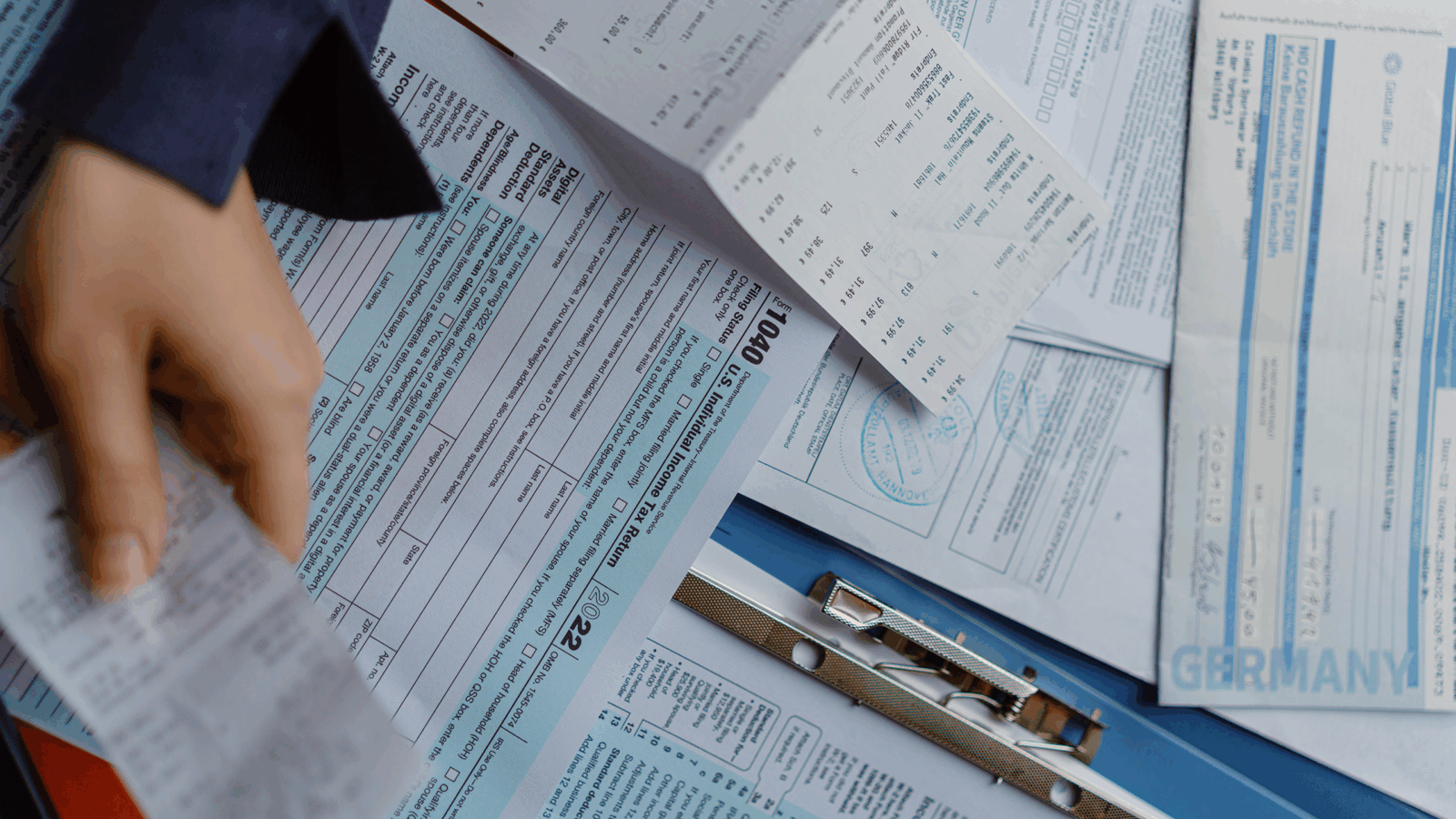
Do you know how many federal income tax brackets there are? Seven, strictly speaking, with the lowest-earners paying 10% on income in the first bracket and the highest-earners paying 37% in the top bracket.
Financial advisors often consider these brackets as clients amass wealth, but things get much more complicated when it comes to optimal retirement income planning, says Stuart Ritter, insights director at T. Rowe Price. Getting the most out of clients’ accumulated nest eggs requires consideration of 16 de facto tax brackets. The added complexity stems from five-tiered Medicare surcharges, potential taxes on Social Security benefits and more. It’s not easy for advisors to master retirement income planning, Ritter said, but those who do can help clients keep more of their hard-earned wealth.
“The good news for advisors today is that they can rely on some powerful tools and calculators to help address the complexity,” Ritter told Retirement Upside. “Income planning is complex, but it’s not as difficult as it once was when you had to do everything by hand with a calculator.”
Income Planning in Practice
For clients on Medicare, proactively managing their income to minimize the program’s Income-Related Monthly Adjustment Amount is critical. Often abbreviated as IRMAA, it’s an escalating surcharge Medicare adds to clients’ Part B and Part D premiums when their income exceeds progressive thresholds.
IRMAA isn’t a penalty, Ritter explained, but rather a pricing structure that ties higher incomes to higher premium costs. If the client’s income stays below the first threshold, they’ll pay standard premiums and nothing more, but even going one dollar over a threshold can trigger significant additional costs. 2026 IRMAA brackets are based on 2024 income and apply at the following income levels:
- Tier 1 surcharges apply between $109,001 and $137,000 ($218,001 to $274,000 joint), triggering $81.20 in added monthly Part B premiums and $14.50 for Part D.
- Tier 5, the highest, applies when income reaches $500,000 ($750,000 joint), adding $487.00 in Part B premiums and $91.00 for Part D.
- Separately, Social Security taxes apply when a client’s adjusted gross income plus nontaxable interest and half their benefit amount exceeds just $25,000 ($32,000 joint).
For affluent retired couples, IRMMA surcharges can approach $7,000 per year. Meeting these costs might not break the bank for a given retiree, Ritter said, but they can be surprising (and distressing) if not proactively addressed.
Ups and Downs. “Steering your clients wrong on this stuff is a great way to lose credibility,” Ritter said. However, advisors can help plan around the surcharges, for example by timing Roth conversions for lower-income years. “Real-world data shows us that retirees’ spending varies a lot over time, which gives us the opportunity to be very strategic when drawing income from tax-free, tax-deferred and taxable sources.”
Berkshire’s Annual Meeting Shines Spotlight on Buffett Successor Greg Abel
The man who now leads Dairy Queen must be wondering how he wound up with such unjust desserts.
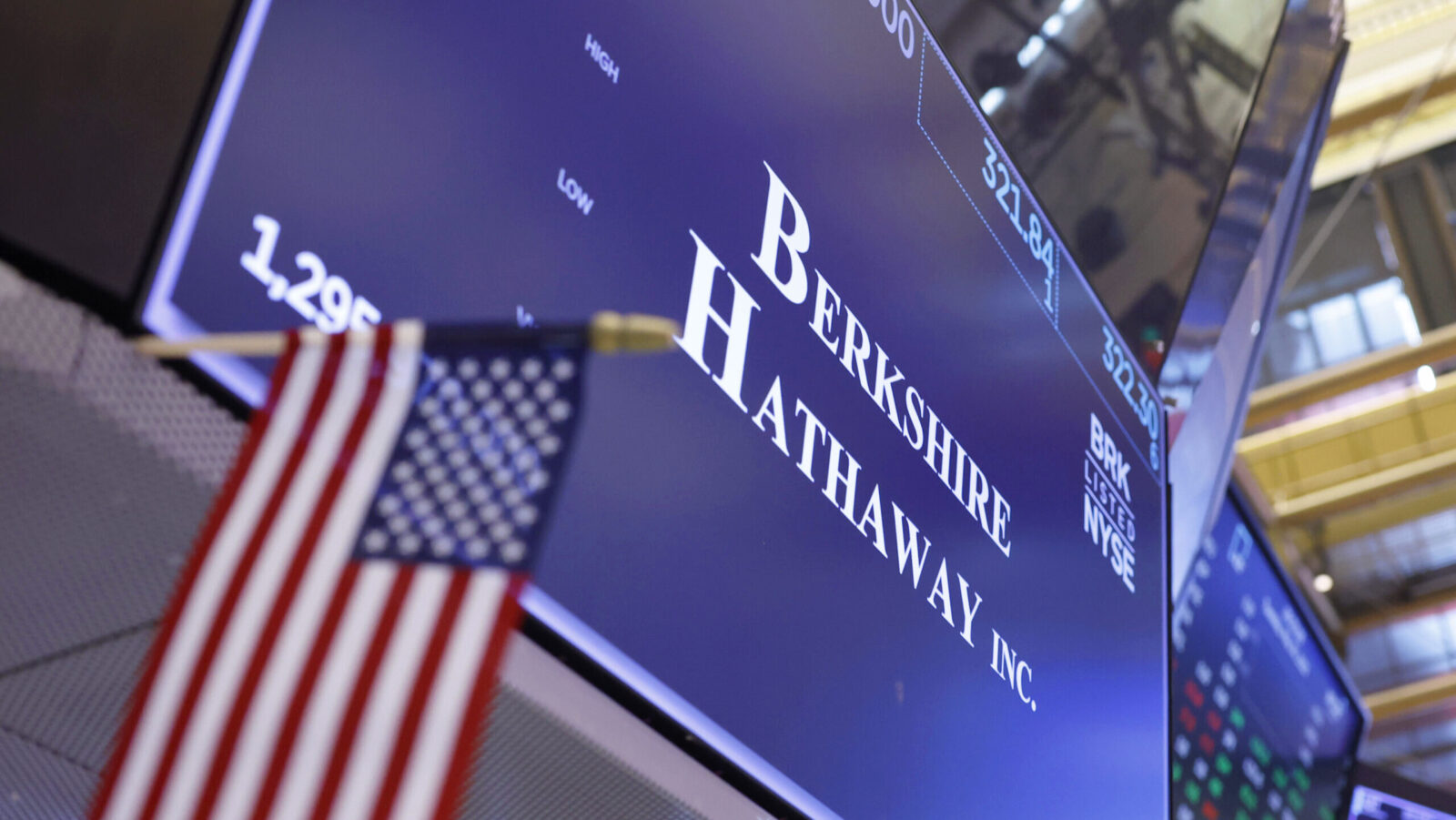
Greg Abel will helm his first-ever shareholder meeting as CEO of Berkshire Hathaway this weekend, taking the reins from Omaha’s folksy oracle, Warren Buffett, who announced his retirement almost exactly a year ago, in an event dubbed “The Legacy Continues.” But Class B shares of the company have been melting like a chocolate chip cookie dough Blizzard left on the counter too long. Relative to the S&P 500, Berkshire just clocked its worst performance since the turn of the century, lagging the index by 37 percentage points in the past 12 months. In other words, the market began pricing in the dimming glow of Buffett’s halo effect the moment he announced his retirement.
Welcome to the Show
Of course, the loss of the Buffett premium doesn’t explain the company’s entire 11% share price skid in the past year. Berkshire got dinged for conceding its big Kraft-Heinz merger bet had gone bust, while operating profit fell 6% in 2025 on roughly flat revenue. Meanwhile, operating profit from insurance underwriting slumped 54% in the most recent quarter, even as much of the rest of the industry thrived. And some investors have grown a bit antsy watching the giant holding company largely sit out the artificial intelligence boom that has lifted the S&P 500 by 25% in the past year. Abel’s only big move since taking over at the start of the year was executing a $9.5 billion acquisition of Occidental Petroleum’s chemicals business.
Consequently, at least some of the 30,000-odd attendees expected at this weekend’s event might be hoping Abel reveals some slick plans or a trick or two up his sleeve. On the other hand, doing nothing in the present moment is precisely how Buffett would act:
- Want proof? Just observe the Buffett Indicator (the ratio of total US stock market value to GDP), which currently sits near a record high of over 220%, signaling to Buffett-esque value investors that now is definitively not the time to buy.
- Whenever the tides turn, Abel will have a roughly $373 billion cash pile at his disposal, a near-record war chest for the company. In the meantime, Abel restarted share buybacks in March, ending a drought of more than a year.
Square Off: Abel isn’t the only man around who fancies himself Buffett’s heir apparent. Bill Ackman’s closed-end fund Pershing Square USA went public Wednesday on the New York Stock Exchange, fulfilling his long-stated goal of running a Berkshire-esque publicly traded investment vehicle. Shares plummeted 18% on the first day, and despite clawing back some ground since, are still well below their $50 IPO price. At least Abel can take solace in knowing he’s not the only one who isn’t receiving the benefit-of-the-doubt Buffett premium.
Here Are the Top Active ETFs Used by Advisors
Active ETFs have firmly established themselves as the cool, new kids on the block, with asset managers launching nearly 1,000 products last year alone. While registered investment advisors still rely heavily on passive funds for their low costs and diversification, many are increasingly incorporating active ETFs into portfolios, and a few firms are standing out.
JPMorgan is king, issuing three of the top five active funds preferred among RIAs, and that concentration is reflective of a wider trend across firms. “The list is dominated by relatively few asset managers, indicating that brand familiarity and established advisor relationships remain key drivers of adoption in the active ETF market,” said Rich Donnellan, vice president of marketing at data firm Fintrx.
And the Winner Is …
Active ETF adoption has surged, especially among independent RIAs. In early 2021, these advisors held about $28 billion in active ETFs. By the end of last year, that figure had climbed to nearly $400 billion, according to Fintrx.
The types of strategies advisors favor help explain that growth. RIAs tend to gravitate toward active ETFs focused on income generation, cash management and tax-efficient core exposures. These align with ongoing client demand for yield, liquidity and diversified long-term portfolios. Fintrx data shared with Advisor Upside showed that the top five most popular active ETFs among all RIAs, include:
- JPMorgan Equity Premium Income ETF (JEPI) — Some 1,200 RIAs have allocated a combined $14.5 billion to the fund.
- JPMorgan Ultra-Short Income ETF (JPST) — Nearly 1,050 firms hold about $20.5 billion in assets.
- Dimensional US Core Equity 2 ETF (DFAC) — Just over 1,000 RIAs account for roughly $30 billion of the fund’s AUM.
- Avantis US Small Cap Value ETF (AVUV) — Around 860 firms have invested a combined $12.5 billion.
- JPMorgan Nasdaq Equity Premium Income ETF (JEPQ) — More than 800 RIAs have committed $7.7 billion to the fund.
Not So Fast. Active ETFs may be gaining ground with RIAs, but plenty of advisors still remain cautious as the funds tend to underperform their passive counterparts over long periods. “We do use active ETFs, but very selectively,” said Sean Beznicki, director of investments at VLP Financial Advisors. “We’re not going out and ‘shopping’ the ETF universe from scratch.” His firm typically allocates to ETF share classes built from mutual funds it’s already vetted and used for years. “It gives us a bit more confidence sticking with what’s familiar, while still picking up the added benefits of the ETF structure,” he told Advisor Upside.
Edited by Sean Allocca. Written by Emile Hallez, Griffin Kelly, John Manganaro, Lilly Riddle, and Quinn Waller.
Advisor Upside is a publication of The Daily Upside. For any questions or comments, feel free to contact us at advisor@thedailyupside.com.