

Good morning.
How exposed is the typical portfolio to just a handful of names? The truth is more than many might expect.
The top 10 US stocks now account for roughly 40% of the S&P 500, a level of concentration the market hasn’t seen in decades.
At Schwab Impact 2026, we sat down with Ben Adams, Allspring’s Head of US Portfolio Specialists, Systematic Core Equity, to dig into it. In this Q&A, he explains how to help manage the risk and how a systematic approach can help advisors cast a wider net.
Let’s dive in.
How Advisors Can Manage Concentration Risk
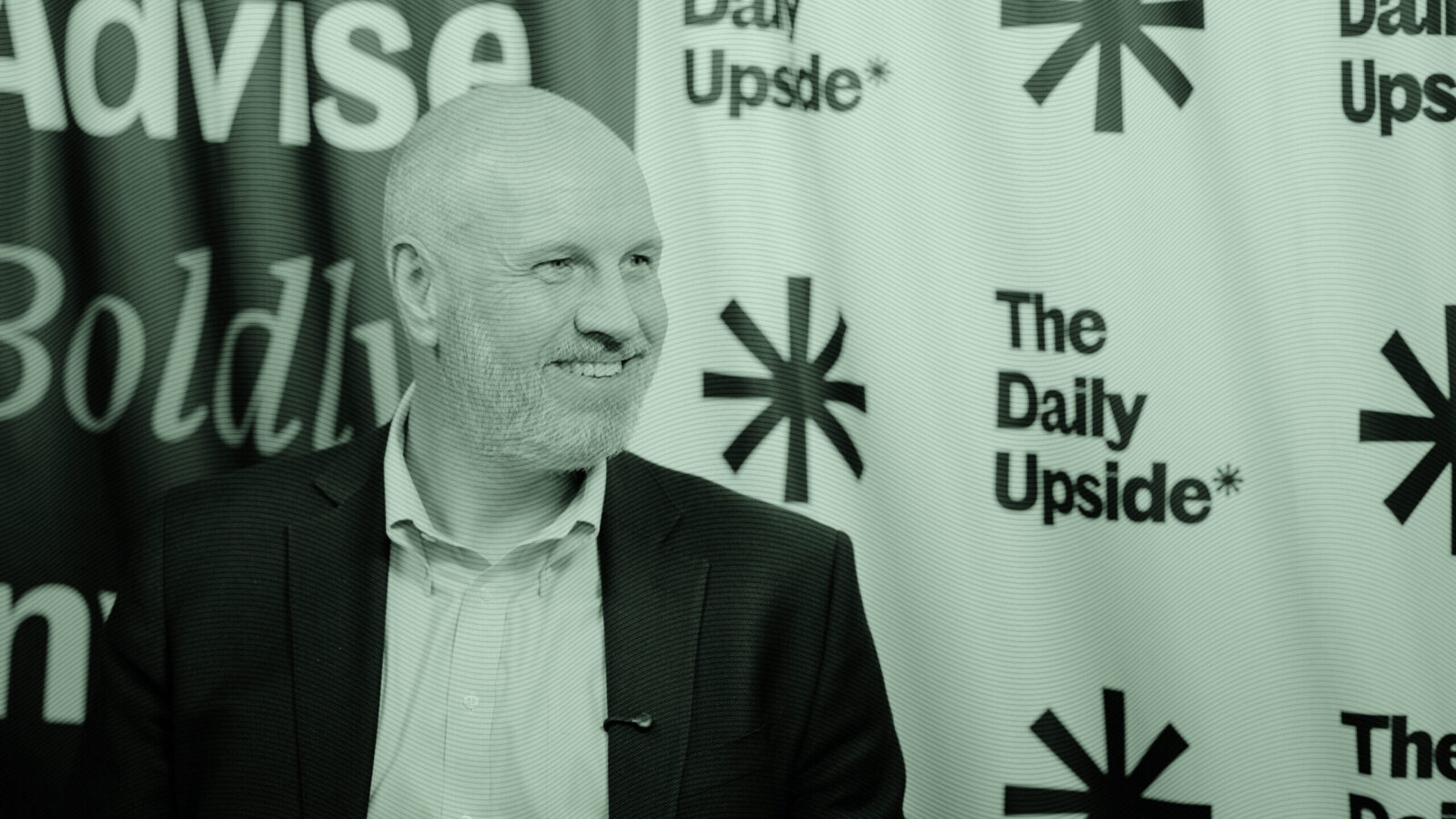
The Daily Upside: The top 10 US stocks make up about 40% of the S&P 500. How should advisors be thinking about that in terms of risk and opportunity?
At Allspring, we focus heavily on the risk. Forty percent is a very high number. You’d have to go back to the Nifty Fifty in the early 1970s to find similar concentration. But what’s different today is the shared risk within those names. The top 10 are largely hyperscalers and AI infrastructure and data-center plays, and more or less across the board, they’re exposed to the same risk factor.
Compare that to the peak of the internet bubble. There was concentration then too, but the top names were IBM, Pfizer, ExxonMobil. Cisco was in there too, but they weren’t all in the same space.
Today, if the ROI on all that data-center spending doesn’t pay off for the hyperscalers, their stocks will probably suffer, and the data-center names, the Nvidias, Broadcoms, and Microns, will likely suffer at the same time. So for us, it’s all about understanding and finding ways to manage that risk.
The Daily Upside: How much of this concentration is driven by index investing itself?
Very little. These companies are performing well, they’re not outrageously valued, and it’s appropriate that their market caps have risen. But here’s what we find interesting about passive: if you go to S&P or Russell, the index construction team has no risk-management framework. They base decisions on market capitalization or float, not on whether it’s appropriate for the index to carry a certain amount of risk. So the question we ask is, who’s minding the store when it comes to the risk factors inside these indexes?
The Daily Upside: How should advisors address client concerns about concentration risk?
We like to highlight ways to keep equity-like return expectations while getting away from some of that concentrated risk. The toolkit is to go down-cap into small and mid, to go from US into international or emerging markets, and to take more of an equal-weighted mindset even in large cap. An S&P equal-weight approach or ETF may be a better implementation than pure market-cap weighting. The message to advisors is to use that broader toolkit and build in as much diversification as you can, in case that big risk does become a problem for client portfolios.
The Daily Upside: Where does your systematic core equity approach fit in?
Our systematic approach in large cap starts from an equal-weighted mindset, so you own less Nvidia, less Meta, less Alphabet, and you broaden your exposure. We also offer small- and mid-cap strategies to reach smaller names. Systematic approaches are critical in this environment because they let us cast a very wide net and have a view on every company in the universe, including which companies face the most AI disruption and which might be tomorrow’s winners. If you’re not casting that wide net, you can miss those opportunities.
Two of our key pillars are business momentum, which picks up companies whose fundamentals are trending the right way, and price momentum, where the market is starting to see it too. Bring those together and you may find winners the market has been overlooking.
The Daily Upside: Clients want to know who’s making the decisions. How much of your process is models versus people?
There’s a famous line in statistics: all models are wrong, but some are useful. It’s important to stay humble, because any model reflects the inputs its human minders gave it. Our approach relies primarily on company fundamentals. It’s not a black box, and it’s not so esoteric that it can’t be understood. The human element goes into the model, and it also sits on top of it as a check on what comes out, with additional discretion from portfolio managers. We might have 500 interesting names from the model and end up with a portfolio of 50 to 75. Without the human element, you may never get down to that high-conviction mandate.
The Daily Upside: How are you thinking about AI concentration risk specifically?
Two ways. The first is benchmark sensitivity. Our mandate is to outperform the benchmark, and we offer different approaches. Some are tightly tied to the bench, I call those our “FOMO” strategies, for those who fear missing out on the AI trade, and any they may end up with exposures similar to the benchmark. Others have more latitude and look a bit more differentiated while staying benchmark-aware.
The second is asset allocation. US large-cap equity tends to be the single largest, most dominant exposure for almost any investor. So for advisors thinking about overall client portfolios, allocating toward small and mid, international, or emerging markets, spreading the bets as much as possible, is just a sensible approach.
The Daily Upside: How can a systematic strategy play in a portfolio that’s mostly passive?
A systematic approach can actually replace a passive exposure. In some cases, we’ve seen clients come back to active, in the form of systematic, from passive, which you don’t hear much these days, but still grounded in benchmark sensitivity. If a client wants passive US large core, we want to stay true to that exposure while adding value through our systematic process.
We’ve used the phrase “peak passive.” Passive has grown immensely as a share of equity assets, but we think that growth is at least leveling off, if not at risk of declining as a percentage of total equity assets. As clients recognize the nature of this concentrated exposure, they may keep moving away from pure passive and put more trust in human judgment and active management as a way to address it.