

Good morning.
The ETF train keeps on rolling. Three quarters in, and this year’s flows have already topped 2025’s record, with roughly $2.3 trillion projected by year-end.1
But that headline number only scratches the surface. We sat down with Allison Bonds Mazza, Senior Managing Director and Head of US Wealth at State Street Investment Management, to unpack this surge, including Trump accounts, the forces behind the flows, and the tax-loss opportunities advisors shouldn’t miss.
Let’s dive in.
Why the ETF Boom Is Just Getting Started
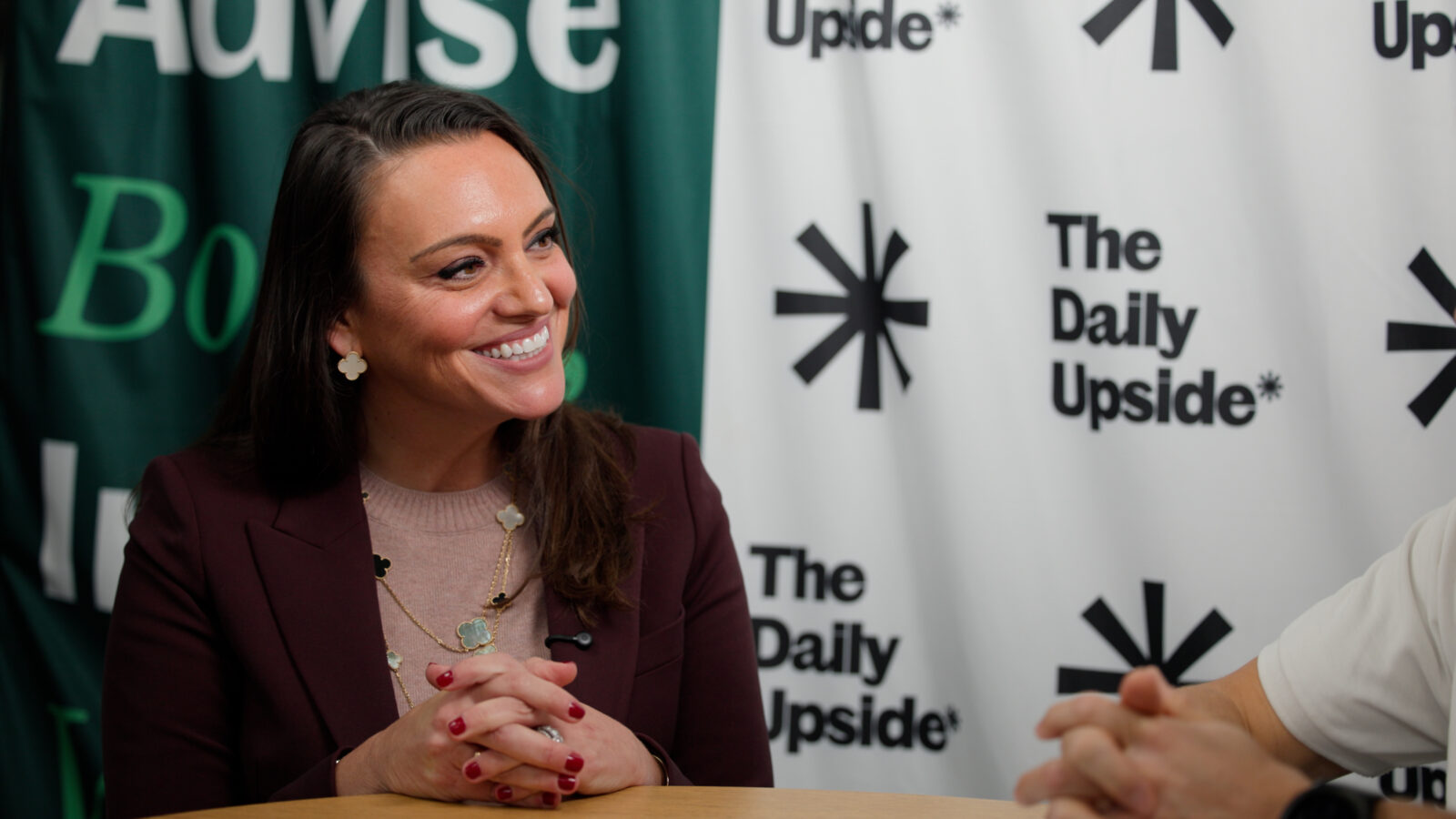
The Daily Upside: ETF flows have already surpassed last year’s record. What’s driving demand right now?
Well, to your point, through Q3 of 2026 we’ve surpassed the 2025 record, and that was on top of 2024, which was also a record. We’ve seen $1.54 trillion come into ETFs this year.2 Our research team is predicting we’ll end the year, once Q4 is on the books, at around $2.3 trillion.3 That would be the third consecutive record year.
It sort of begs the question, what’s driving all of that? Number one, we continue to see ETFs embraced as the investment vehicle of choice by financial advisors and investors. But I also think there’s this evolution of the ETF. It used to just be thought of as a way to access a specific asset class. It’s evolved now into being viewed as a broader toolkit for investors.
Depending on what you’re looking to do in a portfolio, whether that’s managing volatility, targeting income, or hedging risk, there’s probably an ETF for that. So we’ve seen more and more ETFs come to market in new ways, whether that’s privates, alternatives, real assets, crypto, derivative income, or defined outcomes.
I’ve been in and around the ETF world for almost 20 years. When I joined State Street in 2008, we had $160 billion in ETF assets across about 80 ETFs.4 Today we have hundreds of ETFs, approaching $2.3 trillion.5 And I actually think we’re just getting started.
The Daily Upside: Where are you seeing demand from advisors?
When we look at the flows, we’re seeing two stories play out. On the one hand, about half of flows have come into low-cost ETFs this year. Advisors are still using ETFs for the core of their portfolio, and they’re voting with their dollars for low expense ratios.
We see that play out in our portfolio series, a suite of about 26 low-cost ETFs at two, three, four basis point exposures. I’d point to SPYM in particular. That’s our low-cost S&P 500 ETF, lowest cost on the market at two basis points.6 Year to date we’ve seen $70 billion in inflows into SPYM,7 making it the second-greatest ETF by inflows this year across the entire industry.8
On the other hand, about 36% of flows year to date have gone into actively managed ETFs.9 That surprises some people, but it’s actually not a new story. This is the sixth year in a row we’ve seen inflows into active ETFs. If you count them, it’s 78 months of consecutive inflows.10
We’re seeing that in a couple of ways. Number one, really strong interest in actively managed alternative strategies. There I’d point out the ETF we brought to market with Bridgewater last year, bringing their all-weather risk parity strategy to every investor in an ETF. That’s now approaching $2 billion in assets.11
And we’re also seeing strong interest on the active side in fixed income. We’re now in this higher-for-longer environment, so things have shifted a little. Financial advisors are looking for floating rate and senior loans. In that area we’re having more and more conversations around a couple of ETFs we have in partnership with Blackstone. We have SRLN, which gives you exposure to Blackstone’s active management in the bank loan category. And we have a high-income ETF, HYBL, run by Blackstone, where they’re navigating between senior loans, high yield, and CLOs.
The Daily Upside: There’s been big news about SPYM being selected as a default investment in the new accounts for children. Tell me about that, and how it’s been received by advisors.
So you’re referring to SPYM being selected by the Treasury as the default investment for Trump accounts. Obviously we were thrilled, because we think it will open up ETFs to a whole new generation of investors, and it can be transformative for millions of American kids.
I look at myself as an example. I didn’t start investing until my early 20s, entering the job market and contributing to a 401(k). Trump accounts give this next generation the ability to have a couple of decades’ head start, to start that investment journey much earlier in life, potentially at birth.
But to your question around how advisors think about it, we think this is an unbelievable client engagement opportunity, right at the same time that one of the biggest conversations in wealth is around generational wealth transfer. They actually just updated their numbers. It used to be a prediction that about $80 trillion would change hands. It’s now roughly $120 trillion that will change hands from one generation to the next by 2048.12
And we’re actively seeing advisors look to address that. How do you build a relationship with the next generation now, so that when that wealth changes hands, you’ve got it established? I can’t think of a better way to engage families across generations than to be the advisor that helps educate them around Trump accounts, and helps them build the wealth now rather than waiting for it to change hands in a couple of decades.
The Daily Upside: There’s so much focus on AI and concentration risk these days. What are the opportunities for advisors to add value for clients who see opportunity or are worried about it?
Well, what you’re circling around is this concentration in the equity markets, and how advisors retool or rethink portfolios given some of the stock market concentration we’ve seen.
It’s Q4, we’re approaching 2027. It’s a natural time to be having portfolio review conversations with clients. At State Street, we have a number of tools that can help an advisor stress test portfolios. If you feel like the portfolio’s gotten out of whack, too concentrated, we can run it through different scenarios, whether that’s credit shocks, market volatility, rising rates, or increased inflation, and help advisors identify gaps or overlaps and ideas around retooling.
But another area that’s really interesting today is tax-loss harvesting, particularly within fixed income. We’re in this higher-for-longer environment, and as rates have risen, bond prices have fallen. So if you look across portfolios, you don’t have to look far. You can almost throw a dart at a fixed income sleeve and find an exposure that’s a potential opportunity to harvest a loss.
We’ve done a little analysis on this. The most widely held category within fixed income is core and core-plus bonds. Take a look at the fixed income holdings, use it as an opportunity to harvest that loss, apply it to gains. Is your portfolio positioned for the next cycle? Maybe it’s an opportunity to redeploy into some more opportunistic strategies.
Watch the full Q&A with Allison here.*