

Good morning and happy Monday.
The truth is out there … or so this ETF issuer would have us believe.
Rest assured, there are “no tinfoil hats required,” Tuttle Capital proclaims about its UFO Disclosure ETF (UFOD), which shot into orbit last week. That is, it does not invest in alien technology, at least that we know of. In fact, it looks a lot like an aerospace and defense fund, with the top holdings being Amentum Holdings, Lockheed Martin, Northrop Grumman, GE Aerospace, Leidos Holdings and Boeing. The fund reflects Tuttle’s assessment of government disclosure and legislative activity that involve “unidentified anomalous phenomena and advanced technologies,” the firm says.
Next up, may we suggest a BigFoot ETF that harnesses terrestrial bipedal data the government doesn’t want us to know about?
BlackRock’s ‘Unusual’ Acquisition of CornerCap’s ETF

BlackRock will roughly triple the size of an iShares fund when it acquires assets from an ETF issuer in the coming weeks.
It’s a quirky step for the world’s largest asset manager, which doesn’t normally pursue one-off deals with small ETF providers. It’s also small potatoes, at least on BlackRock’s scale: The $106 million iShares Large Cap Value Active ETF (BLCV) will get a roughly $200 million injection when it receives the assets from the CornerCap Fundametrics Large-Cap ETF (FUNL). The actively managed iShares ETF focuses on US stocks within the Russell 1000 Value Index.
“It’s unusual,” said Dan Sotiroff, associate director of US passive strategies at Morningstar. “I don’t know what the motivation is.”
But Why?
CornerCap Investment Counsel, the advisor to the ETF being acquired, did not respond to a request for comment, though it explained in a regulatory filing that it “has determined to exit the fund advisory business.” That firm was bought about a year ago by EP Wealth Advisors, although the ETF was not part of that deal, according to a representative from the acquiring RIA. In a filing with the Securities and Exchange Commission in late December, CornerCap’s ETF indicated the transfer to iShares would be subject to a shareholder vote, and if the measure failed, the fund would be liquidated. To accommodate the transfer, BlackRock is moving assets from BLCV into an otherwise identical ETF that will also absorb the FUNL assets, transactions that are slated for Feb. 27.
BlackRock declined to comment on the fund reorganization.
There are a couple of aspects that make the fund transfer stand out:
- First, deals to acquire or absorb ETF assets don’t happen very often. Recently, though, there have been a few high-profile arrangements, such as Goldman Sachs’ agreement to buy Innovator Capital Management and Yorkville America Equities’ deal to pick up the God Bless America ETF (YALL), which would be rebranded under Trump Media’s Truth Social Funds line.
- Second, BlackRock certainly doesn’t need to absorb other issuers’ ETF assets, given its size and reach. At just over $100 million, BLCV is far from being one of the larger iShares funds, but it will benefit from seeing its asset levels triple. Even so, “BlackRock’s in a unique position where they can keep things around for a while even if there is no interest,” Sotiroff said, meaning that the company can easily afford to subsidize small ETFs if it chooses to.
Everybody Wins, Maybe. A bonus for FUNL investors who keep their assets invested is that BLCV has a slightly lower net expense ratio, at 46 basis points, compared with 50. The top holdings in the two strategies are not the same, but the funds are stylistically comparable. However, performance is more of a question for the acquiring fund, which only has one full calendar year of returns on its track record. BLCV returned 20% in 2025, while FUNL has returned nearly 15% on an annualized basis since its inception in 2020.
As BlackRock Larry Fink said last year in his annual letter to investors, “investing is an act of hope — that no one invests for the long term unless they believe the future will be better than the present. But that’s not quite right. Investing isn’t just an act of hope; investing is what makes our hopes our reality.”
Building Wealth In The Background. That’s The Betterment Effect

Investing for long-term growth shouldn’t take over your life. That’s why our tools, like automated dividend reinvestment, work for you behind the scenes. Betterment’s expert-built, globally diversified portfolios make it easy to invest with confidence. Limited-time offer: earn up to $1,500 when you open any new investing account and make a deposit. Get started.*
Sustainable Investor Impax Adds First ETF
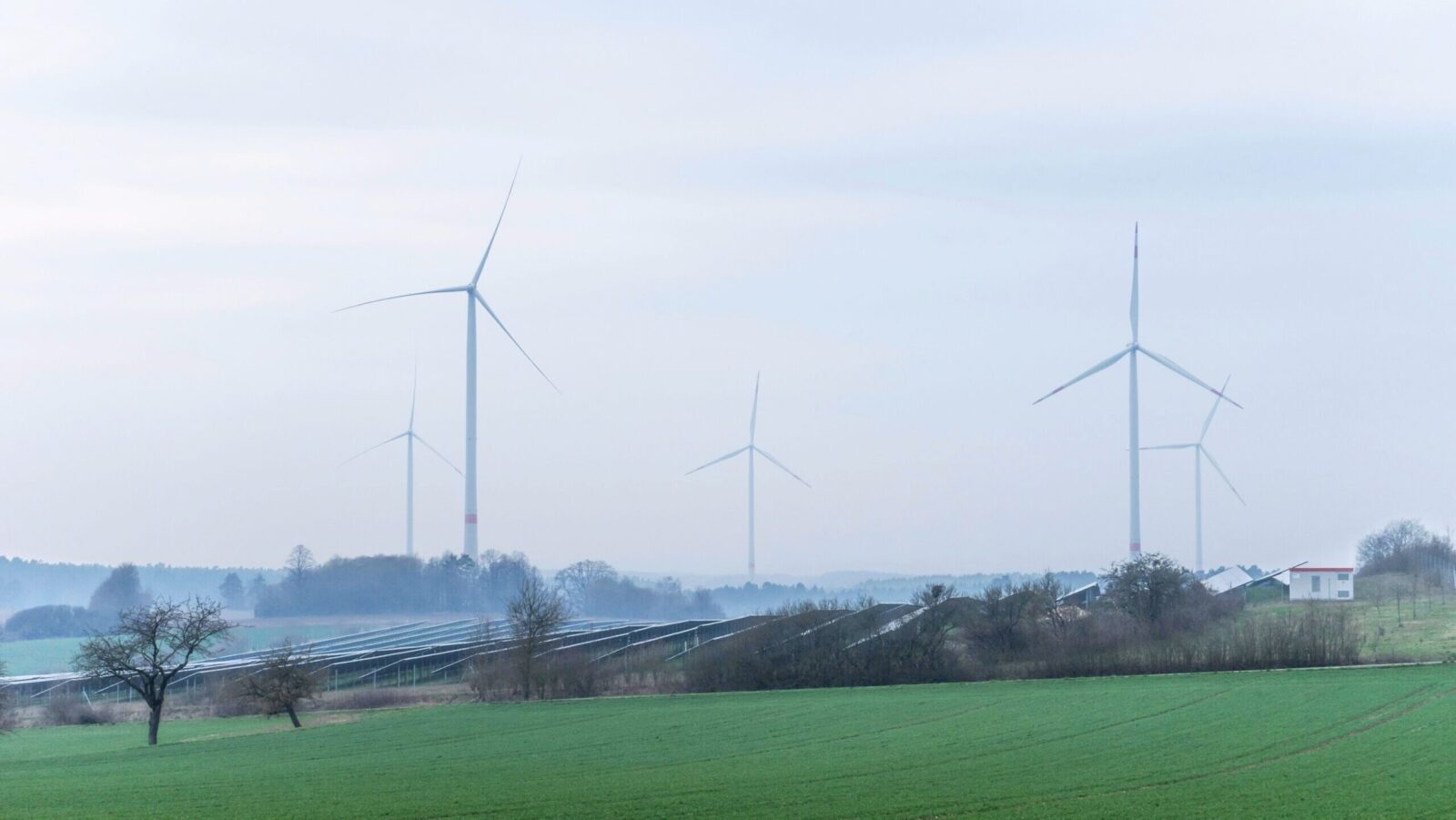
ETFs are a sustainable business, as anyone following the flows might notice.
Long-time sustainable shop Impax Asset Management jumped into the US exchange-traded fund market last week, converting a $100 million mutual fund into the Global Infrastructure ETF (BLDX). And there’s likely more to come, Impax North America president Ed Farrington told ETF Upside.
“It’s easy to see via flows that, for many investors, the ETF is becoming a preferred vehicle. What’s really changed in the past few years is the growth of active ETFs,” he said. “The plan now is to look at each of our funds and see if there are others that might be candidates for conversion.”
Always Bring Something to Share
A big question for any of the mutual fund providers that have recently added ETFs, or converted existing products, is why not just tack on an ETF share class. Last year, a record 60 mutual funds converted to ETFs, Morningstar’s Ben Johnson recently said. The Securities and Exchange Commission recently started letting some companies use dual-share classes, and Impax is among the many asset managers awaiting the all-but-certain SEC approval. The company likely will add ETF shares of mutual funds in the future, and it may also consider whether new strategies should be launched solely as mutual funds or ETFs, Farrington said. In the case of BLDX, it made more sense just to shift to an ETF, as none of the shareholders held the fund in an employer-sponsored retirement plan, he said. “The vast majority were taxable clients,” he said. “In this case, it was really just an easy decision, because [the ETF] was the preferred vehicle for the advisors who are using that particular strategy.”
The conversion comes at a trying time for the sustainable investing world:
- After years of net inflows globally in sustainable mutual funds and ETFs, peaking at $650 billion in 2021, sales went negative last year, according to a recent report by Morningstar. Net outflows in 2025 were about $84 billion, compared with $38 billion in net inflows in 2024. In the US specifically, sustainable funds as a category have bled assets for several years.
- There has been pushback, mostly from Republican leaders at the state and federal levels, against environmental, social and governance criteria for years. But the Trump administration has amplified that, blocking funds for sustainable energy projects and working to prop up the fossil fuel industry.
Blacklisted No More? Separately, a federal judge ruled last week that a Texas anti-ESG law is unconstitutional. That state, which has a blacklist of asset managers that allegedly boycott the oil and gas industry, has prohibited state funds from doing business with companies on the list, including Impax. “There’s never a dull moment these days when it comes to politics,” Farrington said. The company has stuck with its investment thesis based on an “understanding that the world is in transition … Things move from less efficient to more efficient and from more polluting to less polluting.”