

Good morning and happy Friday.
Fear is the mind-killer, both in the futuristic world of Dune and on present-day Earth.
It’s not so great for retirement planning either. Increasingly, retirees are making decisions about when to claim Social Security benefits through the lens of political uncertainty and big worries about the program’s shaky financial footing. Experts warn that some clients are even considering claiming early simply because they fear the benefit may not be there later, or in the hope that their benefit checks will be “grandfathered” and protected from cuts. There’s no guarantee of that. The truth is that waiting to claim can increase guaranteed monthly income for many retirees, but doing so requires sufficient savings to fund the gap years.
The claiming math and its broader political context are admittedly complex, but advisors can do a lot of good for clients by helping them cut through the noise and focus on what they can actually control.
Clients Make Assumptions About Retirement. They’re Often Wrong

Mark Twain may have been right when he quipped that all a person needs in life is ignorance and confidence. But when it comes to successfully navigating retirement, that’s playing a dangerous game.
Many Americans make a lot of assumptions about retirement, from when they’ll finally leave the job to when they’ll claim Social Security, according to new research from J.P. Morgan Asset Management. That’s mostly a good thing, because planning for retirement requires a lot of forethought and careful financial and behavioral preparation. The problem is that many people seem to be working from faulty premises, starting with the belief that retirement is a one-time event that can be carefully orchestrated according to one’s personal wishes. In reality, retirement is more of a journey than a one-time event, with timing that can vary widely due to factors not entirely (or even partly) within the individual’s control. That’s why the research compares the experiences of current retirees with the expectations of savers, while highlighting the important role that financial advisors can play in helping their clients cut through the noise.
“Retirees can offer a valuable reference point for [those people] still saving,” said Michael Conrath, chief retirement strategist for J.P. Morgan Asset Management. “This year’s survey highlights several disconnects between what people expect and what retirees actually experience.”
Perception vs. Reality
Perhaps the biggest faulty assumption baked into many savers’ expectations about retirement pertains to timing:
- Just 28% of workers polled expect to retire before age 65, while 33% expect to work until they are 66 or older.
- But 68% of current retirees left the workforce before age 65, with half retiring sooner than planned due to health issues, job loss or other factors.
These gaps suggest that many people are overestimating how long they might actually remain in the workforce, which can in turn cause a false sense of security about one’s true retirement readiness. Even simple math shows retiring at 62 versus 65 requires a significantly larger nest egg, all else being equal.
What drove people from the workforce? Nearly 3 in 10 stopped working for health reasons, but financial readiness also played a role, with 25% saying they were able to afford retiring sooner. However, many point to job-related factors, including workplace dissatisfaction (24%), job loss or layoff (21%), stress or burnout (20%) or an early retirement offer (14%).
Social Security Uncertainty. Working baby boomers’ expectations about Social Security claiming are likewise divorced from their retired counterparts’ reality. While nearly two-thirds of retirees started claiming Social Security at age 65 or earlier (including nearly 1 in 3 who began drawing benefits at age 62), nearly two-thirds of younger working boomers (65%) expect to wait until 66 or beyond.
Blending Private and Public Market Access

Your clients look to you for retirement guidance they can count on: New T. Rowe Price Goldman Sachs Retirement Blend Plus Trusts offer all-in-one strategies that fuse public markets and private equity, private credit, and private infrastructure.
Developed in conjunction with Goldman Sachs Asset Management’s private market capabilities, these trusts:
- Adjust to changing needs: Target date portfolios designed to evolve over time and deliver durable, long-term outcomes through retirement.
- Blend strategies with purpose: Meaningful allocations to active and passive strategies alongside a range of private investments.
- Diversify with a holistic lens: Globally diverse strategies selected for risk management.
Even Wealthy Retirement Savers Are Losing the Battle Against Everyday Bills

Remember when gas was under $4 a gallon and you could take the family out to eat without taking out a second mortgage? Ahhh, those were the days.
As the cost of living rises, everyday expenses are eating into retirement savings. Americans currently participating in workplace retirement plans anticipate needing $1.2 million on average to retire comfortably, according to a Schroders survey released this month. However, just 30% believe they will reach $1 million due in large part to rising costs, debt and competing expenses. In fact, a third of those surveyed said they have more credit card debt than retirement savings. There are also signs that wealthier clients are feeling the squeeze. It’s a great chance for advisors to help clients prioritize spending to stay on track for retirement without overextending their resources today.
“While many are still contributing to retirement, they’re finding it harder to increase their savings each year,” said Nathan Sebesta, an advisor at Access Wealth Strategies. “Retirement savings shouldn’t simply be what’s left over at the end of the month. It should be treated like any other essential bill.”
Hands Off My Starbucks Latte
Lifestyle creep comes for us all, even the wealthy, said Bryan Byrer, founder of Millennial Financial Planning. “Just because people make a lot of money doesn’t mean that they’re always good at saving it.” Even if they’re making a high income, if their expenses are leaving them living somewhat closer to paycheck-to-paycheck than others, rising prices will certainly come into play. “They’re definitely going to feel that more than someone else who has a higher margin of savings,” he said.
Clients looking to rebalance their expenses can start with eating out: full-service restaurant prices have risen almost 4% since last June, according to the Consumer Price Index. “So many people eat out more than they really know they should or need to, and especially as the cost of goods goes up, that is more impactful than like the silly trope: ‘Get rid of your Starbucks latte,’” Byrer said.
He also highlighted a few other strategies:
- As the housing crisis deepens, renting longer may be a better choice than buying in the near term.
- One client found hiring an au pair was more cost-effective than daycare.
- Paying off credit cards daily lets clients earn points while always knowing their true bank balance.
TIPS of the Iceberg. Even for those whose savings are on track, rising costs have made clients far more focused on earning returns that outpace inflation, said Gautham Jain, president of Jain Wealthonomics. That’s reshaping asset allocation and retirement income strategies: risk-averse investors are turning to Treasury Inflation-Protected Securities and risk-tolerant clients are increasing equity exposure and using TIPS in place of traditional cash-like assets. “This was not a viable factor for most clients when inflation remained low,” said Jain.
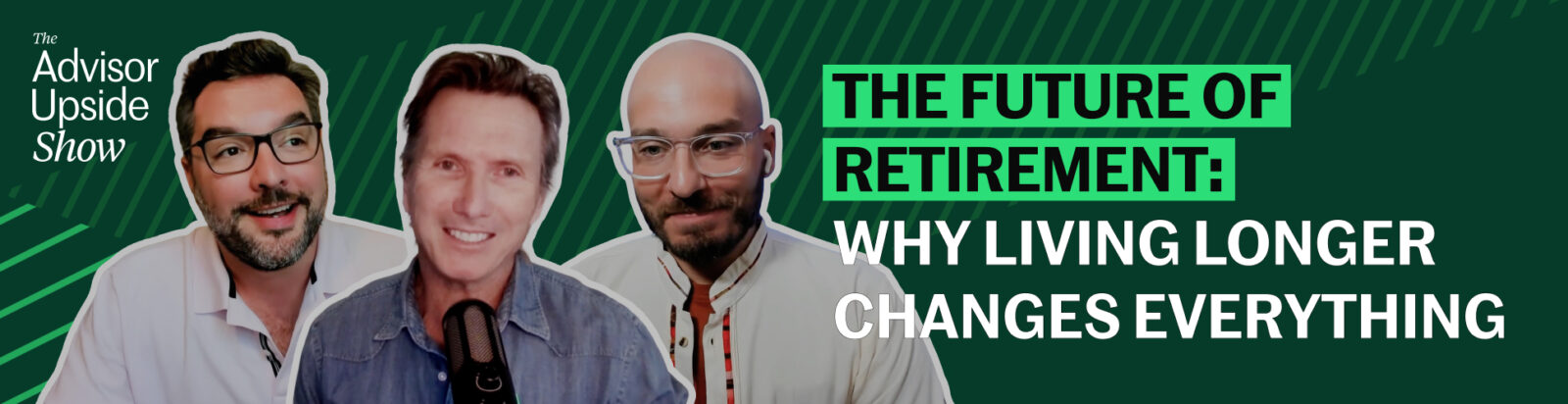
Longer Lives Are Rewriting the Retirement Playbook. People are set to live longer than any generation before, but most aren’t planning for it. Author and longevity planning entrepreneur Jon Sabes joins Sean Allocca and John Manganaro to explain why advisors shouldn’t anchor healthier, wealthier clients to broad longevity averages, and why claiming Social Security early can forfeit guaranteed income and invite sequence-of-returns risk. Plus: what advisors can learn from the Blue Zones habits that help people live longer and happier.
 Listen to this week’s episode here.