

Good morning and happy Monday.
Wallets, meet war. US inflation rose at a 3.3% annualized rate in March, the fastest pace in almost two years, the Bureau of Labor Statistics said Friday. A record 21.2% increase in gasoline prices stemming from the Iran war accounted for almost three-quarters of the monthly consumer price index (CPI) increase of 0.9%, triple the 0.3% recorded in February.
There is a “glass half full” view, according to analysts at ING. Unlike 2022, when the Fed misjudged inflationary pressures as “transitory,” a softer jobs market, lower wage growth and stagnant disposable household income mean fewer inflation drivers right now. And, unlike during the pandemic, supply chain disruptions are limited to energy rather than, well, everything. ING said that once oil transit gets back on track, “lower energy costs could possibly drive inflation below 2% at some point next year.” We’ll have whatever’s in that half-full glass, please.
What’s Next for Oil Tankers Stranded in the Persian Gulf?
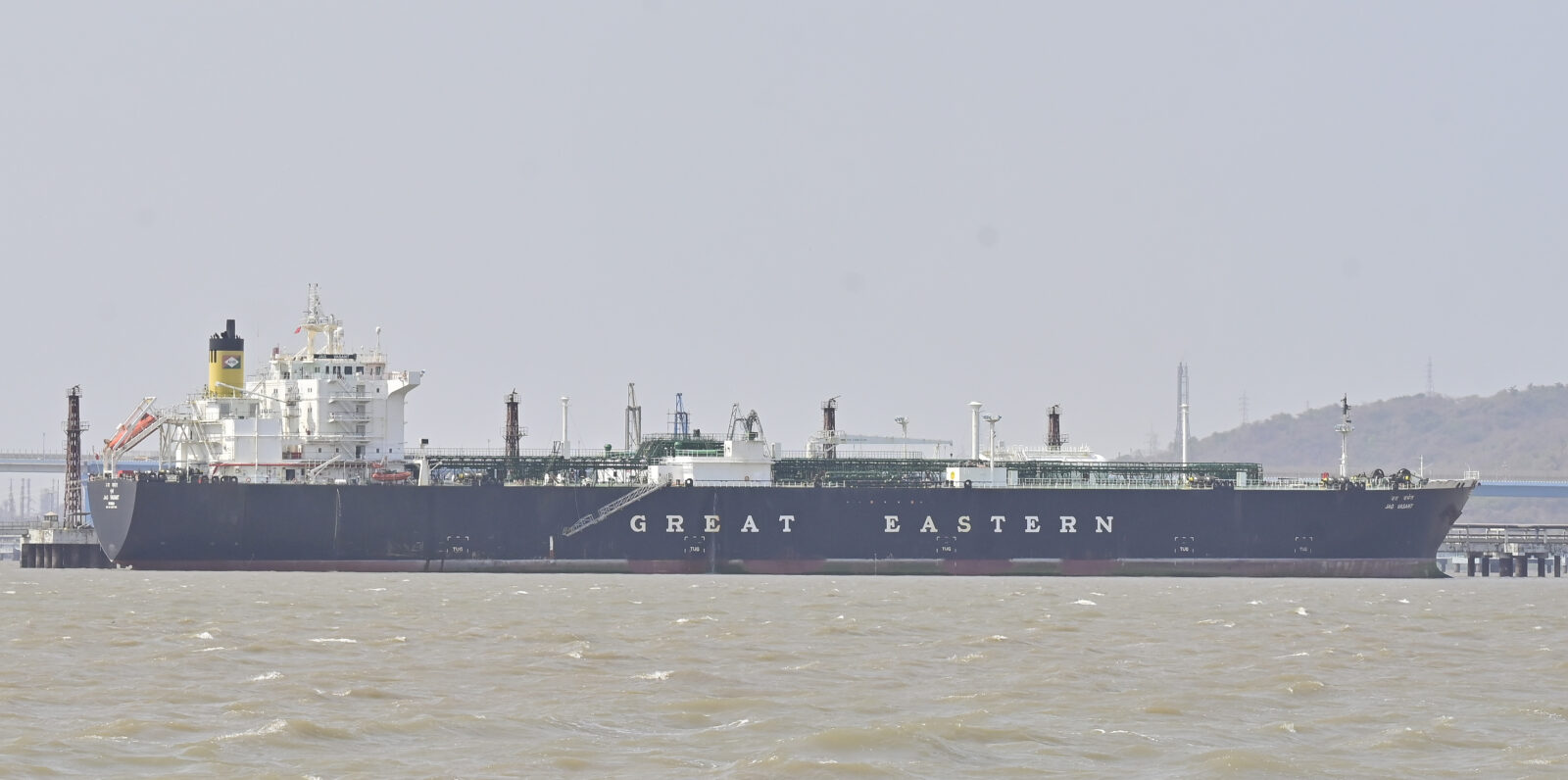
Going into the weekend, Iran had agreed to end its de facto blockade of the Strait of Hormuz as part of a tentative two-week ceasefire with the United States.
By Sunday, when the Strait remained essentially closed after talks led by Vice President J.D. Vance failed to yield an agreement, the US was threatening to impose its own blockade. The rapid escalation leaves the immediate future unclear for not only oil markets but also roughly 800 ships and 20,000 sailors stranded in the Persian Gulf.
The Strait Talk Express
The UN Conference on Trade and Development said traffic through the Strait fell 95% after the US-Iran conflict began in late February. The tiny number of ships that have tried to cross the Strait in the meantime took on an immense risk. Since the conflict began, the United Kingdom Maritime Trade Operations (UKMTO) Centre has tallied 30 security-related incidents involving vessels in the region, including 18 attacks. The war risk became too much for many insurers, a critical pillar of the shipping economy: JPMorgan estimated that $352 billion in private-market insurance was canceled faster than a dinner reservation at a Manhattan restaurant that just received a dismal health department rating. Insurers who did offer coverage hiked premiums by multiples. Governments have since begun to backstop war insurance, like India moving last week to establish $1.5 billion in sovereign guarantees and the US partnering with major US firms on a $40 billion reinsurance facility. But, without Tehran holding up its end of the bargain, it could all be for naught:
- Lloyd’s List reported last week that, even after the ceasefire agreement was announced, tankers in the Gulf region were warned via radio broadcast that they would be “destroyed” by military strikes if they tried to navigate the Strait without clearance from Iran. Only 17 vessels transited the waterway in the 24 hours through Sunday evening, according to aggregated data, a fraction of the roughly 140 in normal times.
- Iran began charging tankers up to $2 million each to cross the Strait last week, something tanker groups and UN officials said is illegal under the UN Convention on the Law of the Sea, which forbids tolling peaceful ships for “innocent passage” on an international strait. In announcing the “immediate” US blockade on the Strait on Sunday, President Donald Trump said it was necessary to prevent Tehran from profiting “off this illegal act of extortion.”
Optimistic Notes: Iranian President Masoud Pezeshkian tweeted that an agreement could still be reached, and US officials including Vance suggested the weekend talks were productive, though the two sides remain at an impasse over Iran’s nuclear ambitions. On the other hand, hope alone won’t take the pressure off energy markets: S&P Global said the combined production of OPEC+ fell 8.1 million barrels per day last month to 34.8 million amid the Strait blockade.
Jeff Bezos’ $100B Bet on Robots
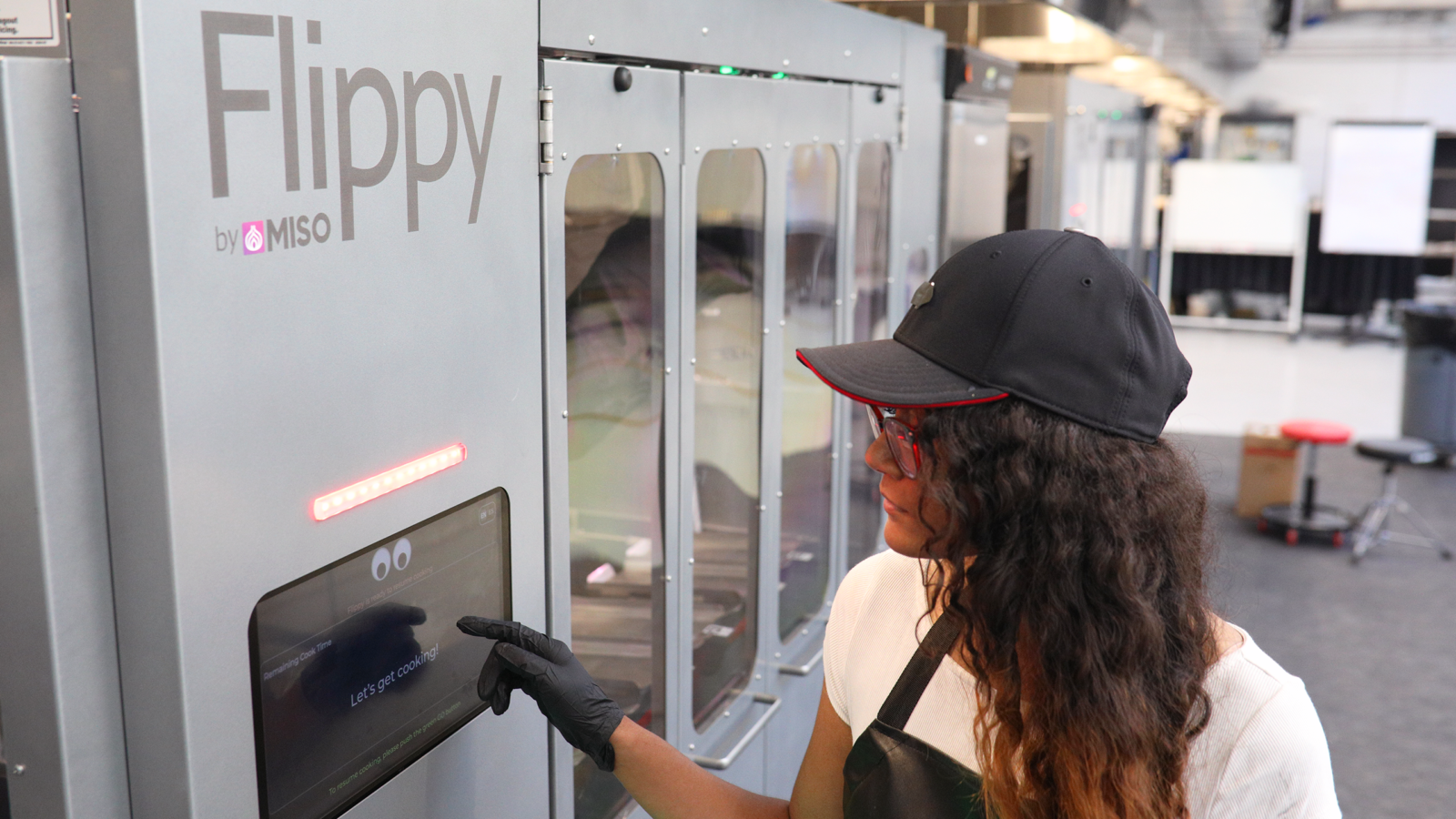
When Amazon founder Jeff Bezos commits $100B to AI robots, it tells you something: The smart money sees robots as inevitable … and lucrative.
But here’s what most people will miss. There’s a company that’s not waiting for Bezos to build the future. They’re already in it.
Miso Robotics makes AI robots for fast food, a $1T industry facing 144% annual labor turnover. Miso’s Flippy robot is already live in White Castle locations, driving up to 4X profit improvements per store. With 100,000+ US fast-food locations in desperate need, there’s a $4B annual revenue opportunity ahead for Miso.
The Bezos fund is reserved for institutional giants. But Miso isn’t.
Wall Street Predicts Record Trading Revenue amid Market Jitters

It’s déjà vu for big banks: Last April, blockbuster earnings were overshadowed by the specter of a trade war; this year, record margins are being eclipsed by the reality of a shooting one.
Goldman Sachs kicks off first-quarter reporting today, followed by JPMorgan Chase, Wells Fargo and Citigroup on Tuesday. Bank of America and Morgan Stanley are up on Wednesday.
Bank execs have a lot on their mind. Besides the war and Friday’s skunky CPI report, Wall Street continues to wrestle with what artificial intelligence disruption could mean for the entire economy. And don’t forget the private credit market woes that were top of mind before the Iran War.
As JPMorgan Chase CEO Jamie Dimon said in his letter to shareholders last week, “Some of the larger risks are much like tectonic plates, always moving and periodically causing earthquakes and volcanoes when they crash into each other.”
On the Bright Side
Still, banks are likely to offer the markets some relief. Anxious investors trade more, which is good for them: The largest banks are expected to post a record $18 billion in stock-trading revenue for the quarter ending March 31, according to estimates from Bloomberg. That’s a roughly 14% increase from the same period last year. The analysts estimate $4.79 billion from Goldman Sachs, $4.67 billion from Morgan Stanley and nearly $4.4 billion from JPMorgan Chase.
But net interest income (or NII, the difference between what banks earn from charging interest on loans and what they pay depositors) will be the biggest factor to keep an eye on, Sean Dunlop, director of equity research at Morningstar, told The Daily Upside:
- Loan demand has held up better than the macro backdrop would have implied. “It’s worth watching whether that’s balance sheet pre-positioning ahead of regulatory reform, businesses stockpiling cash or something more durable,” Dunlop says. The market is also predicting that the Federal Reserve won’t cut interest rates this year, which typically helps buoy what banks can charge on their loans, and that easing regulatory standards may free some capital for lending.
- The average analyst estimates compiled by LSEG for net interest income growth in the first quarter range from 6.89% for Wells Fargo to 10.67% for Citigroup.
Bargain Buy: Morningstar’s top stock pick among the major banks is Bank of America. “Trading at roughly a 15% discount to fair value, it’s essentially a junior varsity JPM at a compelling price,” Dunlop says.
America’s 50 Biggest Companies. 12% Income Target

BIGY, the YieldMax® Target 12 Big 50 Option Income ETF, was built for income generation and long-term capital appreciation. It aims for 12% annualized income through a transparent, rules-based options strategy while maintaining exposure to 50 of the largest American companies — and seeks to pay monthly distributions. Learn more about BIGY’s standardized performance.