

Good morning.
In his final meeting as chairman of the Federal Reserve, Jerome Powell delivered a message to the world (and, OK, one person in particular): You’re not getting rid of me so easily.
Powell said on Wednesday that he will continue to serve on the Fed board as a central bank governor, making him the first chairman to stick around after their tenure since Marriner Eccles went from chair to governor all the way back in 1948. Powell said he plans to delay his retirement at least until the US Justice Department’s investigation into renovation of the Fed’s headquarters concludes with “transparency and finality.” His presumptive replacement, Kevin Warsh, will be taking over at a pivotal time. The Fed opted to hold benchmark interest rates at a range of 3.5% to 3.75% on Wednesday amid inflation that is “kind of misbehaving,” Powell said. The decision received four dissenting votes, the most since 1992.
Meta Lags Rival Hyperscalers as Investors Grow Wary of Surging CapEx
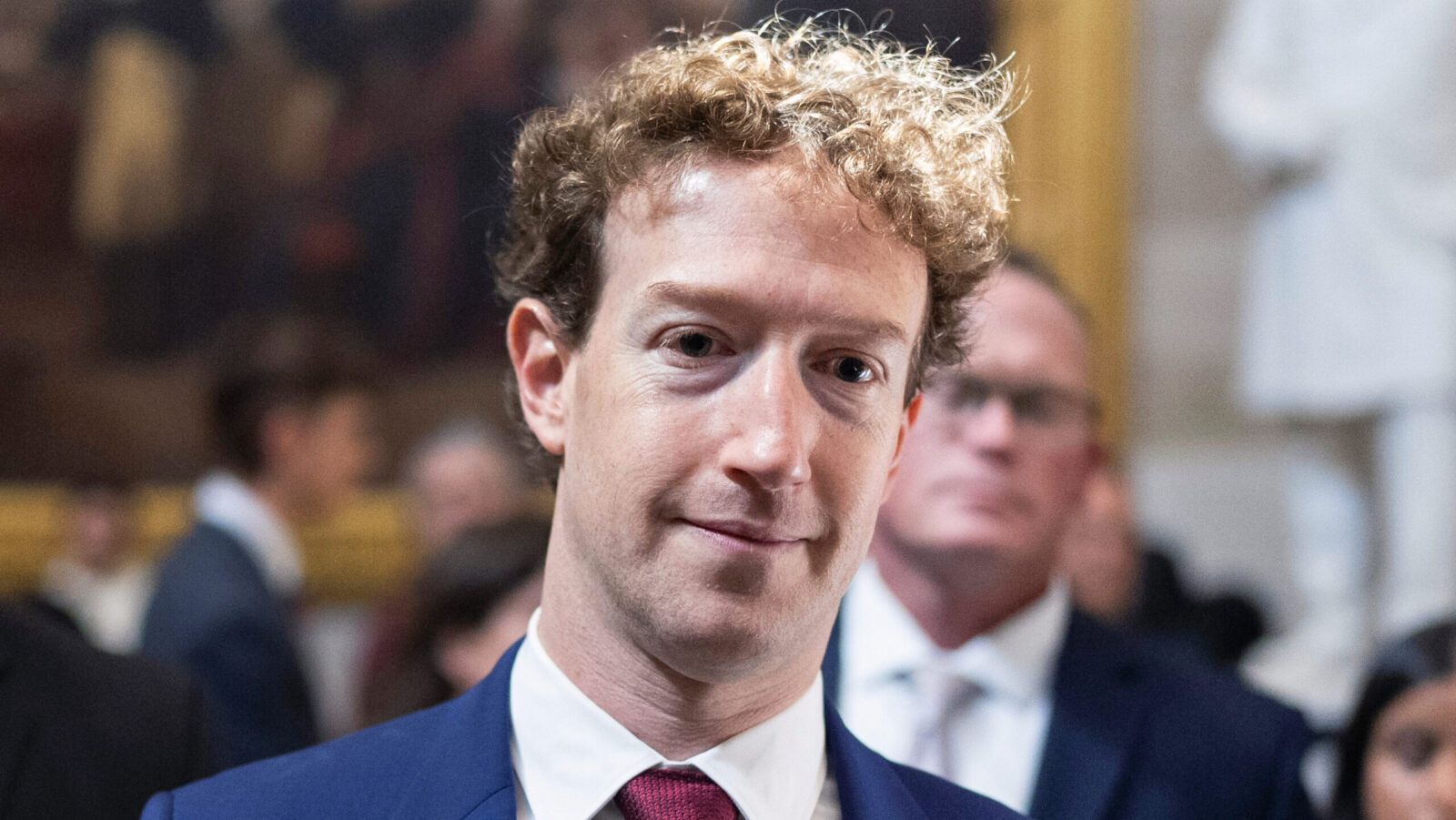
Meta is putting its metaverse pivot behind it in every way except a rename, but even as it rakes in AI-related revenue, investors seem concerned about its gargantuan bet on the tech.
The Instagram parent said Wednesday that revenues surged an expectation-beating 33% from more than $42 billion a year ago. But even then, concerns are rising that Meta, which trades at a huge discount relative to its Mag 7 peers, is stretching those funds too far. Investors sold Meta’s stock after the bell.
Meta spent massively on AI-powering data centers as its capital expenditures rose to nearly $20 billion for the first quarter. While that was less than analysts predicted, Meta’s planning a spending spree later this year, raising its forecast for capital projects to a range of $125 billion to $145 billion, up from a previous projection of $115 billion to $135 billion.
Mag 7’s Biggest Sale
Other hyperscalers (Amazon, Alphabet and Microsoft) also reported yesterday, sharing results that underscored how much of a bargain Meta is. Its 33% revenue gain in the first quarter outpaced those of its hyperscaling peers: Amazon’s 17%, Alphabet’s 22% and Microsoft’s 18%.
But analysts have put Meta’s forward price-to-earnings ratio at 18, below those of Zuck’s hyperscaling frenemies, most of which have forward P/Es over 20. That could indicate it’s a steal or that it could soon board the struggle bus:
- Meta’s rising AI capital expenditures are making investors nervous. After its failed metaverse pivot and mounting losses from the Reality Labs division that made the infamously legless avatars (plus a recent staff culling there), Meta’s under more pressure to pull off its AI shift. Meta’s also more dependent on its ads (which account for about 98% of its total revenue) than peers like Alphabet, which has diversified its businesses up to the cloud, a segment whose revenue climbed more than 60% in the most recent quarter, and down to street level with Waymos.
- On the other hand, the Facebook parent has shown so far that its ad business can not only survive the era of AI but also leverage it to grow with more advanced targeting and other features. Alphabet’s ad biz has also taken advantage of AI, with ad revenue rising 15% last quarter from the previous year.
The Non-Dollar Cost: Hyperscalers can’t keep spending without finding cost-savings somewhere. And that means trading human intelligence for artificial intelligence. In January, Meta laid off about 1,000 people and added hundreds more to the layoff list in March. Last week, the company said that starting in late May, it’ll lay off 10% of its staff, or 8,000 employees, and stop hiring for 6,000 open roles. Amazon and Microsoft have similarly made plans for massive cullings.
The Autocallable Index Is Smashing the S&P 500
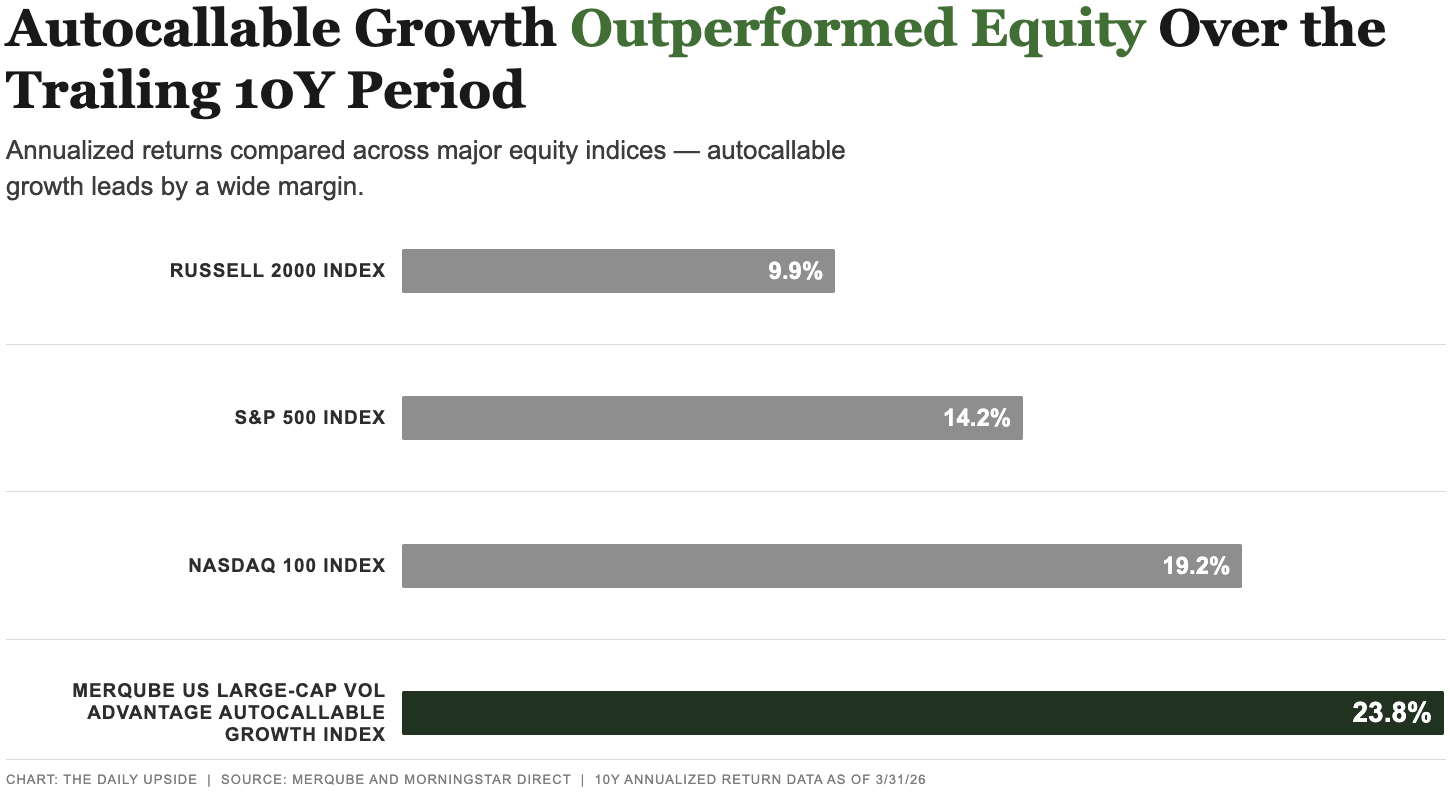
Most portfolios rely on markets doing one thing: going up.
But with rules-based returns, autocallables give you performance in a wider range of scenarios (not just bull runs). The numbers back them up: Over the past 10 years, autocallables outperformed the S&P 500 23.8% to just 14.2%.
So what’s the best way to capture autocallables? The Calamos Autocallable Growth ETF (CAGE).
- Seeks Amplified Long-Term Growth: Grows at a significantly greater rate than the S&P 500 over time.
- Built-in Memory Feature: Stores coupons in down markets and captures them in up markets.
- Tax-Efficient Structure: All coupons reinvested and compound tax-deferred.
General Dynamics Fights Through Wartime Slump
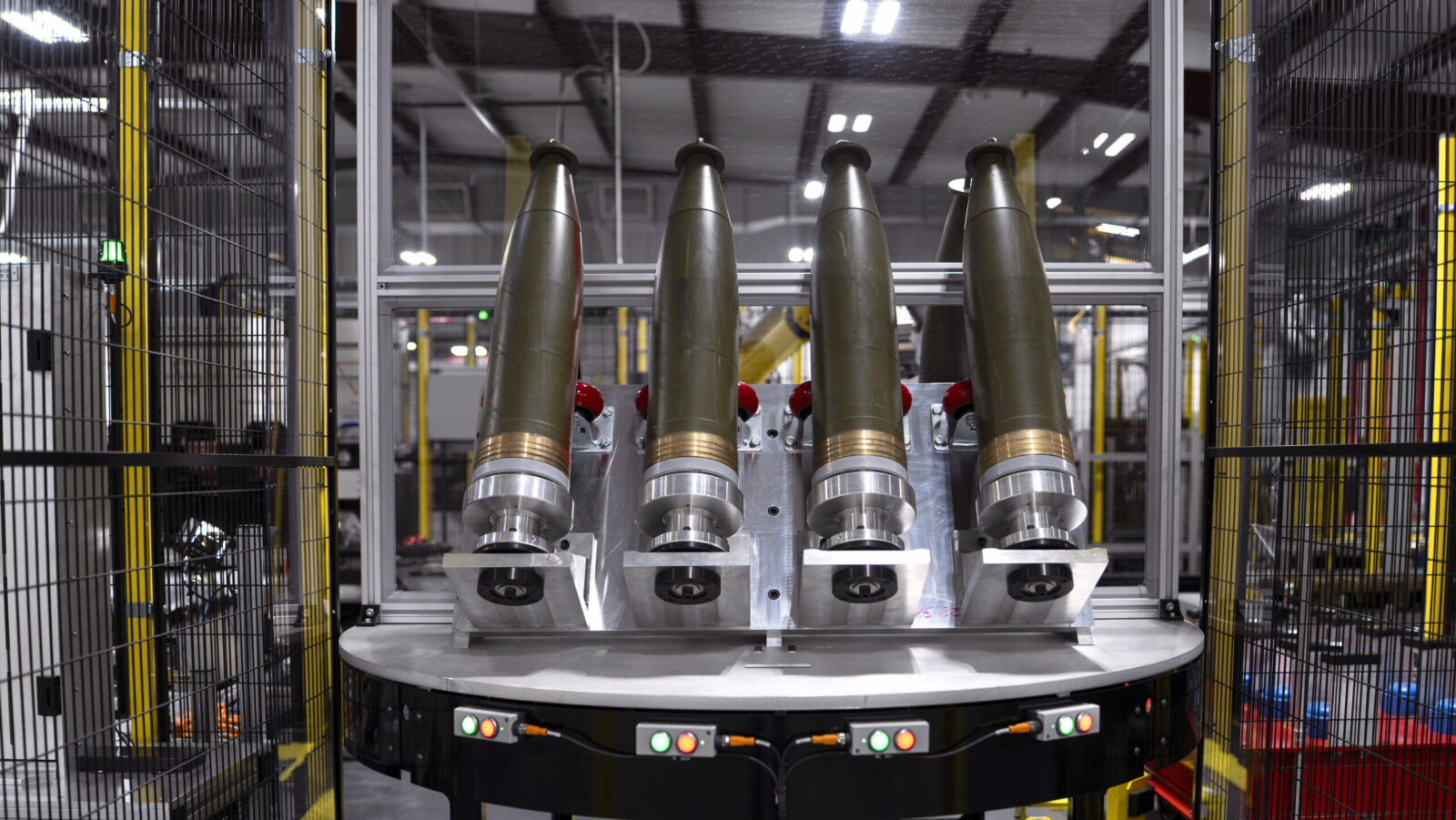
For at least one prime defense contractor, the war slump paradox appears to be resolved. For now.
Shares of General Dynamics soared 8% on an earnings beat Wednesday, erasing much of the company’s losses since the start of the Iran War in late February. But is it enough to alter Wall Street’s perception of old school defense players?
Defensive Position
It’s been 60 days since the beginning of “Operation Epic Fury,” and in that time, the Pentagon has spent roughly $25 billion on the war, acting Pentagon Comptroller Jules Hurst III told Congress on Wednesday. For prime defense contractors, those two months have delivered a freefall from record high share prices. General Dynamics fell 14% since the start of the war through Tuesday, making it one of the better performers among major defense players; Lockheed Martin and Northrop Grumman have each slipped by about 25%.
The downturn comes even as the US and other Western powers continue a widespread military spending ramp-up. Defense Secretary Pete Hegseth reiterated to lawmakers on Wednesday the White House’s long-stated desire for a $1.5 trillion defense budget for fiscal year 2027.
Blame a new batch of shiny war toys, for one:
- US defense spending is set to hit a record $1 trillion this year, though RBC Capital Markets equity analyst Ken Herbert recently told The Wall Street Journal that spending on legacy programs is largely flat while spending on new tech such as drones and AI is up roughly 20%.
- In fact, spending on newer tech surpassed legacy programs for the first time this year. The trend has, in turn, expanded the pool of contractors to new upstart tech-native players that, surprise, surprise, operate with far juicier margins than the industrial legacy players; in its last earnings call, Palantir reported gross operating margins of 57%, while prime contractors are happy to sniff double digits.
Rebound: Investors also held concerns that the boom in military spending in the lead-up to the Middle East conflict would be short-lived. General Dynamics impressed participants in its earnings call on Wednesday in part by dispelling the notion. Its order backlog now totals $130 billion, way up from $88 billion a year ago. Meanwhile, the company reported $13.5 billion in revenue, up 10% year-over-year, and profits exceeding $1.1 billion, up 13% year-over-year.