

Good morning and happy Monday.
Spring is a time for change, so why not some good macroeconomic news? The US jobs market rebounded in March, adding 178,000 jobs, or the most in 15 months, the Bureau of Labor Statistics reported on Friday. With considerable help from a big labor force reduction, the unemployment rate fell a tick to 4.3%.
Most economists had projected a bounce-back in some form after frigid weather and a major healthcare strike in February, but not by this much. Among the winners are hawks at the Federal Reserve, who can argue for further curbing inflation before cutting interest rates again. Also among the winners: AI and computer science researchers at MIT, who likely feel validated by the jobs data after publishing a major study last week arguing that the rise of AI will impact the job market far less than feared. Let’s hope they’re not the ones hallucinating this time.
Is Your Retirement Plan Built to Last?

Planning for retirement means preparing for the unexpected: increased cash flow needs, heightened health care costs or a longer life than you might think. One key risk many retirees face is underestimating how long their savings need to last. Another is inflation, which can quietly reduce your purchasing power over time.
The 15-Minute Retirement Plan can help you navigate these challenges. With this guide, you can learn ways to account for a longer time horizon and manage the effects of inflation.
Crypto Preps for Looming Q-Day Predicted by Google

On the upside, advanced quantum computers could crack that 12-word seed phrase from 2013 that was scribbled on a piece of paper your mom threw out. But that level of encrypting ability can also unravel cryptocurrency’s core security … womp womp.
Q-Day is the Y2K-esque time when quantum computers become advanced enough to decode all cryptography. Google recently warned it could be coming for cryptocurrency before the decade’s out. In a new paper, researchers wrote that quantum computers would need fewer than 500,000 physical qubits to break through bitcoin and other cryptocurrencies — 20 times fewer than previous estimates.
Google researchers noted that 6.9 million public bitcoin keys are already exposed, leaving them wide open for quantum computers to crack at their leisure. There’s also a ~10-minute window when public keys are exposed during transactions, and the researchers said advanced quantum computers will be able to wheedle out a private key from a public one in nine to 12 minutes.
Quantum Safety 101
Google is pushing companies to transition to post-quantum cryptography, which uses algorithms that quantum computers can’t easily crack. In PQC, a quantum computer may have to try to solve for, for instance, a vector in a thousand-dimensional lattice.
Developers are debating how to push crypto toward quantum-proof practices:
- The Bitcoin Improvement Proposal (BIP)-360 aims to provide a way for bitcoin owners with older wallets to opt in to move their holdings to safer addresses. Another idea, the Hourglass proposal, would restrict how quickly older coins can be spent to slow down any Q-Day mass liquidation events. But bitcoin has no central authority, and making changes on this scale is not just difficult but, in some ways, against the crypto’s core ethos.
- The No. 2 crypto by market cap, Ethereum, operates a little differently from bitcoin since its cofounder has remained an active figure developers listen to (no offense, Satoshi). Vitalik Buterin has proposed a roadmap for the crypto’s post-quantum transition with one change that could be rolled out in Ethereum’s next scheduled upgrade this year.
It’s Always Tomorrow: There’s a running joke that quantum computing has been right around the corner since the 1980s, and the crypto industry’s divided about how imminent the threat really is. But more major figures seem to be taking it more seriously, as IBM and Google both aim to build practical quantum computers by 2029. Coinbase CEO Brian Armstrong said last week in response to Google’s paper that “we all need to solve it sooner rather than later.”
Love ’Em or Hate ’Em, These Brothers Keep 2X-ing the S&P

Beating the S&P 500 once? Impressive. But doubling it for more than a decade? No wonder investors are flocking to the Pernas brothers. Their infamous portfolio has annualized 31.4% vs the S&P’s 15.1% since 2016. Even crazier, you can adopt this proven investment philosophy and discover their top stock picks when you sign up for their newsletter.*
Power Plant Builder Argan Rides Data Center Boom to Blowout Gains
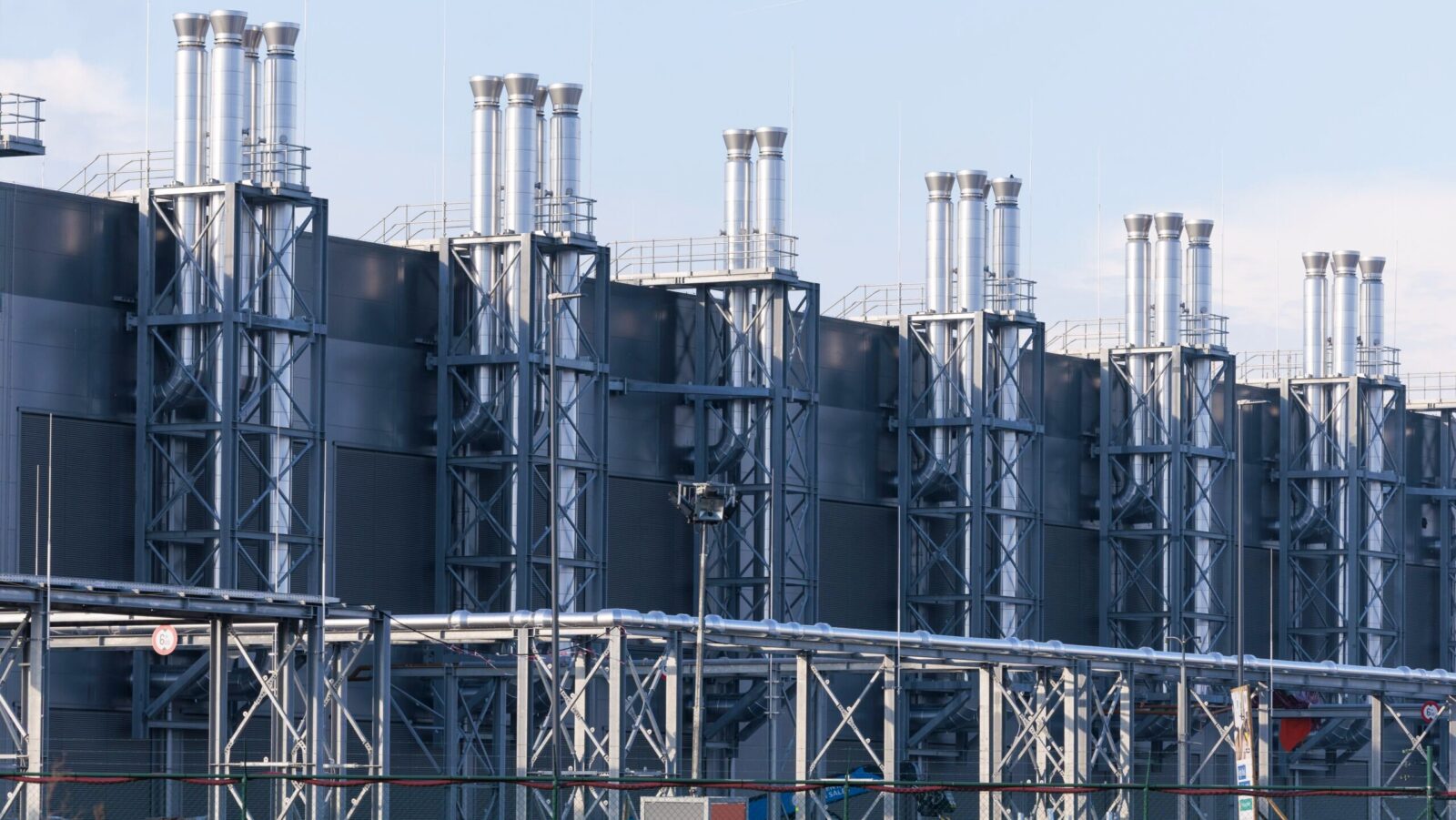
If the data center buildout is the modern-day gold rush, then Argan owns the shovels.
Shares of the power plant builder climbed more than 76% through the first quarter of the year, lifted by a blowout earnings report late last month. Meanwhile, a pair of recent plaudits from analysts at JPMorgan and Goldman Sachs suggest there’s plenty of room left to grow. For Big Tech, desperate to secure power for its massive data center buildout, the company’s infrastructure expertise has proven invaluable.
Hit the Gas
In a perfect encapsulation of the explosive data center buildout, Argan said in its fourth-quarter earnings report that its order backlog now stands at $2.9 billion, more than double the $1.4 billion backlog at the end of the same quarter a year ago. The boom proved enough for JPMorgan analyst Michael Fairbanks to upgrade the stock from neutral to overweight last month, while raising its price target from $370 to $550; the upgrade came just after Goldman analysts raised their price target from $399 to $518.
Gas-powered plants account for 77% of the backlog, CEO David Watson said in a call with shareholders. It’s hardly surprising for anyone following in the footsteps of Big Tech:
- Through 2025, a full 39% of gas power capacity under development in the US was being designed specifically for on-site data center use, up 5% from 2024, according to non-profit energy project tracker Global Energy Monitor.
- Overall, gas-fired capacity in development in the US (data center-related or otherwise) tripled in 2025, according to Global Energy Monitor. If all in-development gas projects are completed, the US’s gas-powered capacity will increase by 50%.
Private Practice: Increasingly, hyperscalers are going off the grid. By 2030, as much as one-third of data centers will be powered entirely by on-site and off-grid power generation, according to a recent report by Bloom Energy.