
Good morning.
Oil futures have plummeted this morning after the US and Iran agreed last night to a fragile, two-week ceasefire following five weeks of conflict. Energy and equity markets were sent reeling after the Islamic Republic closed the Strait of Hormuz, the world’s most crucial oil chokepoint, which is now poised to be conditionally reopened.
West Texas Intermediate futures with May delivery are down more than 17% to around $93.50 a barrel, while Brent Crude futures are down more than 15% to roughly $92.50. S&P 500 futures, meanwhile, have jumped 2.8% in premarket trading. In a social media post, President Donald Trump said Iran has proposed a 10-point peace plan that the White House believes is “a workable basis on which to negotiate.”
Goldman Sachs Spots Buying Opportunity in Bruised Big Tech
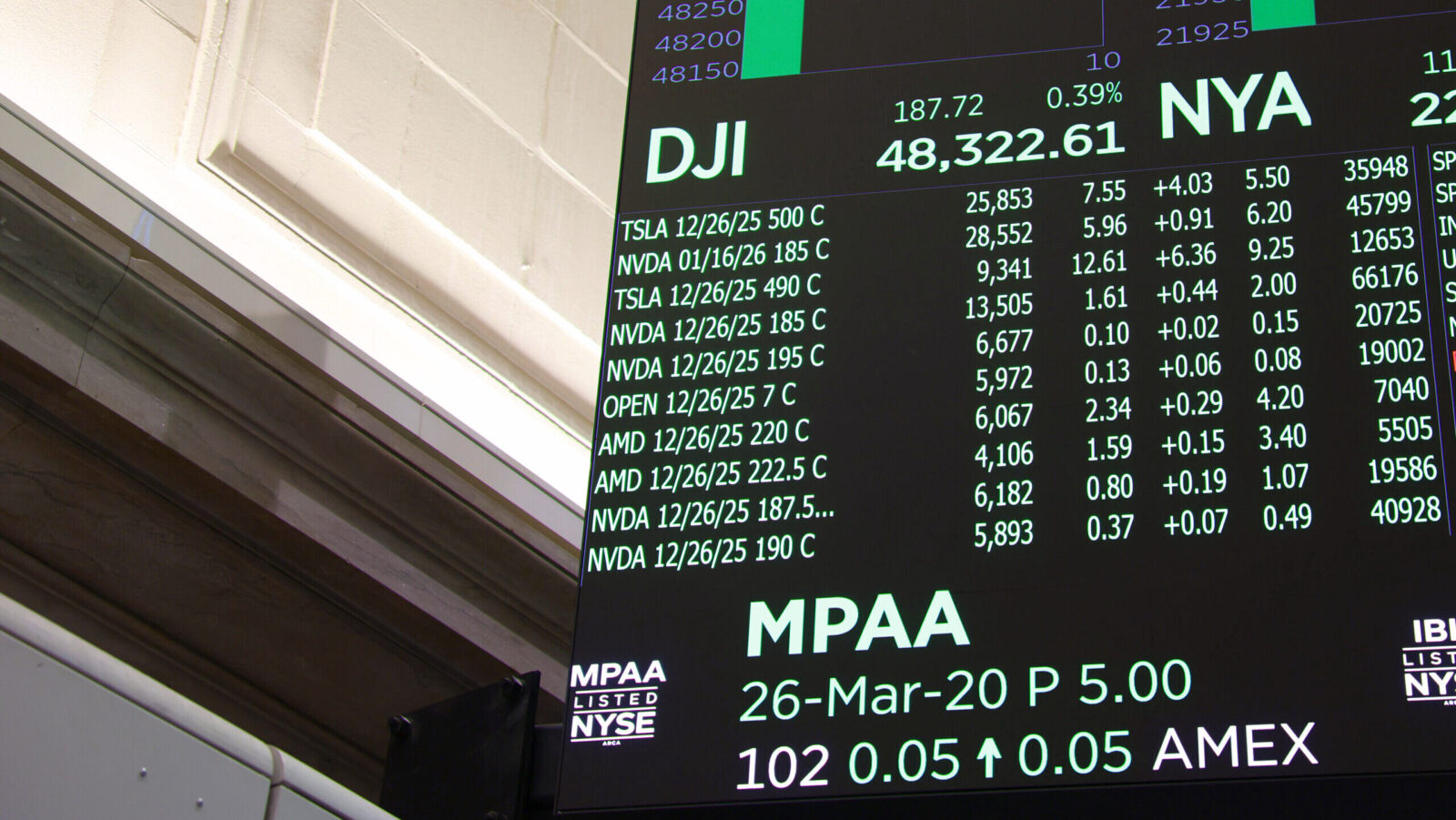
After years as stock market heavyweights, Big Tech shares are looking a lot like an early Rocky Balboa: beaten up and on the ropes.
The beat-down has been such that even members of the Magnificent Seven are undervalued and investors should buy the dip, Goldman Sachs analyst Peter Oppenheimer wrote in a note to clients Tuesday. The Roundhill Magnificent Seven ETF — which offers equal exposure to Alphabet, Amazon, Apple, Meta, Microsoft, Nvidia and Tesla — has slid roughly 11% for the year amid concerns about artificial intelligence disruption and the war with Iran, which has choked oil supplies. But continued military conflict could prompt central banks to cut interest rates to avoid a recession, and that’s something tech stocks tend to like.
“The risk is that the longer the disruption to the Strait of Hormuz continues, the more this morphs into a perceived growth shock, limiting interest rate rises,” Oppenheimer wrote in the note, published before a two-week ceasefire was agreed to on the condition that Iran reopens the Strait. “Given the relative insensitivity of the cash flows in the technology sector to economic growth, and the benefit it would derive on any rally in bond yields, this sector might prove to be more defensive over the next few months.”
Go the Distance
Tech giants have been synonymous with growth in recent years. But now they’ve fallen behind some surprising market stalwarts. Walmart, for example, is trading at a higher price-to-earnings ratio than Amazon.
“That’s a bit of an anomaly,” Jed Ellerbroek, portfolio manager at Argent Capital Management, told The Daily Upside. Typically, the faster-growing companies trade at higher multiples. So it’s a good opportunity to buy big tech stocks, Ellerbroek adds. Not only because they’re relatively inexpensive, but because “their businesses are performing really well,” which he predicts will be underscored during quarterly earnings reports.
Investors looking to buy the dip will have a long shopping list:
- Morningstar recently named Microsoft as one of the most undervalued stocks to buy. Broadcom and NXP Semiconductors were also on the list. “We remain confident in secular tailwinds in tech, including cloud computing, artificial intelligence and the long-term expansion of semiconductor demand,” the analysts wrote. “After months of poor performance, we see software as offering the most upside within the sector.”
- Alongside tech, Morningstar says communication services, real estate and consumer cyclical stocks look the most undervalued at the start of the second quarter. Energy and consumer defensive stocks look the most overvalued.
Tesla in the Ring: Tesla, whose stock is down around 21% for the year, seems to be itching to rejoin its Mag Seven tech peers, announcing a partnership with Intel on Tuesday. Intel is collaborating with Elon Musk on the Terafab project to design chips for Tesla, SpaceX and xAI. “Terafab represents a step change in how silicon logic, memory and packaging will get built in the future,” Intel CEO Lip-Bu Tan said on X.
CEO Backs One Stock with $2.6 Billion

That’s called conviction.
A rare type of conviction, one that Motley Fool CEO Tom Gardner has had a few times in his career. One such time was when he doubled down on Nvidia in 2009 when tech stocks were in the gutter. You know what happened next.
At the Motley Fool, when Tom gets this type of confidence, they call it a “Total Conviction Buy Alert.”
This time, it’s for a little-known space company that’s still 1/100th the size of Nvidia. They’ve positioned themselves as a one-stop shop for the space economy: design, manufacture, launch and monitoring.
The company’s own CEO just plunked $2.6 billion into the stock.
Universal Music Group (Ackman’s Version): Hedge Fund Mogul Makes $63B Takeover Bid
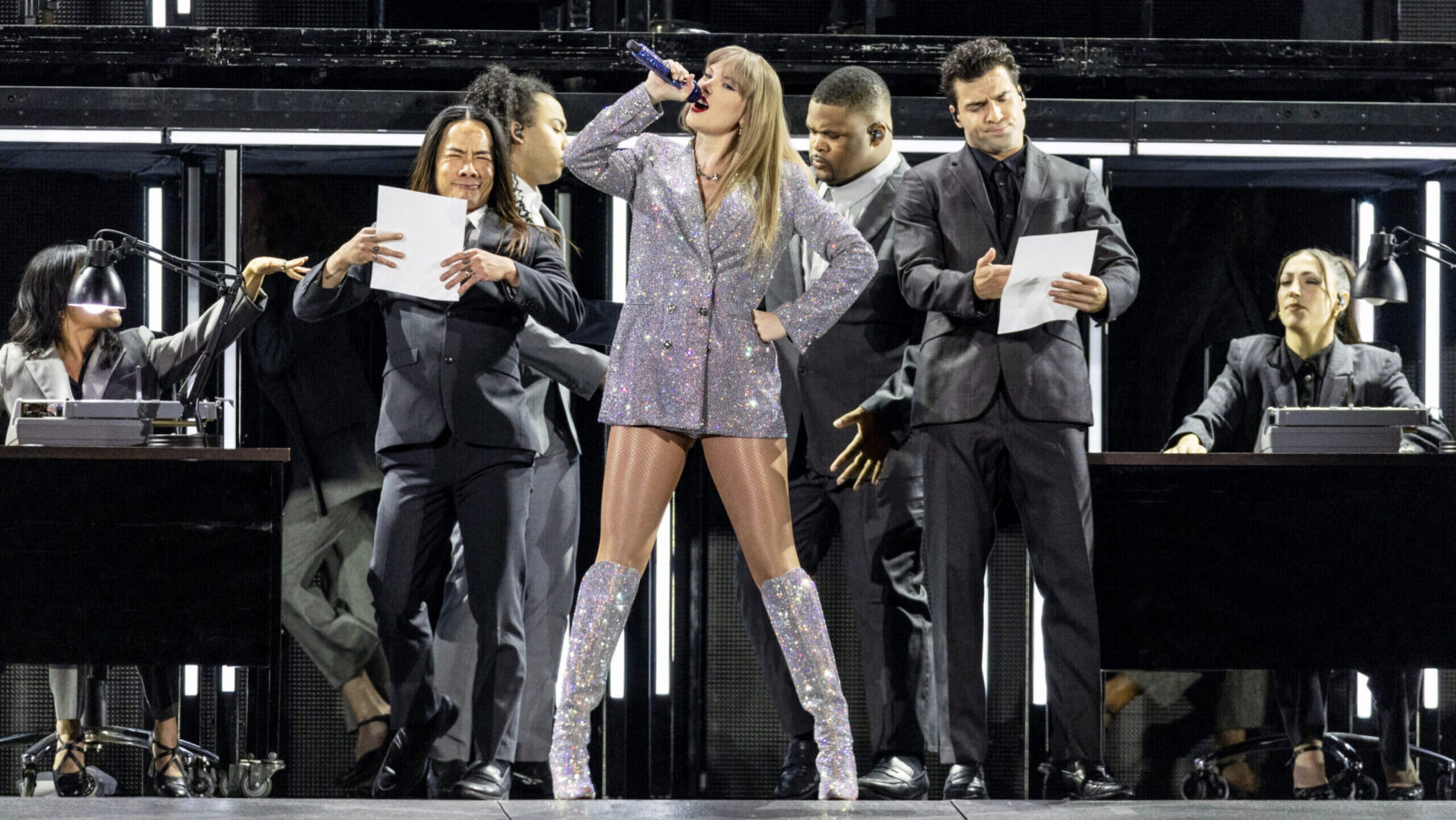
Bill Ackman has a message for Universal Music Group’s lagging stock price: It’s me, hi, I’m the problem, it’s me. On Tuesday, the enigmatic hedge fund manager proposed a €55 billion (or roughly $63.5 billion) takeover of Universal Music Group, saying he could revive the Amsterdam-based company’s “languished” stock price in large part by moving to America and listing on the New York Stock Exchange. To pull it off, Ackman is proposing a sort of SPAC remix.
SPARC Plug
Ackman’s hedge fund, Pershing Square, took a 10% stake in the company, which owns the rights to major artists and bands including The Beatles and Bob Dylan as well as contemporary superstars such as Bad Bunny, Billie Eilish, Kendrick Lamar and Taylor Swift. In 2021, UMG spun off from French conglomerate Vivendi and went public on the Euronext Amsterdam Stock Exchange; its current headquarters, however, are in Santa Monica, California. Five years after the spinoff, as Pershing noted in a slide deck Ackman shared on X, UMG’s revenue has increased by some 60% and its adjusted EBITDA, a profitability metric, has grown by 70%. In comparison, its share price has slumped roughly 40% from a peak two years ago.
What’s needed now, per Pershing, is a souped-up SPAC-style merger:
- In the proposed deal, UMG would merge with Pershing Square SPARC Holdings, a blank-check special-purpose acquisition rights company established in 2023. Unlike SPACs, which court investors before finding a takeover target, the SPARC gives investors the right to buy in after a target is identified.
- The deal would value the company at around €30 per share, a premium from the €19 per share it traded at on Tuesday.
… Ready for It? Funding for the deal will rely in part on a planned sale of UMG’s stake in Spotify, worth roughly €1.5 billion. Two-thirds of shareholders must approve of the transaction, Pershing said. That means Ackman will have to win over shareholders including French billionaire Vincent Bolloré, whose conglomerate controls a roughly 28% stake in UMG, as well as Chinese tech group Tencent, which holds roughly 11%. Pershing Square’s own stake has been scaled down to around 4.5% in recent years. While Ackman told the Financial Times that he’s confident he has enough support, it’s not as if he has a blank space and can write in his name.
America’s 50 Biggest Companies. 12% Income Target
BIGY, the YieldMax® Target 12 Big 50 Option Income ETF, was built for income generation and long-term capital appreciation. It aims for 12% annualized income through a transparent, rules-based options strategy while maintaining exposure to 50 of the largest American companies — and seeks to pay monthly distributions. Learn more about BIGY’s standardized performance.