
Good morning.
Score two for humanity. On Tuesday, audio streaming platform Spotify announced it will explicitly label AI accounts, excluding them from the company’s playlists and algorithmic recommendations. Music to our Homo sapiens ears.
In other pro-human news, Anthropic said it will mark text and images generated using its Claude large language models with readable metadata that’s invisible to the human eye. This will allow people to more easily verify if something is AI-generated. In the case of written responses, Claude will “weave an imperceptible watermark directly into the text itself” that won’t impact its readability or meaning, the company said. It’s a bold stance worthy of applause, especially since the entire university cheater demographic just signed up for ChatGPT, Gemini and Perplexity. Those term papers on Ulysses will, unfortunately, write themselves.
Nvidia Underscores Support for Open-Source AI, a Boon for Hardware Spending
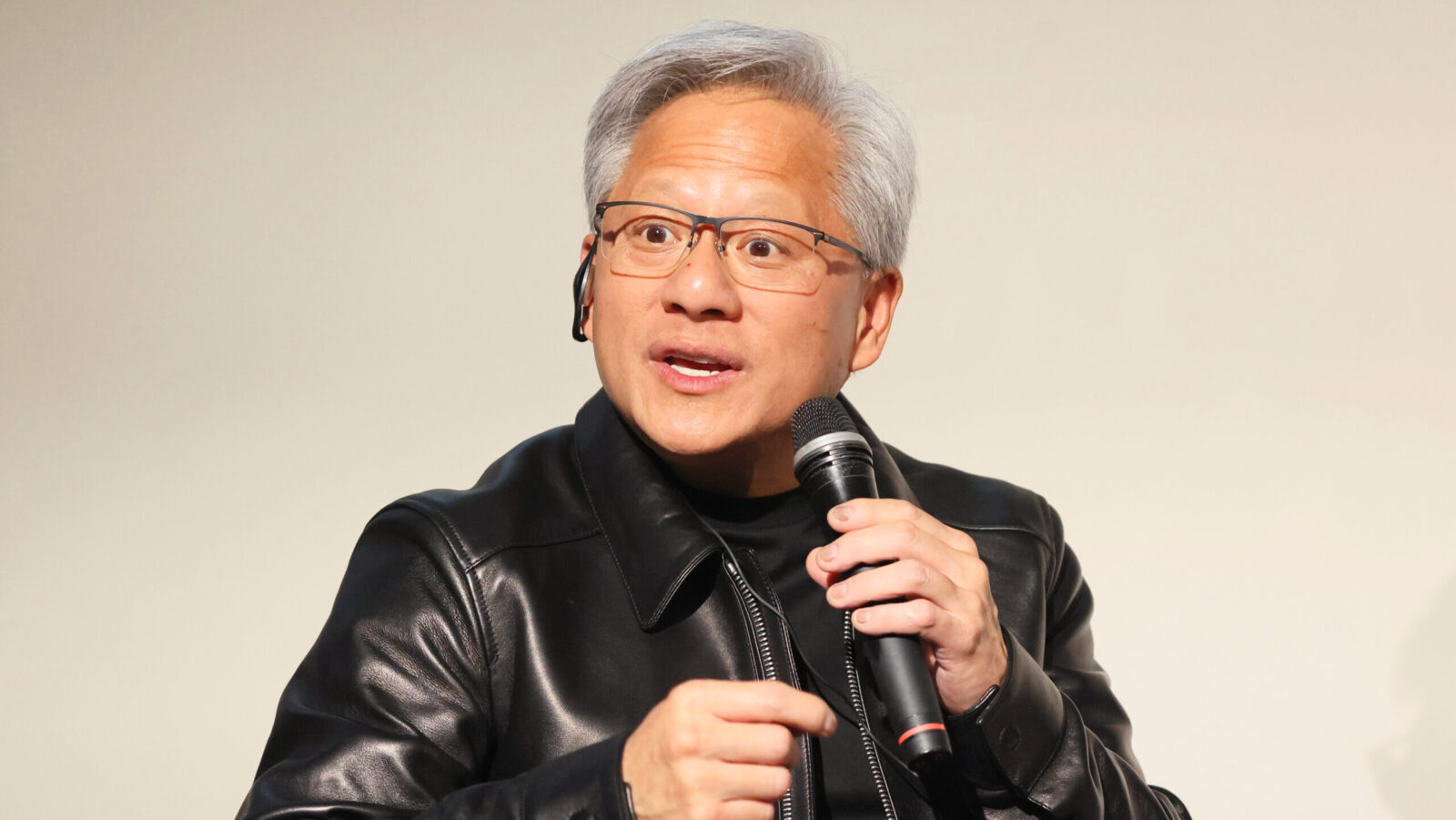
The emergence of frontier artificial intelligence is the new front in Silicon Valley’s open- vs. closed-model Forever Wars, and the battle lines are now clear.
On one side: OpenAI and Anthropic, championing a closed-model ecosystem in the name of safety. On the other side: just about everyone else in the tech world, including Mark Zuckerberg’s Meta, and perhaps most importantly, Nvidia. In March, Nvidia CEO Jensen Huang spent much of Nvidia’s developers conference positioning Nvidia’s chips as the perfect infrastructure for open-source tools, and last month, Huang created an X-née-Twitter account seemingly for the sole purpose of publicly praising the democratizing power of open-source AI. On Tuesday, the semiconductor king made another stand, announcing its new open-source Nemotron 3.5 Lightning model.
With Open Arms
Still, Nvidia didn’t become the world’s biggest company by practicing pure digital altruism, and the company has plenty to gain from a more open AI ecosystem. “Software traditionally is where the value is, and that is also where a lot of the costs are,” Bill Wong, AI research fellow at Info-Tech Research Group, told The Daily Upside. “What Nvidia is doing is removing that cost” by offering and supporting open-source models, “which means [enterprise clients] have more money for hardware.”
In other words, greater demand for and access to open models will push value back down the tech stack to where the scarcity exists: hardware and infrastructure, Nvidia’s bread and butter. The flow of money away from powerful models also drains potential capital that closed-model makers like OpenAI, Google and Anthropic could use (and are already using) to craft in-house chips and reduce their reliance on Nvidia. In turn, model right-sizing only increases compute demand, which is also good for Nvidia:
- Global spending on AI inference (or the actual usage of AI models) is expected to reach $23.3 billion this year, according to a Gartner report published Monday. That would surpass spending on AI training (expected to reach $19.9 billion this year) for the first time ever.
- Nvidia, which holds an ironclad 90% market share for the training side of AI by most estimates, is increasingly eating up the inference market, too. According to a report by The Information in June, Nvidia’s inference market share is now at 74%, compared with 66% a year ago.
Fastest Route: In addition to the Nemotron 3.5 Lightning, Nvidia on Tuesday also announced the NeMo Switchyard, an open-source library for routing agent tools to the best-suited model for any given task. Nicolas Sauvage, president of venture capital firm TDK Ventures, told The Daily Upside that may just be the most important news of the day. “Open models do not eliminate value. They change where value is captured,” Sauvage said. “The future may therefore be less about one model winning and more about systems dynamically choosing the best model, or combination of models, for each task.”
Apollo Places $2.6 Billion Bet on New York Yankees

Ruth and Jeter built the house. Wall Street is financing the latest renovations.
The holding company of Major League Baseball’s New York Yankees revealed a $2.6 billion financing agreement with private equity giant Apollo Global on Tuesday, showcasing the intersecting interests between an established sports family and new financial entrants to the pro leagues.
PE for Pinstripes
The Steinbrenner family has held controlling ownership of the Yankees since patriarch George, who died in 2010, led a group that bought the team for $10 million in 1973. Today, it’s worth $8.5 billion, according to Forbes.
The Steinbrenners, now led by scion Hal, are certainly not hurting for cash but aren’t nearly as liquid outside of their sports business as many mega-rich businessmen who entered pro sports ownership in recent years. Estimates put the family’s worth in the range of $5 billion. Compare that to Los Angeles Clippers owner Steve Ballmer and Denver Broncos owner Rob Walton, both worth well over $100 billion, thanks to their respective Microsoft and Walmart fortunes. It’s not hard to see why added Wall Street firepower on the Yankees bench has appeal.
At the same time, Apollo Sports Capital’s interest couldn’t be more straightforward. In a white paper last year, it made the case that sports investing represents a $2.5 trillion opportunity. The firm’s sports unit is not averse to controlling stakes, having taken one in Spanish soccer giant Atlético Madrid earlier this year, but when it comes to the MLB, Apollo must navigate a rule barring private equity funds from owning more than 15% of a team. Tuesday’s agreement is a mix of credit and equity, with Apollo’s exact stake in the Yankees undisclosed:
- The Steinbrenner family will retain “full control” of the Bronx Bombers, but it’s unclear if any funds will go toward the Yankees’ payroll, the MLB’s third-highest. The team hasn’t won a World Series since 2009.
- The announcement said the money will support “continued growth of the Yankees franchise as well as refinancing of existing debt.” Yankee Global Enterprises has stakes in Major League Soccer’s New York City FC, Italian soccer team AC Milan, the YES Network and Legends Hospitality.
Financial Might Doesn’t Always Make Right: The richest MLB owner is hedge fund manager Steve Cohen, the $23 billion man who bought the Yankees’ crosstown rival New York Mets for $2.4 billion in 2020. But, despite spending $369 million on player salaries this year, the second-highest in the league behind the Los Angeles Dodgers, and reportedly running up an annual operating loss of $200 million, the Mets are dead last in the NL East division.
The AI Buildout Is Charging Up Lithium Demand

EVs are still lithium’s biggest gig. But now, data centers also need those batteries to keep the lights on, and J.P. Morgan projects a 30% surge in global energy storage installations this year.1 The Sprott Lithium Miners ETF (LITP) gives you pure-play2 exposure to the miners behind it. Get exposure to the demand shift.**