

Good morning and happy Sunday.
Roughly 100 years ago, the American Bill Gorton asked drinking buddy Mike Campbell how he went bankrupt. “Two ways,” Campbell answered, in what would become an enduring truism from Ernest Hemingway’s The Sun Also Rises. “Gradually, and then suddenly.”
The same might be said for America’s family farmers, grappling for years with lower crop prices, higher interest rates and other challenges while watching the slow depletion of their working capital. Now, many are sliding rapidly toward financial ruin under the added economic strain of the US war with Iran. That’s the subject of today’s deep dive. But first, a word from our sponsor, The Points Guy.
For that long weekend in Miami, or those flights home for Thanksgiving, how much of it ran on points instead of your paycheck? If it was more than you’d like to admit, you’re in good company.
As many as 3 in 4 rewards cardholders redeemed their rewards annually in recent years.1 Airline cards alone sit in nearly 1 in 4 American households, per Airlines for America. That’s some serious money, and a bill in Congress has its sights set on it.
The Credit Card Competition Act would let retailers reroute your card onto cheaper networks that fund fewer rewards. The Points Guy pegs the hit at $80 billion a year in lost rewards, hundreds of dollars per household, gone from dinners out, extra bags, seat upgrades.
The Points Guy is pushing back, and has already sent more than 800,000 reader letters to Congress opposing it.
Add yours in under two minutes, and tell your representative to vote no.
Spiking Diesel Costs Drive Growing Number of American Family Farms to Bankrutpcy
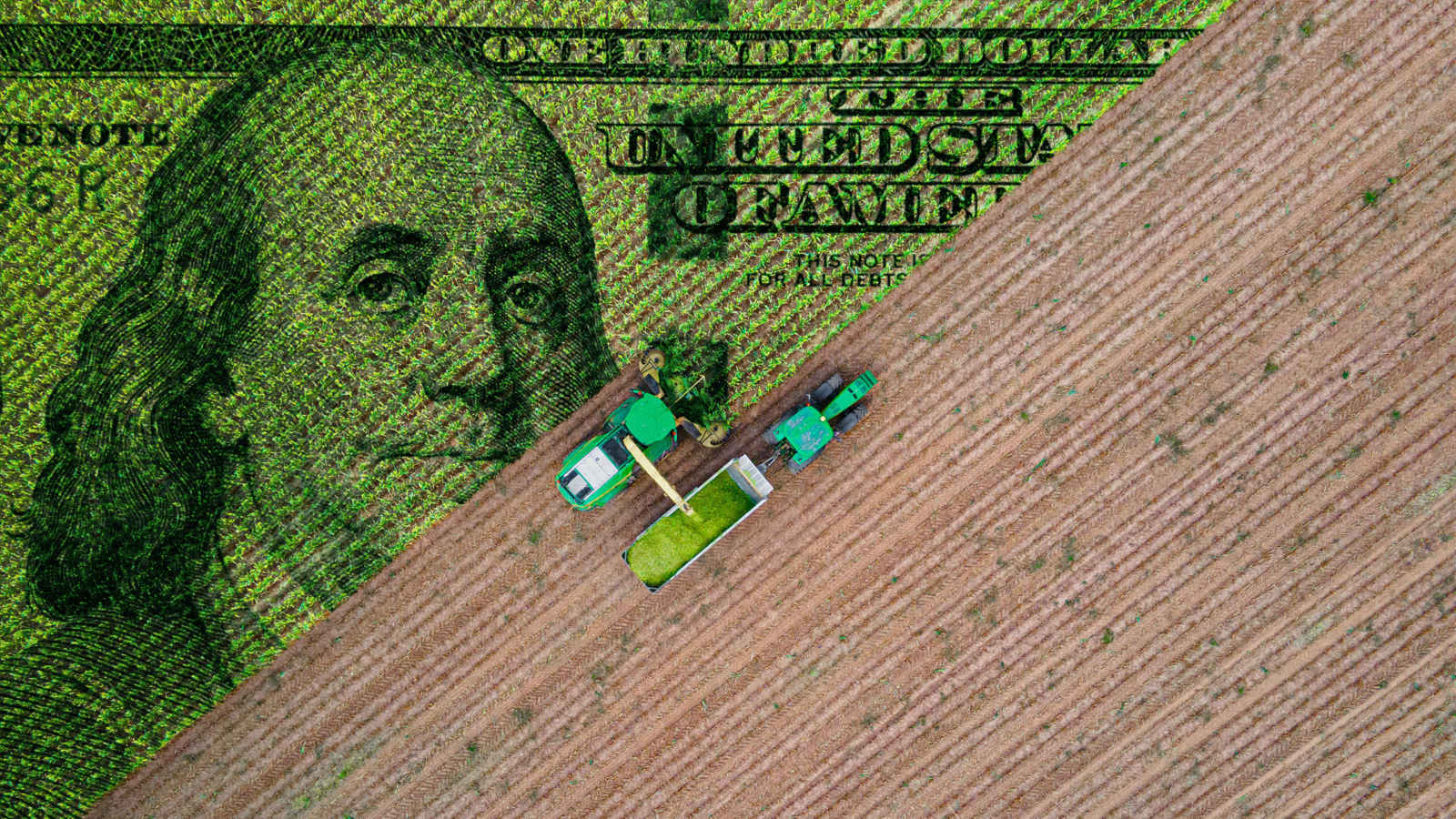
Harvest season is on the way and, for some of America’s family farms, it may be the last.
They face an onslaught of costs driven by the war in Iran that are testing the limits of their finances. According to US Federal Courts data, there were 336 bankruptcy filings under Chapter 12, a special category designed for family farms and fisheries, in the 12-month period ending June 30, up from 282 in the previous year.
Persistent, elevated prices of fuel and fertilizer, driven by the war in Iran, threaten to deepen losses at a time when many farmers are already valiantly pressing on through negative crop margins and other business pressures.
Economists at the American Farm Bureau Federation (AFBF), an industry lobbying group, expect the national average returns of farmers growing nine major crops will be $32 billion short of expenses in 2027, up from a $31 billion shortfall this year before federal assistance is factored in.
Analysts and industry groups fear more farmers could be pushed to the brink, with more foreclosures looming.
A Lagging Issue
Farm bankruptcy filings are important to watch because they’re a lagging economic indicator.
The recent rise in bankruptcies, according to research published by the University of Illinois Urbana-Champaign, tells us that “lower commodity prices, elevated interest rates, high input costs and tighter operating margins accumulated over previous production cycles are now appearing in court filings and farm credit portfolios.” Which is to say, things were already tough and pushing farms past their limit, even before you consider this year.
Writing for the university’s agricultural economics platform Farmdoc, the researchers noted last year’s rise in bankruptcies ended a five-year trend of fewer defaults following their 2019 peak.
One of the biggest pressures already facing farms was crop prices, which have remained stubbornly low due to bountiful global supplies from previous bumper harvests and booming production.
Federation economists project 2027 will be the sixth year in a row where US farmers see negative returns after accounting for total costs for major row crops.
For example, they project corn losses will rise 27% from $131 per acre this year to $167 per acre in 2027, and soybean losses 72% from $80 per acre to $138 per acre.
Major crop prices have generally remained below their five-year averages this year, while farmers still have to deal with stubbornly high expenses including machinery and, of course, fuel and fertilizer.
Which brings us to this year’s twin troubles.
The Diesel Drag
When it comes to all-important diesel fuel, the agriculture industry is not feeling the spark at the moment.
Because diesel engines generate more power than gas engines, and because the fuel is less volatile, it’s essential to agriculture businesses, which use heavy equipment and often store fuel in bulk.
The US Department of Agriculture (USDA) estimates farmers spent $15.6 billion on fuel last year, with diesel accounting for $10 billion of that.
But by massively disrupting traffic in the crucial global oil chokepoint that is the Strait of Hormuz, the US-Iran war is driving diesel ever closer to a record high. After months of on-off negotiations with no end in sight, the cost of the conflict is threatening to topple more farmers.
According to AAA, diesel cost $5.55 per gallon at the pump on Thursday, and is approaching its $5.82 June 2022 peak, which followed the outbreak of the ongoing war in Ukraine.
Diesel at the pump is up 8.6% in the last month and 50% in the past 12 months.
On its own, this rapid increase in price would not prove insurmountable.
Jim Wiesemeyer, an analyst at agricultural markets intelligence provider Ag Bull, observed in a note last week that diesel represented just 2% of the $490 billion in US farm expenditures last year.
He wrote the “honest framing” of the current diesel price “is that it is a manageable number sitting on top of a farm economy that has very little room left.”
In other words, a 1% increase in production costs (which is roughly what the past year’s 50% rise in diesel represents) could normally be absorbed by the farm industry.
Capital Crunch
However, Wiesemeyer noted the USDA estimates inflation-adjusted net farm income will slide 2.6% this year from 2025, and working capital will fall 9.2% at the same time.
Under that light, the uptick in production costs looks a lot different, he said: “A 1% cost increase against a 9.2% working-capital decline is a different proposition than the same increase against a healthy balance sheet.”
Tom Kloza, chief energy adviser at Gulf Oil, told the Financial Times last week that the diesel surge has already created a “quiet crisis,” with costs set to ripple across the economy and be passed on to stretched consumers.
“These are body punches to the middle of the economy,” he told the newspaper. “They’re going to have a pretty dramatic impact.”
To give an idea of just how high the pressures are for diesel-reliant businesses like agriculture, industrials and trucking at the moment, one can look at what’s called the diesel crack spread.
The spread represents the difference between the price of crude oil and the diesel refined from it.
Last week, diesel was trading at more than $100 a barrel above US crude. That’s more than triple the average spread in 2025 and is a record. The spread had never before crossed the $100 threshold.
To make matters worse, diesel demand is expected to rise considerably in the next two months as farmers get ready for the harvest season, retailers ship more goods by truck to ensure they are stocked for the holiday season, and American homeowners buy fuel for the winter.
Nutrient Needs
Fertilizers represent a much bigger line item for farm expenses. Along with lime soil conditioners, they comprised 7% of expenditures last year, according to the USDA, making movements more acutely felt.
US fertilizer prices reached historic highs after the outbreak of the war in Iran, no surprise given one-third of the world supply is transited through the Strait of Hormuz. When prices were at their worst in April, 70% of US farmers told an American Farm Bureau survey they couldn’t afford all the fertilizer they needed.
Costs have, mercifully, come down from spring’s record levels, including declining this month. But they remain elevated: Seven of the eight major US fertilizers tracked by agricultural market intelligence provider AgroLatam are more expensive than they were a year ago.
“Availability and affordability concerns have created demand destruction and demand deferral that cloud the fertilizer price outlook for the next few years,” Jacqui Fatka, an economist at agribusiness lender CoBank, wrote in an analysis earlier this month. “Market recovery depends on stabilization in the Middle East, sulfur price trends and shifts in global demand patterns.”
As for stabilization in the Middle East, US President Donald Trump said last week there were no planned US-Iran talks, while Tehran said it would continue to close the Strait of Hormuz.
Researchers at North Dakota State University’s Agricultural Risk Policy Center published a white paper last month projecting that fertilizer prices will rise somewhat more before plateauing above pre-Iran war levels until 2028.
For example, in 2027, they estimate the average per-ton cost of urea will be $496, up 5.5% from the pre-war level of $470. Diammonium phosphate is forecast at $666, up 7% from the pre-war $622. And ammonia is projected at $619, up 16.7%.
Congressional Quandary
“For farmers, elevated prices will keep nutrient decisions under pressure and could extend the recent pullback in phosphate and potassium applications,” added Fatka, the CoBank economist. “Even if prices stay below the extreme levels feared after the Strait of Hormuz closure, the industry should prepare for fertilizer costs to remain structurally higher, and more difficult to manage, through the next several crop years.”
Politico Pro reported earlier this month that Senate Republicans are angling to hold a vote on a $95 billion Iran war package that includes $12 billion in relief for farmers in early September. A framework for what’s been dubbed “Reconciliation 3.0” passed in the House of Representatives last month.
At the same time, negotiations are underway for a bill that sets out future federal farm subsidies, something Congress typically passes every five years but that is facing gridlock.
Heading into harvest season, however, those crops aren’t going to wait for Congress. Because who can?
Your Credit Card Fraud Protection Is Up for a Vote

To protect you from fraud, your credit card dons an impressive suit of armor. And it only cost pennies. Merchants pay a small interchange fee at checkout, which helps fund the fraud detection behind your card. When fraud does slip through, 96% of victims get their money back.2
But the Credit Card Competition Act, currently moving through Congress, would let retailers swap that system for a cheaper one that invests less in stopping fraud (pinching scraps off that shiny suit). In short, retailers would get a discount, while you inherit more risk.
The Points Guy is rallying support to oppose the bill with a letter to lawmakers.