
Smart, actionable news trusted by millions.

Our flagship newsletter delivers smart news and analysis on finance, and investing — all for free.

Good morning.

Is AI watching too much TV?

On Friday, Amazon Prime Video quietly removed the AI-generated video recaps for several of its popular original series, after fans on social media quickly noted that the AI recap of the first season of Fallout was filled with mischaracterizations and mistakes (hat tip to The Verge for spotting the recap removals). Hey, maybe Amazon’s AI is just like us after all, trying to do our jobs but constantly distracted by screens.

Healthcare

Biotech Bill Bundled in Pentagon Spending Plan May Worsen Pharma’s Patent Cliff Dilemma

Much like pharmaceutical packaging, the most important part of this story is in the fine print.

Last week, the US House overwhelmingly voted in favor of Congress’s mammoth annual defense policy bill, which would authorize $900 billion in military funding. Inside the omnibus package was the Biosecure Act, a piece of legislation targeting Chinese biotechs that could have unintended consequences.

Plugging the Gap

The next few years of projected revenues in the pharma space have more holes in them than industry CEOs’ favorite golf courses. Intelligence provider Evaluate forecasts $314 billion in sales will be impacted in the next five years by patent cliffs, industry jargon for when drugmakers lose exclusivity on their products. Take, for example, Merck’s Keytruda, the world’s best-selling cancer drug that made $29 billion last year, with a patent expiration in 2028. At the same time, years of investment in China, a non-factor in cutting-edge biotech a decade ago, have made the country a leading innovator. At 20%, China has the second-largest share of global drugs in development, according to Globaldata research, behind only the US at 40%.

As a result, Chinese partnerships have become an increasingly popular way for US and European pharma firms to replenish pipelines in advance of patent cliffs. In a survey by the Biotechnology Innovation Organization (BIO) last year, 79% of biopharma companies reported at least one partnership or supplier relationship with a Chinese firm. Licensing agreements to bring Chinese therapies abroad are especially popular, with Pfizer, Novartis and AstraZeneca inking multibillion-dollar deals in a frenzied 2025. Naturally, this has been great for Chinese biotech stocks: The Hang Seng Biotech Index is up 69% this year, more than double the 32% rally on the main Hang Seng Index.

But the Biosecure Act, which is expected to pass in the Senate as part of the defense bill this week, could cloud the matter by allowing Washington to rule out deals with “companies of concern”:

  • The Biosecure Act failed last year when lawmakers and industry opposed the singling out of five Chinese companies — BGI Genomics, MGI Tech, WuXi Biologics, WuXi App Tec and Complete Genomics — because of the industry disruption that their exclusion would cause. WuXi App Tec, in particular, is a key provider of ingredients for cancer treatments.
  • The revised version of the bill leaves the selection of “companies of concern” to the discretion of the Department of Defense and the Office of Management and Budget (BGI, a genetic testing company, is already on the list). Drugmakers working with “companies of concern” will also get five years to adjust their supply chains, although companies told BIO’s survey last year they’d likely need eight.

Buy Option: Pharma companies are also resorting to acquisitions ahead of patent cliffs: Johnson & Johnson spent $14.6 billion this year for neurological treatment maker Intra-Cellular Therapies, Merck spent $10 billion on respiratory treatment developer Verona, and Sanofi bought oncology specialist Blueprint Medicines for $9.5 billion.

Photo via Citizens

For the 300 leaders surveyed, the realized ROI on recent AI investments is finally meeting expectations. As a result, leaders are putting more toward the tech, such as exploring agentic AI and even in-house AI capabilities. Explore the use cases identified in Citizens’ 2026 AI Pulse Survey, and gain insights that can help inform your own AI strategy. Read the report.

Semiconductors

Nvidia H200 Exports Boost Odds of a World That ‘Runs on Chinese AI’  
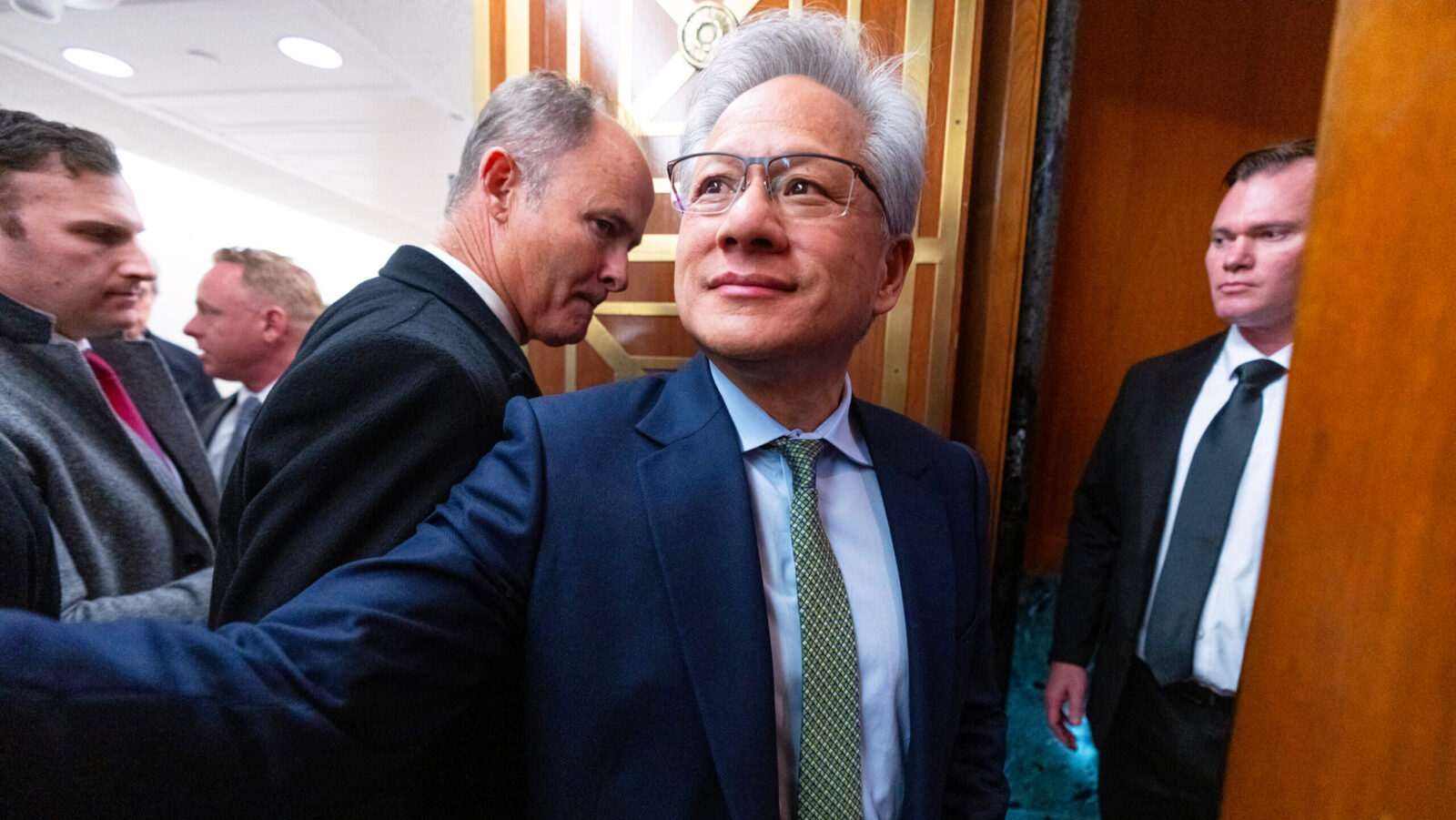
Photo of Nvidia CEO Jensen Huang.
Photo via Bill Clark/CQ Roll Call/Newscom

ByteDance and Alibaba are shopping for stocking stuffers: Nvidia’s H200 chips.

The Chinese tech giants are looking to place orders for the semiconductor company’s second-best artificial intelligence chips now that President Donald Trump has given Nvidia the OK to export the processors to China in exchange for a 25% cut, Reuters reported.

Exactly when companies like the TikTok owner will actually be able to get their hands on these chips is unclear. The Chinese government has discouraged companies and government-funded data centers from buying Nvidia’s chips to give its domestic chip manufacturing a leg up. The Information reported that following Trump’s announcement, Chinese regulators held an emergency meeting with companies including Alibaba, ByteDance and Tencent Holdings to gauge the demand for H200s.

China’s Power

Trump’s green light of the exports is a retreat from a relatively simple decades-long policy: Don’t hand your best tech advancements over to your foes. Ultimately, the White House’s decision came down to the fact that China’s Huawei already offers AI systems with comparable performance, Bloomberg reported. The idea is that offering up Nvidia’s chips to Chinese companies will slow the country’s AI chip market by getting them hooked on the American stack.

While Nvidia still reserves its most advanced Blackwell chips for Americans, Chinese companies like AI start-up DeepSeek, developing their own AI systems, are nipping at the heels of their US competitors. Some experts say the damage may be done:

  • “Compute is our main advantage,” Rush Doshi, assistant professor at Georgetown University and former deputy senior director for China and Taiwan affairs with the Biden National Security Council, said on X. “China has more power, engineers and the entire edge layer — so by giving this up, we increase the odds the world runs on Chinese AI.”
  • The exports will “boost China’s ability to both develop frontier AI models and deploy them widely, competing with US AI and cloud companies abroad,” added Tim Fist, director of emerging technology policy at the think tank Institute for Progress. “The new Chinese stack will be NVIDIA chips, Tencent/Baidu/Alibaba cloud, and DeepSeek/Qwen/Kimi models.”

Breaking Rules: DeepSeek is reportedly already using Blackwell chips that were illegally smuggled into China, according to The Information. (Nvidia denies knowing anything about these so-called “phantom data centers.”)

Photo via Fisher Investments

Thinking About Buying An Annuity? Some investors see them as a safe option in retirement — but are they as secure as they seem? Find nine reasons to reconsider in Annuity Insights: 9 Questions Every Annuity Investor Should Ask from Fisher Investments. Get the guide.

Industries

JetBlue Courts First-Class Clientele With Pre-Flight Upgrade

Low-budget airline JetBlue is moving on up.

The airline is set to open its first-ever premium airport lounge, dubbed the BlueHouse, to host high-income flyers in Terminal 5 at JFK, with a second location planned at Boston Logan next year. Call it an ascent to the upper bounds of the K-shaped economy. What’s next, a premium version of Taco Bell? Well, yes, actually.

K Marks The Spot

It’s no secret there’s a lot of money to be made chasing higher-income consumers with often higher-margin “premium” products. Taco Bell, home of the $1.50 Cheesy Bean and Rice Burrito, has populated major urban centers with “Cantina” locations that serve $15 burritos with premium proteins and $8 margaritas. In fashion, Levi’s launched its “Blue Tab” label this fall to sell denim items priced at a few hundred dollars, while H&M earlier this year decided to pivot its low-key line Cos toward the luxury market.

But the airline industry, in particular, appears uniquely suited to chasing the upper crust of consumers. After all, once you fly first class, it’s hard to go back to economy. We’ll let you know if that’s really true after we sell a few more ads:

  • United, Delta, and American are all in the midst of operations to drastically increase the number of premium seats on their aircraft. In its most recent earnings call in October, United said that premium seat revenue increased 6% year-over-year, lapping overall growth of 2.6%, while it has expanded the amount of business and premium economy seats by 40% since 2019.
  • Southwest Airlines is also “actively pursuing” a network of airport lounges, CEO Bob Jordan told CNBC last week. And even Spirit Airlines is chasing the premium consumer, increasing its availability of higher-priced “Go Comfy” and “Big Front Seats” earlier this year (the former even comes with — get this — a free snack and beverage).

Feeling Blue: As far as the BlueHouse goes, travelers booked in JetBlue’s trans-Atlantic Mint business-class cabin will get an invite, ditto owners of JetBlue’s Premier Mastercard credit card and top-tier members of JetBlue’s frequent flier program. Customers with basic economy tickets will be completely ineligible. Oh, well. Maybe one day JFK’s public terminal will get a Taco Bell Cantina of its own (one is already arriving at Denver International Airport next year).

Extra Upside

  • It’s a Gamble: Rick Wurster, the CEO of Charles Schwab, says his brokerage is not interested in prediction markets and other risky investments and doesn’t want to encourage young people to pursue them, as opposed to upstarts like Robinhood.
  • Power Delay: Oracle is pushing back the timeline for some of the data centers it’s building for OpenAI by one year to 2028.
  • What Forces Are Driving The Next Era Of Global Business? Find out in Semafor Business. Liz Hoffman delivers scoops, insights, and analysis on the people, companies, and institutions moving markets. Join top executives at top investment banks, advisory firms and hedge funds who rely on Semafor Business. Subscribe for free.*

* Partner

Sign Up for The Daily Upside to Unlock This Article
Sharp news & analysis on finance, economics, and investing.