
Smart, actionable news trusted by millions.

Our flagship newsletter delivers smart news and analysis on finance, and investing — all for free.

Good morning.

If you feel like you’re spending more time on the internet than ever, don’t sweat it: We all are.

According to CloudFlare’s annual Radar Year In Review report, published Monday, global internet traffic surged 19% in 2025. The rest of the results weren’t exactly surprising: Google remained the top search engine, Facebook the top social network, ChatGPT the No. 1 generative AI platform, and YouTube the most used video streaming service. Curiously, however, Apple’s Messenger ranked as only the eighth-most-used messaging service. The next time you get the boot for polluting a group chat with green bubbles, just remind everyone else that they’re the ones in the minority.

Markets

Big Tech’s Allure Fades as Wall Street Bets on Main Street Stock Rebound in ’26
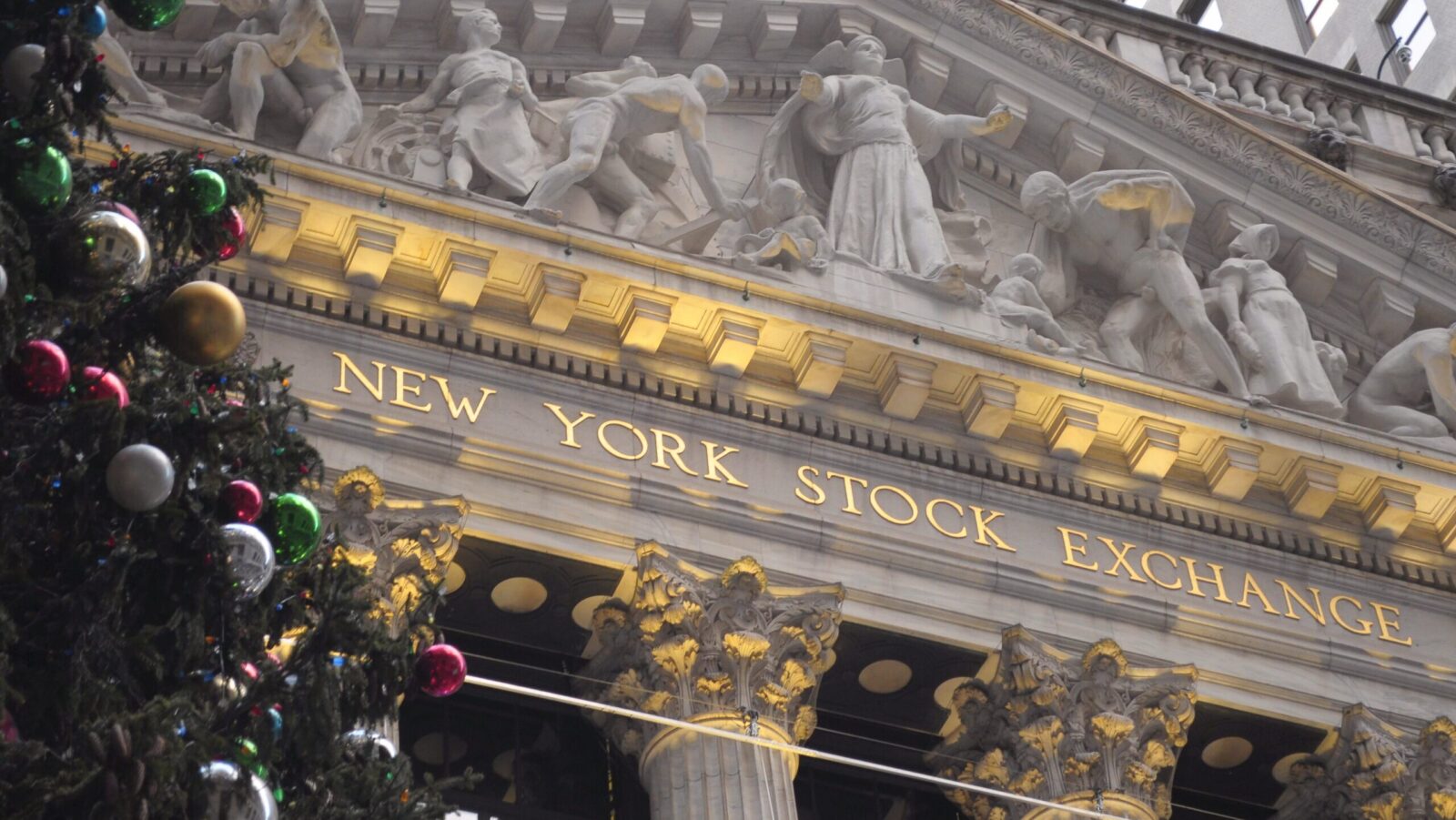
Photo of the New York Stock Exchange.
Photo via Jimin Kim/ZUMAPRESS/Newscom

It’s the last full trading week of the year on Wall Street, with a deluge of pent-up 2025 data heading our way, but all investors seem to care about is staking out positions for the new year.

Traders continued rotating out of the artificial intelligence trade that has powered this year’s market rally on Monday. Some see it as a new “run-it-hot” bet on Main Street.

Trading Places

The S&P 500 is up 15.9% this year, and the market’s rally is now over three years old. There is broad belief that it will continue through 2026, but the path forward looks a little different, according to Wall Street forecasts. Still important will be the tech megacaps, with enough data center announcements to fill the footnotes of a long-lost corporate dystopia novel by David Foster Wallace. “Bubble or not, history shows that rallies can last for quite some time (3-5 years in the dot-com/housing boom), so we see more to come and recommend a broadening of the AI trade,” HSBC analysts wrote last month.

But equity gains will not be limited to tech as tax and interest-rate cuts lift corporate earnings for an array of mid- and small-cap stocks. Trading activity already reflects rotations in line with this view. On Monday, Oracle, down 2.6%, and Broadcom, down 5.6%, were hammered again; they’ve given up 16% and 15.2% of their value, respectively, in the past five trading days, while the S&P 500 has ticked down a mere 0.4%. Deutsche Bank analysts observed that, while the S&P 500 is below its October record high, “the average stock in the S&P 500 is higher, as are small caps, while mega-cap growth and tech stocks … are down.” As banks have issued bullish stock market projections for 2026, they’ve highlighted how growth could come from sectors of the economy outside tech:

  • Bank of America forecasts S&P 500 earnings will grow 14% next year, and sees the index reaching 7,100 (it closed at 6,817 on Monday). JPMorgan Chase pegs earnings growth at 13% to 15% and has a more bullish target of 7,500. Profit hopes have been boosted by a rosier outlook for the US economy, which the Federal Reserve expects to grow 2.3% in 2026, up from its 1.8% forecast in September.
  • Morgan Stanley, with an even more ambitious 7,800 S&P 500 forecast, sees a “rolling recovery” in which small-cap equities outperform large caps. Deutsche Bank, the most bullish major bank with an 8,000 forecast, expects both corporate earnings and the AI trade to make strong gains.

Letters to a Contrarian: Bank of America Chief Investment Strategist Michael Hartnett called commodities “the best ‘run-it-hot’” trade of 2026 earlier this month, noting metals’ increasing importance in the AI boom. For the more courageous, he deemed oil and energy stocks, which have long underperformed, “the best ‘run-it-hot’ contrarian trade” in part because they, too, feed booming AI demand.

Blockchain

From JPMorgan, a Token(ization) of Esteem for Money-Market Fund

Quiet, please! Genius (Act) at work.

Today, JPMorgan is rolling out its first-ever tokenized money-market fund on the Ethereum blockchain, the bank announced on Monday. The move comes after the passage of the Genius Act in July, which created a new nationwide regulatory framework for the burgeoning economy of tokenized-dollar stablecoins. But JPMorgan is capitalizing on not one, but two, booming trends.

Stable Setting

Stablecoins, obviously, are a popular asset class: According to CoinGecko data seen by The Wall Street Journal, the total market cap of all stablecoins has reached $300 billion. That’s staggering, but still small potatoes compared with the enormous growth in demand for money-market funds, whose assets have grown from $6.9 trillion to $7.7 trillion over the course of 2025 alone, according to data from the Investment Company Institute seen by the WSJ.

With the My OnChain Net Yield Fund, or MONY (our hat-tip to whoever coined that one), JPMorgan is offering qualified investors the best of both worlds. (To be clear, qualified investors include individuals with at least $5 million in investments or institutions with at least $25 million, who can invest a minimum of $1 million into MONY). Typical for money-market funds, it invests in safe assets that usually yield more than bank accounts, like US Treasury securities. Meanwhile, the tokenization “provides increased transparency, peer-to-peer transferability and the potential for broader collateral usage within the blockchain ecosystem,” the bank said in a statement on Monday.

Innovative it may be for JPMorgan, but the bank is actually chasing an existing trend on Wall Street:

  • The BlackRock USD Institutional Digital Liquidity Fund launched in March of last year, before the Genius Act, and remains the world’s largest tokenized money-market fund with more than $1.8 billion in assets under management.
  • In July, just a week after the passage of the Genius Act, Goldman Sachs and Bank of New York Mellon partnered to launch digital tokens that show ownership of existing money-market funds run by Wall Street institutions.

New Year’s Resolution: Ahead of Congress’s holiday recess, lawmakers have been batting around a second major bill regulating cryptocurrency markets that would split the industry’s oversight between the Securities and Exchange Commission and the Commodity Futures Trading Commission. On Monday, however, Politico reported that a vote on the bill has now likely been punted until January. Passage of the bill is probably a major New Year’s resolution for the crypto lobby. Well, that and getting bitcoin’s price back above $90,000.

Photo via Oracle NetSuite

The Last Great Productivity Shift Took Decades. When factories first moved from steam to electric motors in the 1900s, hesitation slowed most manufacturers, while early adopters surged ahead. AI marks a similar inflection point today. Oracle NetSuite’s field guide gives leaders a practical blueprint for how to leverage AI for real business advantage, now and into the future. Be an early adopter, download the guide.

Finance

Do McKinsey Layoffs Signal Trouble for Consulting Industry?

After careful review, McKinsey is suggesting broad cost-cutting measures that amount to layoffs of up to 10% of total staff … for its own business.

Hey, at least the firm is consistent.

Amid flatlining growth, executives at the hundred-year-old consultancy firm are pushing back-office units to get leaner, according to a Bloomberg report on Monday. Is it the end of a consulting era as we know it?

Cost Control

McKinsey’s planned layoffs of a few thousand roles over the next 18 to 24 months, per Bloomberg sources, isn’t exactly surprising. It comes after the firm’s own relentless hiring spree — headcount increased from around 17,000 to as high as 45,000 from 2012 to 2022, a spokesperson told Bloomberg — and a gradual post-pandemic attrition that has already trimmed that figure to 40,000. Meanwhile, corporate America is on a cost-cutting mission of its own, embracing AI and automation while slashing expenses. That’s putting consulting contracts on the chopping block. Fellow professional services firms such as Deloitte, Ernst & Young and KPMG have already undergone significant layoffs in recent years.

Arguably worse for McKinsey and the consulting industry writ large, however, have been similar cost-cutting initiatives by governments across the globe:

  • US government agencies were ordered by the Trump administration’s Department of Government Efficiency earlier this year to justify their consulting contracts, while consulting firms were asked to justify their work and suggest cost cuts (note: McKinsey had already experienced a drastic decrease in government contracts, losing key work with the Food and Drug Administration due to its prior work with opioid-maker Purdue Pharma).
  • Leaders in Beijing, meanwhile, have pushed domestic companies to abandon international consulting firms. Sources also told Bloomberg that McKinsey is suffering from spending cutbacks by the Saudi Arabian government, which had paid the firm half a billion dollars in fees in the decade leading up to 2024.

Data Dump: The McKinsey layoffs could signal a broader slowdown in the white-collar jobs market, following similar layoffs in Big Tech, finance and elsewhere. Today’s government shutdown-delayed “double jobs report” from the US Department of Labor will provide employment data for both October and November, possibly heightening Fed Chair Jerome Powell’s concerns about the job market.

Extra Upside

  • BlackRock Gets the Boot: Dutch pension fund PME is severing ties with BlackRock, which oversaw $5.9 billion of its money, after determining the world’s top asset manager is no longer acting in its best interests, thanks to axed climate commitments.
  • Mac in Your Cadillac: New General Motors cars will come with eight years of complimentary Apple Music, starting with Chevrolet and Cadillac models immediately, followed by Buick and GMC.
  • The Hustle Covers the Weird, Wild Side of Business that Traditional Media Ignores. Discover unexpected business stories, unconventional entrepreneurs and profitable niches overlooked by mainstream media. The Hustle in your inbox.*

* Partner

Sign Up for The Daily Upside to Unlock This Article
Sharp news & analysis on finance, economics, and investing.