
Smart, actionable news trusted by millions.

Our flagship newsletter delivers smart news and analysis on finance, and investing — all for free.

Good morning, and happy holidays.

We worry about robots being able to think for themselves. The fact that they don’t is a problem, too.

Case in point: the fleet of self-driving Waymo cabs in San Francisco. The Google-backed robotaxis shut down on Sunday amid widespread power outages, leaving traffic lights blacked out and the self-driving cars collectively flummoxed about how to respond. In turn, the stalled robotaxis caused traffic jams and, presumably, scores of angry drivers. As for robotaxis, they’re not paying any mind to the criticism.

A calendar note: The Daily Upside is off until Friday, when we’ll see you before you wander out in search of gift returns, exchanges and discounts.

M&A

‘Vortex of Volatility’ Kept 2025 Dealmaking From Breaking Records
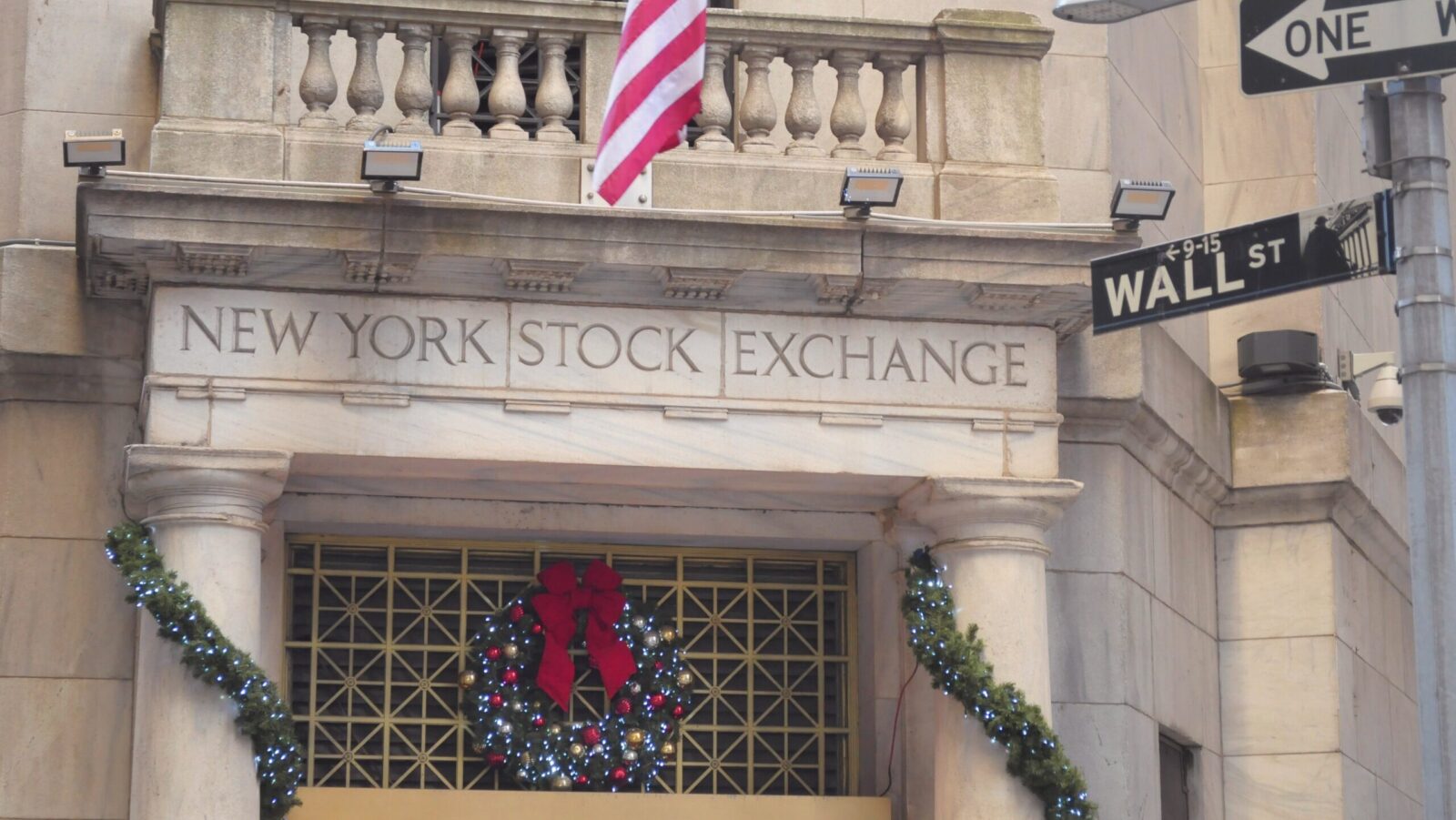
Photo of the New York Stock Exchange on Wall Street in New York City.
Photo via Jimin Kim / SOPA Images/Sipa USA/Newscom

As dealmakers welcomed 2025 with toasts at their Aspen and Palm Beach vacation homes, hopes were high that a business-friendly White House would usher in an M&A boom.

Their champagne dreams mostly came true, though political volatility in DC proved an obstacle at times, too.

Worthy of Brags and Hitting Snags

Last week, Dealogic analysts reported that companies agreed to $4.8 trillion worth of global mergers and acquisitions this year, the second-highest on record after the frenzied boom times of 2021. The geographic driver was North America, where the $2.6 trillion in deal volume, a 52% increase over 2024, represented 55% of the global total. The financial powerhouses behind this revival were megadeals, or transactions worth more than $5 billion, which hit a record 70. Standout deals included Union Pacific’s $88 billion purchase of Norfolk Southern and a consortium including the Saudi Public Investment Fund taking Electronic Arts private for $56.6 billion.

The ascent was far from smooth, however. “April’s Liberation Day tariff announcement choked activity before a summer reacceleration,” Dealogic’s report noted, adding that mid-market companies, more subject to volatility, “mostly stayed on the sidelines” in 2025, contributing to the megadeal dominance. “I’m cautiously optimistic M&A will be better in 2026 than in 2025, but not at 2021 levels,” Paul Aversano, global practice leader at Alvarez & Marsal, told the report’s authors. “The vortex of volatility swirling around the world is starting to calm down, and people are coming back to the market. The large deals are happening first, and then we will see more activity from the middle market.”

IPOs in 2025 followed a similar trajectory. The $170.6 billion in proceeds raised from more than 1,300 IPOs was the best since 2022. In the Americas, listing volumes of $77.9 billion nearly doubled the $42.4 billion in 2024. But the revival hit even more snags, according to data released Monday by Dealogic:

  • Global equity capital market deal volumes declined on a quarterly basis in the last three months of the year amid the US government shutdown. Dealogic analysts said transactions in the Americas were hit hardest: Notably, the Securities and Exchange Commission, the US IPO regulator, was “reduced to a skeleton staff,” and companies affected by a tech and crypto selloff around the same time opted to postpone their plans to go public.
  • “The figures on the face of it don’t look too disappointing, but given the huge momentum that had been building in the US IPO market through September, the pause in the calendar due to the shutdown turned what could have been a spectacular quarter into a merely good one,” analysts said.

Last-Minute Shopping: Roughly $464 billion in mergers and acquisitions have been announced so far in December, according to Dealogic, nearly a third more than last year. IBM’s $11 billion purchase of data platform operator Confluent and the Netflix-Paramount duel over Warner Bros Discovery are among the major deals now in the pipeline. The IPO market, meanwhile, is fresh off the biggest listing of the year last week, when medical supplies company Medline raised $6.2 billion.

Media & Entertainment

Backed by ‘Bank of Dad,’ Paramount Makes Another Push For Warner Bros. Discovery

Paramount Skydance’s David Ellison had to make one thing clear to Warner Bros. Discovery: Don’t worry, my dad’s got this.

In an amended bid for WBD on Monday, Paramount pinky-promised the financial backing of Larry Ellison, the Oracle founder, world’s fifth-richest man, and longtime backer of son David’s media and entertainment ambitions. Is it enough to shift the odds?

Return of Debtflix

The financing of Paramount’s all-cash $109 billion offer has always been a bit of a question mark. Underlying everything has been the participation of the senior Ellison. In its rejection of Paramount’s bids so far, WBD’s board of directors flagged Larry Ellison’s supposed financial support as “illusory,” because the cash was being sourced from a family trust it said could be easily manipulated amid a pending transaction. In a statement highlighting an amended filing to the SEC on Monday, Paramount said “Larry Ellison has agreed to provide an irrevocable personal guarantee of $40.4 billion of the equity financing for the offer.”

That puts the ball back in WBD’s court to reject Paramount’s offer for the eighth time if it chooses to stick with Netflix. But pulling off one of the biggest media acquisitions of all time requires some financial backflips for any bidder, and is forcing Netflix to return to some old tricks that some had hoped would remain firmly in its past:

  • The streamer’s cash-and-stock bid is backed in part by $59 billion in temporary debt financing from Wall Street banks, which it says will eventually be replaced by a mix of bonds, delayed-draw term loans, and a revolving credit facility. On Monday, the company had already begun refinancing part of the bridge loan, according to regulatory filings.
  • It’s the first time Netflix has relied heavily on debt financing since its early “Debtflix” days, when the company sold junk bonds to build its streaming giant. Its bonds climbed back to investment grade by 2021 as a pandemic boom fueled free cash flow, and are currently rated A by S&P Global and A3 by Moody’s. In a note seen by Fortune earlier this month, Morgan Stanley analysts warned that taking on new debt to fund the WBD deal could drag Netflix’s bonds to BBB, or the lowest tier of investment grade.

Winner Takes All: So which way are WBD shareholders likely to lean? “I doubt many [WBD] shareholders that are on the fence or planning to vote no were holding out due to issues the revised bid addresses such as a guarantee from Larry Ellison on the funding front,” Seth Shafer, principal analyst at S&P Global, told Reuters on Monday. Meanwhile, some analysts say not to fear the return of Debtflix: “Their balance sheet has plenty of capacity to accommodate something like this, even if they have to up their bid,” Jim Fitzpatrick, head of US investment-grade credit research at Allspring Global, told Fortune.

Finance

Trian, General Catalyst Scoop Up Janus Henderson for $7.4 Billion

In the asset management world, big fish are eating smaller fish. Sometimes that smaller fish is a very large marlin. Trian Fund Management and General Catalyst agreed yesterday to buy Janus Henderson for $7.4 billion. They’ll pay an 18% premium for Janus’s shares compared to what they were trading at before the deal went public.

The deal, which is expected to close in the middle of next year, will take Janus, and its $484 billion in managed assets, off the NYSE. Trian and General Catalyst said going private will free the firm “from the constraints of operating as a public company.” Private companies don’t have to report quarterly, a cycle that pressures public firms to please short-term shareholders—sometimes at the cost of long-term goals.

This Didn’t Happen Overnight

The buyout concludes a five-year activist campaign that’s pulled Janus Handerson out of a slump. Some backstory: Janus Capital merged with Henderson Group in 2017, but suffered from outflows and internal conflict after the tie-up. Since October, it’s seen six straight quarters of net inflows.

Trian, meanwhile, has been building up its stake in Janus over the past five years to 21%, and it has two reps on the company’s board — including its billionaire CEO Nelson Peltz. Now, the firm’s ready to take Janus fully under its wing.

Peltz has been pushing for asset managers, which are struggling with clients switching to cheaper investing products like index funds, to consolidate. He’s not alone:

  • Goldman Sachs said in September it’d buy up to $1 billion worth of T. Rowe Price’s shares and collaborate on investment products for retirement savers. T. Rowe’s shares at the time had fallen 50% since their 2021 peak as the firm’s investors pulled out. The deal marks Goldman’s only investment in an asset manager beyond itself.
  • Trian’s deal, which is backed in part by Qatar Investment Authority and Hong Kong-based Sun Hung Kai & Co, also speaks to the increasing involvement of foreign investors in US firms. Aquarian Capital, which is backed by Abu Dhabi, last month made a $4.1 billion deal to take Brighthouse Financial private.

Better Together: Asset managers have struggled with investors switching to cheaper products and alternative investments. But when firms tie up to combine their assets, they can rack up higher fees and better margins. Peltz has pushed for industry consolidation, and it’s starting to play out.

Extra Upside

  • Copper’s a Steal at These Prices: Soaring copper prices have emboldened thieves, who have stripped wiring out of manholes, telephone lines, electrical boxes and streetlights, according to the LAPD.
  • Wind-ing Down: Wind power stocks fell Monday — Orsted by 12.7%, Dominion Energy by 4% — after the Trump administration suspended five major offshore wind projects, claiming the turbines interfere with radar and thus pose a threat to national security.
  • Breakthrough: The FDA approves the first-ever GLP-1 pill for obesity from Novo Nordisk, giving it a leg up on rival Eli Lilly.
Sign Up for The Daily Upside to Unlock This Article
Sharp news & analysis on finance, economics, and investing.