

Good morning and happy Monday.
Like Aussie rocker Nick Cave’s backing band, KPMG’s Australia operation says it has some Bad Seeds. The Big Four auditor found itself in high-profile trouble down under on Friday as executives admitted at a legislative hearing that staff had leaked information from one client, Optus, to colleagues bidding for a contract with Telstra, one of the client’s rivals. It follows an admission that sensitive info from a third client, construction firm Lendlease, was similarly misused.
A whistleblower who first raised concerns internally in 2024, however, was met with the opposite of a “Good on ya, mate.” KPMG dismissed their claims as unsubstantiated, accused them of harboring “workplace grievances” and pressured them to quit. Their concerns became public only because Australian Senator Deborah O’Neill invoked parliamentary privilege to outline them in the legislature earlier this year. KPMG apologized “unreservedly” to the whistleblower last month, and the auditor’s incoming international CEO, Gary Wingrove, said Friday that he was “personally sorry” for their treatment. Now, there’s material for a good chinwag around the barbie.
Does Your Org Have a Moneyball Problem?

Remember how they laughed at Oakland A’s manager Billy Beane?
Most baseball teams were chasing flashy stats. But the Oakland A’s began focusing on numbers that statistically led to more wins, quietly propelling them from a laughing stock to the playoffs.
Today, many businesses still play like the rest of the league. They track dozens of metrics and add new dashboards and tools, without knowing which KPIs truly lead to success.
Oracle NetSuite’s KPI Checklists will teach you how to stop tracking everything and focus on what matters, with tools that:
- Pinpoint which KPIs actually lead to your strategic goals.
- Eliminate metrics that create more noise than insight.
- Provide 50 practical templates and checklists you can deploy today.
Bitcoin Bulls Grope Around for the Floor
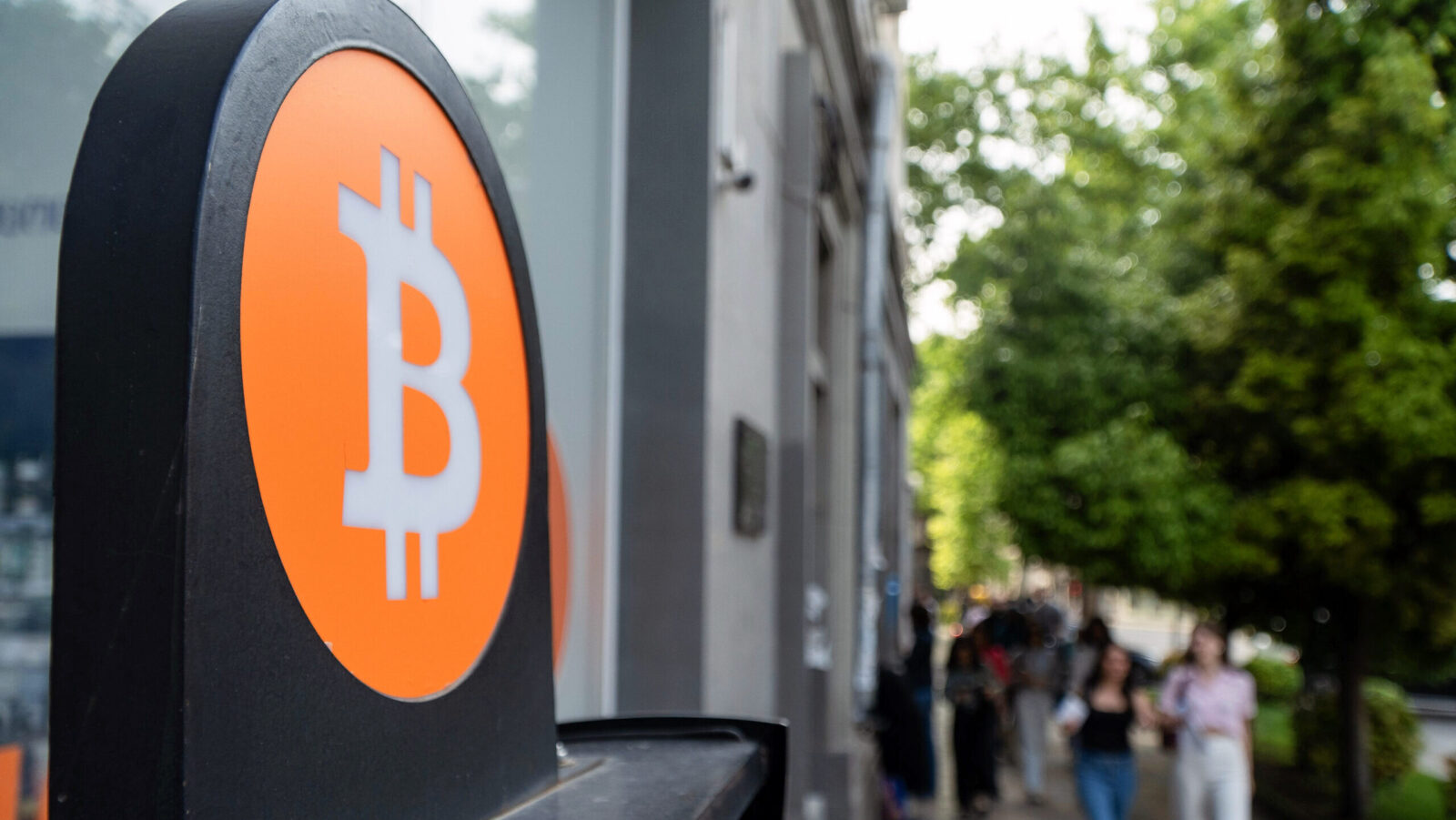
Bitcoin’s still sinking in quicksand, and it’s unclear when investors will feel like throwing it a rope. The top token by market cap plummeted below $60,000 this month for the first time since 2024, and this week, it’s worth less than half the record it set last October.
The token briefly rallied along with the broader market on June 15, climbing above $67,000, on hopes that the US-Iran conflict is closing in on a resolution. But it has since pared its gains for myriad reasons, starting with bitcoin’s biggest corporate bull blunting his horns.
No More Smooth Sayling
Michael Saylor spooked investors in early June by announcing that his company, Strategy, had sold off 32 bitcoin for about $2.5 million. The digital pile is tiny compared with Strategy’s total holdings, but the sale was the company’s first time parting with even a grain of sand off the top of its massive bitcoin hoard since late 2022’s crypto winter.
Investors seemed to take Saylor’s announcement as a signal that Strategy, and its underlying asset, could face rough waters ahead. Strategy shares were down about 30% for the month as of the end of last week. STRC, a dividend-paying stock issued by Strategy to raise capital the company uses to buy bitcoin, has been below its intended $100 anchor since mid-May. That’s fueling concerns about Strategy’s ability to keep doling out dividends and the possibility that it’ll need to sell more bitcoin to keep its stockpiling cycle spinning.
Strategy’s struggles may have made investors extra-sensitive to other events that have happened since:
- Bitcoin and other tokens dipped last week after Fed Chair Kevin Warsh’s first FOMC meeting made rate hikes seem more likely later in the year. Cryptocurrencies aren’t investors’ favorite investment vehicle when they’re anticipating higher costs.
- Crypto-exposed stocks, including Coinbase and Robinhood, meanwhile, joined a wider tech rally, rising as bitcoin and other tokens continued to fall. Even Strategy’s stock rose slightly. But instead of pulling crypto tokens up with them, tech stocks and shiny new IPOs like SpaceX’s could be pulling risk-seeking investors away from crypto.
Don’t Look Up: Coinbase CEO Brian Armstrong said that he expects bitcoin to bottom out at around $60,000. Crypto exchange Kraken, meanwhile, noted that bitcoin has fallen below its 200-week moving average twice this month, which in the past has signaled an imminent bounce-back. But crypto isn’t exactly known for its predictability, and investors will be watching for major events that could swing its price, like the possible passage of the Clarity Act.
What Has Your Company Card Done For You Lately?

Yeah, didn’t think so. This card actually pulls its weight for business owners. It earns unlimited 1.5% cash back on every purchase. Plus up to $1,000 as a welcome bonus, with no annual fee. Cards like this don’t stick around. Learn how to apply now before it’s gone.*
Uranium Deal Powers Up Nuclear Fission Firm Oklo

Sam Altman’s company has finally solved its supply problem.
No, we’re not talking about OpenAI and its insatiable appetite for more compute. We’re talking about Oklo, the Altman-backed nuclear fission company, which has struck a multiyear purchasing agreement with Centrus Energy for domestic high-assay low-enriched uranium (HALEU), the difficult-to-source fuel for its new-age nuclear reactors.
Nuke Box Fever
Data center fever has nuclear fission companies adopting the same mindset: Solve the science and engineering feat of small modular reactors first, ask questions about uranium fuel supply later. With the technical side now all but cinched up, the supply question has been front and center. The problem? For years, commercial HALEU could only be sourced from China and Russia … not exactly the coziest of trade partners.
Still, the US needed data centers, and data centers needed clean energy, and nuclear energy required HALEU. The National Defense Authorization Act of 2024 directed the US Department of Energy to help the private sector kick-start commercial HALEU enrichment, and in January, Centrus secured a $900 million contract to do just that. Oklo is only one of the beneficiaries:
- Centrus is set to supply enough HALEU fuel to power five of Oklo’s Aurora SMRs in a deal that starts in 2029. The company has also explored using recycled Cold War-era plutonium for its reactors, and CEO Jacob DeWitte once told Barron’s that sourcing fuel was one of its “biggest challenges.”
- In its press release on Thursday, Oklo said that some of the HALEU supply will be used to fuel the Aurora SMRs it is building in Pike County, Ohio, for a nearby Meta data center; the Instagram owner contracted Oklo for energy earlier this year.
HALEU Effect: Shares of Oklo jumped 4% on Thursday, while shares of Centrus Energy jumped more than 12% (note: The market was closed Friday in observance of the Juneteenth holiday). The radioactive glow-up spread across the sector. Uranium supplier Energy Fuels saw its share price jump more than 8%, while Oklo’s SMR rivals NuScale Power and NANO Nuclear Energy jumped 13% and 11%, respectively.