Smart, actionable news trusted by millions.

Our flagship newsletter delivers smart news and analysis on finance, and investing — all for free.

Good morning.

Just how badly do you need that LED light therapy face mask, or that copy of Murakami’s latest novel or that stainless steel cutting board? Amazon, for one, is betting you have zero chill.

The e-commerce giant announced Tuesday that it’s rolling out three-hour delivery in roughly 2,000 US cities and towns, and hyperfast one-hour delivery in hundreds of locations. Both come at a price. Three-hour deliveries will cost Prime members $4.99 and non-members $14.99, while one-hour deliveries will cost members $9.99 and non-members $19.99. “We’re excited to say that two decades after Prime first launched, we’re still innovating to make delivery even faster,” the company said. Frugal shoppers who need something that desperately might consider a less costly innovation: the Upper Paleolithic invention called the shoe, which can be used to walk down the street and buy things at a store, typically in an hour or less and without extra charge.

Blockchain

Mastercard Embraces Digital Future with $1.8 Billion Bet on Stablecoin

Mastercard is going all out to avoid becoming a casualty of disruptive tech.

On Tuesday, the credit card giant announced an agreement to acquire the stablecoin payments infrastructure firm BVNK, in a deal worth up to $1.8 billion. It’s a move that could help secure Mastercard’s place in not just the crypto world of tomorrow, but the AI-driven one too.

Change Agents

While stablecoins (a.k.a., cryptocurrencies with a value pegged 1:1 with a fiat currency, such as the good ol’ US greenback) have rocketed into the mainstream financial ecosystem in the past couple of years, there’s a chance we haven’t seen anything close to peak stablecoin yet. At least, so says the infamous Citrini artificial intelligence doomsday report, which explores a near-future in which everyone the world over employs autonomous, coldly efficient AI shopping agents that quickly identify stablecoins as a backdoor solution to pesky credit card interchange fees.

Shares of Mastercard fell some 6% the Monday following Citrini’s crystal ball reading roughly three weeks ago, and have clawed back only about 2% since (in the meantime, a new war over access is breaking out between e-commerce platforms and third-party shopping agents). Via its BVNK acquisition, Mastercard is attempting to secure its place in the blockchain-driven future of financial plumbing before it’s too late:

  • Founded in 2021, BVNK has focused on building payment infrastructure to facilitate global stablecoin transactions and allow customers to seamlessly move money from fiat currencies into stablecoins and back again. BVNK says its infrastructure supports payments across all major blockchain platforms and is accessible in over 130 countries.
  • In January of last year, the startup scored a $50 million funding round at a $750 million valuation, though by October it told CNBC that its valuation had since increased above that level. The company was also in talks with major crypto platform Coinbase last year before moving forward with Mastercard.

The Future Is Now: “This is a very highly technical, sophisticated technology,” Mastercard chief product officer Jorn Lambert told Bloomberg on Tuesday. “Time to market does matter, and so we felt like for us to build, it would take us a little while.” Taking a little while is an opportunity cost that Mastercard could likely ill afford. Total stablecoin transaction volumes jumped 72% to an eye-watering $33 trillion in 2025, according to data compiled by Artemis Analytics Inc. And that was almost entirely before an army of Claude-powered AI agents began their shopping sprees.

The worries floating around private credit right now (opaque structures, long lockups, performance uncertainty) mostly describe something Percent isn’t.

On Percent, accredited investors see the borrower financials, deal structure, and performance history before committing a dollar. No 7-year blind pools. No black-box underwriting.

The numbers as of Q4 2025:2

  • 16.72% current weighted average coupon rate.
  • 681 deals fully repaid.
  • $1.33B in principal returned to investors.

Since 2018, Percent has funded $1.82B across 981 deals. 97.33% of all principal is either returned with interest or currently performing.* It’s a public track record — every deal is on the platform, readable before you invest.

New investors earn up to $500 on their first investment.1

See what private credit actually looks like.

Consumer

K-Shaped Buffer Helps Delta Soar Above Airline Industry’s Fuel Price Woes
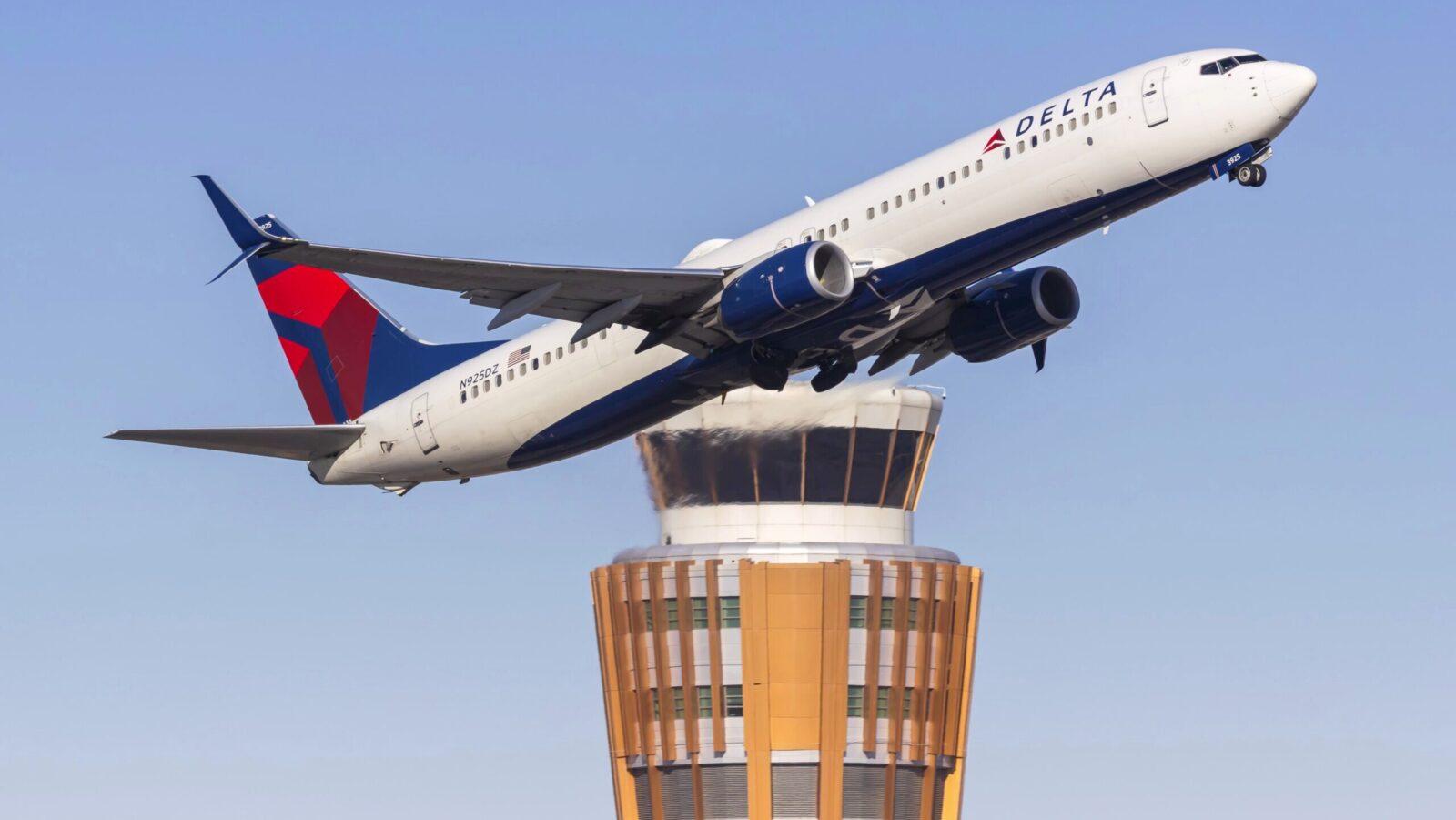
Photo of a Delta Air Lines flight.
Photo via imageBROKER/Markus Mainka/Newscom

Despite jet fuel prices jumping more than 50% this month, Delta is cruising. The closure of the Strait of Hormuz amid the US-Israel war with Iran may be crunching oil supply, but the airline raised its revenue forecast on Tuesday to high-single-digit growth through March from the previously predicted 5-7% growth. American Airlines also boosted its guidance, saying that it now expects record year-over-year quarterly revenue growth of more than 10% in its first quarter, up from the previous forecast of closer to 8.5%.

Delta, American Airlines and United Airlines have customers who can afford to fly even when prices increase, unlike many of their budget-carrier peers. But the heightened demand also suggests that travelers are looking to lock in prices before they rise further.

“When prices did spike, we saw a spike in demand,” Alaska Airlines CEO Ben Minicucci said recently. “I think people got this initial, ‘Wow, if this thing is going to go crazy, I better book my fare now before fares go up.’”

Pursuing Premium Passengers

Delta is reporting strength across all segments, but its focus on customers on the upper diagonal of the ‘K-shaped’ economy is buoying performance.

“Our consumer’s really healthy. We live at the top end of that ‘K’ that people talk about, the premium end of the ‘K,’” Delta CEO Ed Bastian recently told CNBC. “That group of folks wants to travel. They’re investing in themselves; they’re investing in the experience economy.”

The company has certainly invested in attracting those higher-income flyers:

  • During Delta’s fourth-quarter earnings call in January, then-President Glen Hauenstein, who retired at the end of February, said that all new-seat growth would be concentrated in premium cabins.
  • Bastian said during the earnings call that the company is expanding its premium lounge network.

Budget Blues: While airlines that cater to the top of the K-shaped economy aren’t sweating costlier jet fuel, airlines carrying less affluent passengers are struggling. “Airlines with the thinnest margins and least flexible supply chains are going to hurt the most,” the Association of Flight Attendants wrote in a recent statement on the impact of the war with Iran on the airline industry. The statement highlighted budget carriers including Frontier and Spirit, the latter of which filed for bankruptcy in August for the second time in less than a year (though it has plans to emerge in the spring or summer).

Photo via Mogul

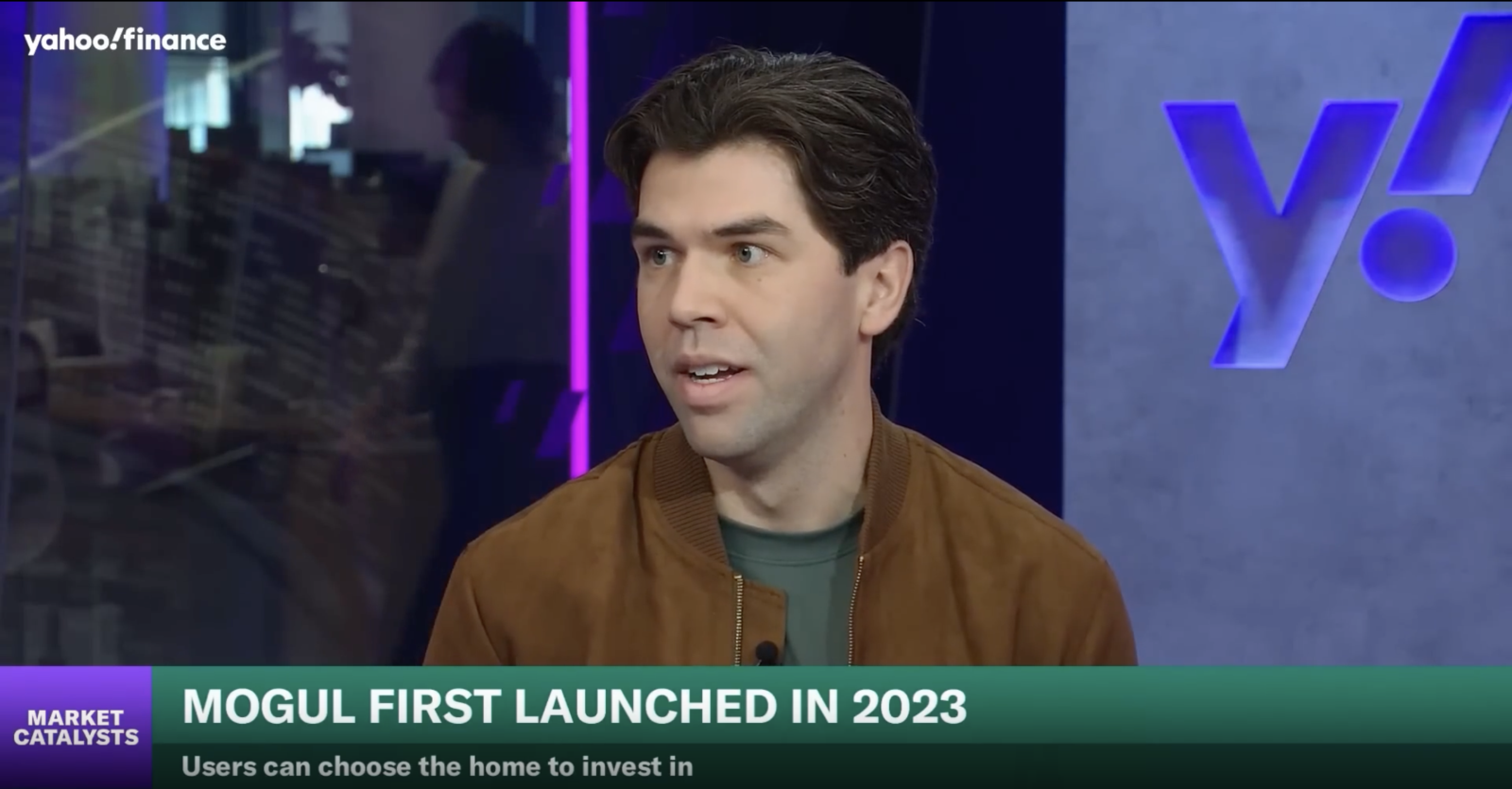
When the S&P 500 swings, smart investors move $50,000 into stable residential real estate ASAP. mogul, founded by former Goldman Sachs executives, lets you invest in properties producing 18.8% average IRR and 7-12% annual yields. You get appreciation, monthly income and tax benefits. Stop overthinking and start earning. Use the Goldman strategy with 20,000 investors today.**

Electric Vehicles

Tesla’s $4.3 Billion Not-so-Secret Is Officially Out 

Last July, South Korea’s LG Energy Solution said it inked a $4.3 billion contract to supply batteries to … someone.

The secret was as poorly kept as a college frat house, with reports immediately pointing to Tesla as the not-so-mysterious counterparty. Nearly eight months later, LG confirmed its deepened partnership with the Elon Musk-led automaker on Tuesday, after the Department of the Interior included the arrangement in a roundup of energy pacts between US companies and partners across the Pacific.

Electric Excess

The battery cells Tesla is buying will be produced at a plant in Lansing, Michigan, previously run by LG as a joint electric vehicle (EV) battery venture with General Motors. The end of Biden-era incentives hammered EV sales, however, leading GM and other US automakers to massively scale back their go-electric ambitions. US EV registrations fell 41% year over year in January, while GM disclosed $7.6 billion in EV-related write-downs.

LG bought out GM’s stake in the facility last spring and is converting it into a production hub for lithium iron phosphate (LFP) batteries. The EV market may be waning, but LFP batteries are hot commodities in the growing energy storage market. BloombergNEF forecast in December that US data center power demand could reach 106 gigawatts by 2035, up 36% from a previous estimate. Tesla is poised to capitalize:

  • It’s buying the batteries for its fast-growing energy division, which sells utility-scale power storage systems called Megapack and Megablock. Though most of the company’s revenue still comes from EVs, the energy business grew sales 27% last year to $12.8 billion.
  • The biggest threat to margins at Tesla’s growing energy division is US tariffs on imported Chinese LFP batteries. The LG deal creates a domestic supply chain for the company.

Investors’ initial reaction to the deal was positive on both counts. LG’s Seoul-listed shares rose 2.7% Tuesday. Tesla rose 0.9% in New York, besting the S&P 500’s 0.2% gain.

Make It a Trend: LG and General Motors are still partners in a Tennessee EV battery plant, but not for long. On Tuesday, they announced plans to recall 700 laid-off workers and turn the facility into an LFP plant.

Extra Upside

  • Legal Gamble: Arizona’s attorney general filed criminal charges against prediction market Kalshi, alleging the company is operating an illegal gambling business.
  • Detroit to Tokyo: Nissan became the third major Japanese automaker, after Toyota and Honda, to announce it will export vehicles from the US to Japan following a trade deal last year.
  • The Hustle Covers the Weird, Wild Side of Business that Traditional Media Ignores. From gas station pizza empires to billionaire mountain takeovers, and everything in between. Join 1.5M readers discovering massive opportunities and weirdly profitable businesses hiding in plain sight. Subscribe today.***

***Partner

Disclaimers

*Alternative investments are speculative and possess a high level of risk. No assurance can be given that investors will receive a return of their capital. Those investors who cannot afford to lose their entire investment should not invest. Investments in private placements are highly illiquid and those investors who cannot hold an investment for an indefinite term should not invest. Private credit investments may be complex investments and they are subject to default risk. Secondary market transactions are subject to availability, matching of counterparties, and issuer approval; liquidity is not guaranteed.

1Terms and conditions apply.

2Past performance is not indicative of future results.

**Past performance does not guarantee future results. Historical, hypothetical, or simulated data is for illustrative purposes only. Investing involves risk, including loss of principal. This is not an offer to buy or sell securities. See important Disclaimers.

Sign Up for The Daily Upside to Unlock This Article
Sharp news & analysis on finance, economics, and investing.